Robbie Thain
Founder, CEO

Transform trade show momentum into sustained retail sales. Learn how to convert static event sponsorships into mobile pop ups that drive measurable product trial.

Most brands treat the final day of a major expo as the finish line when it is actually just the starting block. A crowded booth feels like a victory. True success requires taking that localized energy and pushing it into the streets.
This playbook details how to transform static event sponsorships into mobile sampling operations that force measurable product trials. Marketing leaders can secure defensible pipeline growth by bridging the gap between crowded convention halls and localized retail environments.
Trade shows and sponsorships cost a massive premium. Relying purely on the four days of an expo to drive a ninety day retail strategy is a failing game. Industry benchmarks reveal that 68 percent of consumer goods companies fail to sustain momentum without follow up mobile activations. They pack up their gear, fly home, and hope for retail lift that never comes.
The event looked busy, but it produced fog instead of evidence. Expos end, leads get cold, and booths are packed away. Nothing hits the bottom line without a dedicated transition strategy. Brands often struggle with fragmented staffing, poor reporting, and inconsistent retail presentation.
This high failure rate happens when teams prioritize temporary visibility over permanent market penetration. Thirty percent of localized pop ups underperform without proper audience mapping. Without strict operational rigor, live events fail to connect with local stockists or distribution partners. The primary goal is forcing a new buying habit in a defined geographic area.
Sponsorships must evolve from simple logo placement to contextual experiences. We must move the brand out of the convention center and into the path of the daily shopper. Traditional visibility based sponsorships yield an average Return on Investment of roughly two to five times the spend. When those same sponsorships are extended into targeted physical activations, that multiple can climb up to twelve times.
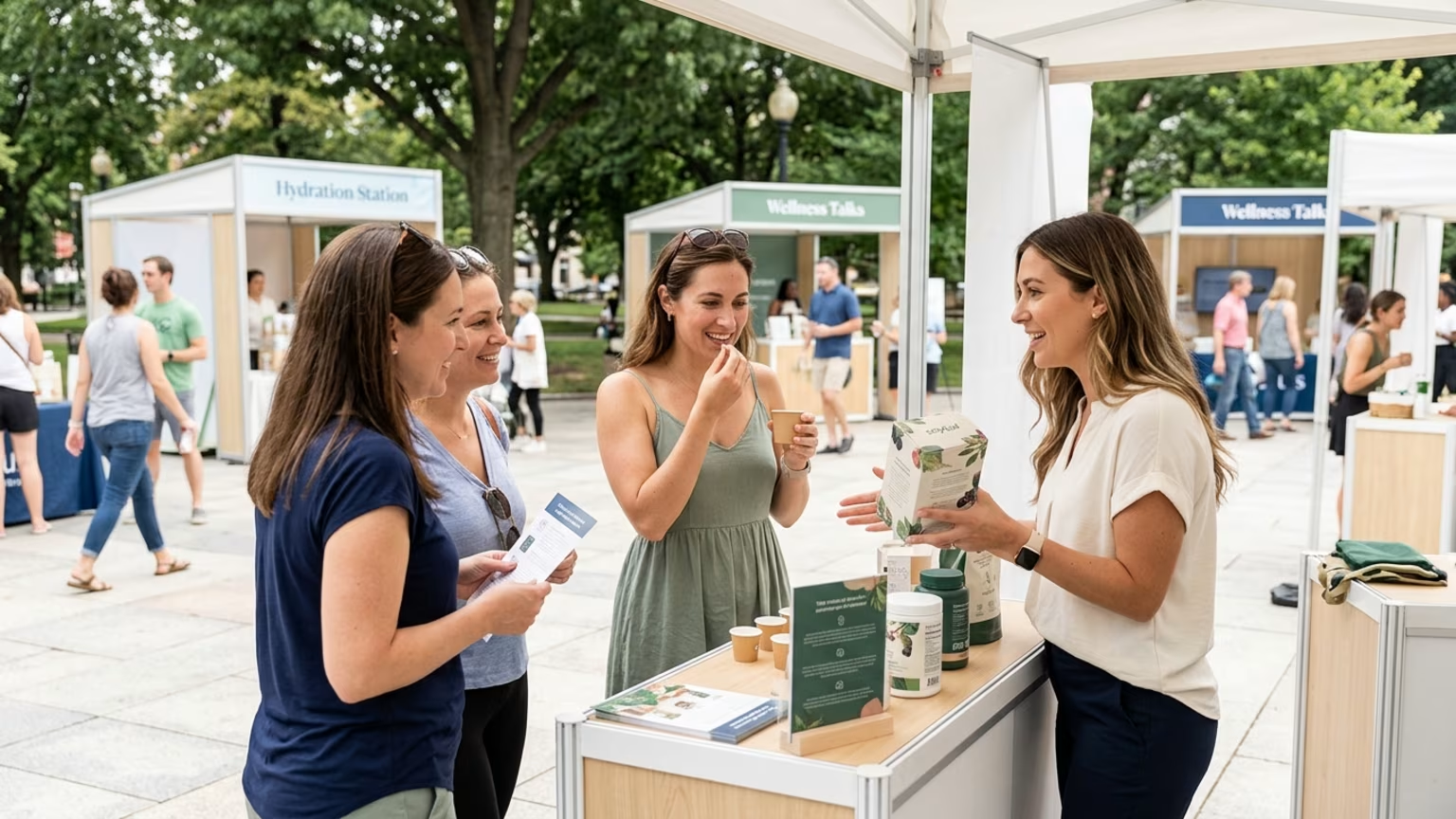
The framework requires strict audience mapping and precise routing. If you sponsor a mass participation sports event, you must build a bridge to the nearest retail environment. Sporting goods and food brands are currently using marathons and races for sampling stations. Those immediate interactions easily convert into massive retail pushes.
Partnership marketing is not a one way delivery system. It is a synchronized campaign designed to maximize trial and capture verifiable data. Consumers need to touch, taste, and experience the product outside the artificial environment of an exhibition hall. Nearly 40 percent of experiential budgets now allocate funds strictly for post event sustainers.
Fifty two percent of consumers try new products via live sampling versus just 22 percent from digital ads. Sustained pop ups boost retail sell through by 28 percent when executed correctly. This is where optimizing the roadshow for sales lift becomes a mandatory capability for any serious brand operator. You capture the initial interest at the expo and fulfill it directly on the street.
Moving from a convention center to a street level campaign requires absolute discipline. You need a sequential process to secure smooth operations.
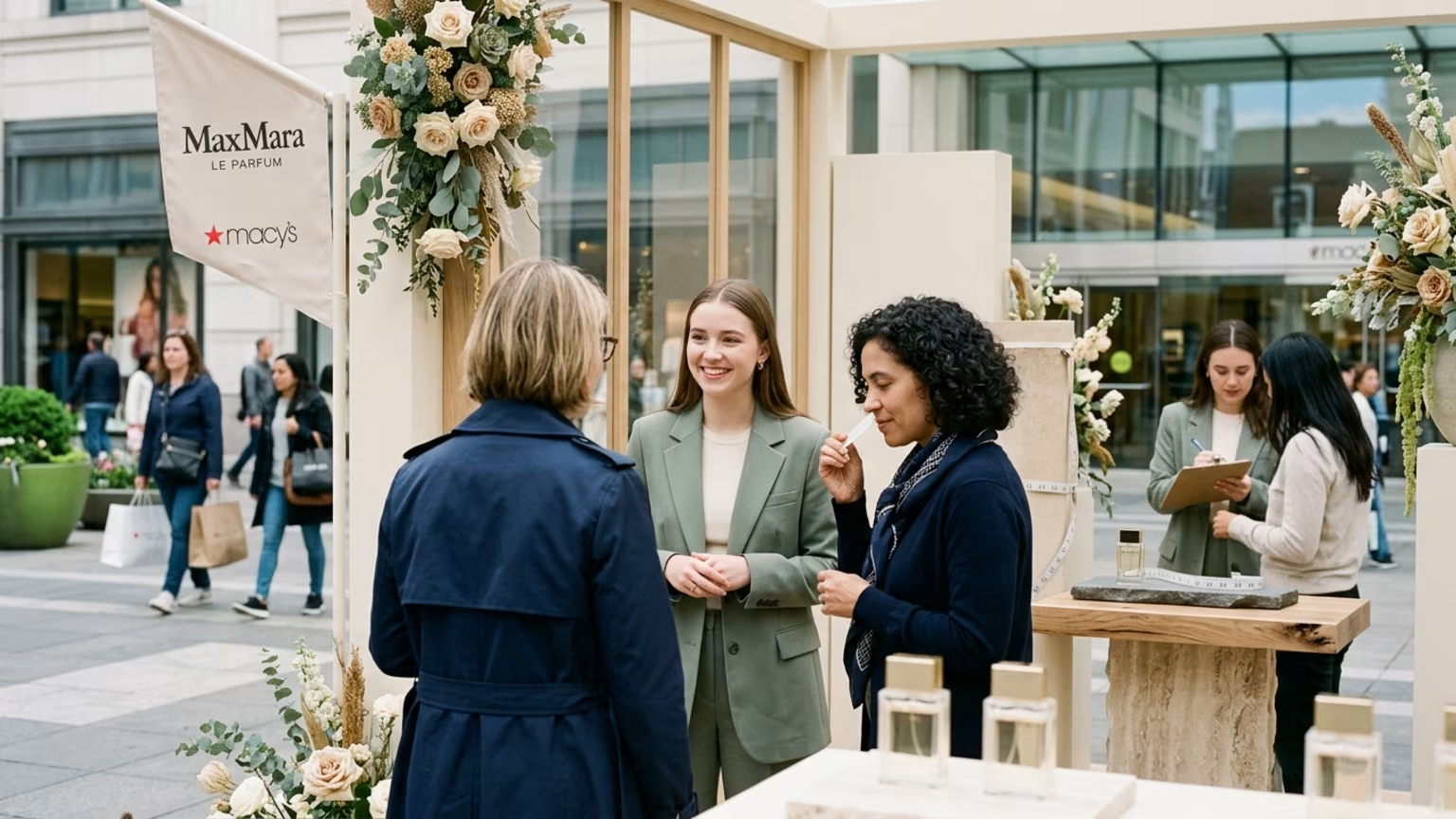
Deploy mobile fleets immediately to capitalize on the regional attention. Map out three to five key markets near your expo or sponsorship location. Launch targeted sampling fleets within the first week after the main event. Establishing immediate localized presence captures the residual buzz from the convention floor.
Align your retail partners completely before the activation begins. Build joint marketing calendars with regional buyers to secure premium floor space. Train your brand ambassadors to deliver a consistent message that matches the original trade show pitch. Consistent messaging builds undeniable trust with local shoppers.
Sync digital tools with physical locations to capture real intent data. Map your sponsor audiences to specific retail location boundaries. Use simple scan codes at pop up locations to drive foot traffic directly to local stockists. Capturing immediate digital intent bridges the gap between tasting a sample and making a purchase.
Track the ninety day sell through relentlessly to prove your concept. Connect the localized sampling data to regional sales reports to prove the financial impact. Scaling retail demos into post expo roadshows helps brands maintain their sales momentum long after the event ends. Financial visibility keeps the marketing budget totally secure.
Maintain strict inventory control across all of your activation sites. Storage and logistics often ruin otherwise great creative ideas. Keep your gear centralized, tracked, and ready to deploy at a moments notice. A beautiful pop up is completely useless if the trucks arrive late.
You cannot improve what you refuse to measure. Relying on foot traffic and total samples distributed will ruin your credibility with the finance department. You need a mix of lead and lag indicators to prove true financial lift. Lead metrics must include daily trial conversions, digital engagement scans, and the percentage of qualified retail conversations.
Lag metrics are where the actual revenue lives for your brand. Track the ninety day sell through lift at target retailers located within your pop up radius. Look closely at the 15 percent repeat purchase rate benchmark for consumer goods. The attribution is often tricky, but focusing on localized point of sale data removes the guesswork.
You must base success on concrete sales data rather than simple impressions. Building strong ROI frameworks for events helps leaders connect street level metrics to board level expectations. Pure direct channel brands see faster wins but lower lifetime value without these retail partnerships. Track the conversion rate, measure inventory turns, and monitor the lift in retail confidence.
Events converting to sustained trial see 15 to 25 percent higher purchase intent compared to digital ads alone. Tracking these numbers protects your marketing budget from executive cuts. It proves that physical activations drive undeniable and repeatable financial results.
Consider how major food and beverage brands approach live sports. Kraft Heinz recently reworked its sponsorships to focus entirely on localized trial. They moved past simple stadium signage and created direct product pop ups tied to regional games. This targeted outdoor model generated a 20 percent sales lift in specific markets.
Kraft Heinz focused on reaching consumers with an opt in level of engagement. They treated massive sports audiences as a blank canvas for creative product placement. Building a localized restaurant partnership immediately proves the product value to the fan. They combined outdoor advertising with local food service sampling to drive real volume.
IBM proved that enterprise software can benefit from physical street activations. They created interactive kiosks in public parks right alongside their major golf sponsorship. This physical extension of a major sponsorship resulted in an 18 percent uplift in business lead conversions. It turned a high level technology demonstration into an accessible street level experience.
The mass participation sports industry grew by nearly eight percent recently. Brands are using these massive crowds as market entry launchpads. They set up sampling stations along marathon routes and convert sweaty runners into loyal buyers. Seventy percent of participants report increased brand affinity after engaging with these types of localized activations.
We have executed over 1000 campaigns across all 50 states, bringing brands to life in every major United States market. From retail demos in Seattle to roadshows in Miami and events in Honolulu, our teams activate brands wherever our clients audiences are located. You cannot just hope that a beautiful booth translates into regional dominance.
You have to put the product in the hands of the consumer right where they shop and live. We see companies struggle with complex event logistics, permits, and staffing every single day. The brands that win are the ones that treat physical execution with the same respect as their creative strategy.
The logistics of moving from a massive expo into a multi city roadshow can feel incredibly heavy. It requires strict permitting, secure storage, and flawless staffing execution. If your team is ready to stop leaving revenue on the trade show floor, you should book a strategy call with our planners. We build the operational bridges that turn momentary attention into permanent shelf space.
The truest measure of a brand experience is what happens after the crowds disperse. Attention is cheap, but memory and preference take actual work to build. A great activation simply leaves a quiet, lingering proof of value in the hands of the consumer.

30 Years Experiential & Retail Activation Partner for CPG & Beverage Brands | Multi-Market Demos, Roadshows & Costco/Club Programs That Actually Sell