Robbie Thain
Founder, CEO

Discover how brands integrate digital media with physical product trial to drive measurable retail sales and strong commercial outcomes.
On August 4, 2026, the Path to Purchase Institute published a case study detailing a connected holiday campaign by Eos Products. This report surfaced alongside a Mondelez International case study detailing a Sargento Cheese Bakes activation. Both documents confirm a major operational shift in consumer packaged goods marketing. Experiential marketing is no longer treated as a separate silo from digital performance channels.
The traditional model of running isolated street teams is fading quickly. The Eos campaign connected an immersive Target activation with paid search and retail media. It also integrated social media, digital out-of-home advertising, connected TV, and ambassador activity. Mondelez International executed a comparable strategy for its snacking portfolio.
The Mondelez program combined off-site targeting with in-store screens across 116 Albertsons banners. The target audience consisted of cheese-snacking category buyers who had purchased within the previous 26 weeks. These buyers were divided into quality-driven and engagement-driven behavioral segments. Mondelez used in-store digital screens for Sargento Cheese Bakes for the first time in its spring and fall 2025 campaigns.
Both brands designed their retail footprints to interact directly with digital advertising exposures. The industry formally recognized this integrated approach earlier this year. The Eos campaign received a Silver award in the Best Use of Retail Media Networks category at the 2026 REGGIE Brand Catalyst Awards. Mondelez received a Bronze award in the same category.
In our experience, brands waste budgets when they treat physical marketing as a vague awareness tool. A live brand moment must solve a specific commercial barrier that digital platforms cannot resolve. Eos reported that its research identified purchase uncertainty as the main barrier. Consumers wanted to try new scents but needed a low-risk way to experience them first.
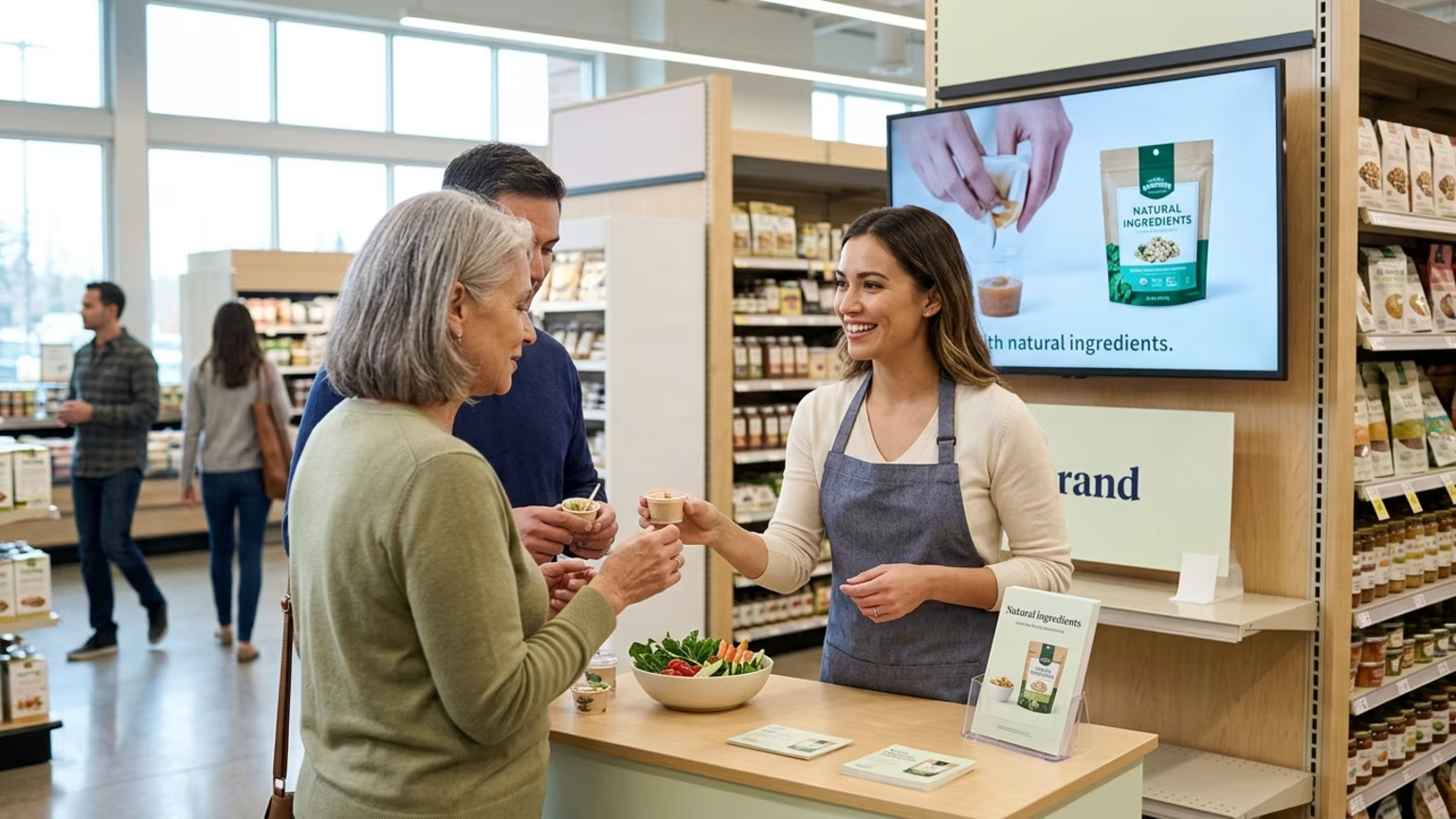
This specific insight created a clear rationale for hands-on sensory trial. Digital media can generate reach, but physical marketing delivers the definitive proof point. You cannot smell a vanilla cashmere body mist through a smartphone screen. You cannot taste a cheese bake through a connected television advertisement.
By anchoring digital campaigns around real-world interaction, brands build immediate credibility and higher trust. We see this dynamic constantly when designing trade show experiences. The physical activation becomes a structured commercial engine that validates the digital promise. The financial stakes for getting this right are massive.
EMARKETER forecasts U.S. retail media ad spending at $72.97 billion in 2026. This spending will rise above $118 billion by 2030. As these networks grow, physical trial will become the ultimate conversion mechanism for premium product lines. A successful multi-channel program assigns a clear job to every single touchpoint.
Paid media builds broad awareness among priority consumer segments. Retail media intercepts shoppers who are actively navigating digital storefronts. Finally, the physical event delivers the decisive proof point through direct human interaction. We implement this precise structure when planning mobile roadshow tours.
When the real-world moment answers a specific product question, the entire media investment works harder. Integrating physical trial with digital media networks forces an intense operational reckoning. Eos said it aligned media timing and market targeting with the activation calendar. This geographic synchronization means your field staffing, permits, and inventory must operate perfectly on schedule.
If a media buy drives traffic to a specific retailer, the sampling station must be fully operational. Scaling live campaigns introduces massive risk if logistics are handled poorly. Eos began the campaign with an immersive event at a Target store in New York in November 2025. The brand subsequently replicated the experience in 200 stores nationwide.
Executing a rollout of that size demands strict compliance across multiple regional markets. Brand ambassadors must be thoroughly trained to answer complex product questions. Inventory levels must be monitored daily to prevent highly damaging out-of-stock scenarios. A beautifully designed booth means absolutely nothing if the underlying product is missing from the shelf.
Measuring physical impact requires highly advanced operational data. Albertsons said the Mondelez program used Matched Market Incrementality to identify comparable test and control stores. This analytical approach accounts for store, shopper, market, and competitive variables. Managing these data streams requires intense focus from the very first planning meeting.
A Director of Brand Strategy in the CPG snack division shared: 'The Makai team turned our product launch into a sensory event that shoppers still talk about. From creative storytelling to flawless in-store execution, they made snack time unforgettable. We couldn't have asked for a stronger partner.' Our team created an in-store experience that left a lasting impression on consumers and became a memorable brand moment.
Marketing executives are increasingly vocal about the need for upfront operational design. Grace Smith of Eos said that full-funnel connectivity has to be designed in from the beginning. She argued that national media, retail media, and in-store activation must reinforce one another as part of one consumer journey. Melissa Pitmon of Mondelez highlighted a similar operational truth.
She stated that off-site retail media and in-store programs can create a seamless path from awareness to action. This path is crucial when shoppers are making impulse purchases or deciding at the shelf. Additionally, the industry is racing to define exactly how to measure these connected journeys. IAB and IAB Europe released in-store retail-media definitions and measurement standards in December 2024.
However, Taryn Rade of Albertsons Media Collective noted that in-store media requires sophisticated measurement. She explained that digital environments provide clearer exposure and conversion signals than physical stores. By establishing strict measurement protocols early, brands can prove their experiential investments actually drive retail sell-through. Avoiding common lead capture pitfalls requires this exact kind of rigorous, data-driven planning.
The demand for precise commercial metrics is only going to increase. Mondelez reported that the fall activation delivered significantly stronger return on ad spend than its spring campaign. This improvement proves that iterative testing in physical environments yields real financial dividends. EMARKETER describes a shift toward closed-loop attribution that connects retail-media exposure with online and in-store purchases.
Marketing executives can no longer rely on vague foot traffic estimates to justify field budgets. Brands must demand clear operational frameworks that connect physical trials to actual register receipts. Live marketing must adopt this commercial mindset to secure future budget allocations. Does your next experiential tour operate as an isolated vanity project, or does it serve as the measurable, converting core of your retail media strategy?
Synchronizing a physical product trial with national digital media schedules introduces immense operational risk. Makai eliminates the challenge of navigating complex event logistics, permits, and staffing by deploying our flagship Promotional Campaigns. Our campaigns connect digital and real world touchpoints to boost visibility and spark brand conversations, ensuring every interaction becomes a measurable commercial outcome.

30 Years Experiential & Retail Activation Partner for CPG & Beverage Brands | Multi-Market Demos, Roadshows & Costco/Club Programs That Actually Sell