Robbie Thain
Founder, CEO

NIQ's recent framework separates immediate sales from long-term brand health. Learn why experiential teams must measure brand equity apart from activation.

On September 29, 2026, NIQ published new commentary that separates immediate market activation from long term brand health. The report, updated on September 30, 2026, addresses a common reporting blind spot by distinguishing short term sales from lasting brand equity. The analysis focuses on how shoppers can mix accessible and premium purchases within their broader buying habits. While the research examines European fashion and prestige beauty buyers, the core measurement framework forces a direct reevaluation of how marketing leaders judge success. By isolating temporary sales spikes from structural brand perception changes, NIQ creates a dividing line between fleeting attention and genuine brand strength.
The article mentions Fashion Week as a moment of concentrated attention. However, it provides no quantitative Fashion Week case study, experiential marketing experiment, or activation performance result. Despite this, the framework requires teams to evaluate the immediate response to a campaign separately from changes in underlying consumer sentiment.
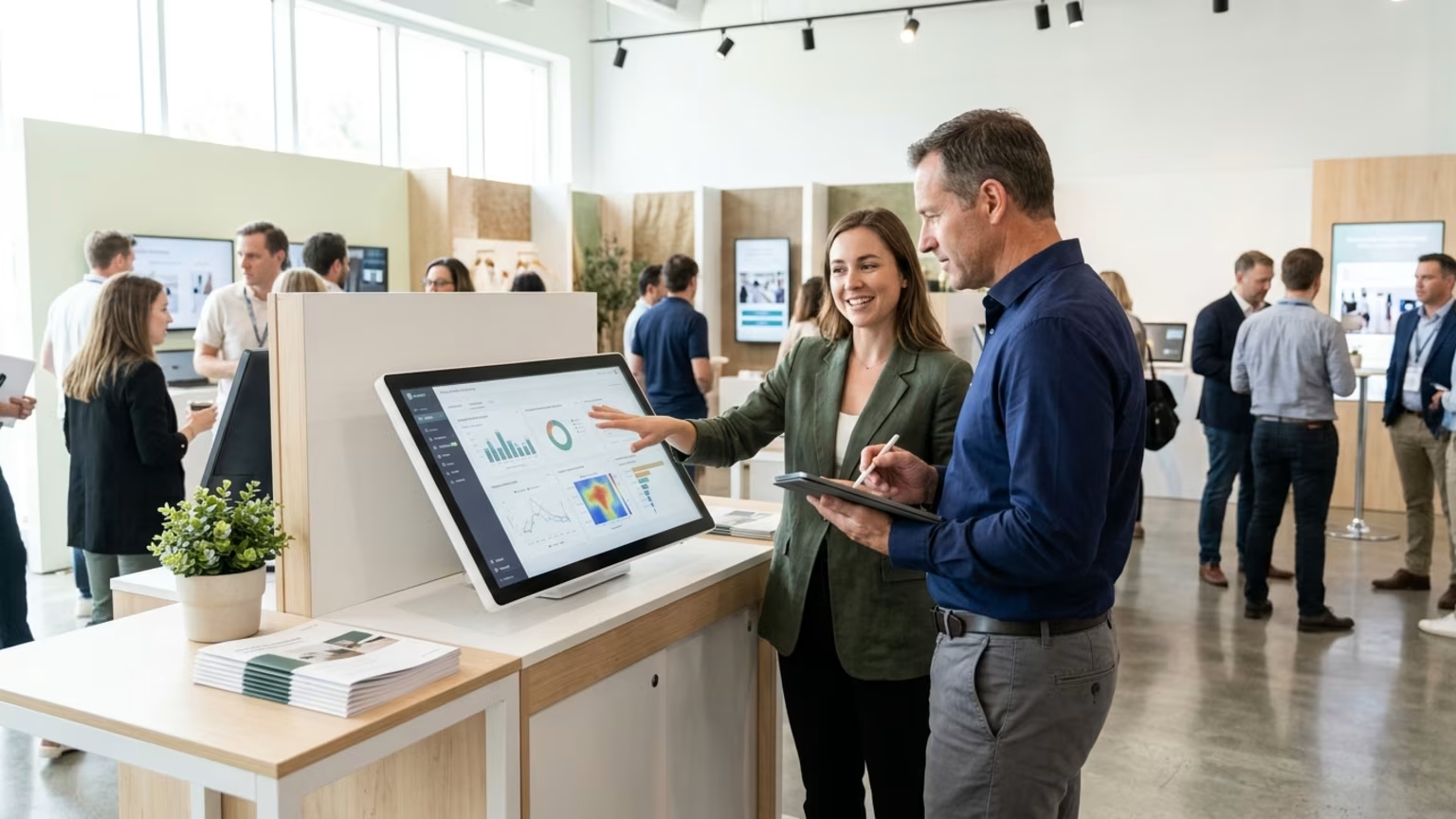
The core adjustment lies in how NIQ defines and tracks brand health. The firm explicitly separates brand strength from market activation. To measure this separation, NIQ relies on diagnostics such as mental availability, brand image, and brand attachment. These metrics help identify which consumer perceptions actually changed after a marketing initiative.
The firm cautions that immediate sales are not a complete verdict of success. A sudden sales spike might just reflect product scarcity, high visibility, or a strong activation. Conversely, deeper changes in perceptions regarding product quality, expertise, or differentiation might not show up in immediate sales data. To manage this disconnect, NIQ advises establishing a starting position against competitors before launch.
Teams must define the intended strategic role of a campaign and then measure brand KPIs after the launch. This process identifies which dimensions actually drive long term equity. NIQ grounds this framework in recent European ecommerce data ending May 1, 2026. The firm found that fashion represented around one fifth of online sales value in the region.
Category penetration hit 76 percent across the panel. Shoppers purchased more frequently, with average annual purchases rising from 8.2 to 9.2. However, the average basket value fell from 54 euros to 49 euros. NIQ uses this dynamic to show that brands face a two part challenge.
Companies must sustain the occasions when shoppers choose them while simultaneously giving buyers reasons to value the offer. To address this tension, NIQ divides brand health into two specific dimensions. The first is Brand Choice, which measures predisposition to buy and the potential to drive volume. The second is Brand Premium, which measures a buyer willingness to pay more for the brand.
NIQ argues that awareness, familiarity, consideration, and purchase intention are useful but partial measures. When the ultimate goal is to understand perceived value, leaders need tools that capture both choice and premium positioning. The firm notes that ultra fast fashion competition in seven European markets holds a larger share of units than of value. This accessible model emphasizes scale, high frequency, and highly accessible prices.
The NIQ data indicates that a shopper might buy prestige beauty items while also utilizing an ultra fast fashion platform. NIQ notes that this is about prestige beauty, not direct evidence of the same shoppers buying premium fashion. The article does not identify the specific platform, the European markets in the study, or the sample size. Furthermore, the article provides no evidence that its fashion specific measures transfer unchanged to food, beverage, or entertainment experiential programs.
For U.S. consumer packaged goods and beverage brands, this distinction between immediate action and lasting brand strength is a critical operational reality. Field marketing leaders face intense pressure to prove Return on Investment from live physical events. Too often, teams judge the success of a national roadshow entirely on immediate trial numbers or weekend sales volume. However, as the NIQ analysis suggests, a massive crowd does not automatically translate into a stronger brand.
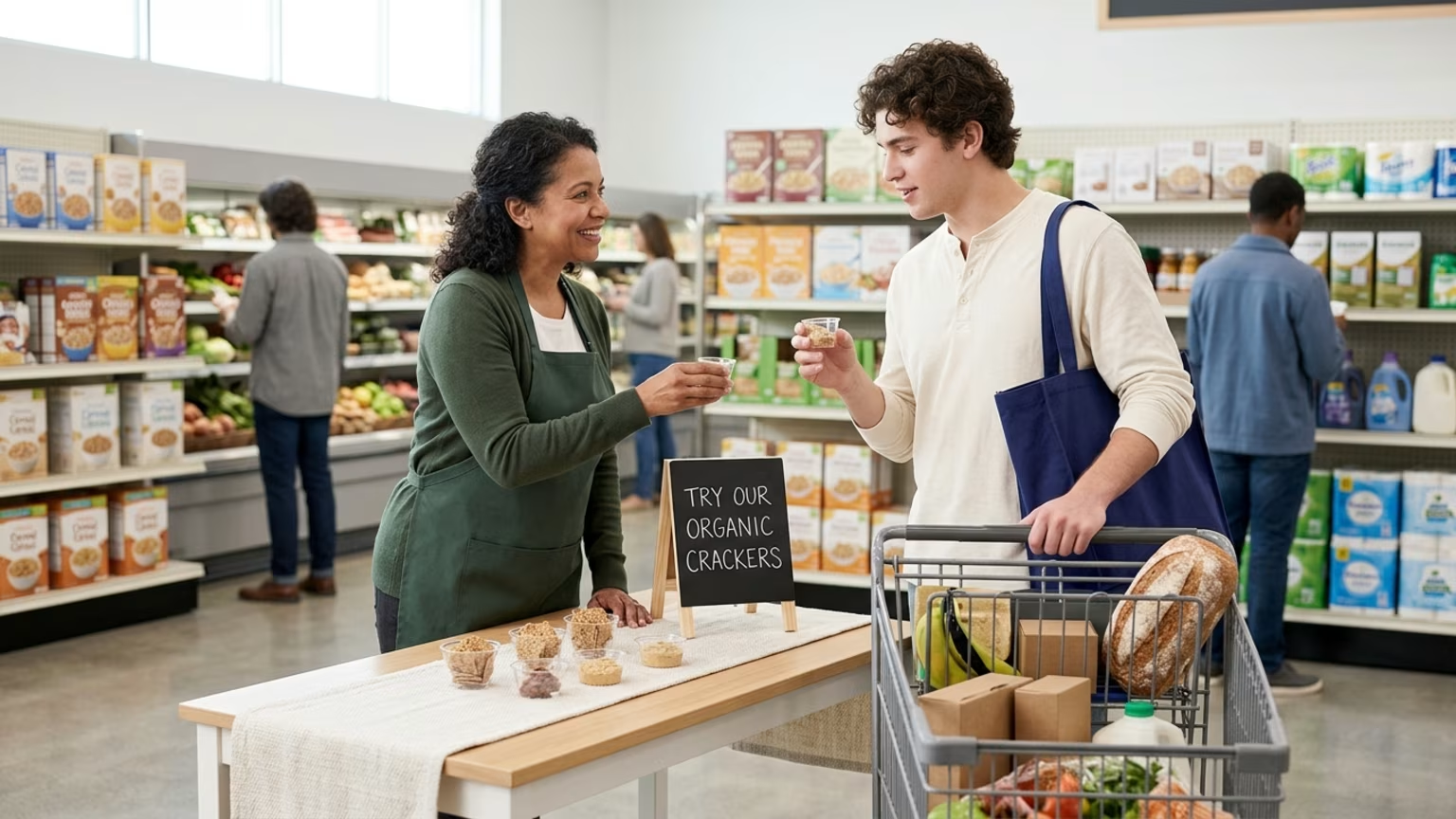
At Makai, we view this separation as a necessary evolution for physical marketing. We create hands on brand moments that connect emotionally and turn customers into ambassadors. When we deploy trained brand ambassadors for Retail Demonstrations, our goal is to drive in store sales through real conversations. We design memorable live experiences that bring brands and people together through interaction, emotion, and engagement.
But we also know that counting samples distributed is only half the job. If a brand activation generates a massive immediate sales spike but fails to move the needle on mental availability, it acted merely as a discount mechanism. Brands that rely on physical marketing to drive pipeline need real world consumer engagement. Measuring immediate activation metrics is strictly necessary for logistical health.
But those metrics must remain separate from the slower moving indicators of brand attachment. When marketing leaders blur the two, they risk optimizing their event footprint for cheap attention rather than actual pipeline growth. This is exactly why brands must define what their activation is meant to change before the first tent goes up. Our team creates experiential marketing programs built to connect emotion with action.
Through our Mobile Sampling Tours, we deliver your brand directly to audiences through on the go experiences that drive trial and awareness.
A Director of Brand Strategy in the CPG snack division shared: 'The Makai team turned our product launch into a sensory event that shoppers still talk about. From creative storytelling to flawless in-store execution, they made snack time unforgettable. We couldn't have asked for a stronger partner.' This reflects the precise transition from simple sampling to actual brand attachment.
We manage end to end Costco roadshows that bring brands to shoppers through live demos, real conversations, and measurable sales impact. In these environments, immediate sales are clear, but capturing long term mental availability requires disciplined execution. When a campaign aims to shift brand image, the physical footprint must reflect that specific objective. An activation built for immediate trial will operate differently than one built to shift premium perception.
Separating market activation from brand health forces an immediate change in how field teams operate. If immediate sales do not guarantee brand premium, operational planning must account for both outcomes separately. This changes the very nature of how companies secure permits, route their tours, and train their event staff. Teams can no longer equate concentrated consumer attention with underlying brand strength.
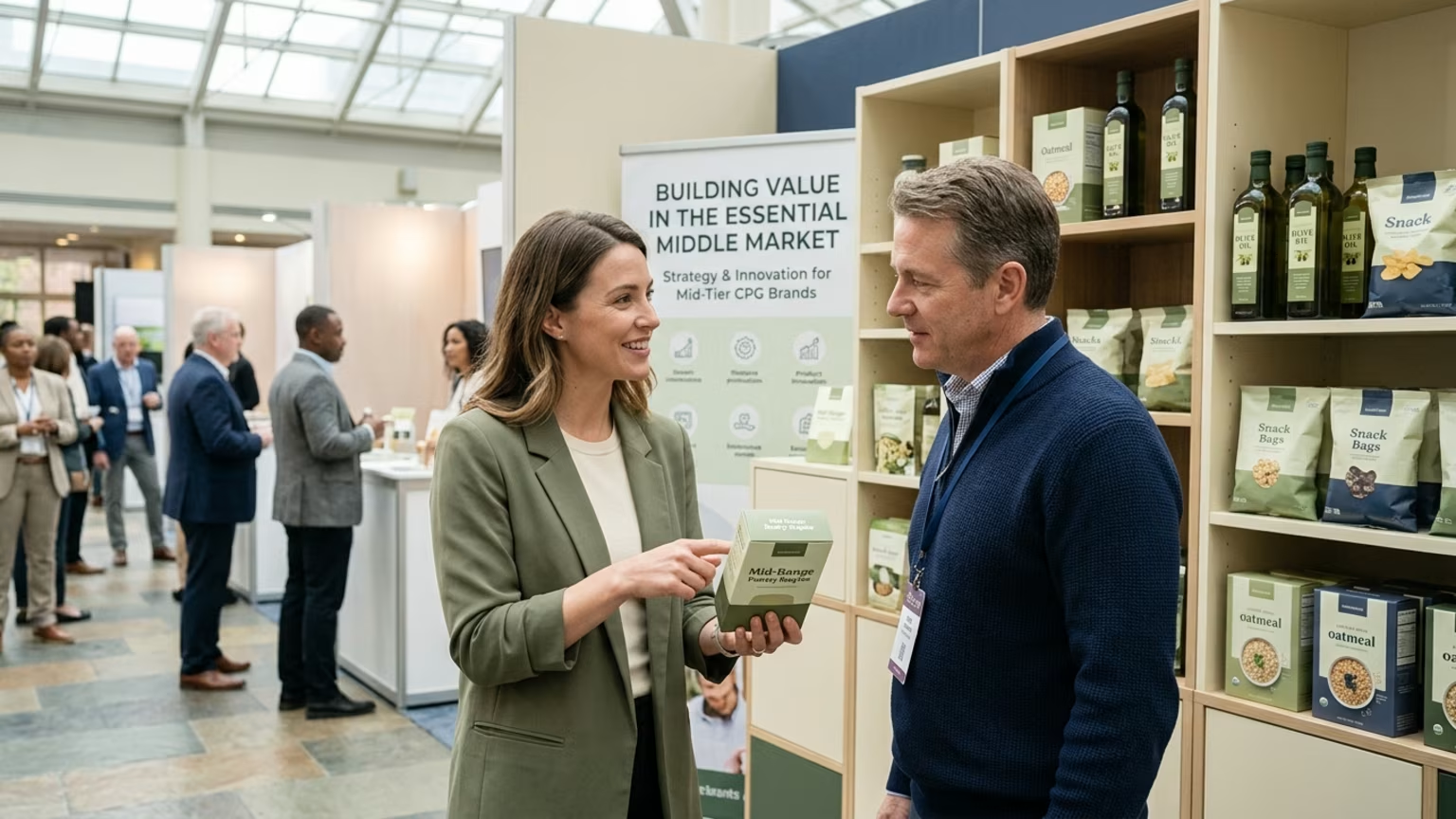
Consider the flow of a standard trade show footprint. If the only goal is immediate activation, a booth might rely on loud gimmicks and aggressive sampling to maximize badge scans. But if the goal is to improve brand image and attachment, the space requires a completely different operational layout. Teams must design environments that invite deeper conversations rather than just pushing product into hands.
You can read more about securing the physical infrastructure for large events to see this in practice. This dual measurement approach also permanently changes staffing requirements. Brand ambassadors must now balance high volume product trials with the nuanced delivery of key brand messaging. They are no longer just distributors.
They become the primary vehicle for testing whether consumers perceive the brand as premium or just accessible. If a team mismanages these logistics, the resulting data will be too noisy to read. Properly trained field teams act as a strict filter against this operational noise. Storage and Logistics become a vital part of this equation.
We store your sampling product and event gear, then ship, track, and coordinate delivery nationwide so every activation stays on schedule. When the supply chain is tightly controlled, field managers can focus entirely on the consumer interaction. Operations leaders can isolate the direct impact of high visibility moments from long term consumer sentiment. This structure helps teams standardize their approach across different regions and formats.
For brands expanding their physical presence, understanding building a consistent national presence becomes much easier when the measurement framework is clear. Measurement must match the specific objective of the physical build. For teams seeking clarity on these outcomes, reviewing moving beyond vanity metrics in field marketing offers a technical baseline for better reporting. The physical footprint must always serve the verified data.
If your latest brand activation successfully drove immediate sales but left consumer perceptions entirely unchanged, what exactly did your marketing budget buy?
When marketing leaders confuse temporary sales spikes with long-term brand equity, evaluating physical marketing performance becomes impossible. Makai solves the difficulty of navigating complex event logistics, permits, and staffing. Using Guerilla Marketing we launch creative, street level ideas that surprise, delight, and generate authentic word of mouth. We ensure every physical interaction drives documented sales pipeline rather than empty attention. Request a proposal

30 Years Experiential & Retail Activation Partner for CPG & Beverage Brands | Multi-Market Demos, Roadshows & Costco/Club Programs That Actually Sell