Robbie Thain
Founder, CEO

Monster Energy links club-channel bulk sales to large-format experiential sampling at Costco, blending indoor trials with branded outdoor environments.

In Q1 2026, Monster Beverage Corporation reported a significant shift in consumer behavior toward 12-packs and 24-packs within club channels like Costco. By July 20, 2026, the beverage company maintained a market capitalization of approximately $95.4 billion with a stock price of $95.45. To support this massive volume demand in the club channel, the brand initiated a summer sampling tour across select warehouse locations. This activation moves completely away from passive sampling by deploying large-format experiential setups designed to drive trial.
The operational reality of club store sampling is changing rapidly to accommodate bigger physical footprints. Retailers demand higher consumer engagement to justify valuable floor space. Brands must execute larger activations to stand out in crowded warehouse environments.
Costco is currently in a high-growth phase regarding its physical real estate. The retailer is opening 10 new locations across the U.S. and Taiwan between June and August 2026. These brand new warehouses provide a massive blank canvas for consumer packaged goods companies to deploy heavy experiential tours. Monster Energy is maximizing this specific retail expansion by integrating standard indoor demonstrations with larger outdoor branded environments.
This retail tactic directly mirrors the brand's aggressive live event strategy for the summer. The company is simultaneously running large-scale experiential activations at summer events like WILD BUNCH FEST. 2026 and Inkcarceration. At these major music festivals, the brand offers full-can sampling of innovation flavors alongside fan experiences like custom gear stitching. Bringing this exact level of production to a warehouse environment requires intense operational coordination from field marketing teams.
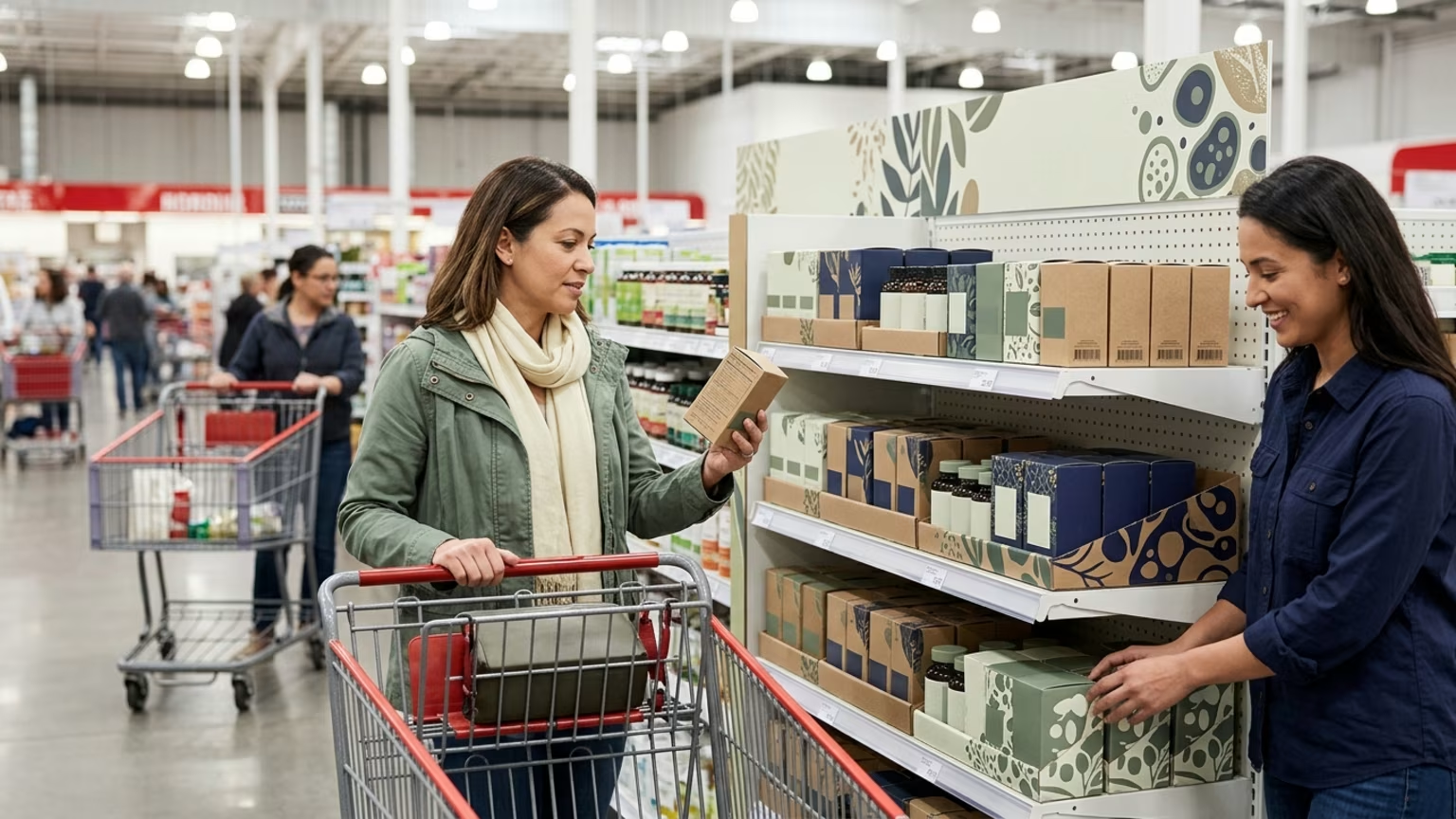
Selling beverage products in a club channel environment presents unique friction points for fast-moving consumer goods brands. Unlike a standard grocery store where a shopper might buy a single can, a Costco shopper must commit to a heavy case. Driving trial for a new product requires overcoming this high financial barrier to entry. Shoppers are highly hesitant to spend money on a 24-pack of an energy drink if they have never tasted the product.
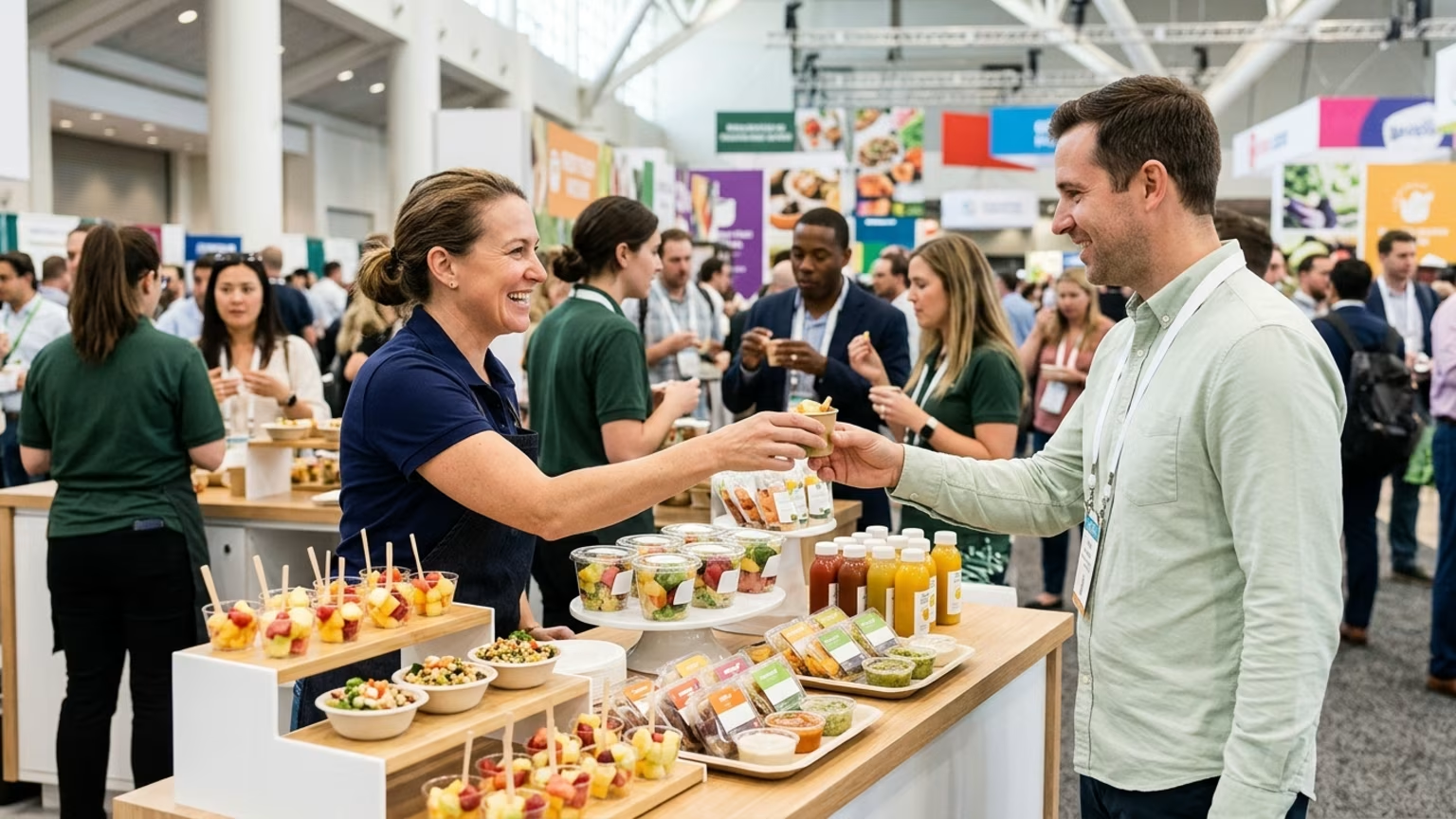
Traditional retail kiosks attempt to solve this problem by offering small sample cups near the aisle. However, these basic setups often suffer from scattered attention and poor booth flow. Shoppers grab a cup, keep walking, and immediately forget the brand name before reaching the register. This passive approach generates low-quality interactions that rarely translate into measurable return on investment.
To overcome this hesitation, beverage brands are turning to immersive marketing tactics that command total shopper attention. Creating an environment that feels like a lifestyle event helps build the emotional connection required for a bulk purchase. The brand needs to slow the shopper down, start a real conversation, and deliver an experience that builds immediate trust. Replacing small paper cups with full cans shifts the consumer mindset from passing curiosity to active participation.
Retail demonstrations often fail because they optimize for the number of cups poured rather than measurable retail sell-through. Handing out a two-ounce sip rarely provides enough conviction for a shopper to purchase a heavy 24-pack. We believe that turning a fleeting consumer interaction into a qualified purchase requires serious operational discipline. Large-format setups bridge the gap between simple product awareness and hard conversion at the register.
At makai, our team knows this is the exact operational standard required to win in modern retail environments. Experiential marketing must function as a high-performing sales channel rather than a purely creative exercise. When we manage Costco roadshows that turn sampling into sales, the primary objective is always driving verifiable pipeline. We have over thirty years of specialized national execution experience focusing exclusively on the nuances of food and beverage sectors.
Our proven methodologies for high-volume roadshows maximize pipeline by treating every physical interaction as a sales opportunity. Brands facing a trigger moment, such as a major retail expansion or a new product launch, cannot afford poor execution. A beautiful creative concept quickly becomes a logistical nightmare without operator-grade discipline guiding the process. Field marketing teams must manage end-to-end services from initial permitting to final customer relationship management reporting.
Brands must connect physical and digital touchpoints to create a unified layer across all retail and event properties. We blend physical and digital experiences by integrating QR codes, mobile technology, and real-world activations into a cohesive layer across retail and tour experiences. This connected strategy is not a standalone service but an upgrade we apply to many types of experiential work to drive better results. High-impact branded environments capture attention digitally and physically before the shopper even enters the store.
This aloha-meets-discipline approach ensures that field teams execute flawlessly across multiple regional markets. Fragmented execution is the absolute enemy of any national sampling campaign. Moving a heavy activation setup from city to city demands precise logistics and highly trained brand ambassadors. The true goal is creating memorable live experiences that compel a customer to physically place a case of product into their cart.
Running festival-grade activations outside of a club store triggers an immediate downstream effect on field operations. Managing these variables requires a specialized approach to retail marketing and strict attention to local regulations. If the reporting is weak, marketing leaders cannot prove that the activation led to actual sales lift.
Permitting becomes significantly more complicated when a brand moves beyond a standard indoor table setup. Local municipalities often require special event permits for large outdoor activations located in commercial parking lots. This administrative hurdle is particularly strict if the setup includes physical structures or interactive stations like custom gear stitching. Brands must clear these complex permitting requirements months before the production trucks ever arrive at the warehouse.
Staffing models also require a complete structural overhaul to handle the increased physical footprint. A traditional in-store demo might operate smoothly with just one or two brand ambassadors stationed by an aisle. A large-format activation blending indoor and outdoor elements demands a fully synchronized street team capable of managing heavy crowds. Managing scalable event operations means training these teams to handle full-can sampling while keeping retail floor flow moving safely.
Supply chain coordination faces intense pressure during these aggressive multi-city roadshows. With Costco opening 10 new locations in a tight three-month window, routing a heavy experiential asset leaves zero room for scheduling errors. The physical booth structures, the sampling product itself, and all promotional materials must arrive at the exact same time. Field marketing directors must establish rigid operating procedures to ensure product sampling campaigns translate into seamless physical execution.
The strategic pivot toward large-format experiential marketing directly answers changing consumer purchase habits. In its Q1 2026 earnings report, Monster Beverage Corporation highlighted this exact logistical evolution in the market. Company leadership stated, "We gravitated to six and eights, and now we're supplying 12-packs and of course, the club channels has generally been 24-packs." This aggressive shift in consumer volume dictates the absolute need for higher-impact engagement strategies to justify bulk transactions.
Is your current field marketing strategy built to drive measurable retail sell-through, or are you just counting the number of small cups handed out on the floor?

30 Years Experiential & Retail Activation Partner for CPG & Beverage Brands | Multi-Market Demos, Roadshows & Costco/Club Programs That Actually Sell