Robbie Thain
Founder, CEO

U.S. retail food and beverage unit sales fell 4% in April. See how CPG brands deploy targeted experiential marketing and retail demos to drive unit movement.
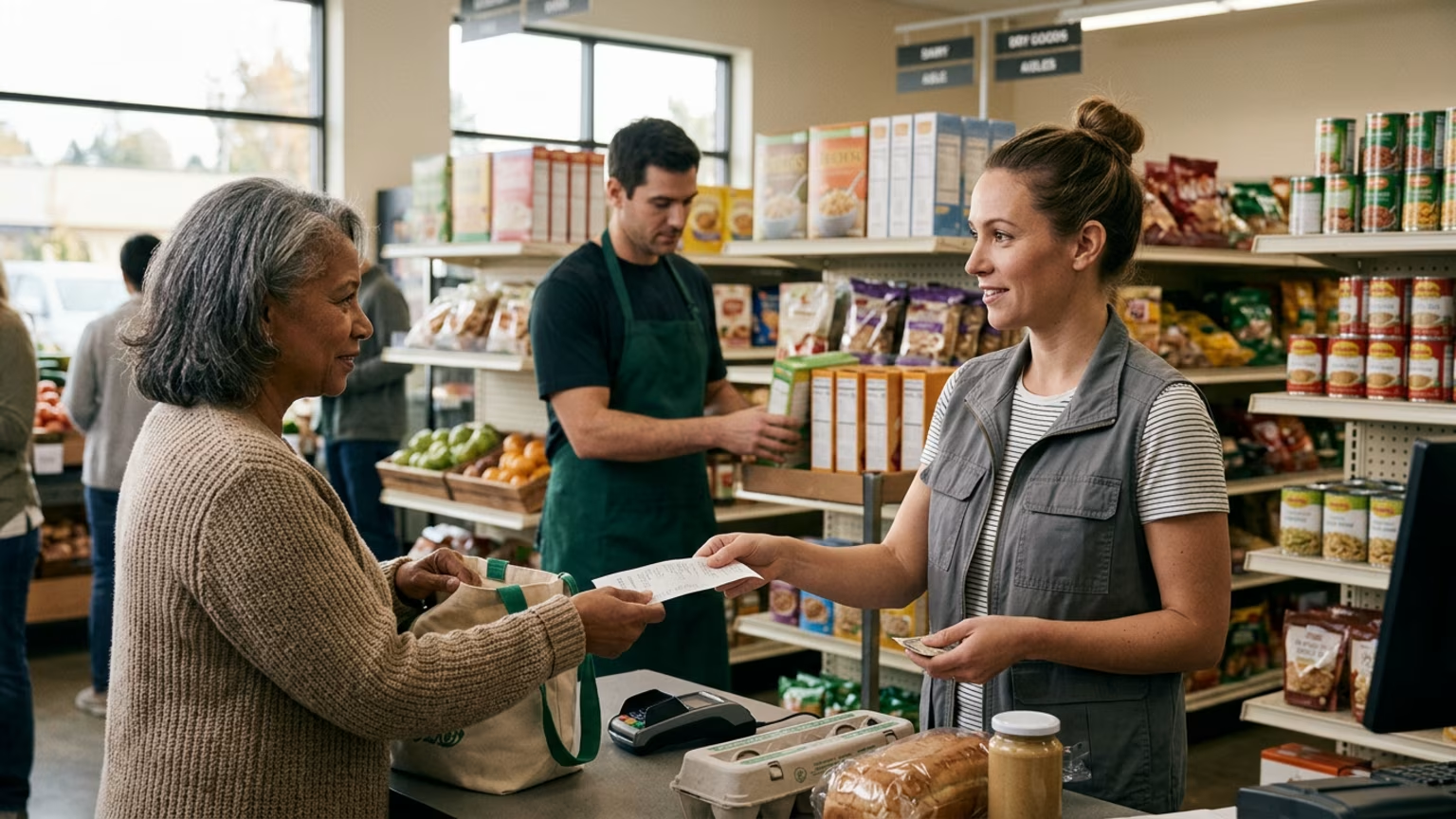
According to recent Circana data, U.S. retail food and beverage dollar sales fell 1.7% in April with unit sales dropping a steep 4%. Non-edible consumer packaged goods felt a similar pinch with revenue dipping 0.7% and unit demand plummeting 5.8%. This sharp decline proves that shoppers are actively pulling back on volume across the aisles. Brands can no longer rely on baseline demand to keep inventory moving.
The latest economic pressures reveal a cautious consumer base that demands more than passive advertising to open their wallets. Field marketing teams must immediately deploy targeted experiential activations to overcome purchase hesitation and drive measurable unit movement. Shoppers want clear value before they spend their hard earned money. Marketing leaders are under immense pressure to prove that every dollar spent generates real pipeline.
The unit pressure extends far beyond standard food and beverage categories. Discretionary general merchandise posted an even steeper decline recently, with revenue down 2.1% and unit sales plunging 10.9%. This widespread drop proves that the consumer slowdown is not isolated to one specific aisle or product type. Shoppers are scrutinizing every single purchase across the entire retail footprint.
Circana attributes this broad slowdown to sustained economic pressures weighing heavily on consumer demand. The Conference Board confirmed this sentiment when their May confidence index dipped to 93.1. Shoppers simply lack the broad optimism required to impulse buy premium products at full price. Brands must accept that the barrier to entry for a new customer has reached a seasonal high.
Walk into any major grocery retailer right now and you will feel the shift. Shoppers grip their carts tight and stare at price tags with intense scrutiny. They skip the mid-tier snacks and walk right past the flashy new beverage endcaps. The usual frantic energy of weekend grocery runs has turned into a calculated operation. Brand managers are watching their baseline demand drop and scrambling to adjust their trade spend.
A brand ambassador stands at a folding table offering free sips, but most people simply shake their heads and keep walking. When inflation concerns and housing costs dominate the news, consumers trade down to basic goods. Retail analysts report that spending is increasingly concentrated on necessary services or very specific cheap thrills. A polite smile and a branded polo shirt are not enough to stop a shopper on a budget mission. Consumers are actively looking for reasons to say no to new products.
The Conference Board reported that consumer confidence weakened recently, proving that shoppers are far from optimistic. If your activation lacks a compelling reason to buy today, your product stays on the shelf. We have been connecting brands with people through live experiences, retail programs, and national activations since 1995. Over three decades, we have built a track record of creating meaningful brand moments across the country. We know firsthand that when macro conditions tighten, marketing theater must give way to operational precision.
Brands must pivot from broad awareness pushes to highly targeted conversion campaigns. The goal is to reduce the perceived risk of a new purchase for a hesitant buyer. When a shopper is worried about wasting five dollars on a new sparkling water, a high quality retail demo removes that barrier instantly. You let them taste the value before they commit. The physical product experience is the strongest sales tool available.
This approach requires aligning your experiential marketing directly with promotional windows. You map your live activations to locations where unit demand has historically stalled. Every single engagement must offer a clear path to the register. This strategy shows how CPG brands turn live event growth into retail sales and provides a blueprint for survival. Live moments must translate into scanner data.
Experiential tactics often depend on a willingness to try something new. When shoppers feel stressed by grocery bills, they stick to their predictable shopping lists. A well designed live event breaks that pattern by offering an immediate reward. You provide a memorable brand moment and pair it with an irresistible trial offer.
To arrest declining unit volume, field teams need strict execution standards. You cannot afford inconsistent staffing or poor product availability.
Discipline on the floor dictates the numbers on the final report. Teams that master this execution often see the highest Return on Investment from their shopper marketing budgets. Operational discipline becomes a growth lever for your brand. Bad signage and weak messaging will sabotage your best efforts. You can improve this targeting by understanding why AI driven local relevance shapes retail activations in uncertain markets.
Foot traffic and smiles do not pay for shelf space. In a low growth market, your experiential programs must demonstrate undeniable incremental lift. You need hard evidence to justify your budget to the finance department and retail buyers. Baseline demand is weak right now across the board.
Track your SKU level lift precisely during the activation window. Monitor the trial to purchase conversion rate to see if the live interaction actually changed shopper behavior. Calculate coupon redemption rates to validate your promotional strategy. Compare these metrics against control stores to isolate the true impact of your live program.
If you need help structuring this reporting, you can easily Book a strategy call with our team. Proving this kind of retail demo ROI keeps your brand on the shelf next quarter. Weak retail demand increases pressure on brands to justify floor space and sampling support. You must bring evidence of lift and repeat purchase potential to every retailer meeting.
Consider a regional snack brand that faced dropping unit sales last spring. Broad digital campaigns failed to spark any meaningful retail movement in their key target markets. The brand decided to pull back on passive ads and invested heavily in structured live activations. They targeted high traffic locations where baseline sales had recently dipped. They needed a physical intervention to reverse the negative trend.
They deployed trained ambassadors who focused entirely on flavor and bulk value. The live interaction allowed shoppers to taste the premium ingredients, completely neutralizing their price hesitation. By pairing the taste test with a temporary price reduction, the brand drove a massive spike in weekly unit movement. This strategic push provided the exact sales lift needed to secure permanent placement. The brand proved that experiential strategy beats out passive discounting.
The activation showed the retail buyer that the product could perform even in a tough economy. Consumers walked away with a positive brand experience and a full size product in their cart. The field marketing team used this localized success story to expand their retail footprint nationwide.
The retail environment will always have periods of economic contraction. Unit sales may slip and shoppers will occasionally clutch their wallets a bit tighter. The silent grocery aisle does not have to be a permanent reality for your brand. When the consumer backdrop feels fragile, you have to work harder to win their trust.
By turning passive displays into active, value driven conversations, you give shoppers a genuine reason to put your product in their cart today. You replace uncertainty with proof of quality through physical interaction. Your brand becomes a tangible solution rather than just another ad on a screen. Every live engagement is a chance to rebuild your unit volume one satisfied shopper at a time.

30 Years Experiential & Retail Activation Partner for CPG & Beverage Brands | Multi-Market Demos, Roadshows & Costco/Club Programs That Actually Sell