Robbie Thain
Founder, CEO

MoZeus details how sponsor-branded prediction games capture first-party data at events. Learn why active dwell time and CRM integration beat foot traffic.
On September 24, 2026, MoZeus published an article detailing how sponsor-branded prediction games capture first-party data. The piece explains how digital games turn live sports moments into measurable fan interactions. MoZeus positions FanPlay as a free-to-play, white-label, and browser-based activation product. The company presents this tool as a direct alternative to traditional sportsbooks or broadcast-only graphics platforms.
The article lists several interactive game formats including pick’em games, bingo, and brackets. Sponsors can also utilize trivia, Higher/Lower predictions, Draft My Team, or custom sponsor challenges. MoZeus recommends tracking interaction quality markers instead of relying solely on general foot traffic. Specifically, the company highlights game starts, active time, session depth, and return plays as superior metrics. The article also references Nielsen in discussing changing sports-fan behavior, though it provides no specific Nielsen statistic.
The proposed MoZeus participation loop aims to eliminate common operational barriers. A fan locates the game, enters through a QR code, makes a prediction, and waits for the live outcome. Because the platform is browser-based, fans begin playing without downloading a native application. The user then returns for additional prompts or plays as the live event progresses.
MoZeus details several potential activation environments for these digital prediction games. These locations include stadium concourses, sponsor villages, watch parties, and in-seat mobile engagement. Brands can also deploy the games across branded microsites, tournament programs, or full-season sponsorships. MoZeus explicitly contrasts active participation metrics with impressions, logo exposure, and general concourse foot traffic.
According to the article, consented opt-ins can connect directly to entering, competing, and claiming prizes. This engagement data is subsequently sent into rewards programs or CRM workflows through a standard webhook. By defining this process early, sponsors capture consented first-party data tied directly to voluntary consumer actions. The system captures declared fan preferences that static footprint metrics simply cannot record.
While MoZeus outlines a clear operational framework, the vendor article does not provide independently audited campaign outcomes. The company says it reports directional product outcomes regarding opt-in strength, active dwell patterns, and return rates. However, MoZeus does not publish numerical performance results, conversion rates, or dollar values in the article. One industry source notes that sponsorship measurement is moving toward downloads, leads, engagement, and verified actions.
We have been connecting brands with people through live experiences, retail programs, and national activations since 1995. Over three decades, we have built a track record of creating meaningful brand moments across the country. In our operational view, digital gamification succeeds only when it actively supports a core physical product trial. Digital prediction games create engagement, but they never replace physical fabrication, staffing, or actual product sampling.
MoZeus illustrates this challenge using a hypothetical high-traffic stadium booth for a consumer packaged goods brand. In this illustrative scenario, hundreds of people pass through the booth, but few scan a QR code. Furthermore, almost nobody returns to the booth after the initial sports match begins. MoZeus explicitly labels this scenario as an illustration rather than a verified case study.
Still, this hypothetical highlights a real vulnerability for brands that rely on passive visibility alone. When marketing teams prioritize massive venue crowds over upfront performance planning and data-driven metrics, measuring true business impact becomes difficult. If a brand wants to secure actionable information, game participation must connect to a commercial action. A beverage brand must link a trivia win to a product sample, a retailer offer, or a store-locator interaction.
Securing actionable consumer data during physical product trials requires flawless field logistics and real-time first-party data. Ultimately, an activation must deliver clean and actionable information straight to the sales pipeline. We provide clear reporting on reach, trials, leads, and sales to guide next steps in campaign optimization. Our measurement approach tracks awareness, engagement, and conversion to demonstrate actual business impact.
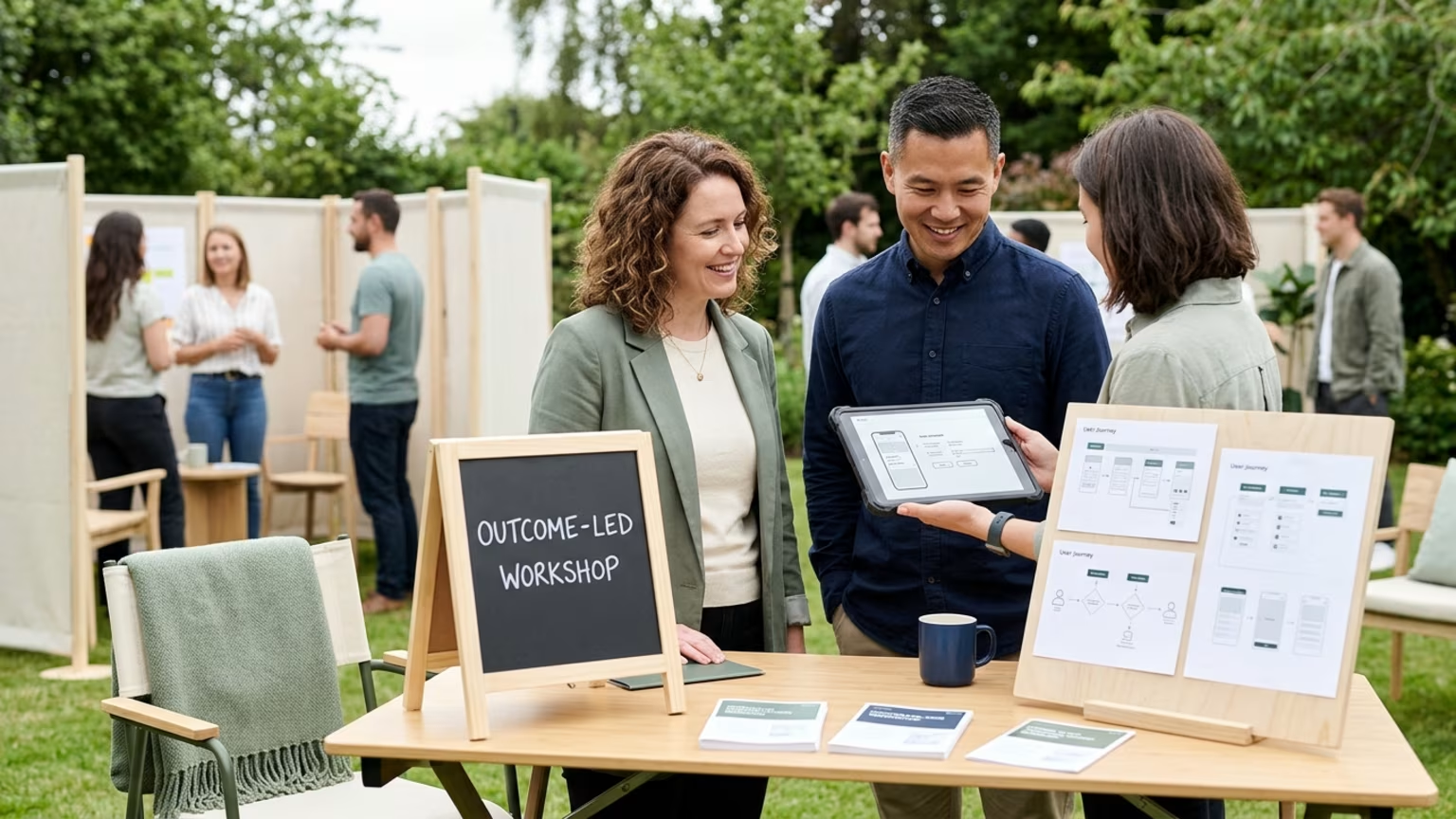
Implementing a browser-based prediction game fundamentally changes how field marketing managers design venue layouts. Gamification platforms increase active dwell time, which means visitors remain in the sponsor footprint significantly longer. If attendees stay for multi-minute trivia sessions, the venue requires robust digital connectivity and expanded physical space. Field teams must train brand ambassadors to guide visitors through digital interfaces without bottlenecking total throughput.
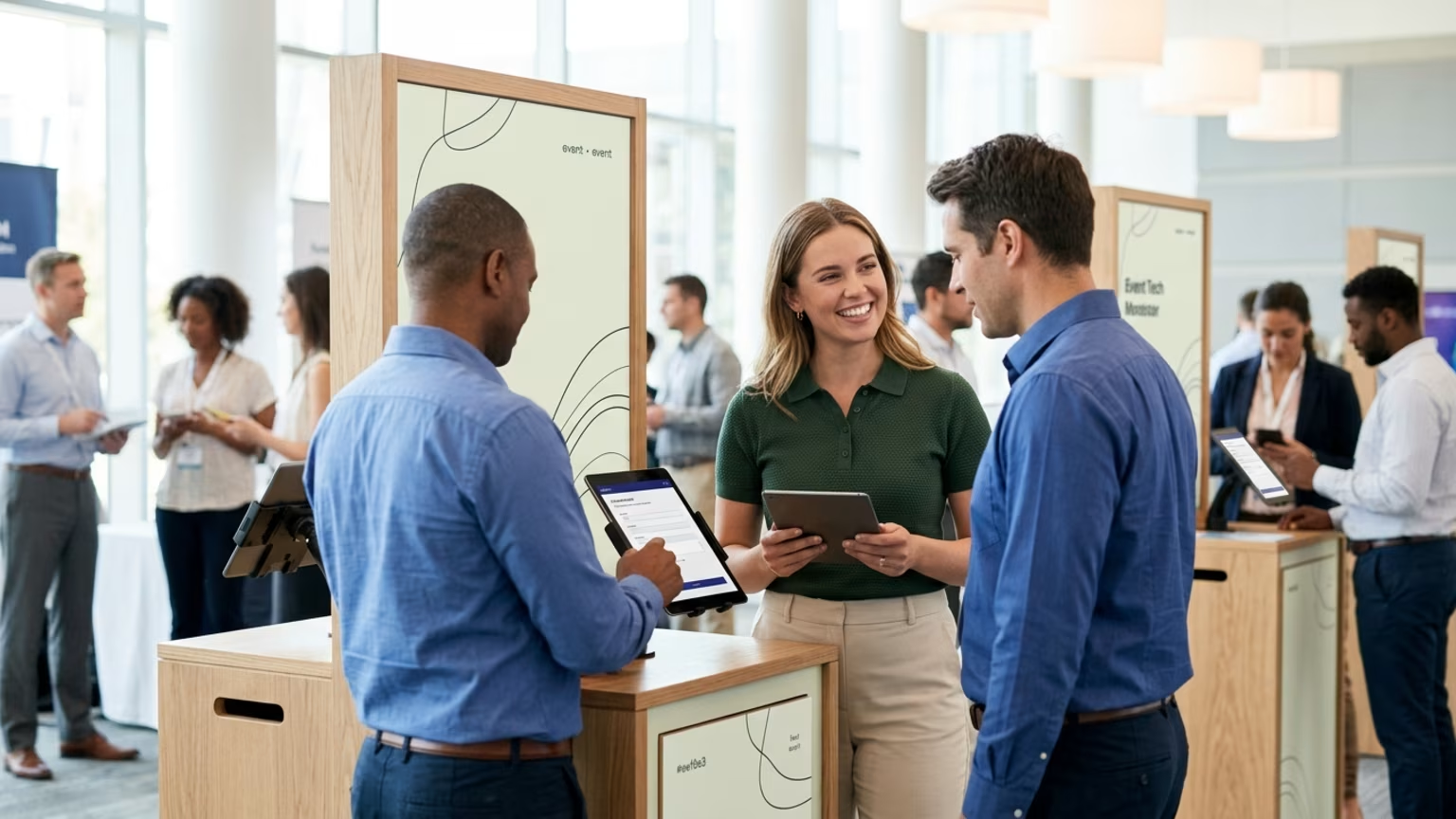
This operational shift introduces new technical dependencies that can heavily impact a live consumer event. The sponsor must maintain reliable, real-time CRM connections to ensure data flows properly during peak attendance windows. If a webhook fails during a stadium watch party, the brand immediately loses critical consented first-party data. Therefore, field logistics teams must rigorously test the complete path from QR scanning to CRM arrival.
We experienced the importance of managing extended dwell times firsthand during a major outdoor festival activation. We turned Kona Brewing's sponsorship at Santa Monica Pier 360 into a beach-themed branded environment. This footprint was built around product, giveaways, leis, and a place for attendees to spend time with the brand. Our team handled the on-site execution from setup through teardown at a festival with an estimated 50,000 attendees.
The wider sports and entertainment sector is aggressively adopting these hybrid physical and digital interaction models. Cricket Australia’s partnership with Komo Technologies provides an excellent example of active gamification applied in live settings. The organization used this technology to replace static forms and surveys with declared consumer data and measurable sponsor outcomes. When sponsorship activations prioritize active gamification, event producers must adjust staffing models to support deeper interactions.
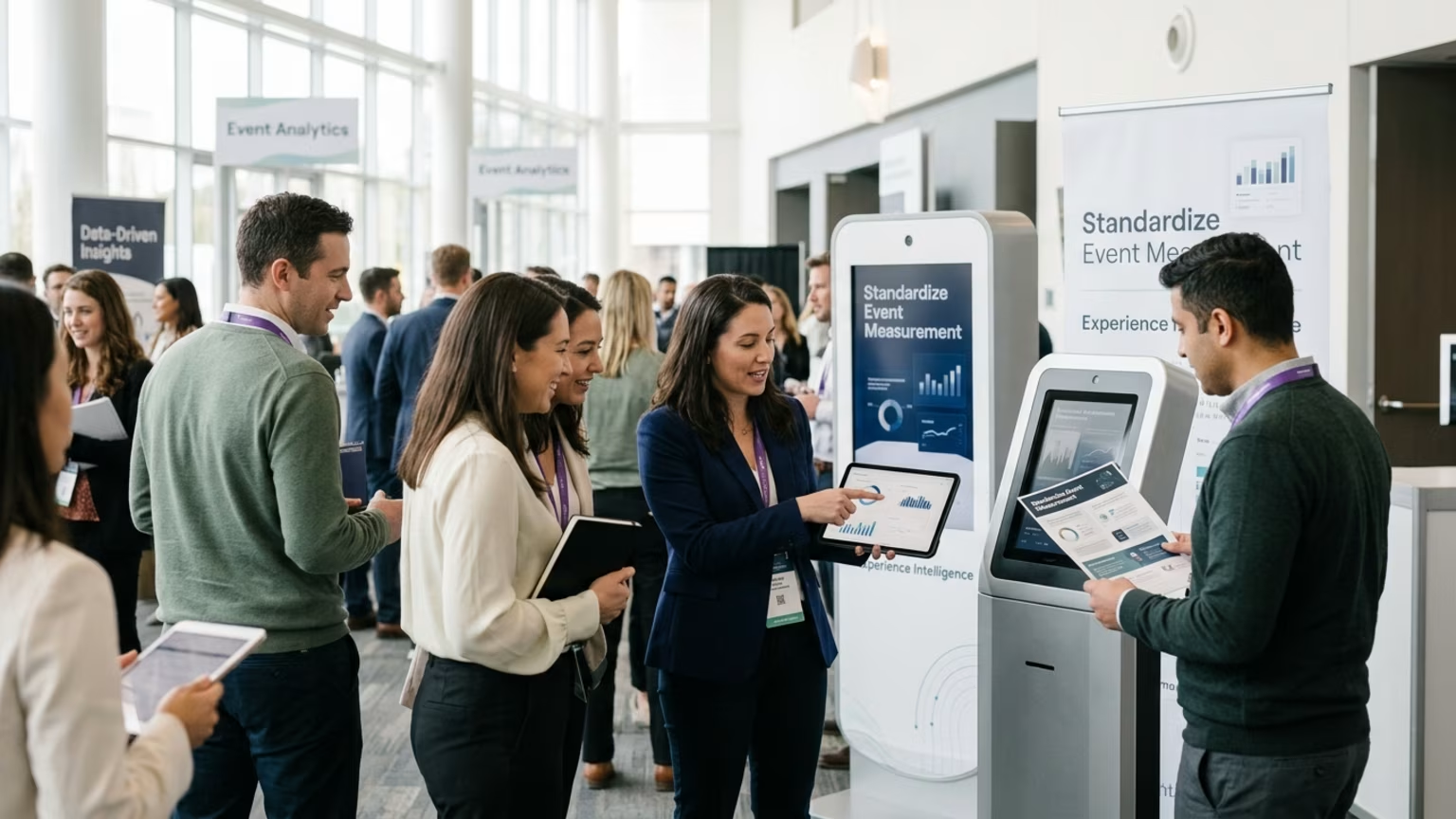
If a brand replaces a passive booth element with a live prediction mechanic, it needs a comparison framework. Marketing leaders cannot claim a prediction game is effective merely because it generated higher total scans. Instead, teams should compare the static QR code scan rate directly against the live game start rate. They should also evaluate one-time scans versus repeat participation and anonymous traffic versus consented records.
A detailed comparison must weigh the operational costs against the overall quality of the engagement data. Marketers should calculate average interaction time by format and analyze opt-in quality based on specific incentives offered. Measuring CRM delivery success and downstream offer redemption behavior provides a clearer picture of actual campaign return. Evaluating the cost per engaged participant ensures that the technology investment aligns with the experiential budget.
While first-party data capture is the primary goal, marketers still need to define data governance rules clearly. They must finalize what information is collected, what consent language is used, and how long data is retained. First-party data does not automatically mean high-quality or commercially useful data without proper campaign tagging. The buyer should require vendors to demonstrate the entire path to CRM arrival before launching the activation.
Furthermore, CRM exportability is not the exact same thing as confirmed revenue attribution. A webhook connection can transmit engagement records flawlessly, but the brand still needs rigorous follow-up discipline. A prediction game may create significant event engagement without generating product trial, purchase intent, or retail sell-through. Those specific commercial outcomes require separate measurement instruments such as controlled attribution models, retailer data, or purchase tracking.
Before approving any digital activation, marketing and technology teams must agree on the core data exchange. Teams need to establish exactly why the consumer is being asked for personal information in the first place. Marketing leaders must also determine which data fields are strictly required versus which fields remain entirely optional. Establishing these parameters early prevents the activation from collecting irrelevant data that clogs up the sales pipeline.
Brands must also consider how quickly this collected information actually reaches the central CRM system. If the data is stored locally and uploaded days later, the post-event follow-up window often closes completely. Marketing managers must verify which specific source tags and campaign identifiers are attached to each digital engagement record. Clear tagging ensures that subsequent retail purchases can be accurately traced back to the original stadium interaction.
Free-to-play programs also require careful sweepstakes compliance and strict adherence to promotional regulations. Brands must maintain clear rules and ensure the appropriate handling of eligibility requirements, legal disclosures, and prize distributions. The consumer must understand exactly what they are opting into when they provide their email address. Earning the consumer's trust through transparent consent language is just as critical as building an entertaining gamification interface.
As the sponsorship industry moves beyond passive impressions, marketing leaders face a critical operational evaluation. Integrating a digital prediction game into a physical activation requires flawless field logistics and robust technical oversight. Are your brand ambassadors and footprint designs fully prepared to convert multi-minute digital engagement into measurable sales pipeline?
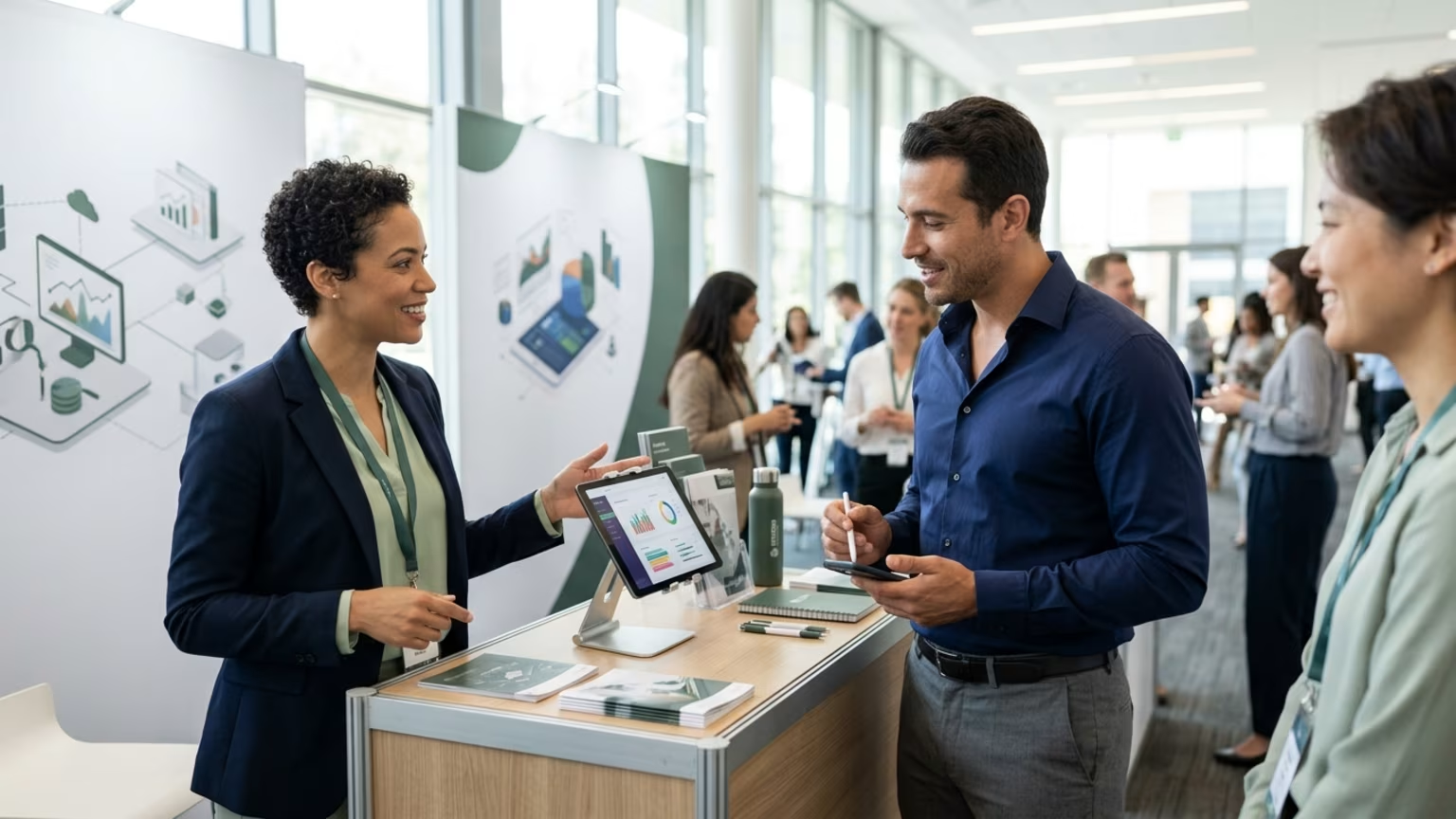
When scattered attention and poor booth flow prevent sponsors from capturing actionable first-party data, Makai redesigns the physical experience. To solve the challenge of turning massive venue crowds into qualified leads, we plan and manage trade show spaces that attract attention, start conversations, and convert visitors into customers.

30 Years Experiential & Retail Activation Partner for CPG & Beverage Brands | Multi-Market Demos, Roadshows & Costco/Club Programs That Actually Sell