Robbie Thain
Founder, CEO

Discover why brands are shifting from single-day trade shows to connected event ecosystems. Learn how to track extended measurement windows and prove true ROI.
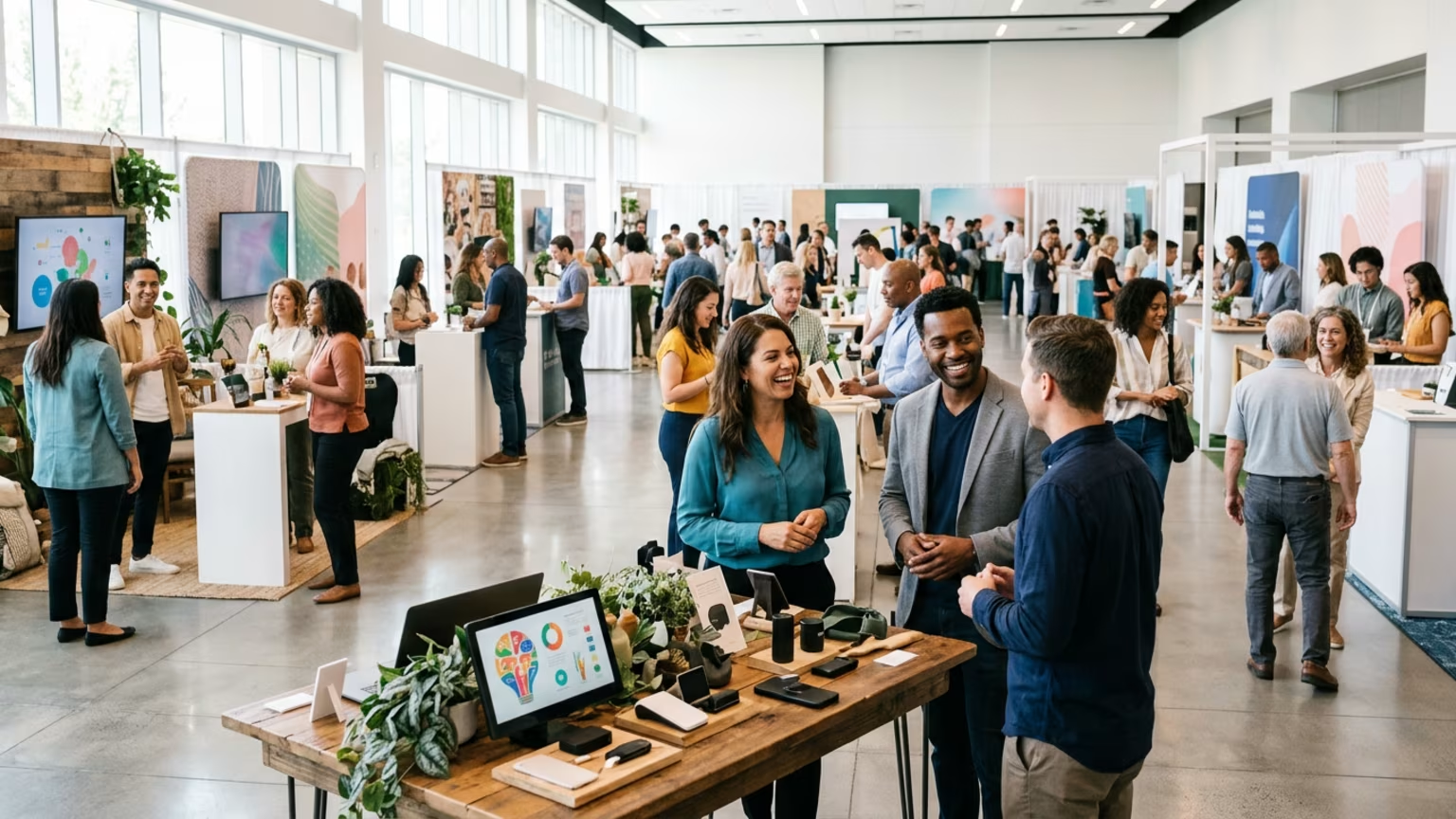
The pallets sit fully unloaded on the concrete floor. Your booth staff stands ready under the bright convention center lights. The doors open to thousands of roaming retail buyers. By Sunday afternoon you have a fishbowl full of business cards and zero proof of pipeline.
Trade shows and field marketing programs are rapidly evolving from isolated appearances into connected ecosystems with extended measurement windows. By treating an activation as a 90-day strategic arc, CPG and retail brands can finally replace vague foot traffic data with measurable Return on Investment.
Most brands treat live events as isolated spikes in activity. The marketing team spends months prepping for an expo. The field team sets up an incredible physical presence, hands out thousands of samples, and scans every badge in sight. When the trucks leave the loading dock, the momentum stops dead.
Sales reps stare at spreadsheets full of unverified leads. Retail partners receive a generic email blast three weeks late. The executive team asks for hard Return on Investment figures, and marketing can only point to total booth attendance. This creates a fragmented execution environment that looks busy but produces fog instead of evidence.
Field marketers focus heavily on the live consumer experience. Digital teams focus entirely on tracking pixels and online conversions. The disconnect between these two groups leaves massive revenue opportunities completely untouched. Brands cannot afford to treat their physical footprint as a siloed marketing channel.
We know the pressure marketing operators face to prove that live activations lead to retail sell-through. Relying on a single day of interaction guarantees weak reporting and low-quality leads. To turn consumer engagement into actual pipeline, brands must rethink the boundaries of the event itself.
The smartest players in the corporate events space are abandoning the one-off model. Industry publications like Headquarters Magazine report a massive shift where organizers design year-round engagement communities instead of standalone conferences. Brands are applying this same logic to trade shows and retail roadshows.
Consumer tech research from Parks Associates notes a market transition from a device-led model to an ecosystem-led model. In this new reality, value comes from a network of connected products working together. For experiential marketing, the live event is simply the central touchpoint within a broader data capture ecosystem.
We create experiential marketing programs built to connect emotion with action. Our process blends creativity, strategy, and data so every brand interaction drives measurable results. We craft experiences that engage all five senses, helping people not just see brands, but feel them, turning moments into meaningful business outcomes.
This ecosystem approach creates longer measurement windows. When you integrate pre-event digital touchpoints and post-event retail overlays, you generate significantly more trackable interactions per attendee. This is the only strategy to attribute sales lift and brand perception changes to your field marketing efforts.
Building an ecosystem requires treating your next sponsorship or trade show as a multi-stage campaign. You must structure a data spine that connects the pre-planning phase directly to the post-event retail follow-up.
Begin outreach 60 days before the activation. Build targeted invite lists for category managers and deploy digital teasers to capture first-party intent data early. Up-front alignment on your goals is non-negotiable for separating winners from beautiful disasters.
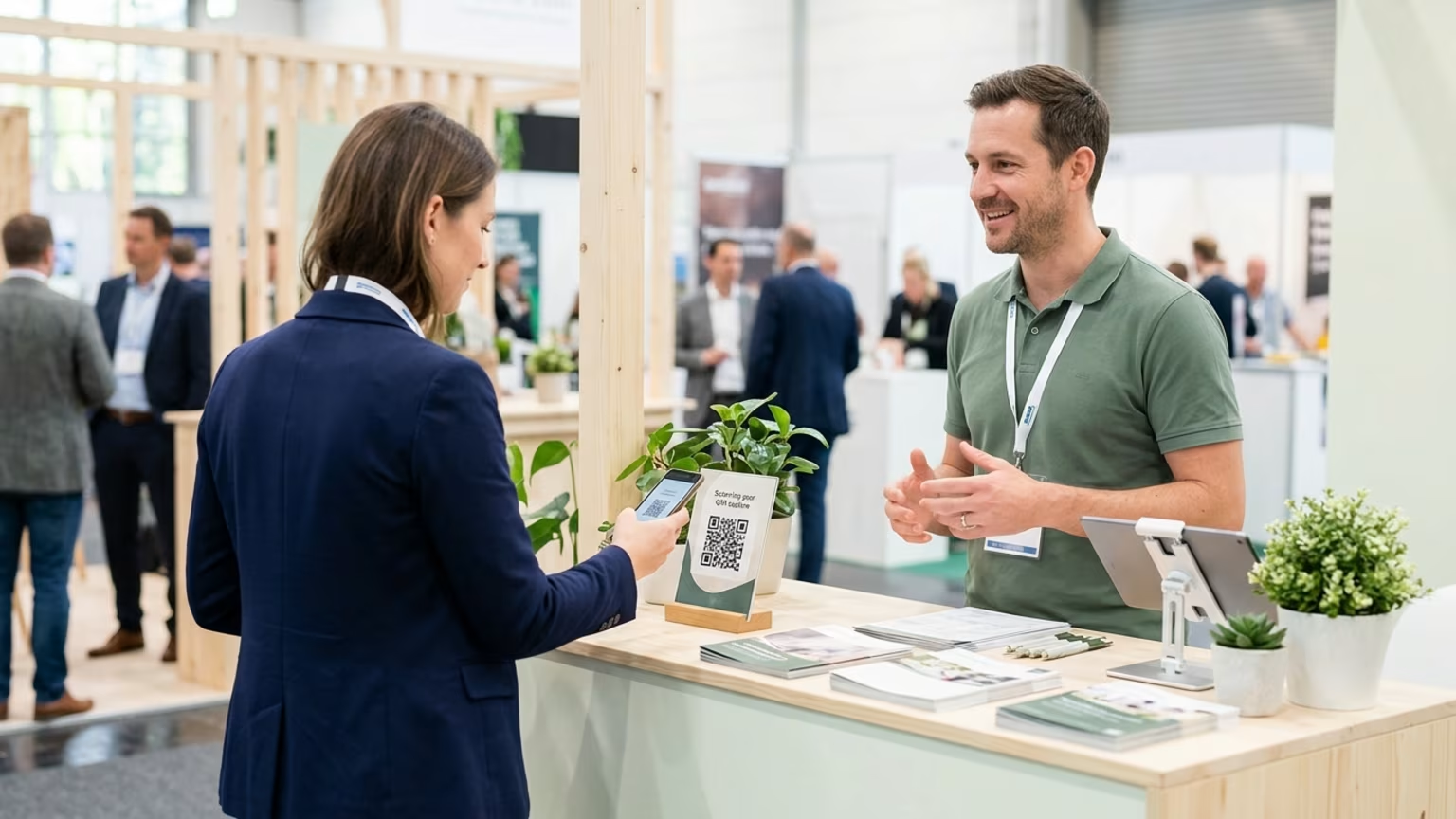
Instrument every critical interaction on the floor. Use uniform data fields across badge scans, QR codes, and sample redemptions. When you build smarter lead capture systems at live events, your regional programs roll up into one coherent national dataset.
Deploy tailored communications within 24 hours. Send retail buyers your sell sheets and specific trial offers. Route consumers toward local retail calls to action or digital loyalty programs.
The ecosystem fails if your data lives in isolated spreadsheets. You must integrate event applications directly into your main customer relationship management platform. This connection allows sales teams to view an entire timeline of buyer interactions rather than a single disjointed note.
Amplify the impact of your trade show footprint by launching localized micro-events in the same region. Deploy branded sampling trucks directly to the parking lots of key retail accounts. Bridging trade shows with retail roadshows helps compound this measurable impact over time.
Track downstream behaviors for 60 days after the event concludes. Compare retail velocity and coupon redemptions in exposed geographic areas against your control markets. Extended tracking windows provide the exact numbers needed to prove retail sampling Return on Investment beyond simple headcounts.
Smart tourism authorities now use connected applications to track visitor behavior before, during, and after a trip. Research from Precedence Research details how these data-driven experiences unlock stakeholder funding by proving long-term economic impact. CPG marketing leaders must adopt this exact same mindset for their event ecosystems.
You must look beyond vanity metrics like room nights or total booth scans. Your leadership team wants to know if the activation moved product and made retail buyers more confident. The right measurement architecture tracks both immediate lead signals and lagging financial outcomes.
Lead metrics tell you if the initial activation is working. You should track pre-event survey completions, on-site qualified buyer conversations, and immediate sample redemptions. These early indicators show if your initial targeting and booth flow actually capture attention. You can use this daily data to adjust your field staff scripts in real time.
Lag metrics require the extended 90-day window to mature completely. You should track incremental retail sales in exposed regions, the percentage of buyers who increased assortment, and documented display commitments. Tracking these exact data points proves that your physical activations generate real pipeline.
Consider a regional beverage brand launching a new sparkling water line at a major industry expo. Traditional execution would rely entirely on casual booth traffic and basic badge scanners. The team would collect a thousand names without knowing which individuals actually possessed purchasing authority. The new strategy fundamentally changes this dynamic.
The brand sends targeted physical mailers to regional category managers two months before the expo. These mailers include a unique tracking code that links to an exclusive meeting scheduler. On the show floor, trained brand ambassadors guide these qualified buyers through a dedicated VIP tasting experience. The system logs their specific flavor preferences directly into the primary sales database.
This immediate data capture triggers a personalized follow-up sequence the very next morning. The regional sales representative receives an automated alert to contact the buyer with custom pricing sheets. The marketing team then deploys a targeted digital advertising campaign directly to the buyer's corporate headquarters. This seamless transition from physical trial to digital nurture proves the undeniable power of a connected ecosystem.
Corporate meeting platforms covered by industry analysts like RTM World now ask what happens to the insights once everyone logs off. Experiential marketing directors must ask what happens after the sampling trucks leave the trade show hall. If you cannot answer that question with hard data, your budget is at severe risk.
The days of measuring success by the sheer volume of tired attendees passing through your footprint are over. Moving to a connected ecosystem model forces operational discipline and gives your sales team the reliable data they crave.
Your single actionable step today is to schedule a review of your next trade show and map out three automated follow-up messages for every scanned badge. Book a strategy call with our experiential team today to build the complete measurement architecture for your next brand activation.

30 Years Experiential & Retail Activation Partner for CPG & Beverage Brands | Multi-Market Demos, Roadshows & Costco/Club Programs That Actually Sell