Robbie Thain
Founder, CEO

Define qualified event leads with practical criteria, a proposed scoring rubric, field capture steps and clear CRM follow-up ownership.
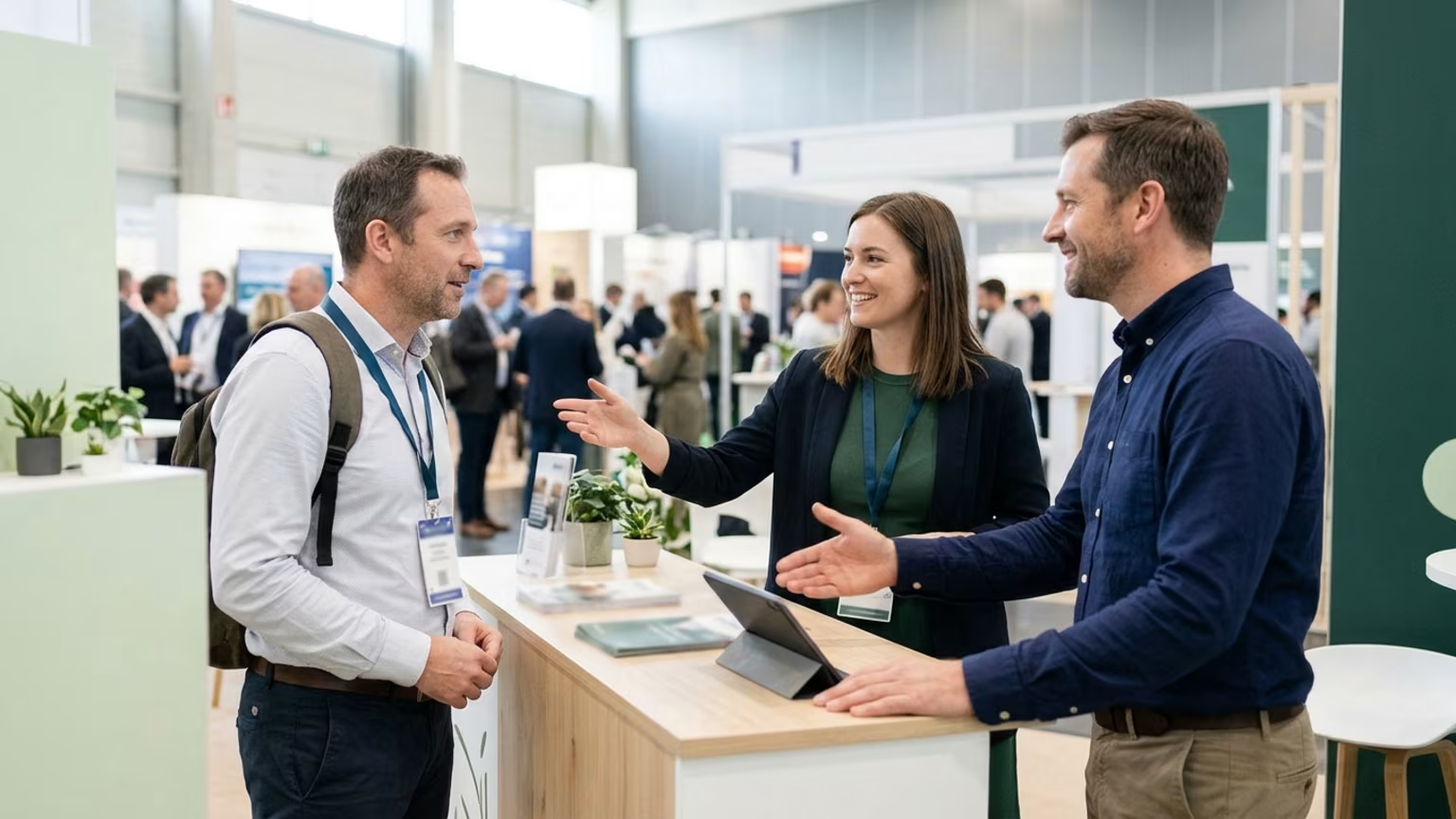
For this playbook, a qualified event lead is a captured contact whose recorded answers meet campaign criteria agreed with sales and support an appropriate next action. That definition keeps qualification tied to the campaign rather than to how many people approached a booth.
Eventdex recommends aligning sales and event staff on what makes a lead hot, warm or cold before the show. Eventcombo suggests agreeing on criteria such as budget, timeline and buying role. The practical decision is which signals matter for this activation and what action each signal should trigger.
A retail buyer discussing a business need is not the same as a shopper asking where to purchase a product. Both conversations may have value. They need different definitions of useful follow-up rather than a shared label that hides the distinction. A clear distinction between contact capture and qualification gives the brief a starting point.
Makai’s capabilities run from permitting through CRM reporting. We also store sampling product and event gear and coordinate nationwide shipping, tracking and delivery. For us, the physical interaction and the record that leaves it belong in the same operating plan.
For a mobile activation, vehicle staging belongs in that brief alongside product delivery and permitting. Those are activation-specific logistics decisions, not details resolved by a lead score. The qualification plan should describe the questions and routing without pretending to supply permit rules or vehicle clearances.
Our team designed and managed a 40 by 20 foot trade show environment for Glanbia at Natural Products Expo West 2025. We handled concept, operations, staffing and breakdown. More than 14,000 recorded product samples were distributed across the activation stations. That is a distribution outcome, not a count of qualified leads.
The distinction belongs in the CRM setup too. Before staff begin capturing contacts, marketing and sales should agree on the recorded fields and follow-up owners. Eventdex’s measurement guidance also recommends tagging leads with the event source so later opportunities and deals can be tracked back to the activation.
The following is a proposed operating framework informed by vendor guidance. Its point values are an editorial starting point, not a validated model or an industry standard. A score does not establish buying intent, and an event’s association with pipeline does not prove that it caused a sale.
Sales and marketing should define what the score bands mean before the event. Do not borrow a cutoff simply because it looks tidy. Keep the answers and notes visible beside the score so the receiving team can understand the rating.
The score has one job: help teams prioritize consistently. The record has a broader job: explain what happened and what should happen next. A field-ready approach to first-party capture keeps those responsibilities connected without treating the form itself as the strategy.
The first mistake to guard against is collecting identities without capturing the information needed for follow-up. Whether the tool is a clipboard or an app, a name and a broad interest label leave too much interpretation for later.
EventMobi’s documented workflow pairs contact capture with ratings, qualifying answers and notes. The practical lesson is to protect the conversation’s meaning, not merely its existence. A fast export is not a complete handoff if the receiving team cannot tell what the visitor wanted.
Our view is that the receiving team should be able to identify the agreed next action without guessing. When that information is missing, the record needs review rather than an automatic qualified label.
The second mistake is planning participation without accounting for the capture work attached to it. For a lead-generation objective, handing out product and recording useful buying signals are different tasks.
Makai plans and manages trade show spaces designed to attract attention and start conversations. Our view is that booth flow should account for the qualification conversation as well as the product interaction. A sampling total should not be asked to stand in for buying readiness.
The practical correction is to put the agreed questions into the field brief and choose reporting that matches the objective. That avoids asking staff to pursue volume while sales expects documented business interest from the same activity.
After the event, review whether the recorded next actions became actual follow-up. Look at which records reached their owners and which required clarification. Then examine what happened beyond the initial contact.
Eventcombo describes qualified lead rate as qualified leads divided by all captured leads. Use that measure alongside the campaign’s written qualification definition. Otherwise, a change in the definition can make comparisons difficult to interpret.
Eventdex recommends selecting measures according to the objective. Sales-oriented events may track qualified leads and opportunities through closed business. Relationship programs may focus on meetings and accounts reached. Awareness programs may focus on conversations and follow-up engagement.
InEvent describes CRM integration as a way to associate event data with contact records and report influenced pipeline. Keep that reporting connected to the commercial progression beyond participation when evaluating Return on Investment.
What to watch next: whether the agreed next action happened and whether the original qualification notes helped the receiving team act. That review is the place to adjust the next brief.
Planning the product handoff alongside the lead handoff is where Makai’s storage and logistics work connects with its support from permitting through CRM reporting. For CPG teams facing inefficient post-event follow-up and CRM routing, Makai combines nationwide product and gear delivery coordination with activations designed to generate qualified leads.

30 Years Experiential & Retail Activation Partner for CPG & Beverage Brands | Multi-Market Demos, Roadshows & Costco/Club Programs That Actually Sell