Robbie Thain
Founder, CEO

A packed booth is not a sales pipeline. Design trade show journeys around relevant product trials, qualified conversations, and useful next steps.

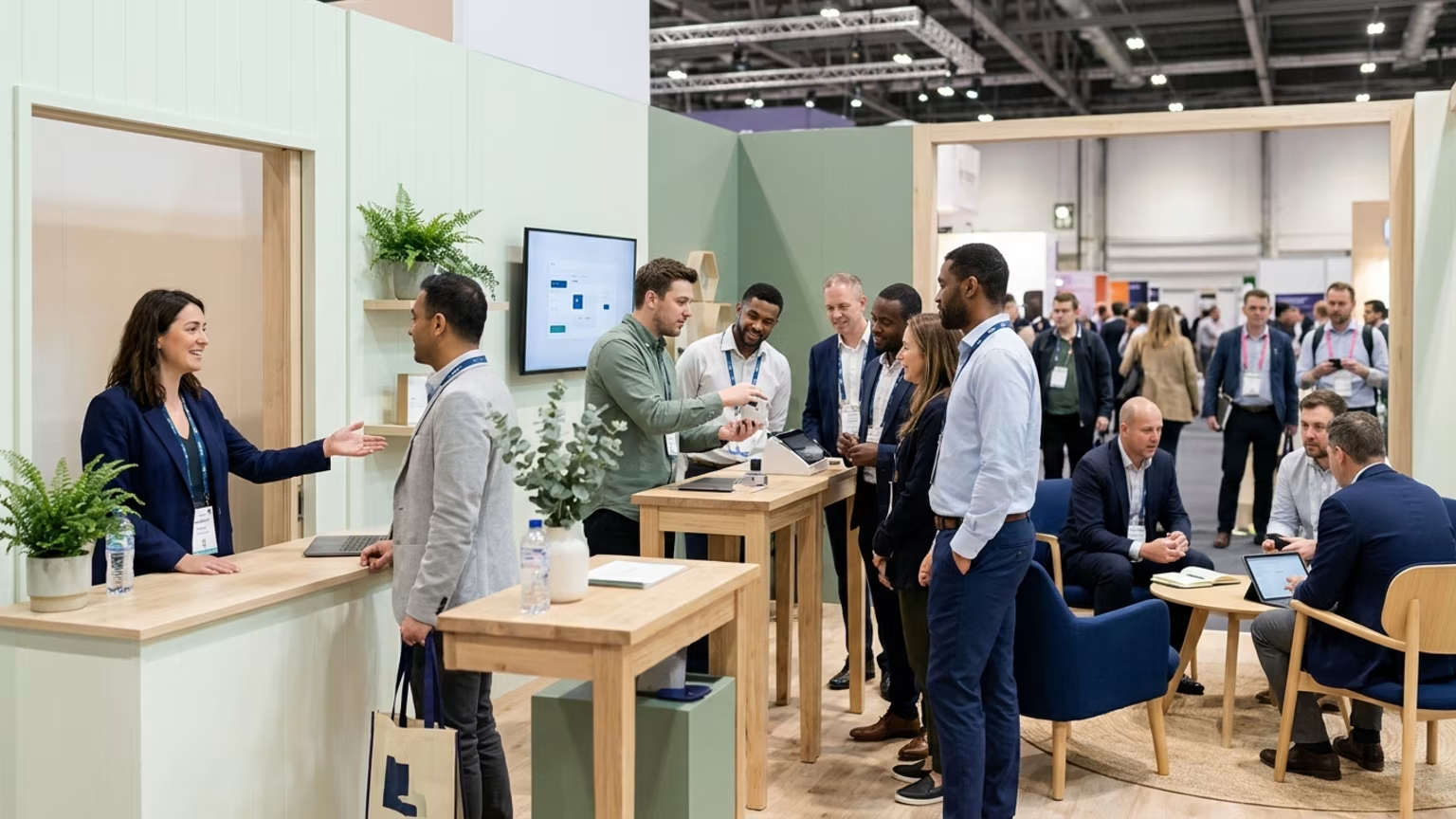
Your packed trade show booth may be the least useful photo in your post-event report. A crowd proves that people gathered. It does not establish that the right buyers found a reason to move forward.
The sacred cow worth retiring is the idea that more traffic automatically means a better activation. A product experience should earn attention and make that attention useful. Otherwise, the booth becomes a beautiful backdrop for an unanswered business question: what did this actually produce?
Our position is straightforward: design for the conversation worth having, not the crowd worth photographing. That means defining the audience before the footprint and treating a useful next step as part of the experience.
The CMO’s fear is not an empty aisle. It is approving a six-figure activation and returning with a busy recap but no qualified pipeline. Attractive design is easy to point to. Commercial progress needs a more demanding explanation.
A booth built around stopping power leaves too much unresolved when its operating plan ends at the entrance. Who is the demonstration for? What question should it answer? Where does an interested retail buyer go after tasting the product?
A published summary of Freeman’s 2025 Commercial Trends Report reports that 63% of attendees selected product samples or service demonstrations as helpful to commercial interactions. Among exhibitors, 34% selected that option. That gap deserves attention when the creative brief gives more space to visual spectacle than product experience.
An expert interviewed by IAEE points to hands-on demonstrations and access to subject-matter experts as valuable parts of a booth experience. The same practitioner recommends assessing lead quality through customer fit and meaningful next steps.
The Freeman findings reflect reported preferences across conferences and trade shows rather than a CPG-specific test. IAEE’s advice is practitioner commentary. Neither establishes that a particular layout or tactic causes sales lift.
The practical argument remains strong: plan around what a visitor needs to understand and what the business needs to learn. A rendering should support a visitor journey with a commercial purpose, not substitute for one.
For Makai, the alternative is warmth with an operating plan. Aloha is an attitude toward people, not an excuse to be casual about execution. We believe a welcoming interaction and a disciplined commercial objective belong in the same brief.
Our work includes hands-on experiences and trade show environments designed to generate qualified leads. The operational side matters just as much: our capabilities run from permitting to CRM reporting. A kind conversation should have somewhere useful to go.
We designed and managed a 40 by 20 foot trade show environment for Glanbia at Natural Products Expo West 2025. It brought think!, Isopure, Optimum Nutrition, and Amazing Grass into one coordinated space. We handled concept and operations as well as staffing and breakdown. More than 14,000 recorded product samples were distributed across the activation stations.
That sample count documents distribution. It should not be relabeled as qualified pipeline. The lesson we take from the project is that substantial execution and honest reporting belong together: say what happened before deciding what it means commercially.
Warmth has a practical place in the experience too. We turned Kona Brewing’s sponsorship at Santa Monica Pier 360 into a beach-themed branded environment with product, giveaways and leis. It also gave attendees a place to spend time with the brand. Our team handled on-site execution from setup through teardown.
The principle we carry into this argument is simple: hospitality deserves operational attention. A welcoming setting and a serious business purpose are not competing ideas. The goal is to make product trial and useful conversation feel connected rather than forcing visitors through an unrelated attraction.
Before debating an entrance feature, define the people the experience is meant to serve. IAEE’s practitioner guidance offers useful criteria: intended customer fit, decision-maker involvement and target-account relevance. For a CPG team, those criteria should shape the distinction between consumer trial and retail-buyer engagement.
A clear audience brief should answer:
These answers give the creative team something more concrete than “make it memorable.” They also give the staffing plan a purpose beyond greeting everyone who passes.
A practical way to map the journey is to connect attention with a useful action:
The floor plan should support those choices. A demonstration area and a buyer conversation do not have to compete for the same attention. Planning should protect space for serious buyer discussions while keeping product trial approachable.
Brutal operational discipline does not mean making the experience cold. It means refusing to leave the important parts vague. Warmth is the welcome; relevance is the reason to stay; a clear next step is the commercial purpose.
Start by separating activity from progress. Visits and samples describe what happened on the floor. Qualified conversations describe whom the team engaged. Meetings and pipeline entry describe what moved forward.
IAEE’s article identifies meetings and demo requests as possible outcomes to track alongside pipeline entry and eventual customer conversion. For a CPG activation, that guidance supports a reporting approach that keeps different outcomes distinct rather than rolling everything into one impressive total.
A useful set of definitions could include:
The point is not to collect every possible metric. It is to know what each metric means before using it to defend the investment. Teams need to distinguish lead volume from lead quality without pretending that either tells the entire story.
This changes the questions worth asking during planning. Instead of “How do we draw more people?” ask “How will the right people recognize that this experience is for them?” Instead of “How many badges can we scan?” ask “What would make the follow-up useful enough to agree on here?”
Return on Investment belongs in the commercial discussion. But an engagement count should retain its actual meaning rather than being treated as a financial result. Product trial matters on its own terms; qualified pipeline matters on its own terms.
That distinction also makes the recap more useful. A strong report should show where the experience delivered its intended value and where the journey stopped. That gives the next activation a specific planning problem to solve rather than another vague request for more buzz.
Core takeaway: Demand an experience that can explain whom it served and what useful next step followed. Good design belongs in the plan, but it does not excuse weak qualification or an unclear visitor journey. The better standard is human warmth backed by disciplined execution: relevant trial and knowledgeable conversation connected to a defined commercial purpose. A beautiful booth is an asset only when the operating plan gives it meaningful work to do.
A crowded trade show booth needs more than visual appeal when the leads lack commercial relevance. Makai plans and manages trade show spaces that attract attention and start conversations, with activations focused on qualified leads for premium CPG brands facing scattered attention and poor booth flow.

30 Years Experiential & Retail Activation Partner for CPG & Beverage Brands | Multi-Market Demos, Roadshows & Costco/Club Programs That Actually Sell