Robbie Thain
Founder, CEO

TSNN’s interview highlights exhibitor ROI uncertainty. Makai examines the implications for audience briefs, staffing, booth flow and reporting.

On November 5, 2026, TSNN published an interview with Freeman executive Ken Holsinger at IMEX America 2026 about attendee registration, decision-making and exhibitor Return on Investment (ROI). The conversation put a practical issue in front of exhibitors: understanding the business case before the show begins.
TSNN reports that only 16% of exhibitors felt they understood their path to a reasonable ROI before an event. For CPG and beverage marketing leaders, that finding makes the pre-show operating brief worth a closer look.
The development is new reporting on participation decisions and exhibitor expectations. Treat it as planning intelligence rather than a new event requirement.
Freeman says its research draws on a September 2026 survey of 3,459 attendees and exhibitors. Its own wording of the ROI finding differs from TSNN’s: only 16% said events were very or extremely effective at explaining the ROI of exhibiting or sponsoring.
Audience information sits near the center of the issue. Freeman reports that 56% of surveyed exhibitors wanted to see what types of organizations would attend. Trade Show Executive’s summary adds that 46% felt organizers fell short on information about attendee roles, levels and responsibilities.
Registration timing also needs careful interpretation. Trade Show Executive reports that 84% of surveyed attendees decided to attend at least four weeks before registering. Freeman reports that 54% started planning their onsite activities at least three weeks ahead, sometimes while still deciding whether to attend.
The two 16% findings use different wording and do not measure actual returns. These survey responses also do not prove a market-wide increase in late registration or provide a staffing formula, permit requirements or a guaranteed method for improving ROI.
The useful operational distinction is between the registration count and the information needed to prepare. A brand can request audience details and define its intended outcomes before the final attendance picture arrives.
Our stance at Makai is straightforward: keep the welcome warm and make the business purpose clear. A generous product conversation and a disciplined operating plan belong together.
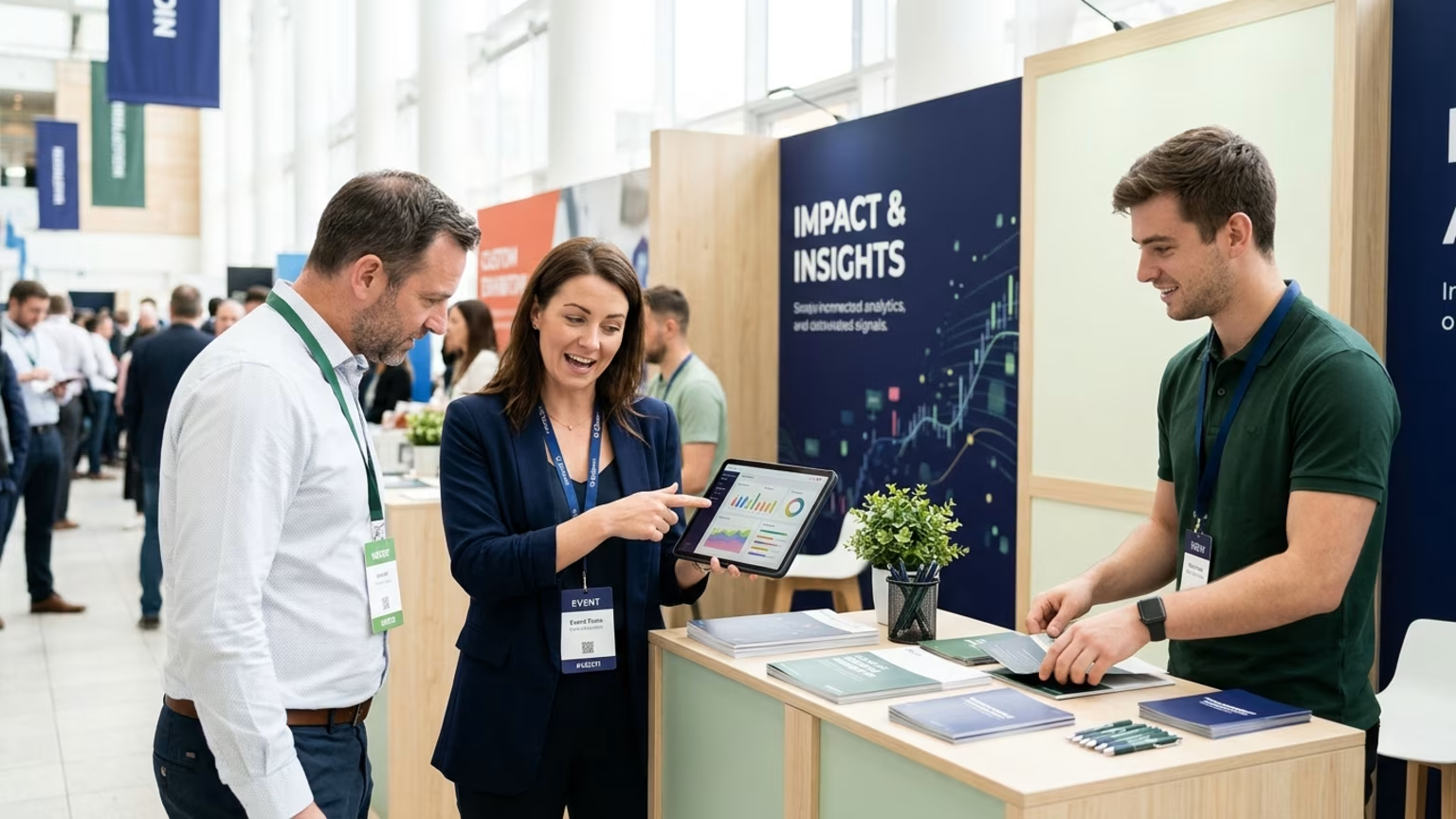
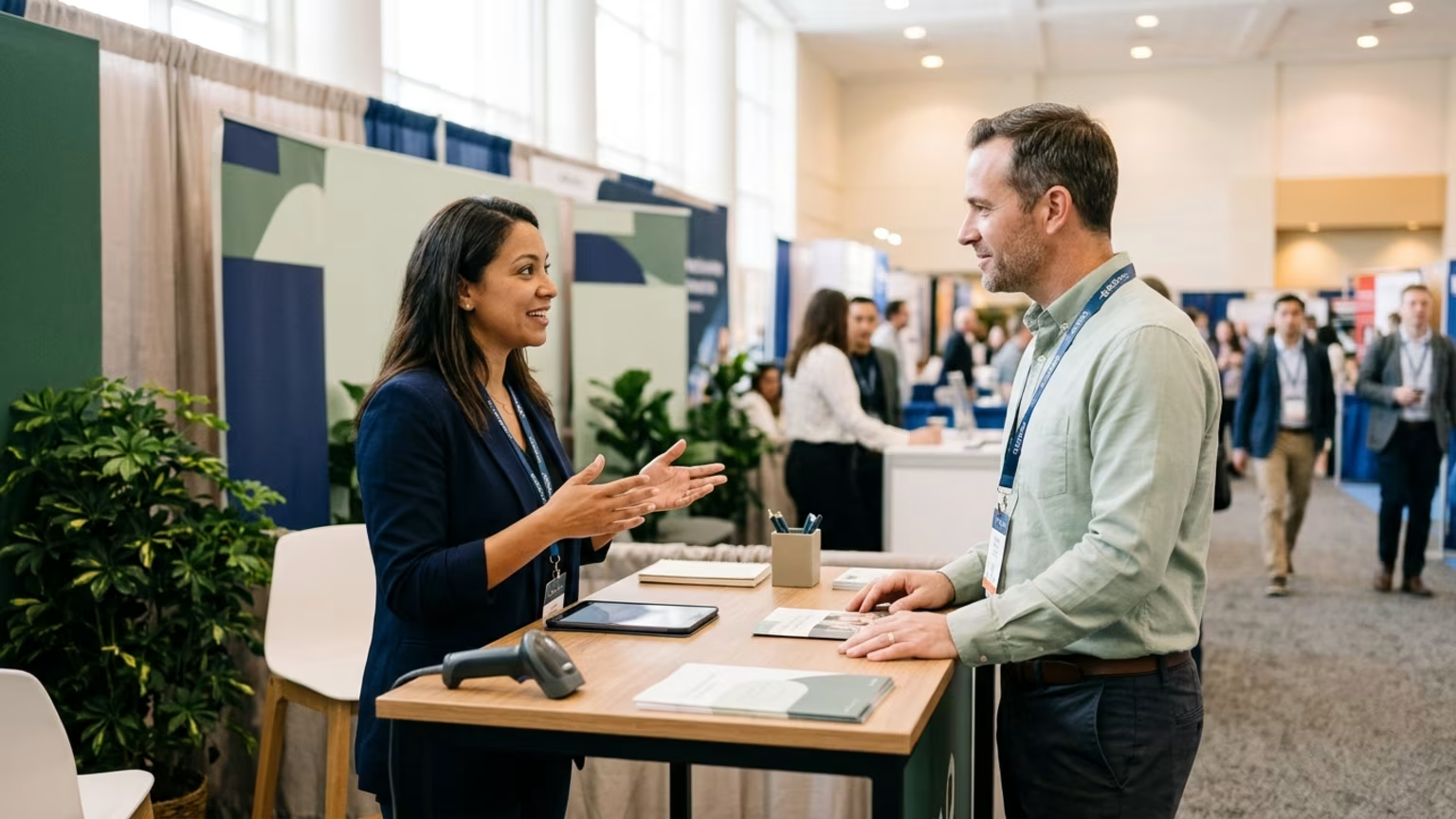
We plan and manage trade show spaces designed to attract attention and start conversations. Our experiential campaigns are built around turning face-to-face consumer interactions into qualified leads for premium CPG brands. That positioning makes early clarity about the audience and intended outcome more than an administrative concern.
For a beverage or snack brand, product trial may be the interaction. The intended business outcome might be a qualified lead or a retailer meeting. Those are related choices, but they should not be treated as interchangeable when the team defines success.
We have executed over 1000 campaigns across all 50 states. That breadth informs our view that a national campaign needs a clear purpose at the individual activation level. A show’s overall appeal should not replace an explanation of how that particular audience fits the brand’s objective.
The research supports bringing these decisions forward:
These are planning recommendations, not a promise of improved returns. They follow the research’s information gaps and Makai’s focus on measurable business outcomes.
Our reporting covers reach and trials alongside leads and sales. The lesson here is to choose the relevant evidence before the activation, rather than asking the final report to settle a goal the team never agreed on. An operating brief that connects objectives to field execution gives that discussion a practical home.
Trade Show Executive reports that 74% of surveyed exhibitors begin preparing six or more months before an event. It also reports that 40% want attendee intelligence to help prepare. The planning response should connect that advance work to the information exhibitors say they need.
The staffing discussion should begin with the interactions the brand intends to support. Product trials and qualified business conversations belong in the same campaign plan when both are objectives. They still need distinct definitions of a useful outcome.
Makai’s retail demonstrations use trained brand ambassadors to support real conversations and product trials. Our trade show work focuses on spaces that attract visitors and support customer conversations. Those capabilities reinforce our view that staffing should follow the purpose of the experience, not just an attendance estimate.
For the marketing leader, the practical implication is to connect staffing discussions to the agreed audience and interaction goals. Our perspective on planning field capacity around the work addresses that operating question without making headcount the starting point.
Audience intelligence should also inform the footprint discussion. A booth intended to introduce a product has a different stated purpose from one intended primarily to maintain customer relationships. The operating brief should make that purpose visible before the space is finalized.
Trade Show Executive reports that surveyed exhibitors’ objectives included building brand awareness at 70% and acquiring new leads and prospects at 64%. Introducing products or solutions was an objective for 56%. Those findings support asking which objectives matter for the specific activation rather than assuming every exhibitor wants the same experience.
For a CPG team combining sampling with business conversations, the planning recommendation is to describe both interactions in the brief. The footprint can then be evaluated against its intended use rather than its appearance alone.
A visitor’s route through the space should make sense in relation to that purpose. This is an operating recommendation grounded in Makai’s trade show positioning: plan the environment around attention and conversation, with the intended customer outcome in view.
Earlier ROI planning should bring the physical requirements into the same discussion. Permitting and product logistics still belong alongside staffing and the experience brief.
Makai’s integrated services extend from permitting to CRM reporting. We also store sampling product and event gear, then ship and track those materials while coordinating nationwide delivery. Those capabilities connect the physical side of an activation with its reporting needs.
The practical sequence is to establish audience fit and the intended outcome, then connect field preparation and reporting to those choices. That is the role of operational planning behind a live brand experience.
The registration story should not become a reason to leave the physical plan undefined. It should make the distinction between confirmed information and planning assumptions clearer. The resulting brief should give the field team an understandable account of whom the activation is for and what the interaction is meant to accomplish.
The same discipline applies to measurement. If qualified conversations are the agreed objective, the reporting discussion should address how those conversations will be documented. If product trial is the objective, trial reporting belongs in the plan from the beginning.
At Makai, our measurement approach tracks awareness and engagement alongside conversion. We believe those categories are most useful when the team knows which business question each one is meant to answer.
The aim is not to turn every welcoming interaction into an administrative exercise. It is to give the activation a clear purpose and give the marketing leader evidence relevant to that purpose. Registration totals can remain one planning input without becoming the definition of success.
Skift Meetings quotes Holsinger saying, “We’re advertising to people, not businesses,” in its coverage of the research. The outlet connects that point to the evidence prospective attendees may need to make an internal case for attending.
Freeman reports that only 18% of surveyed attendees approve their own funding. That finding gives the value proposition a practical audience beyond the person considering registration.
For an exhibiting brand, the parallel is worth keeping in view. The event proposition should explain why a relevant person would spend time with the brand. The internal investment case should explain why that interaction matters to the business.
Our view is that those explanations should support each other. A useful encounter for the attendee and a meaningful outcome for the exhibitor are better starting points than a booth brief built around volume alone.
As a CMO or marketing VP planning the next show, will your team share a clear picture of whom it hopes to meet and what would make those encounters worth the investment?
Late registration figures leave the harder question of trade show Return on Investment unresolved. Makai supports CPG marketers and food and beverage brand managers facing that measurement problem through exhibit planning and management focused on visitor engagement, customer conversations and qualified leads rather than attendance totals alone.

30 Years Experiential & Retail Activation Partner for CPG & Beverage Brands | Multi-Market Demos, Roadshows & Costco/Club Programs That Actually Sell