Robbie Thain
Founder, CEO

Nielsen’s survey reports event-media spending plans and uneven measurement. Makai examines the implications for CPG staffing, logistics and reporting.
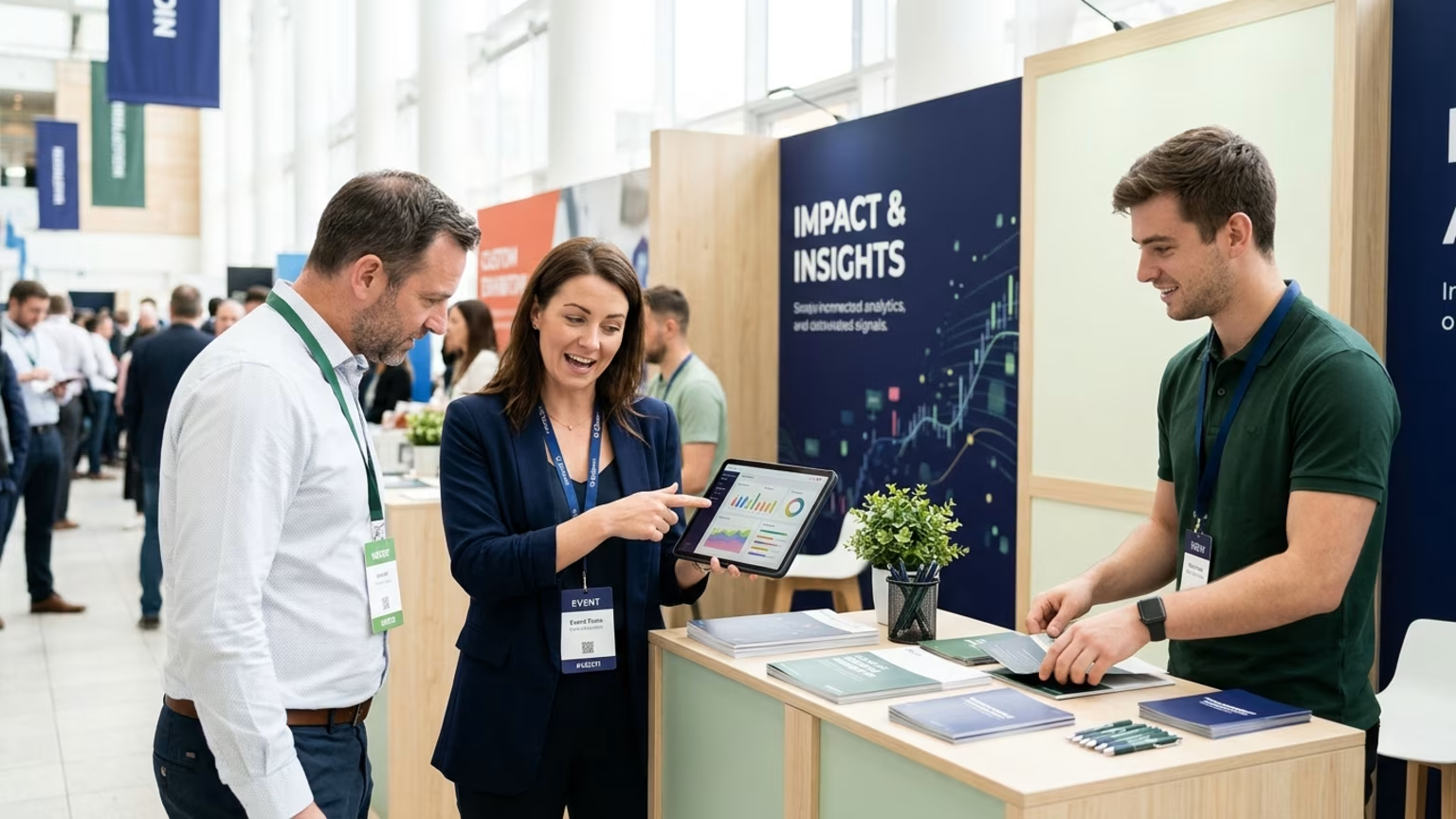
On November 3, 2026, MediaBrief reported findings from Nielsen’s Top 10 Signals Shaping Marketing Budgets in 2026 that paired planned sponsorship and event-media growth with uneven cross-channel measurement. Nielsen’s report draws on a survey of 1,200 marketers across six markets. For U.S. CPG leaders, the useful question is not whether an international spending headline predicts their next budget. It is whether the field operation can connect that budget to a business outcome.
According to MediaBrief’s account of Nielsen’s survey, 94% of Indian marketers expected to increase sponsorship and event-media spending. The reported U.S. share was 75%.
On holistic Return on Investment (ROI) measurement across traditional and digital media, the reported shares were 42% in India and 48% in the U.S. That puts a directly relevant U.S. result beside the international headline without treating the markets as interchangeable.
Nielsen’s report overview separately says 49% of marketers use hybrid or full-funnel metrics to measure combined impact. Its framing is broader than events alone: brand leaders need to prove business impact across fragmented media channels.
These figures describe reported plans and measurement practices, not audited spending or campaign outcomes. Sponsorship and event media is broader than live-event production, and the coverage does not show how increases would be allocated. The accessible material does not include the full questionnaire or detailed methodology, so the meaning of holistic measurement is not fully specified. These findings neither assess event-specific lead quality nor establish that integrated reporting causes better sales.
Our stance is simple: protect the human experience and give it a clear commercial purpose. A warm welcome and a disciplined operating plan belong together. More planned investment is a reason to get specific about the work, not a reason to count every crowded booth as progress.
Makai creates face-to-face campaigns and trade show activations designed to capture attention and generate measurable sales pipeline. We also manage the less visible work of storing sampling products and event gear, then shipping and tracking them while coordinating nationwide delivery. For us, those are parts of the same business assignment.
In a beverage or food activation, the product experience is not separate from the operating brief. We believe business outcomes should shape the activation before launch, including what the team needs to deliver and what the report should distinguish. That is a more useful response to the survey than assuming a larger sponsorship allocation automatically deserves a larger footprint.
Our reporting covers reach, trials, leads and sales. We track awareness, engagement and conversion to guide campaign optimization. The point is to keep different forms of response visible rather than call every interaction a qualified lead.
For a marketing leader responsible for pipeline, this brings logistics into the accountability discussion. We believe the experience and the evidence deserve a shared operating brief. Neither should be treated as something that gets resolved after the creative concept is approved.
Practitioners quoted by Adgully in October 2026 recommend setting event KPIs before activation. Their examples include sampling, redemptions and QR scans alongside leads, enquiries and sales. The coverage distinguishes attention measures from evidence of direct commercial outcomes.
Our operational reading is that this distinction belongs in the production brief, not only in the final report. It affects the work assigned to people, the space reserved for conversations and the movement of sampling stock. Those choices are where a broad measurement ambition becomes an executable field program.
Makai’s retail demonstrations use trained brand ambassadors for real conversations and product trials aimed at in-store sales. Our trade show work focuses on spaces that attract attention and start conversations with potential customers. These formats share a face-to-face setting, but they do not justify an identical definition of success.
When trial is the objective, the brief should make product engagement visible. When qualified leads are the objective, the brief should account for the conversation needed to establish relevance. In our view, staffing and activation logistics deserve to be discussed against those tasks rather than against crowd size alone.
This is also a useful way to evaluate the workload behind an activation idea. We believe the discussion should start with the interaction the brand wants to create. The staffing conversation can then stay connected to that purpose instead of becoming a separate exercise in filling positions.
We plan and manage trade show spaces as places for interaction, not just displays. From that positioning, our recommendation is to assess the footprint against the intended response. A product trial and a lead conversation ask different things of the space.
That does not make a larger booth the default answer. It makes the purpose of the space the starting point. A plan should show how the promised brand moment and the relevant conversation can coexist, rather than treating visual attention as evidence that either happened.
We also integrate QR codes and mobile technology into retail, event and tour experiences. We see that connected layer as a way to link participation with a next step, not as permission to substitute a scan for a commercial outcome.
For us, the practical test is whether the physical and digital elements serve the same objective. An interaction should not become harder to interpret simply because it touches both. The reporting categories need to remain clear even when the experience crosses formats.
Our storage and logistics work covers sampling product and event gear through nationwide delivery coordination. That capability matters to this discussion because an activation budget supports an intended experience as well as the materials required to stage it. In our view, the logistics brief should be legible beside the activation objective.
For a trial-led program, that means treating sampling product as part of the experience plan rather than as an unrelated shipment. For a trade show presence, it means keeping event gear within the same operational conversation as the space it supports. The useful question is whether the delivery work supports what the campaign is meant to accomplish.
Arrival is an operating milestone, not a sales result. Keeping that distinction clear respects the work of logistics without asking it to prove something it does not measure. It also keeps the commercial discussion focused on what happened once people encountered the brand.
Within our approach, reach and trials sit alongside leads and sales rather than replacing them. We believe a commercially grounded event report should retain those distinctions when results are discussed across channels. That makes it possible to ask what was observed before debating how much impact should be attributed to the activation.
Nielsen frames cross-channel business impact as a measurement challenge. Our recommendation is to carry that question back into field planning: identify the intended outcome and keep observed activity distinct from attributed or estimated effects. A shared reporting view is more useful when its labels remain honest.
The goal is not to make every metric tell the same story. We believe it is to let each measure answer the question it is suited to answer. That gives the CMO a clearer basis for evaluating both the execution and the commercial response.
The survey gives CMOs a reason to examine the relationship between investment intent and execution design. For Makai, the practical response is a coherent brief that connects the experience with staffing, product movement and the evidence expected afterward.
That brief can be ambitious without becoming complicated. Its discipline rests in knowing what the experience is for and what the operation must make possible.
As you weigh your next event commitment as a CMO or VP, will your operating plan make the business outcome as clear as the experience itself?
Event ambition has to share the operating plan with product delivery and evidence of return. For CPG teams facing difficulty measuring Return on Investment, Makai develops campaigns around qualified leads and handles storage, shipping and tracking of sampling products and event gear with nationwide delivery coordination.

30 Years Experiential & Retail Activation Partner for CPG & Beverage Brands | Multi-Market Demos, Roadshows & Costco/Club Programs That Actually Sell