Robbie Thain
Founder, CEO

TeamSnap launched a national sampling network spanning over 40 youth sports facilities. We review how CPG brands must adapt field logistics to measure sales.

On September 30, 2026, TeamSnap announced TeamSnap Sampling, a national product-sampling offering powered by its TeamSnap Activation Network. The launch formally opens a massive network of youth sports leagues, tournaments, and facilities to physical product distribution. Logistically, the announcement transitions youth sports from a fragmented local sponsorship model into a consolidated distribution channel for CPG brands. It shifts the primary engagement zone from the digital application directly to the physical field.
The company says its network spans leagues, tournaments, and more than 40 partner sports facilities across North America. They explicitly named Spooky Nook and SCHEELS Sports Park at Legacy Point as primary examples of these partner locations. TeamSnap operates across more than 100 sports and activities, serving more than 19,000 organizations. The network taps into a community of more than 30 million parents, players, and coaches.
The company reports reach figures of more than 100 million for its sponsorship network and 40 million for its facility network. The announcement does not explain how those reach figures are calculated. It also does not define whether they represent unique people. However, the operational shift for marketers is highly significant.
Brands can now route physical inventory directly into suburban sports complexes rather than relying solely on grocery store aisles. TeamSnap says brands have run campaigns through its network involving more than 2 million samples. The announcement notes Kraft Mac & Cheese and Capri Sun have partnered with the sampling network. However, the release provides no campaign-specific outcome metrics for those two brands.
TeamSnap does provide specific performance figures for another participating brand. The company reports that Meiji Hello Panda’s league sampling campaign was associated with a 64% lift in brand familiarity. They also report a 22% increase in monthly purchases among participating league families. The announcement does not disclose the comparison group, survey methodology, or baseline sales data.
For brands that rely on physical product experiences, this development represents a massive surface area for new customer acquisition. Reaching families during a weekend tournament guarantees a high concentration of target consumers. However, placing products in a new setting requires highly disciplined execution. We run experiential and engagement programs coast to coast with local crews, smart logistics, and permit expertise.
This allows us to launch fast and maintain quality consistency in every region. From major metros to smaller markets, our nationwide infrastructure allows us to activate brands wherever their audiences are located. But distributing units is only the first phase of a successful physical campaign. When teams distribute units outside a retail footprint, the distance between the trial and the cash register increases.
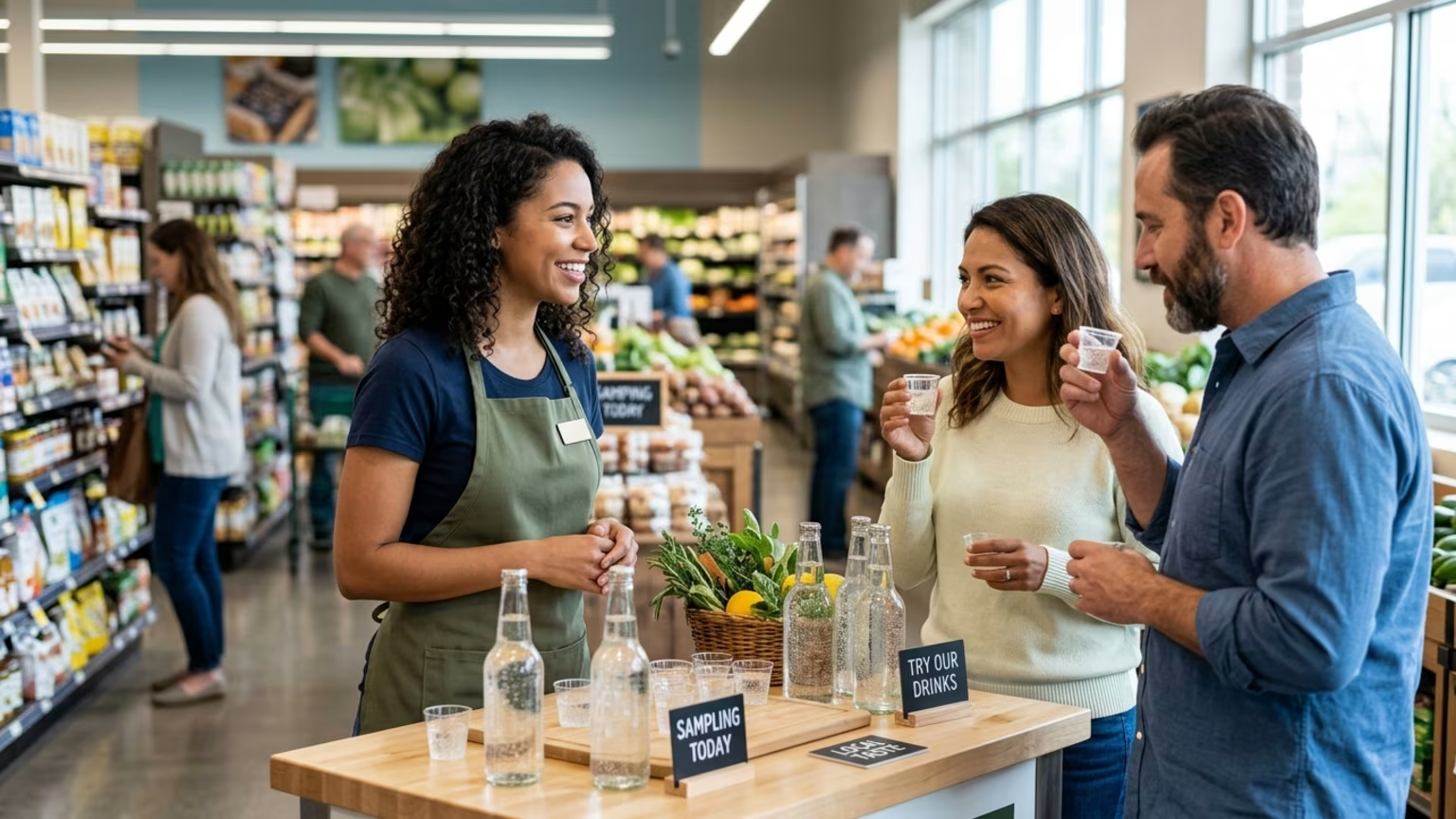
Marketing leaders must bridge that gap intentionally to avoid wasting product. If a team hands out a sports drink at a soccer field, they need a mechanism to drive that family to a local grocery store later. We specialize in creating retail demos, product sampling programs, and roadshows that bring brands face to face with their audiences. Each program is designed to drive trial, build consumer relationships, and accelerate retail velocity across multiple locations.
Without strict operational controls, a facility campaign risks becoming a pure branding exercise rather than a measurable sales driver. Scaling a campaign across multiple geographic markets requires rigorous operational oversight. We ran the Little Debbie Share a Smile Tour as a 21-market mobile activation using a branded truck, a custom trailer, and Cupcake Smart Cars. This massive undertaking required daily coordination across different municipal jurisdictions.
Across the tour we distributed 224,534 cupcakes and generated more than 2.4 million brand impressions. We also captured 9,500 photos alongside 340 videos, while earning coverage from three local television stations. Hitting those numbers meant maintaining strict oversight of inventory and daily local schedules. When brands push into distributed sports facilities, they face similar multi-market complexities.
Managing dozens of simultaneous activations demands precise logistics and local coordination. Teams must actively rethink in-store sampling programs to align with these new off-site touchpoints. Creating a seamless connection between the soccer field and the supermarket aisle requires careful advance planning. Activating across dozens of independent sports facilities fundamentally changes field logistics.
Brands accustomed to standardized grocery aisles must adapt to varied venue layouts. Moving pallets of product into a location like SCHEELS Sports Park at Legacy Point requires precise staging. You have to coordinate storage, temperature control, and local staffing for each unique environment. This variability forces field marketing teams to update their standard operating procedures completely.
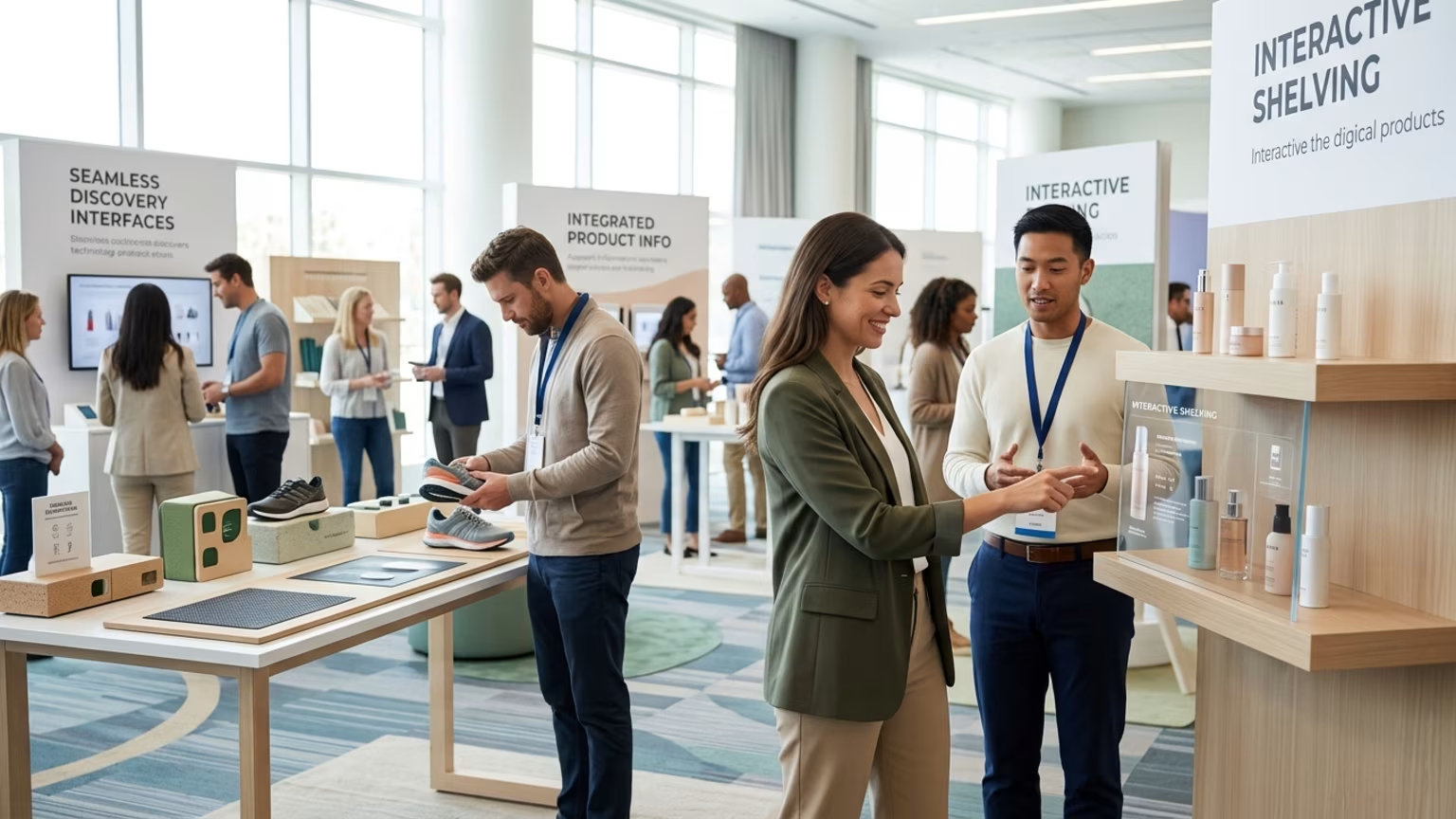
Teams must audit their supply chains to ensure timely delivery to suburban sports complexes. When executing conventional trade shows, the operational variables remain confined to a single building. We designed and managed a 40 by 20 foot trade show environment for Glanbia at Natural Products Expo West 2025. This project brought think!, Isopure, Optimum Nutrition, and Amazing Grass into one coordinated space.
We handled concept operations, staffing, and breakdown logistics. Across the activation stations we distributed more than 14,000 recorded product samples. In contrast, running a program across 40 different sports facilities fractures that physical control. Field teams must replicate high operational standards across dozens of distinct physical locations simultaneously.
Brands must establish clear protocols for on-site activation. For instance, brands planning multi-location product sampling need to verify local health department regulations independently. Permitting for food and beverage distribution varies wildly between municipal parks and privately owned facilities. Local ambassadors must be trained to navigate these nuances without disrupting the ongoing sports events.
Hiring reliable brand ambassadors for weekend sports tournaments presents its own unique challenge. Field marketing directors cannot simply reallocate their weekday retail demonstration staff to Sunday morning soccer matches. Teams must build localized talent pools capable of managing high foot traffic while maintaining strict brand messaging guidelines. This requires robust training programs that ensure every ambassador understands the specific product talking points.
Waste management also becomes a significant logistical hurdle when distributing thousands of wrappers at a weekend tournament. Furthermore, measurement systems must evolve to match this distributed model. TeamSnap executives note they provide brands data that sampling occurred. However, operators must define exactly what constitutes a verified sample.
Does a delivered unit mean a box was dropped off, or does it mean a brand ambassador handed it to a consumer? Teams should align on these definitions before shipping their inventory. Establishing strong data capture methods ensures that field teams track inventory depletion accurately. It also helps justify the budget benchmarks for street team and product sampling activations against actual consumer interactions.
Relying on a modern product sampling playbook for conversion requires hard proof that product reached the target buyer. TeamSnap executive Nicole McCormack said the offering is intended to place products with sports families in familiar settings. She also noted it aims to provide brands data that sampling occurred. McCormack framed context and audience relevance as critical to these activations.
She noted, “Sampling only works if it reaches the right family at the right moment.” This perspective aligns with the operational reality of field marketing. Hitting the right demographic in a trusted environment often yields higher engagement than intercepting strangers on a random sidewalk. When families spend their entire weekend at a sports complex, their dwell time increases significantly.
This extended presence creates a valuable window for brands to introduce new products naturally. As physical sampling moves beyond traditional retail environments, the logistics of reaching families at sports facilities will test operational readiness. A successful campaign requires more than just shipping product to a suburban soccer complex. Brands must tightly connect these local field interactions to measurable retail outcomes.
As you evaluate new distribution channels, one operational question remains paramount. How will your brand ensure that a product sampled on a Saturday morning sports field translates into a verified retail purchase on a Sunday afternoon?
Translating off-site product distribution at busy sports facilities into verified grocery store purchases requires highly structured local execution. To solve scattered attention and poor booth flow during crowded events, Makai manages every logistical detail so our trained brand ambassadors can drive in store sales through real conversations and product trials.

30 Years Experiential & Retail Activation Partner for CPG & Beverage Brands | Multi-Market Demos, Roadshows & Costco/Club Programs That Actually Sell