Robbie Thain
Founder, CEO

Coordinate compliant product demonstrations across multiple locations with our operational checklist for inventory, permits, CRM routing, and field safety.
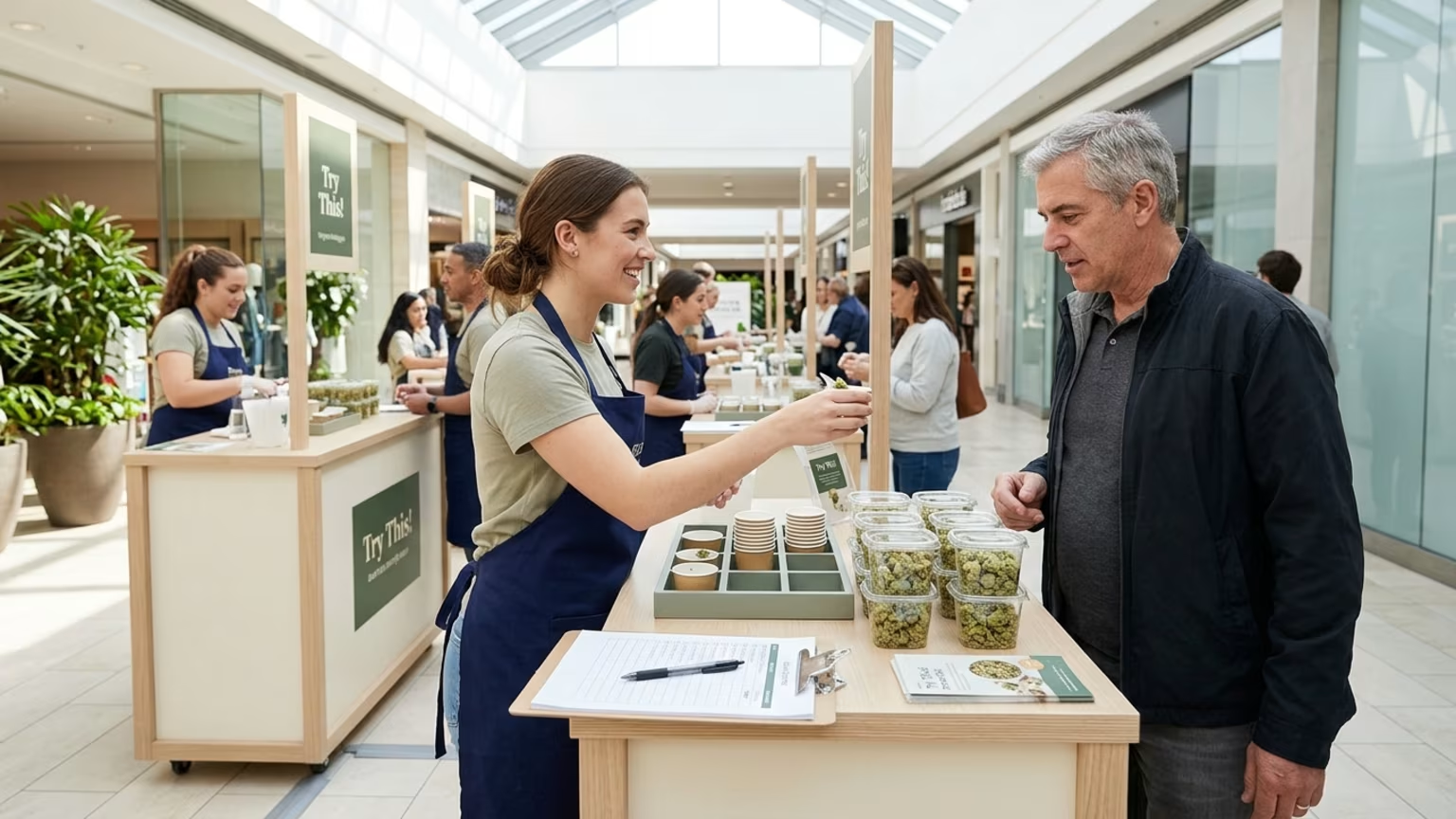
Pallets of perishable food sit waiting on a loud loading dock. A freight carrier driver needs a signature before departing for a cross-country route. Meanwhile, a regional coordinator realizes the destination venue requires a local health permit that was never filed. This exact mismatch ruins expensive campaigns every single week.
The primary question marketing operators face is how to coordinate compliant product demonstrations across multiple locations without losing control of inventory or safety. The most reliable answer is building a location-specific operating plan before any freight is booked. A national quantity estimate is never enough to run a safe program. Operational teams must forecast demand at the exact level where replenishment actually happens by multiplying expected interactions by conversion rates.
Forecasts require several scenarios to remain useful in the field. A base case accounts for expected traffic and a normal sampling rate. The high case plans for favorable weather, nearby events, or stronger traffic spikes. The low case prepares your team for poor traffic, delayed venue openings, or weather disruptions.
You should not apply the exact same contingency percentage to every single item in your inventory. Finished product, refrigerated goods, printed materials, and disposable cups all possess different failure modes and replenishment lead times. A stronger operational plan always utilizes a rolling forecast schedule starting three weeks out. One week before the event, you update the model for retailer forecasts, weather patterns, and local venue changes.
During the actual activation, the site lead reports samples served, remaining stock, and projected depletion. After each operating day, you must revise later locations using the actual consumption data you gathered.
Treating every single location as a unique compliance workstream is absolutely mandatory. You cannot assume that one generic national checklist will satisfy every local health inspector. The United States Food and Drug Administration provides a model code for jurisdictions to develop retail and food-service food-safety rules. Local authorities then modify or adopt these specific rules based on their own regional requirements.
A proper operating plan begins with a comprehensive site file for each venue. This document must contain the event address, load-in windows, venue contacts, and approved commissary arrangements. It also needs to detail specific local rules for open food handling, cooking, and disposal. In our experience, failing to verify these local nuances will shut down an activation before the first consumer arrives.
You must confirm whether the venue requires a temporary food-event permit or if prepackaged samples qualify for an exemption. Traceability is another critical layer in your logistical planning process. According to guidance from the U.S. Food and Drug Administration, shipping, receiving, and transformation are defined critical tracking events for covered products. You must record these events accurately to maintain a clear chain of custody throughout the tour.
The U.S. Food and Drug Administration traceability rules specifically identify shipping and receiving events, including intracompany shipments between different addresses, as relevant supply-chain events for covered foods. Documenting these logistical handoffs protects the consumer and shields the brand from regulatory liability. Every shipment requires a precise record containing the lot code, case count, and destination. The site lead must act as a designated receiver who checks visible damage and records exact arrival times.
This disciplined approach ensures that your multi-city product launch remains compliant from the warehouse to the consumer.
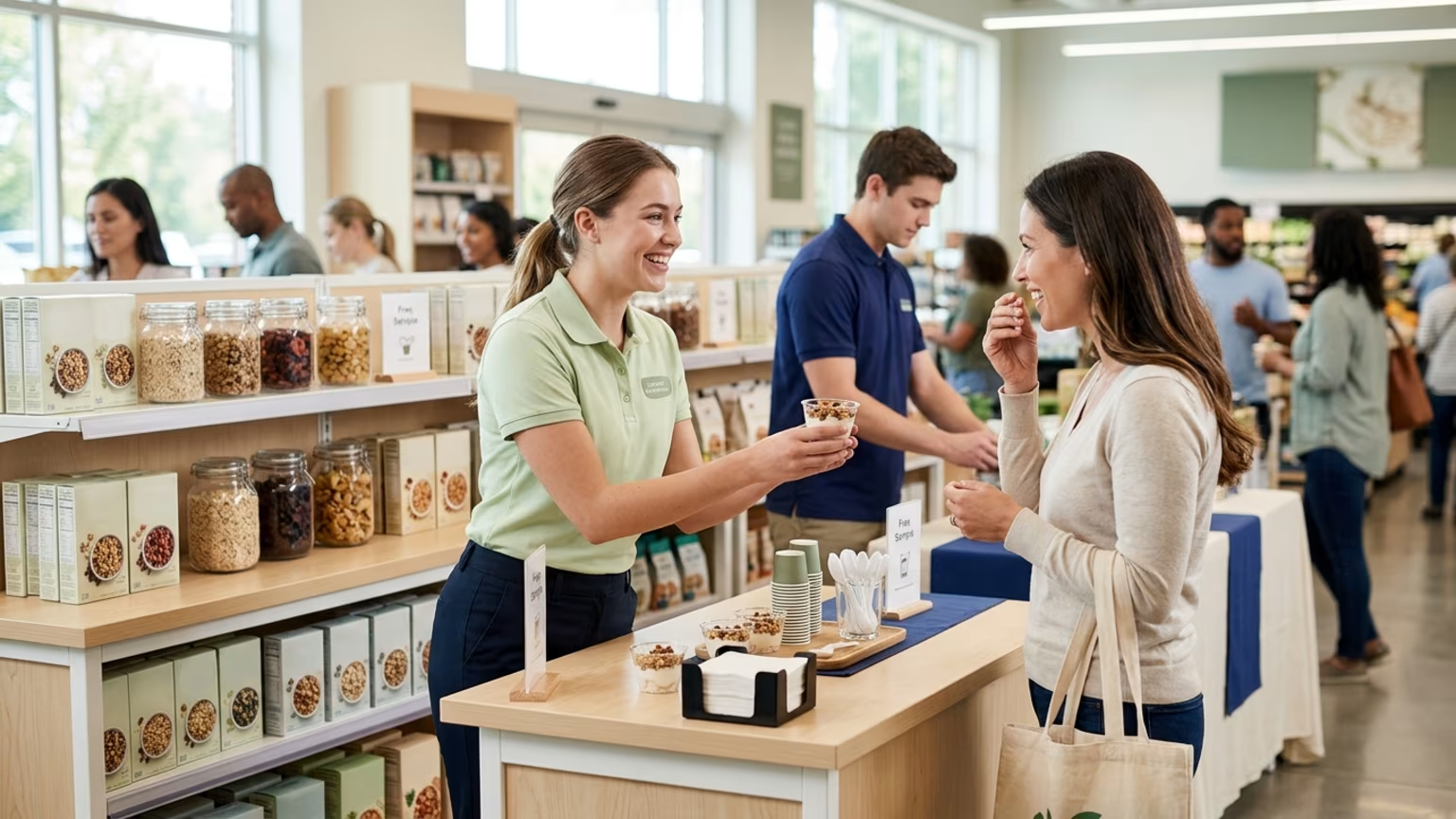
Certifying a field team goes far beyond handing out branded shirts and a talking script. Human connection sits at the very center of successful retail product sampling programs. Brand ambassadors must execute strict operational checklists while maintaining a warm and approachable attitude. Our team utilizes an aloha-style methodology to ensure staff remain welcoming while fiercely protecting brand sanitation protocols.
Sanitation must be designed directly into the service flow rather than treated as an end-of-day chore. Field staff must know exactly when to wash hands, change gloves, or swap out serving utensils. They are the frontline defense against cross-contact, environmental pathogens, and poor brand presentation. FDA preventive-control guidance describes sanitation controls as a way to minimize hazards from pathogens, food handlers, and allergens.
Allergen management requires exceptional discipline from every single brand ambassador on the floor. Staff should never guess about ingredients when speaking to a potential buyer. We always create an allergen reference card detailing product variants, major allergens, and approved consumer-facing responses. A safe script allows the ambassador to check product information or escalate the question to a designated lead.
This precise blend of operational rigor and genuine hospitality builds deep consumer trust. Real connections happen when the staff feels confident in their training, equipment, and environment. Equipping your field team with the right knowledge empowers them to represent your brand authentically.
Moving a physical interaction into a digital system requires strict post-event reconciliation. A busy activation only becomes an auditable record when you track exact inventory movements and consumer outcomes. Every location should close the day by recording opening inventory, receipts, units served, and discarded units. This strict operational discipline provides the exact data needed to prove Return on Investment.
Proving the value of any in-store product sampling execution means separating the initial trial from the downstream conversion. You should route offline consumer interactions directly into a qualified pipeline using controlled technology. Point-of-sale devices, offline lead forms, and unique offer codes help bridge the gap between a physical handshake and a digital customer record. This turns a fleeting moment into a measurable, repeatable business asset.
To measure success accurately, you need to establish a defined key performance indicator hierarchy. Operational metrics track on-time openings, stockout rates, and temperature compliance throughout the event. Engagement metrics measure qualified interactions, dwell time, and total samples served. Commercial metrics connect the event to retail sell-through, attributable purchases, and cost per trial.
Data capture must be completely frictionless for the consumer and highly reliable for your field team. Always pack printed reporting forms in case your primary cellular connectivity fails on the convention floor. Counting errors, damaged cases, and unauthorized product transfers will skew your final metrics if not recorded immediately. A mandatory 24-hour closeout process ensures every piece of data reaches your reporting system intact.
Even the most carefully planned campaign will face unexpected operational challenges. Equipment breaks, shipments arrive warm, or venue restrictions change without any prior notice. The field general must rely on a solid contingency plan centered around strict replenishment thresholds. Each site needs a defined maximum inventory capacity, a clear reorder point, and a critical stock level.
Cold chain failures are highly destructive variables in any live sampling campaign. The FDA’s sanitary-transportation framework places responsibility on the parties involved in transportation to maintain appropriate conditions. According to this framework, federal transportation rules also contemplate carriers providing operating-temperature information when requested by the receiving party. Your site lead must check case counts, verify product temperatures, and record arrival times before accepting any delivery.
Any deviation must be escalated immediately before a single unit is served. Standardizing your equipment with a master pack-out list prevents small logistical failures from stopping service. You should prepare backup batteries, spare thermometers, and extra sanitation supplies for every market. Equipment falls into distinct categories like preparation tools, power supplies, product storage, and specialized recovery items.
Every item on the list requires an assigned owner, a packing status, and a designated destination. Never solve an inventory problem by casually moving product between locations without thorough documentation. You must record the exact transfer quantity, lot code, temperature condition, and responsible handoff. Regional staging hubs can provide fast recovery if strict lot tracking and temperature controls remain perfectly clear.
Proper waste planning also dictates how you handle damaged inventory, packaging materials, and missing assets.
Your next logical step is integrating logistical planning directly into your creative briefing process. An activation concept is not truly ready until you define the storage requirements, staffing models, and waste procedures. Approving the operational footprint at the same time as the visual design prevents catastrophic field failures. Require a strict daily closeout report from every location to feed actual consumption data back into your planning cycle.
You must fund the operational control layer of your campaign with serious intent. Thermometers, backup power supplies, regional inventory hubs, and experienced site leads protect your brand reputation. Use post-event data to refine your forecasts for the next location on your route. Better planning ensures your brand shows up flawlessly, safely, and profitably every single time.
Defining a reliable field compliance strategy requires rigid control over inventory and staff before the first location opens, which is where Makai steps in to run the floor. We solve inefficient post event follow up and CRM routing by leveraging our Brand Activations capability to create high energy activations that turn awareness into participation and drive measurable consumer response.

30 Years Experiential & Retail Activation Partner for CPG & Beverage Brands | Multi-Market Demos, Roadshows & Costco/Club Programs That Actually Sell