Robbie Thain
Founder, CEO

LoneStar Casino planned an independent Austin activation with pedicabs and QR touchpoints. Learn why mobile festival intercepts require strict field execution.

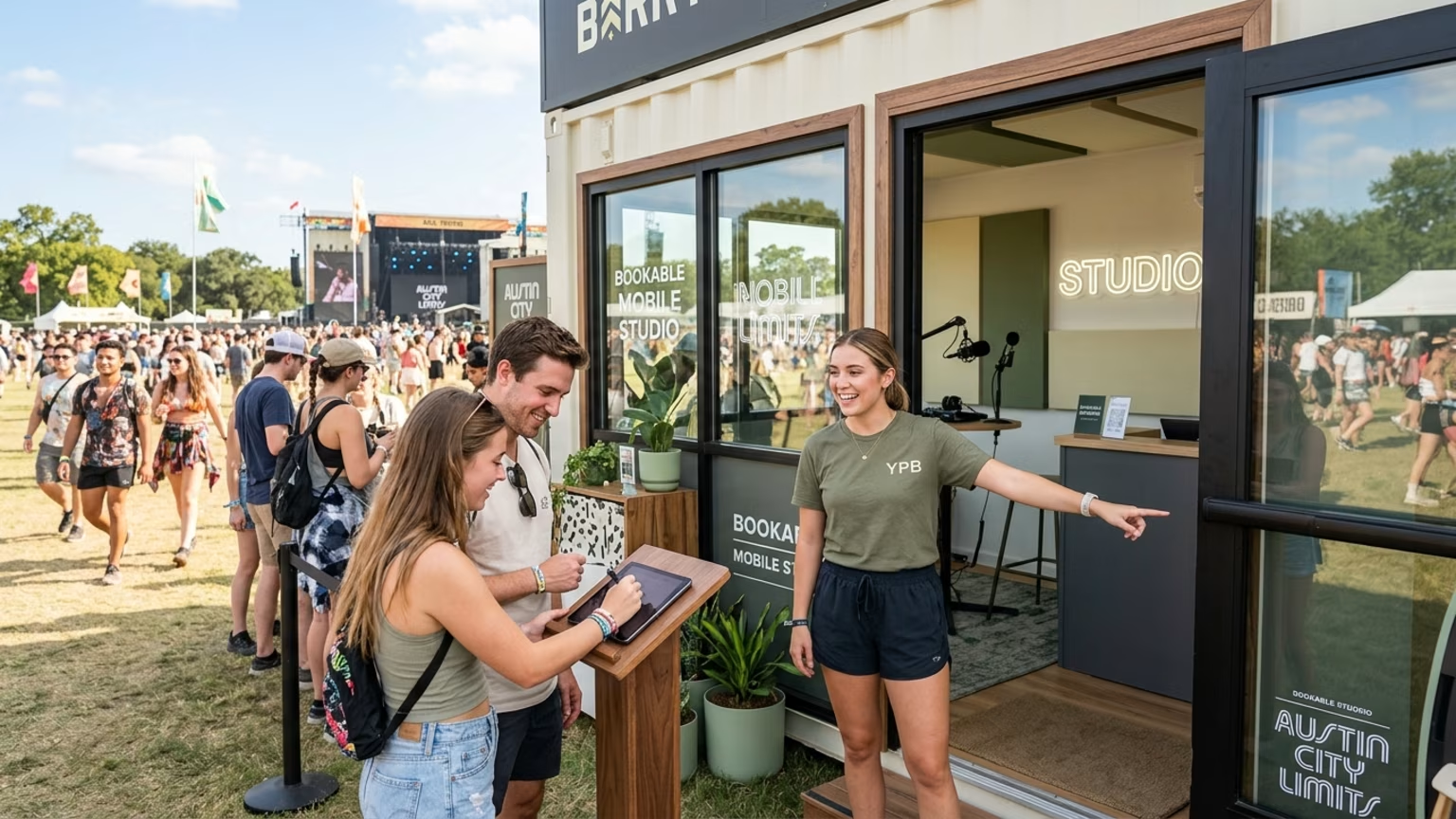
On September 30, 2026, IBTimes reported that LoneStar Casino planned a two-weekend activation at Oria’s on Barton Springs Road. This location serves as a deliberate stop along the main pedestrian route toward the Austin City Limits festival. The venue operates on Fridays and Saturdays from noon to 7 p.m., aligning directly with the festival dates of October 2–4 and October 9–11. Instead of acting as a standalone destination, this physical footprint intercepts attendees while they are already in motion.
The planned footprint utilizes multiple moving parts to capture and redirect consumer attention. IBTimes detailed a strategy anchored by ten branded pedicabs operating along the main travel paths. Five of these vehicles pick up people along the pedestrian route to transport them to the Oria’s venue. The remaining five pedicabs transport visitors from Oria’s toward the actual festival entrance.
Inside the venue, the activation provides food, drinks, DJ programming, and interactive music requests. To capture attention on the ground, the setup incorporates multiple digital and physical interaction points. A planned sticker-wall interaction invites guests to peel away stickers to reveal underlying artwork. The footprint also utilizes QR-based interactions and Digital Spin to Win stations for attendees.
Giveaways form a core component of the physical strategy. Planned items include cowboy hats, bandanas, hand fans, collapsible water bottles, wristlet phone holders, and poker-chip keyrings. IBTimes notes that Austin-area creators in music, food, lifestyle, tourism, comedy, and gaming will participate. These creators will capture photos, short-form video, and behind-the-scenes content to extend the physical experience into digital channels.
Crucially, IBTimes reported that this event operates entirely independently of the primary festival. The activation is not sponsored by, endorsed by, or affiliated with the festival organizers or C3 Presents. Additionally, the pedicabs are expected to run beyond the noon-to-7 p.m. venue activation hours into the late evening.
Active interception along a major festival route presents a significant operational challenge for any brand. KXAN reported an estimate of about 75,000 daily travelers to and from Zilker Park over the two weekends. A crowd of that magnitude creates an incredibly noisy environment filled with competing sights, sounds, and physical obstructions. Marketers often conflate this geographical proximity with guaranteed footfall, leading to empty spaces despite heavy surrounding traffic.
When brands operate without official event endorsement, they must manufacture their own localized gravity. Unaffiliated activations cannot rely on official map placements, festival signage, or sanctioned email blasts to drive attendance. IBTimes stated clearly that this activation is independently operated and not sponsored by, endorsed by, or affiliated with ACL or C3 Presents. For marketers, navigating this distinction means relying entirely on the strength of your own street-level intercept tactics.
We turned Kona Brewing's sponsorship at Santa Monica Pier 360 into a beach-themed branded environment built around product, giveaways, leis, and a place for attendees to spend time with the brand. Our team handled the on-site execution from setup through teardown at a festival with an estimated 50,000 attendees. That experience proved that capturing consumer attention in a highly distracting environment requires managed, sequential flow. A footprint must actively stop people, engage them quickly, and route them efficiently before they lose interest.
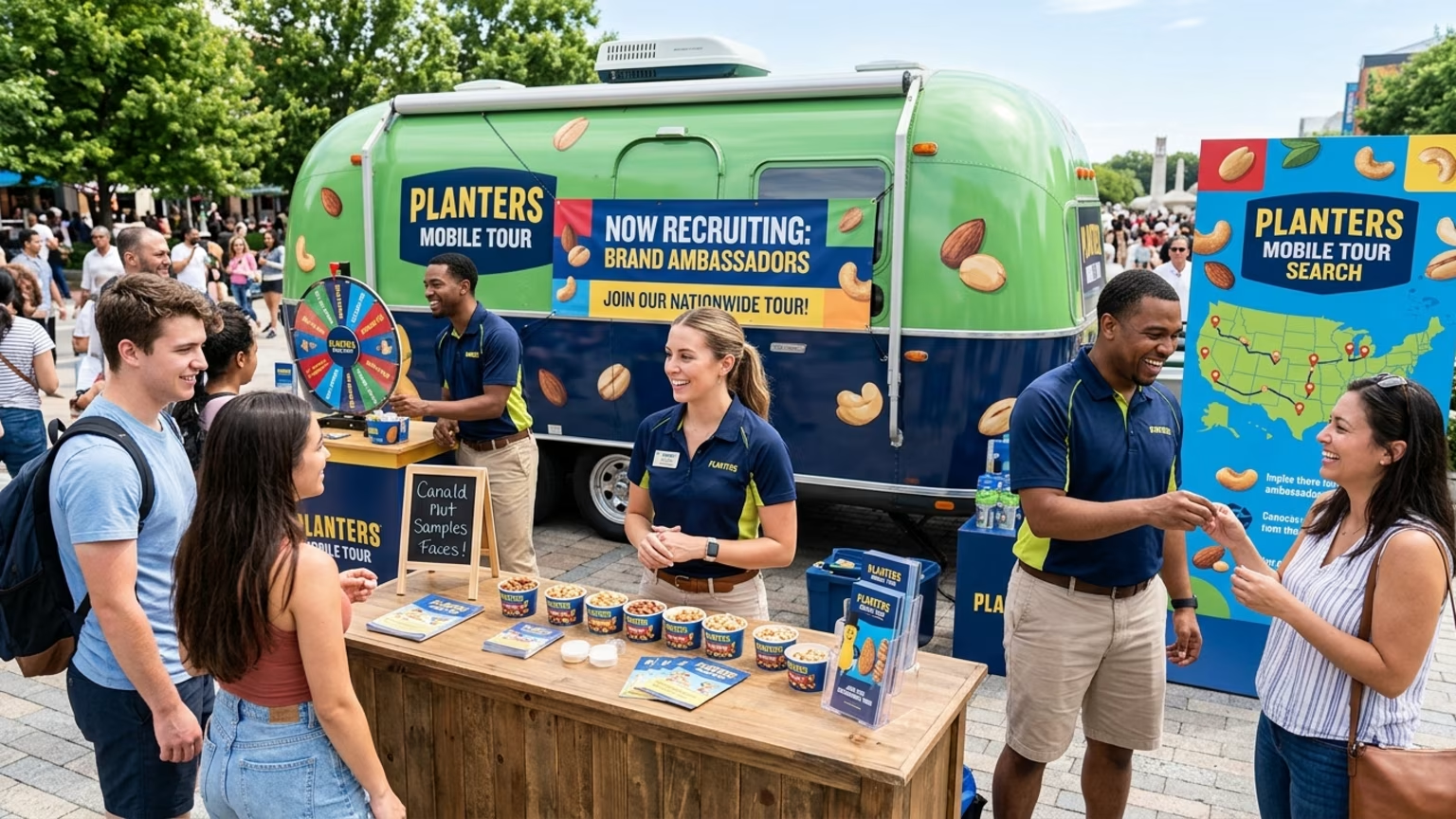
The decision to use branded pedicabs illustrates a practical solution to the proximity problem. By picking attendees up before they reach the main event, the brand removes the friction of walking off-path. This mirrors the mechanics required for successful mobile roadshow tours that intercept daily consumer routines. A structured transport loop actively funnels an audience toward the product rather than waiting for them to wander in. For CPG brands, this type of active capture is critical for proving positive Return on Investment (ROI) from live environments.
Managing decentralized mobile elements forces a complete restructuring of standard field logistics. When an activation utilizes moving transport to capture foot traffic, static staffing models immediately break down. The brand ambassadors operating the five inbound pedicabs require entirely different conversational scripting than those operating the outbound routes. Field teams must maintain strict messaging compliance while working out of sight of the primary venue managers. Ensuring consistent local execution becomes increasingly difficult when assets constantly move through uncontrolled traffic.
Extending operations beyond standard hours creates a secondary layer of logistical strain. The primary venue stops operating at 7 p.m., but the pedicabs reportedly run later into the evening. This split schedule requires staggered shifts, distinct safety protocols, and complex asset tracking. Field managers must monitor vehicle locations, manage physical fatigue for operators, and ensure brand standards remain high after dark. If the mobile transport fails to operate efficiently, the entire intake mechanism for the venue collapses.
Digital interaction mechanics introduce an entirely separate operational mandate for field teams. The planned sticker wall and QR integrations offer immediate ways to digitize anonymous foot traffic. However, interactive elements only generate commercial value if the underlying CRM data routes correctly. If a consumer scans a QR code but the resulting page fails to capture their information, the interaction is wasted.
Executing a multi-touchpoint strategy outside official festival grounds magnifies the standard logistical burden. Field teams face the difficulty of navigating complex event logistics, permits, and staffing across public and private spaces. A mobile pedicab fleet requires different city clearances than a static venue serving food and drinks. When a brand controls its own independent footprint, it assumes total liability for maintaining safe, compliant operations in crowded areas.
Managing physical giveaway inventory in a high-volume environment also demands rigorous operational control. Distributing cowboy hats, bandanas, hand fans, collapsible water bottles, wristlet phone holders, and poker-chip keyrings requires constant supply chain monitoring. Field teams must track redemption rates closely to prevent stockouts during peak traffic hours. If the Digital Spin to Win stations award prizes faster than brand ambassadors can restock them, the consumer experience breaks.
We design mobile activations and roadshows that accelerate consumer trial, build trust, and boost retail velocity during 90-day product launch windows. Our structured approach transforms initial product trial into sustained consumer confidence and retail performance. Applying this rigor to a festival route means treating every pedicab ride and QR scan as a tracked milestone. Upgrading your systems is necessary when scaling pop-up activations across multiple weekends or cities.
The stretch of Barton Springs Road in Austin serves as a temporary, high-volume corridor throughout the October festival weekends. LoneStar Casino’s planned footprint demonstrates how marketers can physically intercept consumers directly along their travel routes. Deploying moving transport, interactive walls, and digital stations attempts to turn passive commuting into active brand participation. Yet, succeeding in an uncontrolled environment requires flawless field execution and rigorous data management.
When your brand sets up near a major cultural moment, do you have the logistical framework to turn passing foot traffic into measurable sales pipeline?
When marketers place mobile activations along busy festival routes, capturing scattered foot traffic without a structured system often leads to severe data loss. To prevent inefficient post event follow up and CRM routing, Makai delivers Engagement Marketing to turn audiences into participants with live and digital experiences that invite people to try, share, and act. Request a proposal

30 Years Experiential & Retail Activation Partner for CPG & Beverage Brands | Multi-Market Demos, Roadshows & Costco/Club Programs That Actually Sell