Robbie Thain
Founder, CEO

Discover how modular design and repeatable infrastructure help CPG brands scale pop-up activations and national roadshows without sacrificing brand consistency.
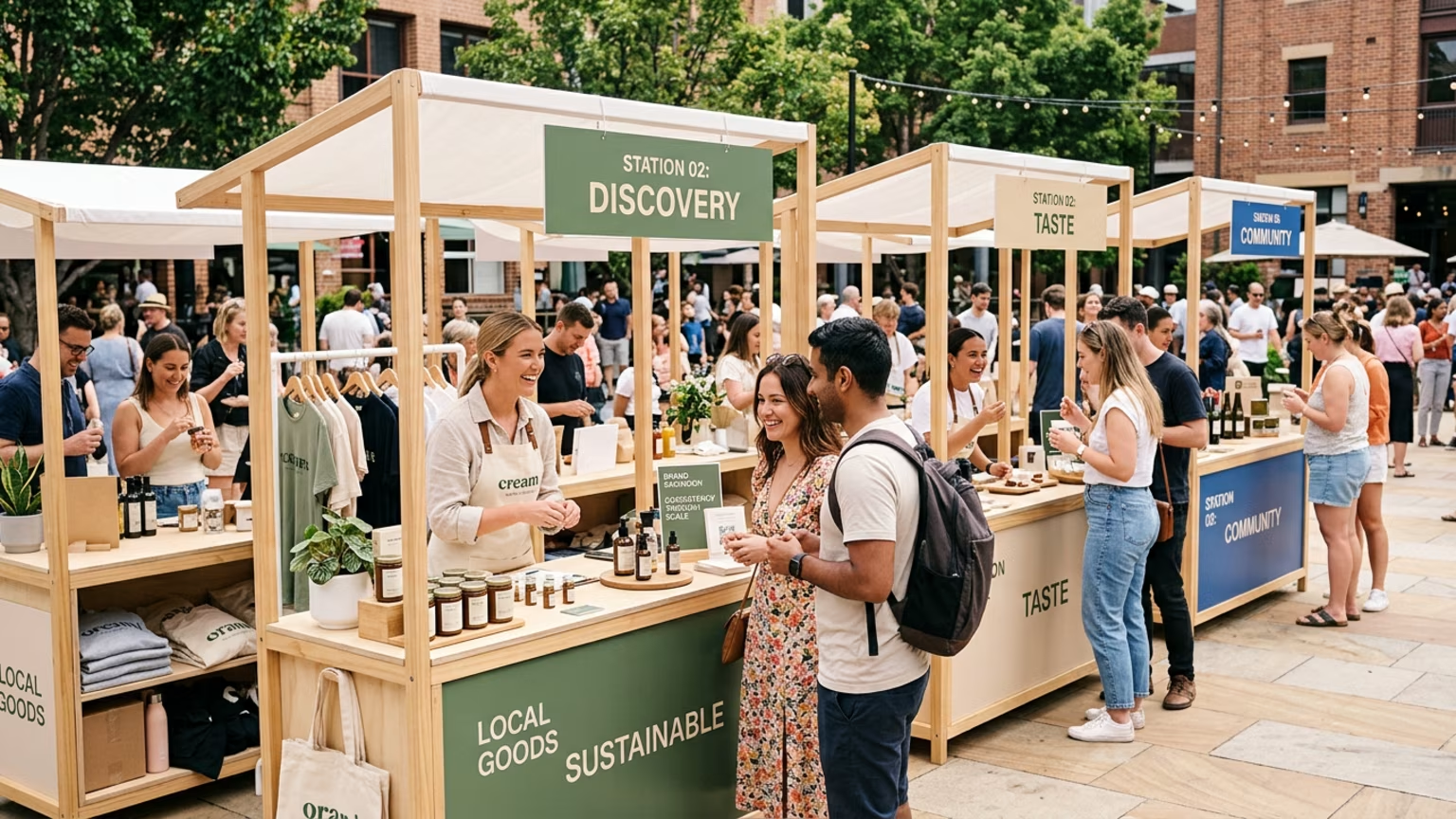
Seven-day pop-up events generate 31 percent more revenue than three-day activations. This data point proves that sustained physical presence drives massive conversion for consumer brands. The catch is that keeping brand presentation consistent across a multi-city tour remains an operational nightmare.
Scaling physical activations across multiple venues requires modular design systems, repeatable infrastructure, and data-driven measurement protocols. Brands that treat pop-ups as production systems rather than isolated events empower field teams to execute consistently and adapt to local constraints.
Think about a typical national product rollout on a busy convention floor. Your Chicago activation looks incredible on Monday morning. By the time the tour hits Dallas on Thursday, the booth looks like a completely different brand entirely. Fixed fixtures do not fit the new retail footprint, sightlines are blocked, and field teams are forced to invent creative workarounds on the spot.
This localized improvisation destroys brand identity. When shoppers walk past an inconsistent setup, they do not stop to engage or ask questions. Your regional teams mean well, but relying on willpower instead of systems leads to a disjointed consumer experience. This lack of control turns what should be a powerful revenue driver into a frustrating logistical puzzle.
The central tension of multi-city tours is maintaining flexibility without causing fragmentation. Your infrastructure must adapt to different retail footprints and still look identical to the consumer. This requires a mobile-first modular design strategy rather than relying on rigid custom builds. Industry analysts report that experiential marketing works when it stops traffic, engages physically, and converts emotionally.
Achieving these three outcomes across twenty different venues demands standardized physical assets. Modular architecture eliminates the need for field teams to improvise on the floor. Flat-pack display units and wheeled movable fixtures allow rapid in-venue reconfiguration without heavy tools. A sampling station can easily convert into a product demonstration zone the next day without requiring new structural elements.
This adaptability keeps your visual identity intact regardless of the venue size. Fixed, bulky infrastructure creates massive shipping bottlenecks and drives up costs. Replacing fixed walls with foldable counters and display tables with built-in hidden storage fixes this problem instantly. Your teams gain the ability to hide inventory gracefully and keep the consumer facing space spotless.
Scaling requires you to balance high-end brand presentation with physical portability. Temporary retail structures often feel cheap or rushed to the consumer. Using high-quality materials like brushed aluminum and custom tension fabric displays solves this problem completely. These materials offer the aesthetic weight of a permanent installation without the logistical burden.
Your local field teams can assemble tension fabric structures in minutes without professional labor. The fabric skins fold down into small bags to cut shipping volume dramatically. If your primary brand messaging changes next quarter, you only print new fabric skins instead of building entirely new walls. This hardware strategy protects your budget and your premium visual standards simultaneously.
Designing layouts that let shoppers walk straight through your space is a massive operational mistake. You must strategically place speed bumps throughout the activation space to slow foot traffic and encourage product interaction. According to retail display experts, island display units and interactive product experience tables act as natural stopping points.
These modular elements extend in-store dwelling time. Increased dwelling time correlates directly with higher sales conversion rates. This flow management strategy is highly repeatable across all your national venues. The speed bump principle remains exactly the same whether you activate in a massive convention center or a tight grocery store aisle.
Fragmented sightlines destroy brand impact on crowded floors. You must design for clear sightlines so your hero product display is impossible to miss from any angle. Instructing teams to place the hero display center-back guarantees visibility from the main entrance. Consistent sightlines help brands plan pop-ups people actually visit time and time again.
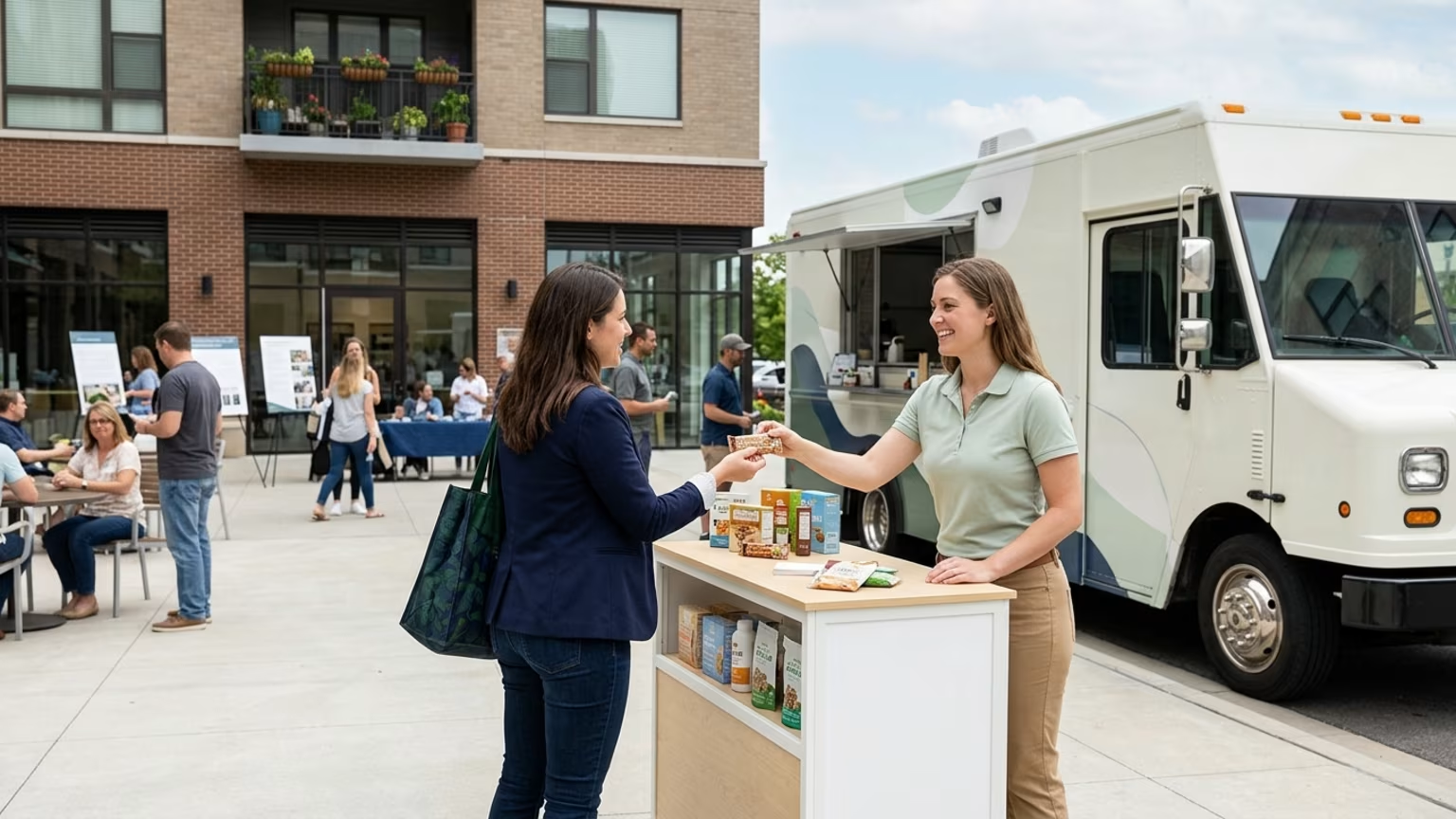
Food and beverage brands face unique hurdles when building national tours. Trial to purchase conversion metrics dominate the success criteria for these sectors. Your activation infrastructure must support high-velocity sampling capacity to hit daily numbers. Portable branded carts and handheld sampling stations scale much faster than fixed, stationary booths.
These mobile units bring the product directly to high traffic zones like entrance points or food courts. Mobility increases exposure and meets your audience exactly where they are. This removes friction from the trial process and accelerates the path to purchase. Top operators are scaling field teams for trade shows using these exact standardized playbooks today.
Turning a complex roadshow into a repeatable production requires strict standard operating procedures. We run experiential and engagement programs coast to coast with local crews, smart logistics, and permit expertise that let us launch fast and maintain quality consistency in every region. Our nationwide infrastructure enables us to activate brands wherever their audiences are located. In our experience, success comes down to a clear, phased operational playbook.
Here is the step by step process to standardize your next mobile tour:
When your Cincinnati crew and your Phoenix team follow this exact system, your brand looks identical across the map. It takes the guesswork out of event logistics and protects your visual standards. This structured approach helps in avoiding execution pitfalls in multi-stop brand roadshows entirely.
Beautiful setups mean nothing without a connection to business outcomes. Generating a strong Return on Investment requires systemic measurement tools that tie physical interaction directly to retail sell-through. You need concrete data to prove your physical marketing actually moves product. Relying on basic foot traffic estimates is no longer acceptable for premium brands.
You should track specific lead and lag metrics to validate your activation spend. First, deploy footfall beacons to count traffic and identify peak engagement windows by venue. Next, measure gesture metrics to track per-user interaction patterns, noting which products get touched and how long engagements last. Finally, correlate this interaction data directly to sales figures or trial redemption rates at the local level.
This data stack creates an incredibly powerful direct feedback loop for your marketing team. You will quickly learn which layout variations or staffing configurations drive the most conversions on the floor. From there, you can standardize the highest performing setups across the rest of your national tour. Tracking these key metrics from pop-up activations shifts your team from guessing to knowing.
Manual reporting creates a massive blind spot for field marketing directors managing multiple active sites. Your teams cannot wait until the end of a three-week tour to realize Dallas underperformed compared to Chicago. Implementing automated daily reporting dashboards provides real-time visibility into floor operations. Field managers must upload their gesture metric logs and sales correlation data at the close of every single shift.
Automated dashboards aggregate this information to show regional performance trends instantly. If an interactive product display fails to capture attention in the morning, regional directors can issue layout adjustments by the afternoon. This agile approach to physical spaces mirrors the optimization tactics used in digital performance marketing. You stop reacting to post-event failures and start optimizing live campaigns.
Recent high-profile activations show exactly how these concepts work in the field. Brands must build immersive environments rather than relying on static, flat signage alone. According to event marketing case studies, Method deployed scent installations with mobile sampling at major events to bring their product directly to the crowds.
Instead of waiting for consumers to find a fixed booth, the brand used dynamic carts to intercept attendees in high traffic corridors. This mobility model removes friction from the trial process entirely. When you remove friction from trial, you rapidly increase conversion rates and build lasting brand loyalty. The mobility concept applies perfectly to food, beverage, and premium consumer goods.
Recall that disorganized Chicago to Dallas roadshow from earlier in this breakdown. By replacing rigid booths with modular systems, that exact same tour becomes a smooth, predictable revenue engine. Your field teams stop improvising and start executing with total precision. If you are ready to turn your next multi-city tour into a highly calibrated production, it is time to book a strategy call.

30 Years Experiential & Retail Activation Partner for CPG & Beverage Brands | Multi-Market Demos, Roadshows & Costco/Club Programs That Actually Sell