Robbie Thain
Founder, CEO

Linqia’s survey signals more planned influencer events. Makai examines the staffing, space and logistics behind meaningful audience participation.
On October 16, 2026, Business Insider reported that Linqia’s annual marketer survey found 53% of respondents planned to work with influencers on events in 2026, up from 34% in 2025. The report brought a practical issue into focus for CPG and beverage marketers: creator partnerships need a field brief when the audience is expected to show up in person.
According to Business Insider, Linqia chief strategy officer Keith Bendes said the company had seen an uptick in custom brand pop-ups and activations at large events. For field planning, the relevant change is the proposed connection between creator participation and a physical experience. A creator brief alone does not define how that experience will operate.
The survey records intentions rather than completed events, committed spending or achieved results. The accessible report does not disclose the sample size, field dates or methodology. Its individual activation results are examples rather than benchmarks, so they do not establish typical attendance or Return on Investment.
That makes this a directional signal, not a mandate to replace other channels. The useful response is to evaluate where a creator can contribute to an event’s purpose. Product trial, qualified attendance and content generation are different objectives. The production brief needs to name the intended outcome before the concept becomes a commitment.
Makai’s view is straightforward: welcome the audience warmly and give the field team a defined job. Creator participation can be a strong creative ingredient without becoming the whole activation. For a CPG or beverage brand, the commercial purpose still needs to survive the excitement around the guest.
We build festival zones, premieres and pop-ups that turn viewers into fans and fans into advocates. Our work uses music tie-ins, screenings and live stunts to bring stories to life while crews manage execution and track reach and response metrics.
That experience informs our stance: the live moment deserves its own operating logic. A guest who came for a creator may still need a reason to try the product or continue a conversation with the brand. We believe the activation should make that next interaction feel relevant rather than forced.
This matters for pipeline because attention and qualified interest are different things. A creator’s audience can be the starting point for an experience; the brand still needs a meaningful role within it. For us, the right question is not simply whether the creator can attract a crowd. It is whether the event gives that crowd something useful to do with the product.
The same principle applies to emotional connection. Our engagement marketing turns audiences into participants through live and digital experiences that invite them to try, share and act. We see those actions as part of the experience, not as an extra layer attached after the appearance. A creator can help set the tone while the brand gives people a reason to take part.
The reporting supports defining objectives and execution responsibilities before production. For a creator-linked activation, that means distinguishing the creator’s contribution from the work of welcoming guests and explaining the product. The staffing brief should make those responsibilities visible rather than treating attendance as the entire assignment.
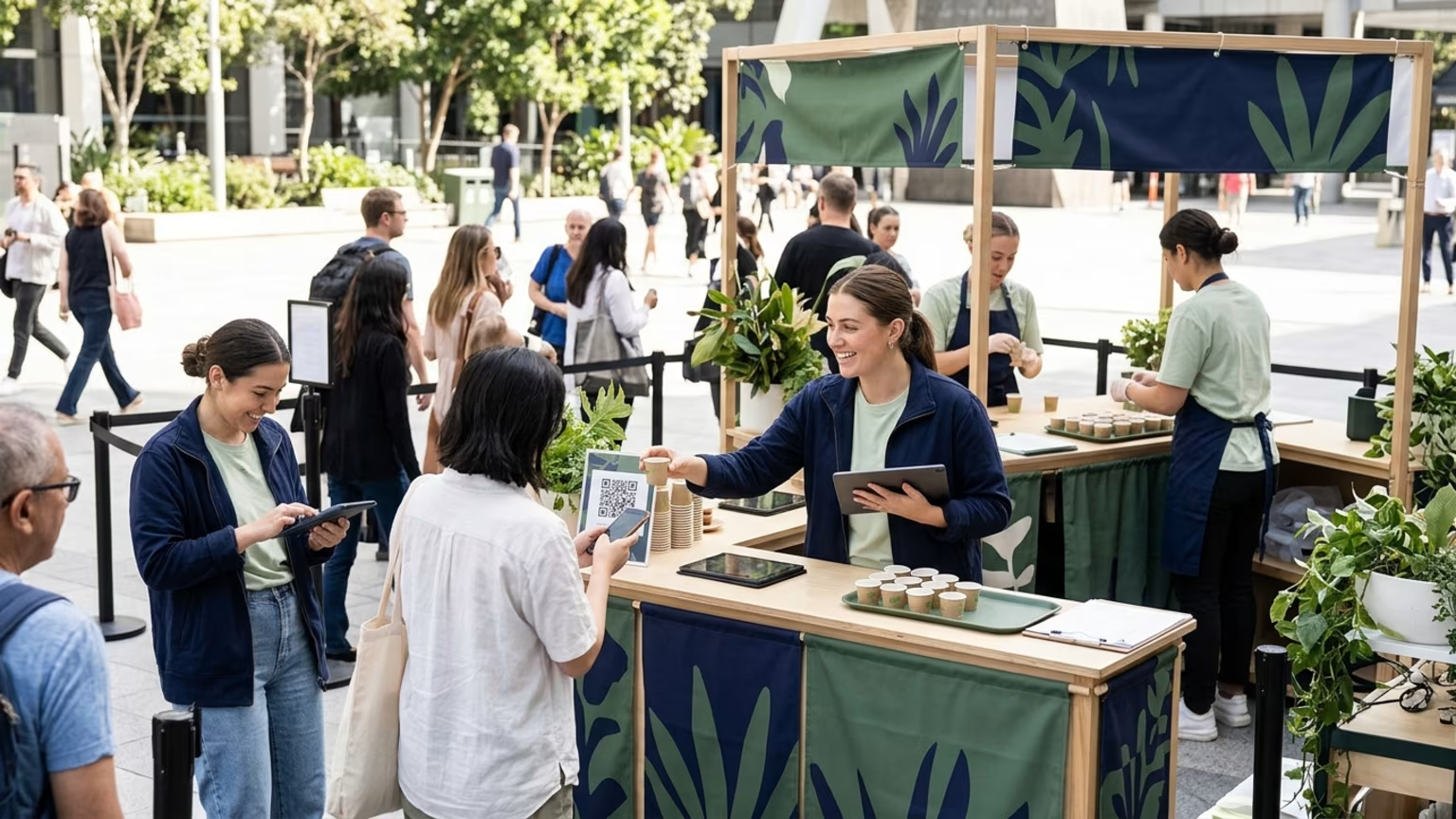
In Makai’s retail demonstrations, trained brand ambassadors drive in-store sales through real conversations and product trials. We believe that distinction should remain visible when a creator is involved. An appearance does not replace the product conversation.
Headcount should follow the experience being planned. If trial is the objective, the staffing brief needs to account for product explanation. If content is part of the objective, capture responsibilities belong in that same brief. This is an allocation decision before it is a hiring decision.
The useful distinction is between influence and execution. A creator’s role might support the welcome or the shared story, while trained ambassadors support product understanding. The reporting supports an authentic creator role; Makai’s position is that the role also needs to fit the work the activation is meant to accomplish.
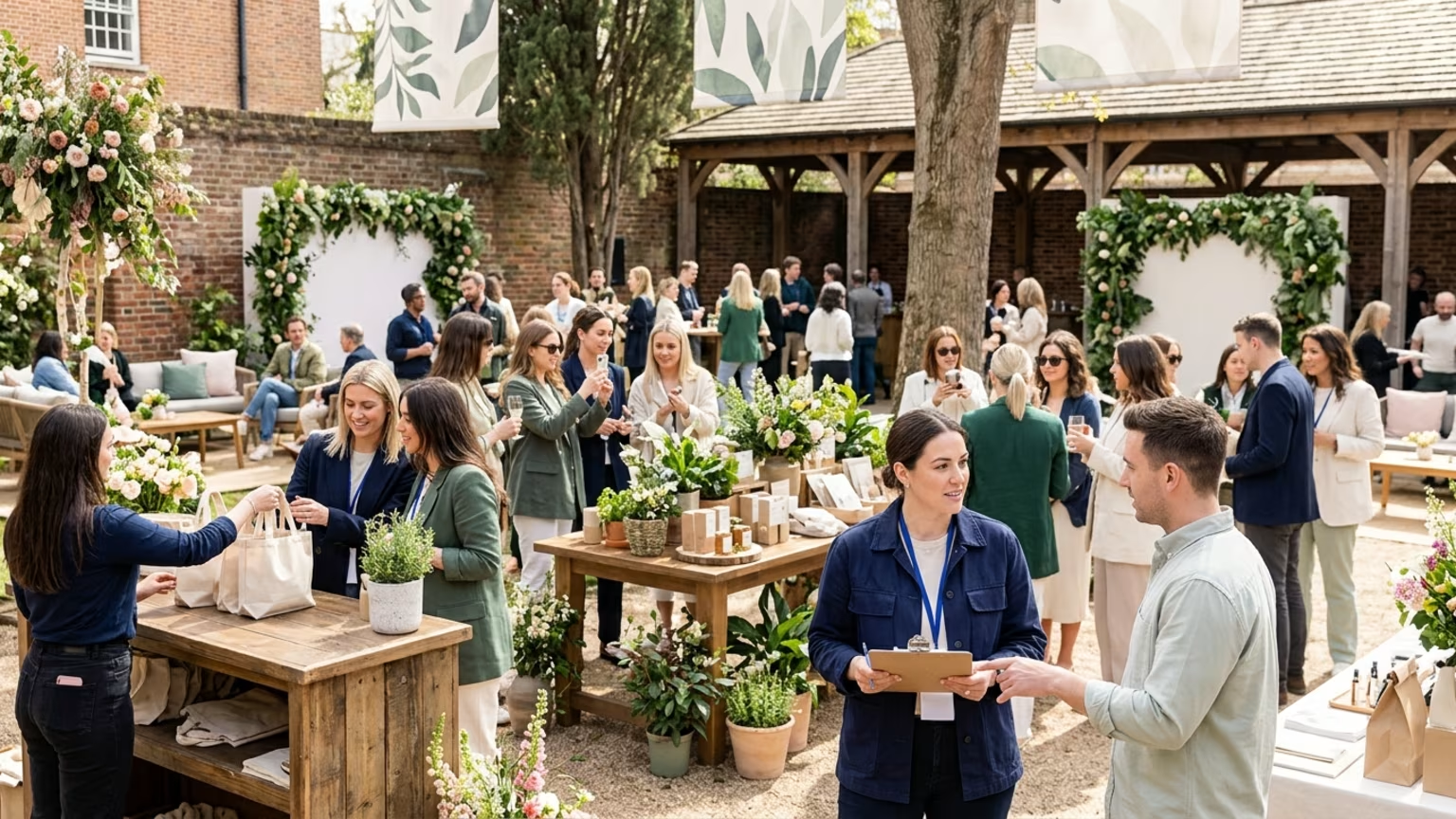
Makai plans and manages trade show spaces to attract attention and start conversations that can turn visitors into customers. For creator-linked formats, our view is that the space should support both the shared moment and the individual interaction.
A viewing area, a product-trial point and a follow-up touchpoint serve different purposes. Treating them as design decisions helps keep the event objective visible. The aim is not a complicated journey. It is a space where attention has somewhere useful to go.
That thinking also belongs in smaller neighborhood pop-up plans, not only major event footprints.
Makai’s integrated services extend from permitting to CRM reporting. We also store sampling product and event gear, then coordinate shipping and delivery nationwide. Those capabilities reflect a basic position: a physical marketing idea includes the work required to put it in front of people.
For a mobile sampling tour or pop-up, the creator role belongs in the same operating discussion as the location and product movement. Permitting should remain part of the event scope rather than an assumption hidden behind the creative concept. We see a clear activation logistics plan as a way to keep those responsibilities in the campaign discussion.
That is particularly relevant when the format is intended to repeat. Makai delivers mobile sampling tours and coordinates product and gear nationwide. We believe the promise made to the audience should be weighed against that physical scope before the concept is approved, not after the creator announcement has set expectations.
We connect QR codes and mobile technology with real-world activations across retail, event and tour experiences. For us, that digital layer should support what the guest has just done, whether the moment involved trying a product or choosing to continue the conversation.
Our recommendation is to keep product trial and qualified attendance distinct from content output. Attendance describes participation; content output describes material created. Neither should be treated as automatic proof of sales pipeline. In our view, measurement belongs in the design discussion rather than a reporting task left until the event is over.
For a marketing leader, this keeps two decisions separate: whether the creator relationship merits another activation and whether the field format supports the commercial objective. Business Insider’s reporting describes events as a way to assess the strength of a creator’s audience connection. That assessment still needs a defined purpose.
Business Insider described Snapple turning a decommissioned Staten Island Ferry into a floating comedy club featuring Colin Jost and Pete Davidson. Keurig Dr Pepper marketer Lindsay Burstein said the event generated about 200 pieces of user-generated content. She also described the planning effort as demanding.
That combination is the useful lesson for an operating team. The creative format and the work behind it belong in the same evaluation. Content output is visible, while the responsibilities that made the experience possible are easier to leave out of the story.
Business Insider also reported a warning from American Association of Advertising Agencies CEO Justin Thomas-Copeland: a poorly handled element or an inauthentic creator partnership can attract criticism. For Makai, that supports giving the creator a role that fits the brand and the experience. A recognizable face should not be asked to carry an unclear concept.
Before a CMO or VP of marketing backs the next creator-linked event, the strategic task is to connect the audience promise with an executable experience. The survey gives a reason to evaluate the channel. It does not make that operating decision for the brand.
A quieter test sits behind the ambition: the people who arrive will experience the plan as a welcome, a conversation and a chance to participate.
When your next creator partnership moves into a physical space, will the field team have a clear purpose for the people who show up?
Creator-led pop-ups can draw attention while leaving participation and business value poorly defined; Makai’s engagement marketing connects live and digital experiences that invite people to try, share and act. When live-event Return on Investment is hard to demonstrate, Makai’s campaigns focus on qualified leads for premium CPG brands.

30 Years Experiential & Retail Activation Partner for CPG & Beverage Brands | Multi-Market Demos, Roadshows & Costco/Club Programs That Actually Sell