Robbie Thain
Founder, CEO

Learn how PepsiCo's strategic shift to away-from-home experiential sampling and retail end-cap takeovers drives measurable CPG sales lift and volume growth.
A shopper walks past the main snack aisle without looking up. High gas prices have completely shifted their daily routine. On June 24, 2026, PepsiCo answered this exact behavioral shift by launching a new away-from-home experiential beverage platform. The global brand rolled out this initiative to intercept buyers where they actually spend time.
In June 2026, PepsiCo Global introduced House of Treats. This experience-first beverage platform targets cinemas, stadiums, and restaurants. The activation offers customized and multisensorial drinks directly to consumers in high-traffic venues. The program focuses on away-from-home channels to create physical interactions. High-volume venues demand a completely different approach to consumer engagement. Speed, efficiency, and emotional resonance must all work in perfect harmony.
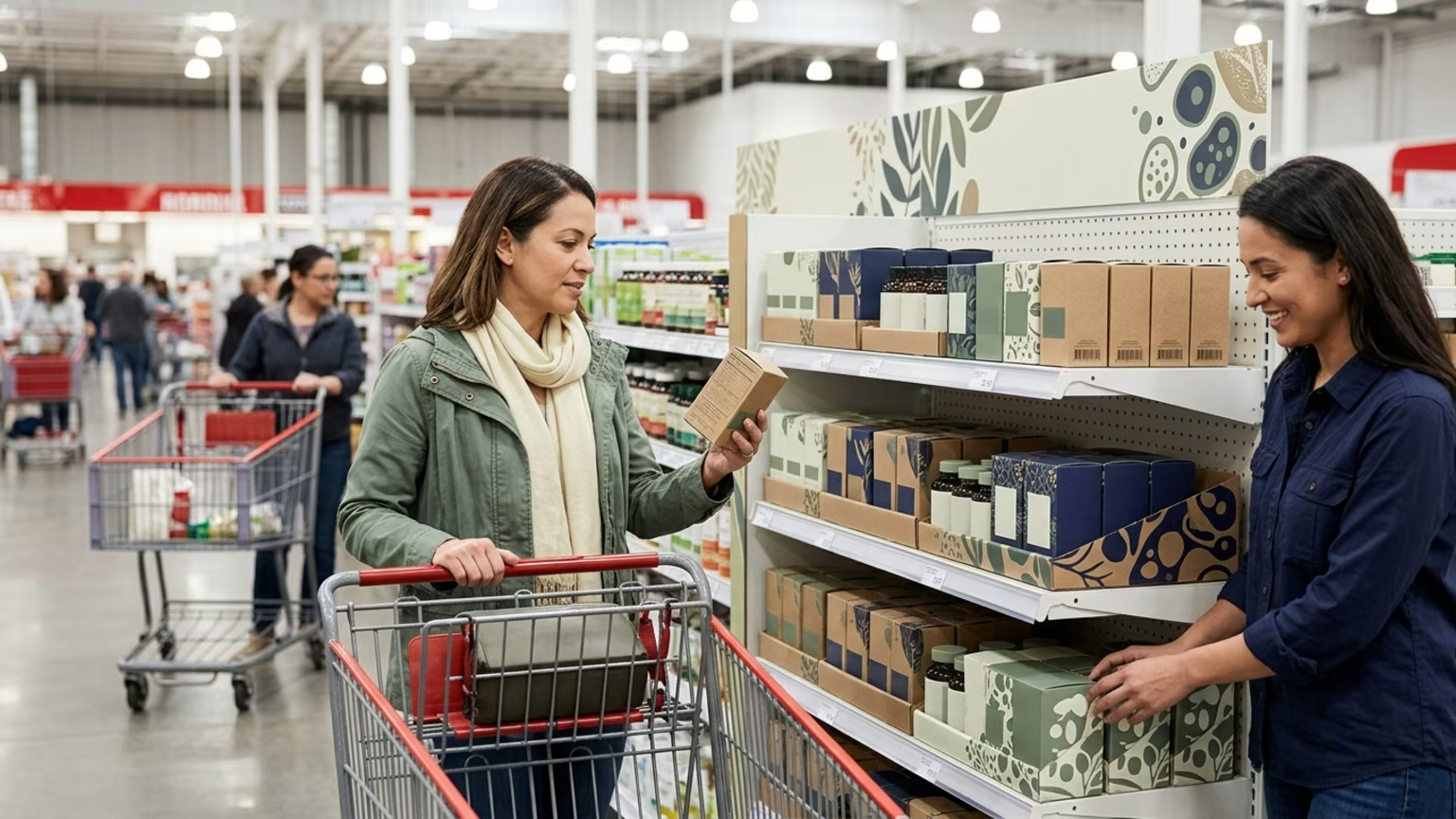
The brand also began tactically adjusting the retail end-cap. High gas prices have recently caused convenience shoppers to bypass traditional high-margin impulse snack aisles. Instead of fighting for lost aisle traffic, the company shifted its physical footprint to high-visibility locations. This tactical move proves that placement is just as critical as the product itself.
During the 2026 World Cup, the brand utilized regional rights to completely command retail end-caps. They used thematic, highly interactive displays to link the communal psychology of sporting events with physical product sharing. By moving activations out of the standard aisles, they successfully intercepted shoppers who were actively avoiding the middle of the store.
By July 2026, the company reported Q2 volume growth of 3% for foods and 2% for beverages. This marked its fastest volume growth since 2022. The brand generated over $92 billion in annual revenue in 2025. While digital advertising accounted for more than 70% of its total ad investment that year, the company is now physically intercepting shoppers to drive volume.
Experiential activations often fail when they prioritize aesthetics over measurable outcomes. We see brands build beautiful mobile tours that completely miss the mark on retail integration. A physical activation must generate net-new trips to the shelf to be considered successful. Otherwise, you are just funding expensive brand theater.
At makai, our team believes physical marketing requires operator-grade discipline. We specialize in creating retail demos, product sampling programs, and roadshows that bring brands face to face with their audiences. Each program is designed to drive trial, build consumer relationships, and accelerate retail velocity across multiple locations. You need live experiences that convert.
The digital space is incredibly crowded right now. Brands pour millions into digital ads only to see diminishing returns. Physical retail experiences provide a necessary counterweight to this digital noise. Near-store experiential events create demand in the community. In-store activations then capture and convert that demand directly at the shelf.
This connection between field events and in-store conversion requires rigorous data integration. Brands must design their physical footprints to feed directly into their measurement systems. By connecting experiential touchpoints to outsized sales lift, marketers can finally prove the value of their field operations.
Executing a large-scale away-from-home platform changes how you hire and train field staff. High-volume venues like stadiums and theaters require immense operational efficiency. Platforms like House of Treats must be designed for effortless customization at scale. If your brand ambassadors cannot customize drinks quickly, the entire customer experience falls apart.
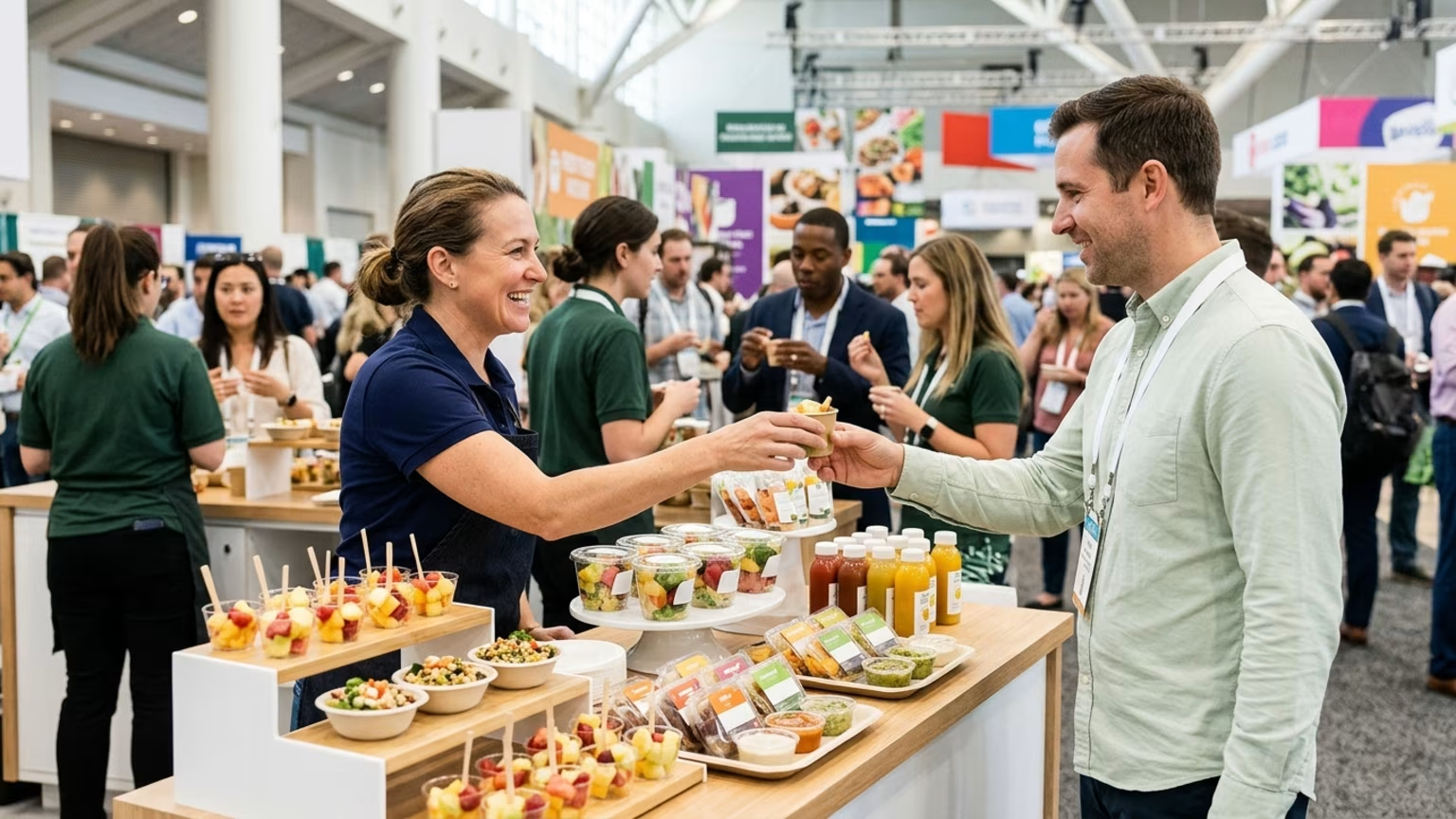
Speed of service is a critical metric for field operations. Brand ambassadors need streamlined workstations, clear protocols, and minimal steps per transaction. Trade show footprint flow must prioritize easy access and rapid movement. If you want to connect trade show performance to real-world sales, your booth cannot become a bottleneck.
Permitting and logistical coordination will also become more demanding. Commanding end-caps and high-visibility retail locations requires deep collaboration with store managers. Field teams must secure premium placements well in advance. They also need to ensure compliance with strict venue regulations.
Measurement logistics represent the biggest operational shift. Proving incremental lift requires matched-market control groups. Industry practitioners state you need a clean, randomly withheld control group of 10% to 20% of the audience. Field teams must coordinate their physical activations with data analysts to ensure these holdout infrastructures are maintained.
PepsiCo CMO Jane Wakely describes in-store and experiential marketing as a tag team. She notes that near-store experiential creates demand in the community. In-store activations then step in to capture that demand at the shelf. This two-part approach ensures physical activations directly support retail partners.
Wakely stresses that physical retail experiences are required for meeting shoppers in the real world. She states these live moments complement the digital noise of online advertising. Consumers need a tangible reason to interact with a product. They need to taste the beverage before they commit to a purchase.
To prove the Return on Investment of these programs, measurement systems must evolve. Wakely suggests that retail media networks must mature through stronger brand and retailer collaboration. She also calls for standardized, transparent measurement approaches tied directly to sales. This level of clarity helps build trust between brands and retail partners.
Retail media networks are traditionally built for digital ad metrics. Integrating physical sampling data into these platforms presents a significant technical challenge. Marketers must map physical interactions to digital loyalty programs or point-of-sale systems. This requires robust CRM reporting and precise field execution.
Brands are facing intense pressure to justify their field marketing budgets. High-low promotional strategies and temporary discounts are common, but they often erode margins. Physical sampling provides a way to drive trial without permanently cheapening the brand image. The physical act of sharing snacks creates an emotional bond that discounts simply cannot replicate.
Retailers are noticing the impact of these strategies. They see that well-executed physical events drive larger basket sizes and increase store foot traffic. As a direct result, we are seeing rising investment in store sampling programs across the grocery sector. Store managers want brands that bring energy to the floor.
The shift to moment-led marketing requires highly adaptable field teams. Brands cannot rely on a single, static display for every retail environment. They must tailor their physical footprint to specific shopper behaviors. This might mean deploying different assets for a morning commute versus a weekend sporting event.
Proving true incremental lift is incredibly difficult without strict data discipline. Incremental lift refers to sales that would not have happened without the specific physical intervention. Brands often make the mistake of claiming all sales during an event as incremental. This flawed approach ignores baseline organic demand and skews the Return on Investment.
To isolate the causal effect of an activation, you must use holdout infrastructures. As noted earlier, you must randomly withhold 10% to 20% of the audience to form a clean control group. This control group receives no physical marketing intervention. You then compare the purchasing behavior of the exposed group against this control group.
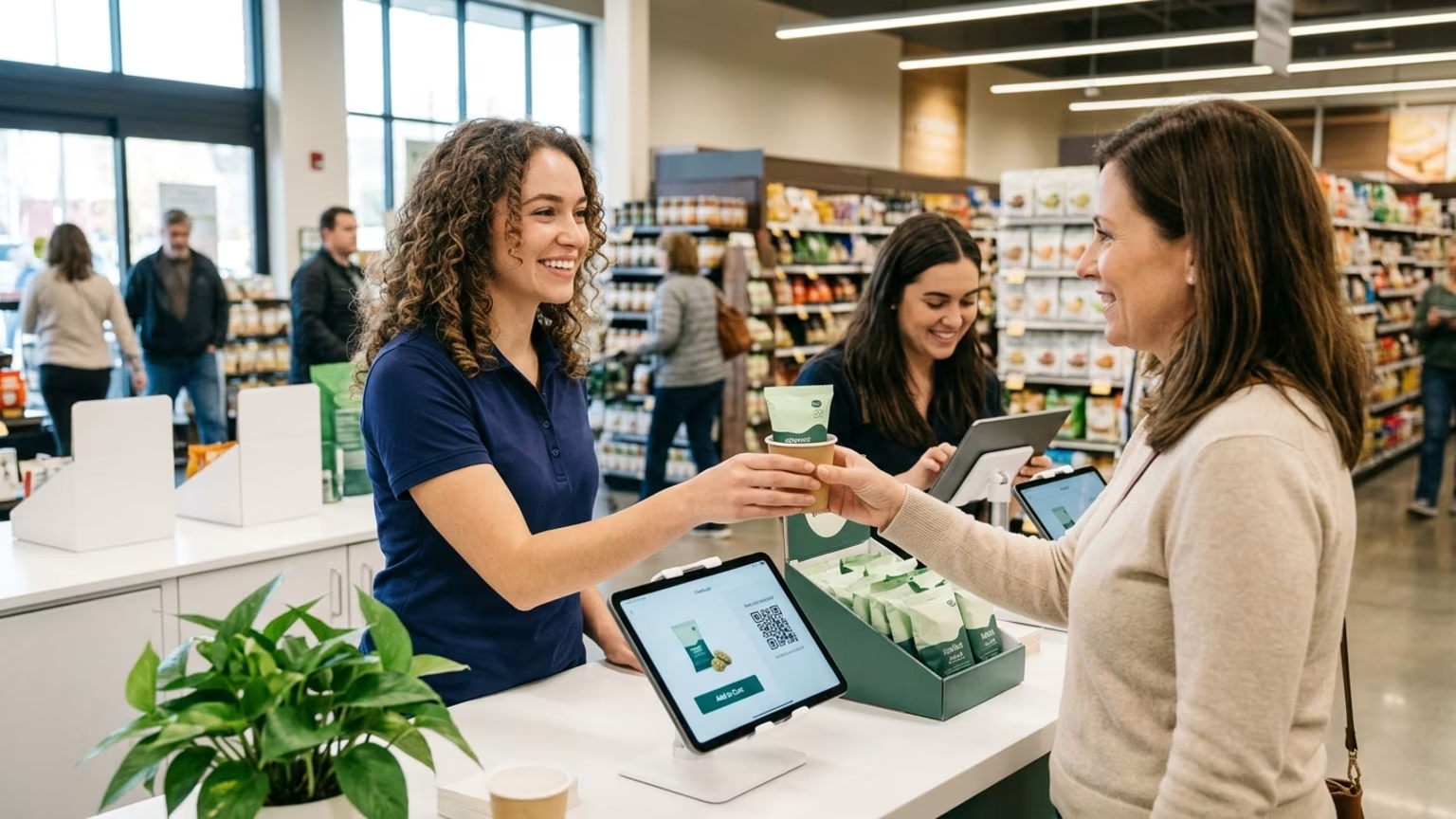
Field teams must be trained to support this data collection. Brand ambassadors should encourage consumers to scan QR codes, join loyalty programs, or use specific digital coupons. These digital handshakes connect the physical trial to the final retail purchase. The data then flows into the retailer media network for accurate attribution.
When you align field execution with rigorous data science, the results are undeniable. Retail partners gain confidence in your brand when you can prove your events drive real sales. This confidence leads to better shelf placement, more favorable terms, and stronger long-term partnerships. The modern shopper demands an experience, and the modern retailer demands proof.
Physical marketing is no longer about just showing up and handing out free products. The standard for field execution has been permanently raised by data-driven platforms and integrated measurement strategies. If your sampling program cannot prove its impact on the margin line, it will eventually face budget cuts.
Are your current field activations designed to capture measurable retail sales data, or are you still just counting cups poured?

30 Years Experiential & Retail Activation Partner for CPG & Beverage Brands | Multi-Market Demos, Roadshows & Costco/Club Programs That Actually Sell