Robbie Thain
Founder, CEO

Six environmental architecture layers protect mobile sampling footprints from extreme heat, heavy rain, wind loads, and severe weather threats during street.
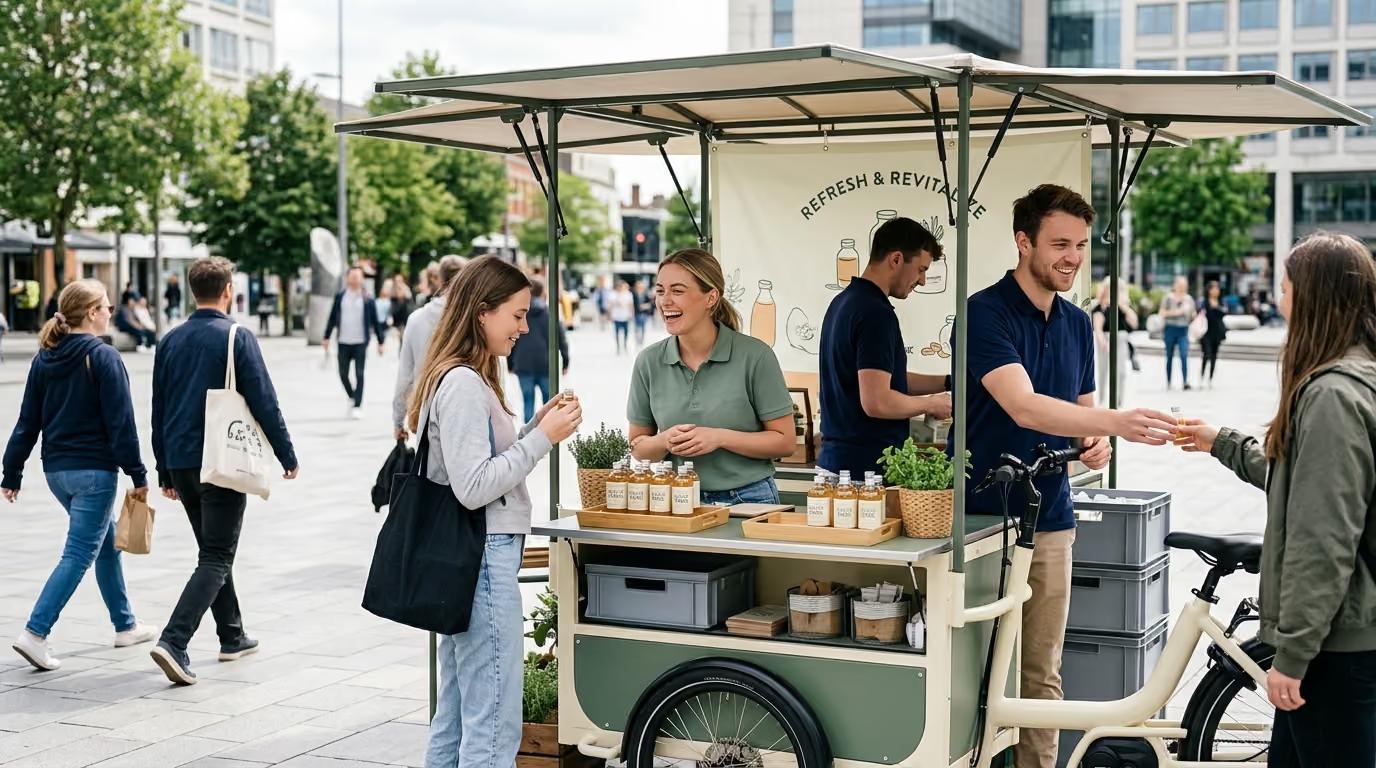
Brand leaders frequently search for how to keep outdoor marketing campaigns running when severe heat, driving rain, or high winds threaten to shut them down. This operational manual provides the definitive framework for weather-proofing mobile sampling tours, pop-ups, and street activations to protect staff, preserve product integrity, and maintain commercial conversion.
Field marketing teams require an operational system that converts environmental volatility into predictable, safe brand interactions. This guide establishes the protocols, equipment standards, and decision matrices needed to turn hostile weather into a measurable business advantage.
Live activations outside traditional venues expose marketing assets to unpredictable physical variables. An unexpected thunderstorm can strike during a peak lunchtime sampling rush in an open plaza. Canopy tents buckle under sudden wind gusts, rain floods electrical distribution lines, and expensive printed collateral transforms into pulp within minutes. Brand ambassadors scramble to protect product inventory while consumers run for cover.
In extreme summer conditions, asphalt temperatures can exceed ambient air readings by thirty degrees. Product samples spoil rapidly inside unshaded staging bins while ambassadors suffer heat strain. Without a clear plan, brand teams argue over whether to stay open or pack up. These chaotic responses destroy product sampling efficiency, burn brand capital, and create severe liability risks.
Uncontrolled conditions demand an engineered operational response rather than improvised reactions. When field marketing directors treat weather as an afterthought, activations fail at the first sign of rain or heat. Success requires shifting from passive hope to structured environmental control.
Weather-proofing requires a multi-tiered defense that integrates logistics, human factors, and commercial goals. Relying on pop-up tents and extra water bottles does not solve systemic environmental risks. Field operators must evaluate every campaign footprint across six interconnected layers.
Planning starts with continuous forecasting before deployment and during live operations. Operators track wet-bulb globe temperature, hourly precipitation probability, wind gust limits, lightning strikes, and shade trajectories. Teams balance regional meteorological data against microclimates created by urban canyons and reflective glass architecture. Advanced planning combines long-range forecasts with live on-site monitoring tools to drive proactive decisions.
Every footprint demands a physical assessment for natural shade, drainage gradients, and fall-line risks. Operators identify structural shelters, hard-topped vehicles, and accessible indoor fallback spaces during initial site selection. You can establish clear site boundaries and backup plans through thorough mobile tour route planning and municipal permitting that account for unexpected weather. Evaluating ground stability, power drops, and emergency vehicle access ensures the venue can handle severe weather shifts.
The footprint includes the vehicle, shade structures, display units, power sources, and storage cases. Operators categorize every asset by its environmental resistance, wind loading, and electrical safety rating. Using commercial ballasting, rated canopies, and sealed connections prevents structural failure when gusts or downpours occur. Standard operating procedure requires regular structural inspections before opening and during shifting weather conditions.
Field personnel represent the most vulnerable operational asset during extreme weather. Systems must manage work-to-rest cycles, warm-up or cool-down recovery breaks, hydration protocols, and protective workwear. Clear staffing models assign active safety leads and rotation relief to prevent heat illness or cold stress. Documenting worker protection policies aligns with national labor standards and maintains consistent engagement standards on the floor.
Product stock must remain within strict sensory, physical, and regulatory temperature bands. Heat, humidity, freezing conditions, and direct sunlight damage food formulations, degrade cosmetics, and destroy packaging adhesives. Operators use calibrated digital thermometers, separate staging stock from bulk reserve inventory, and set strict discard rules. Monitoring product limits protects consumer health and preserves the intended brand trial experience.
When severe weather disrupts an activation, messaging protocols must guide staff, clients, and consumers. Communications define the exact nature of the delay, designated shelters, scheduled restart times, and alternative indoor locations. Coordinated updates across digital channels and on-site signage eliminate confusion and queue abandonment. Fast, transparent reporting protects brand reputation and establishes clear timelines for operational recovery.
Field managers must establish precise operational thresholds for specific environmental hazards. Vague terms like bad weather lead to delayed safety calls. Every campaign operating manual needs clear numerical triggers for action.
Ambient temperature alone fails to capture total environmental heat load on the human body. The Occupational Safety and Health Administration uses the wet-bulb globe temperature (WBGT) to evaluate heat hazards, combining ambient temperature, humidity, wind speed, and solar radiation. When WBGT readings climb, the body struggles to cool itself through sweat evaporation, increasing the risk of heat exhaustion and heat stroke.
Field setups must incorporate active cooling, reflective canopies, and shaded recovery spaces. Ambassadors require electrolyte solutions, mandatory hydration breaks, and split rotations during high-heat hours. Workloads should shift to morning or evening windows to avoid peak solar radiation.
Sub-freezing conditions degrade human motor skills, drain lithium battery reserves, and freeze liquid samples. The Occupational Safety and Health Administration recommends a three-layer clothing system, frequent warming breaks in heated spaces, and warm beverages to combat cold stress. Operators should avoid exposing bare skin to cold metal surfaces, which can cause instant tissue damage.
Winter footprints require non-slip drainage matting, radiant heaters, and commercial de-icing compounds. Sampling equipment and beverage pumps must be insulated to prevent mechanical lockups. Shift lengths should be shortened to keep ambassadors sharp, alert, and capable of executing positive brand conversations.
Rain creates slip hazards, ruins paper collateral, and threatens unsealed electrical distribution hardware. It also degrades queue discipline and disperses casual foot traffic. Footprints must use water-resistant cases, raised storage pallets, and heavy-duty cable ramps rated for wet conditions.
When wet weather arrives, teams should transition from wide-perimeter sampling to covered entry points and transit hubs. Printed flyers should be swapped for high-contrast, waterproof digital display boards. Maintaining dry prep zones ensures samples reach consumers in pristine, hygienic condition.
Wind is the single greatest structural hazard for outdoor marketing activations and temporary installations. ANSI E1.21-2024 standards require operators to document structural wind ratings, reduction factors, and the surface area impact of solid side walls. Adding branded side drops to a canopy turns a simple shelter into a dangerous sail during unexpected gusts.
Ballast calculations must use certified steel weights or concrete blocks rather than makeshift water jugs. On-site leads should monitor wind speeds with digital handheld anemometers. When gusts exceed manufacturer safety limits, crews must immediately drop banners, remove walls, or dismantle the canopy.
Canopies, pop-up tents, and open gazebos offer zero protection against lightning strikes. The National Weather Service states that small outdoor shelters are unsafe, mandating immediate evacuation to substantial buildings or fully enclosed metal vehicles. Outdoor activity must stop immediately the moment thunder is heard or lightning is detected within safe operational radii.
Operations cannot resume until at least 30 minutes after the final audible thunderclap or lightning strike. Safety leads must resist pressure to reopen early just because rain has stopped falling. Preserving consumer and staff safety remains the non-negotiable operational priority.
Snowfall introduces live structural loads on canopies while turning walking paths into severe fall zones. Industry event guidance mandates monitoring maximum snow loads on roofs and establishing continuous clearing protocols. Heavy snow buildup can cause unheated frame structures to collapse without warning.
Crews must secure site maintenance agreements for active snow removal, salt applications, and clear emergency access paths. Insulated transport vehicles must be monitored to ensure delicate product inventory does not freeze during transit. When conditions compromise transportation arteries, safety leads must execute pre-approved postponement or indoor relocation plans.
Outdoor activation builds must be engineered to withstand severe weather loads without compromising visual appeal. Selecting correct materials, ballasting setups, and power hardware prevents catastrophic physical failures in the field.
Pop-up structures must possess certified engineering documentation defining maximum wind resistance and live load limits. Commercial-grade hexagonal aluminum or steel frames outperform consumer-grade recreational canopies under heavy stress. Operators calculate required ballast using canopy footprint, anticipated gust speeds, and surface friction values.
Weights must be mechanically locked directly to frame legs rather than tied with loose cords. Water barrels provide unreliable ballast because they lose mass quickly if punctured and shift under lateral pressure. Concrete blocks, cast-iron weights, and heavy sandbags wrapped in durable Cordura covers provide dependable downward force.
Placing activations directly on bare dirt, grass, or uneven asphalt invites pooling water and slip hazards. Interlocking polypropylene modular flooring systems elevate staff and consumers above runoff channels. Textured slip-resistant walking surfaces prevent falls during sustained downpours.
Flooring layouts must incorporate natural drainage paths and cable run channels. Ramps must meet accessibility guidelines while maintaining structural stability on wet sub-bases. Regular inspections ensure sub-floors do not buckle or lift under direct thermal expansion during high summer heat.
Signage elements must be engineered with low centers of gravity and minimal surface resistance. Tall teardrop banners, rigid wooden displays, and large vertical backdrops must feature wind-permeable mesh or quick-release fasteners. When ambient winds climb, staff can quickly detach graphics without destabilizing the main frame.
A-frame menu boards should be weighted internally with sand and placed away from high-traffic drop edges. Overhead branding must utilize perforated mesh fabrics that allow air to pass through freely. Eliminating unvented solid vinyl backdrops drastically reduces the total overturning moment applied to the structure.
Electrical systems deployed in outdoor environments require commercial-grade water and thermal protection. All power distribution units must incorporate ground-fault circuit interrupters to prevent electric shocks in wet conditions. Outdoor cabling must be rated for heavy-duty exposure and elevated off wet pavement using heavy rubber drive-over ramps.
Tablets, badge scanners, and digital lead-capture hardware overheat in direct sunlight and fail in freezing cold. Field units should utilize high-capacity portable battery stations kept in insulated, ventilated equipment enclosures. Staff must maintain physical lead capture sheets in waterproof cases as a backup for complete electronic failure.
Delivering damaged, unhygienic, or spoiled samples destroys consumer trust and creates immediate public health liabilities. Teams executing food, beverage, or personal care sampling must adhere to rigid temperature control and handling protocols.
For time/temperature control for safety foods, the FDA Food Code mandates cold holding at 41°F (5°C) or below and hot holding at 135°F (57°C) or above. Field teams must maintain formal thermal logs, capturing calibrated digital thermometer readings every 30 minutes. Storing samples in a cooler filled with melting ice does not prove regulatory compliance.
Operators must separate transport temperature, bulk storage temperature, staging temperature, and final service temperature. Calibrated internal probe sensors verify core product condition rather than ambient air around packaging. Any perishable product exceeding critical safety limits must be discarded immediately without exception.
Exposing an entire day's inventory to ambient street temperatures causes rapid degradation and waste. Operators should implement a two-stage inventory process, maintaining the bulk supply inside insulated onboard refrigeration units while cycling small batches to the serving counter. This operational rhythm limits total ambient exposure to minutes rather than hours.
Ice used for cooling outer packaging must never contact open food containers or ice intended for beverage mixing. Staging coolers should be elevated off hot pavement, kept under shade canopies, and insulated with thermal blankets. Minimizing cooler lid openings preserves internal holding environments throughout intense summer afternoons.
Cold weather presents unique threats to emulsion-based foods, carbonated beverages, and liquid personal care products. Freezing temperatures can break mayonnaise-based sauces, crack glass bottles, and cause liquid suspensions to separate permanently. Sensitive products must be transported in climate-controlled cabins rather than uninsulated cargo trailers.
Service counters need insulated dispensers and localized heating elements to prevent product crystallization. Field teams should monitor local forecast minimums during overnight vehicle storage stops. When ambient temperatures drop below freezing, all liquid inventory must be moved into heated overnight storage facilities.
Wet conditions increase the spread of mud, road grime, and dirty rainwater into prep areas. Operators must build a clear physical barrier separating consumer queue lines, prep surfaces, waste bins, and clean storage. Prep stations must be enclosed under fully covered canopy sections fitted with side drip edges.
Staff must have access to functional portable handwashing sinks supplied with warm water, soap, and single-use towels. Hand sanitizers provide supplementary cleaning but do not replace required handwashing after handling wet infrastructure. All single-use sample cups, spoons, and napkins must be stored in lidded plastic bins elevated off the deck.
An experiential marketing activation is only as reliable as the street team executing it. Managing environmental stress ensures high-energy consumer engagements while eliminating fatigue and heat-related illnesses.
The National Institute for Occupational Safety and Health emphasizes that physical work in high-heat settings requires structured rest breaks and active fluid replacement. Operating manuals must mandate specific work-to-rest rotations based on ambient WBGT readings. Brand ambassadors cannot be left to self-regulate hydration while managing long lines of consumers.
Field leads must provide potable drinking water alongside electrolyte replenishment beverages throughout the shift. Resting ambassadors must sit inside air-conditioned vehicles or dedicated cooling tents equipped with misting fans. To explore scalable staffing frameworks across complex tours, review staffing mobile sampling and street teams under extreme operational demands.
Working outdoor activations in winter demands strict adherence to protective clothing standards. Street teams require a moisture-wicking synthetic base layer, a fleece or wool insulating middle layer, and a wind-blocking waterproof outer shell. Footwear must be fully waterproof and insulated, featuring aggressive rubber tread patterns to prevent slips on icy plazas.
Management must supply branded, touch-screen compatible thermal gloves that allow staff to operate registration tablets without exposing bare skin. Warm resting zones stocked with hot, decaffeinated beverages help ambassadors recover core body heat quickly. Regular check-ins ensure no team member shows early symptoms of hypothermia or frostbite.
Deploying a single brand ambassador to manage an outdoor footprint alone invites operational failure. Severe weather increases physical task loads, requiring a specialized crew configuration:
Physical discomfort from harsh weather drains mental energy, reduces smile frequency, and slows speech pacing. When ambassadors battle freezing winds or sweltering humidity, routine tasks like opening boxes or wiping counters take twice as long. Managers must build realistic throughput assumptions into their operational plans rather than expecting fair-weather performance.
Regular buddy-system checks allow crew members to watch each other for signs of disorientation, slurred speech, or exhaustion. Providing clean, dry backup uniforms and branded outerwear ensures the team looks sharp and professional all day. Investing in crew physical comfort directly protects the quality of your brand interactions.
Weather volatility changes consumer behavior, walking speed, and psychological receptivity. Top brand teams adapt their value propositions, queue mechanics, and digital ad framing to match live weather conditions.
Research published by INFORMS in Marketing Science demonstrates that consumer response rates to promotional mobile campaigns are significantly higher and up to 73% faster in sunny weather compared to cloudy days. Rainy weather reduces response volume and slows consumer engagement speeds by nearly 59% relative to overcast baselines. Bad weather compresses dwell time as consumers move quickly to reach indoor shelters.
Marketing teams should adjust on-site calls-to-action when bad weather arrives. Instead of asking consumers to complete long digital surveys, crews should offer rapid, low-friction interactions. Streamlining sample delivery respects consumer comfort and prevents congested, uncomfortable bottlenecks under canopies.
The same marketing studies reveal that prevention-focused messaging helps offset response drops during cold or rainy conditions. On sunny days, promotion-focused copy highlighting energy, indulgence, discovery, and reward drives optimal conversion. When rain falls or temperatures drop, messaging should shift toward comfort, utility, warmth, protection, and immediate convenience.
Signage should be adjusted based on the current weather. An energy drink sampling footprint can highlight crisp summer refreshment during hot afternoons, then pivot to functional focus and clean energy during dreary, rainy mornings. Aligning brand messaging with environmental psychology makes your campaign feel relevant to the consumer's immediate reality.
When bad weather hits, consumers will not wait in long, exposed lines. Activations must convert traditional multi-step consumer journeys into efficient, single-touch brand experiences. Sample pre-portioning, touchless digital coupons, and bold visual displays allow consumers to understand the brand offer within seconds.
For deeper insights into matching physical footprints to real-world consumer behavior, explore designing mobile activations for real conditions across volatile urban markets. Reducing friction builds positive brand sentiment, even when running activations in difficult weather.
Executing an outdoor activation demands a disciplined sequence of operational checks. Field leads must follow an orderly protocol covering site arrival, active engagement, and controlled shutdown.
Evaluating campaign performance requires analyzing both lead execution metrics and lag commercial returns. Calculating the true Return on Investment requires linking weather resilience directly to retail velocity and sampling efficiency.
Lead indicators track how effectively the field team manages safety, logistics, and product quality:
Lag metrics evaluate overall business impact, financial efficiency, and regional retail lift:
For teams building executive reporting frameworks, review this complete guide on measuring the business impact of sampling activations across high-stakes consumer tours. You can also explore our operational guide on contingency planning frameworks for field logistics to safeguard campaign budgets against unpredicted disruptions.
A national ready-to-drink functional beverage brand launched a multi-city mobile tour across eight Midwest metros during late summer. The brand faced severe heat waves, sudden line-squall thunderstorms, and gusty winds on downtown plazas. Maintaining an active campaign was crucial to support a major grocery rollout across 400 retail doors.
We design mobile activations and roadshows that accelerate consumer trial, build trust, and boost retail velocity during 90-day product launch windows. Our structured approach transforms initial product trial into sustained consumer confidence and retail performance. In our experience managing complex regional rollouts, success requires strict operational discipline across every footprint.
The tour operations team used a dynamic contingency framework:
When a severe line squall produced 35-knot gusts in Chicago, the team executed an orderly pause within four minutes. Staff moved consumers into an enclosed retail galleria, lowered the canopies, and continued sampling through their indoor retail partner. The activation achieved 94% operational uptime, distributed 85,000 samples, and drove an 18.7% retail sales lift across partner grocery stores.
Field marketing directors, experiential managers, and tour leads can implement these actionable steps this week:

30 Years Experiential & Retail Activation Partner for CPG & Beverage Brands | Multi-Market Demos, Roadshows & Costco/Club Programs That Actually Sell