Robbie Thain
Founder, CEO

Discover how brands are replacing purely digital campaigns with retail-driven mobile tours to capture first-party data and drive immediate sell-through.
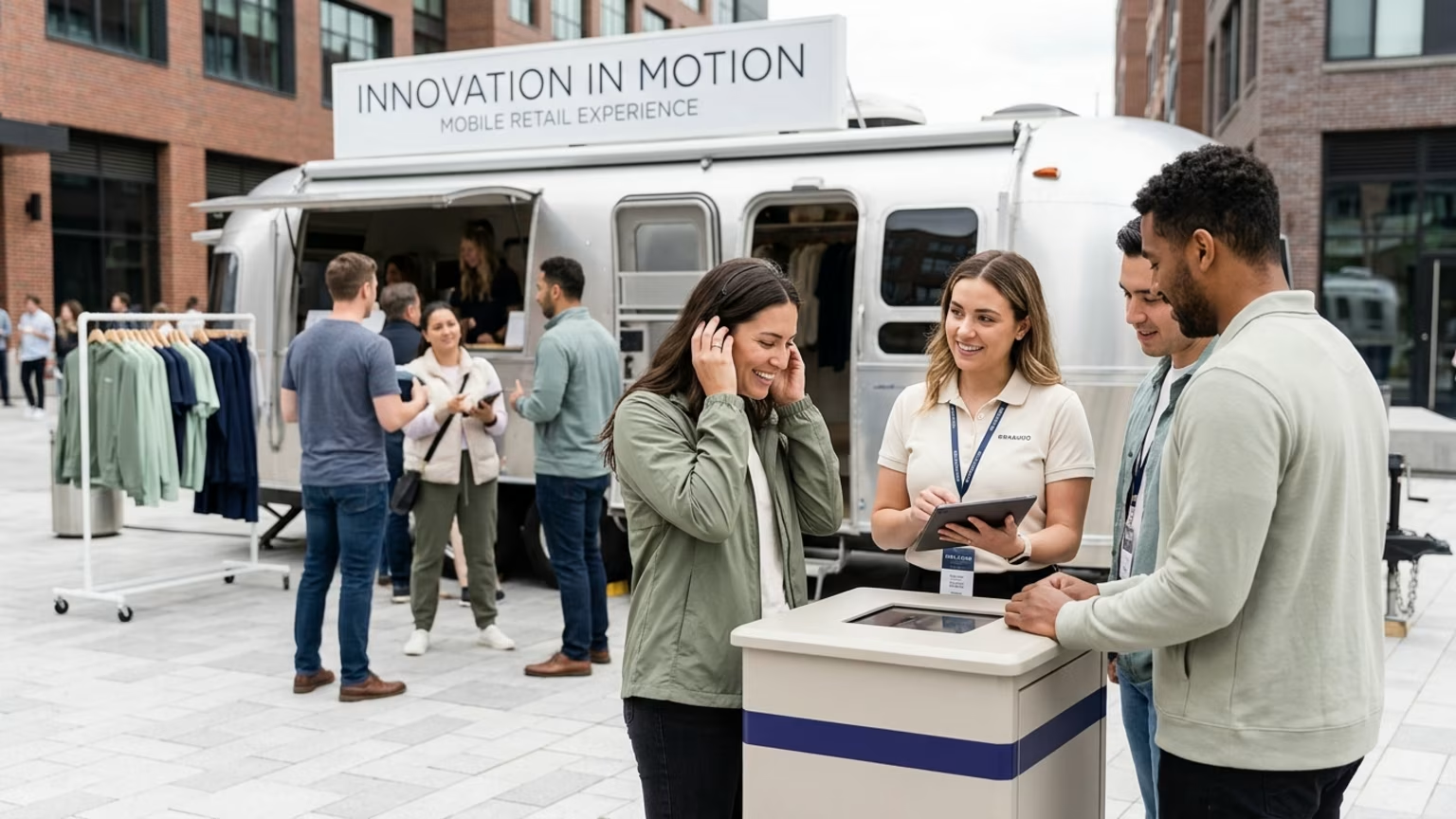
Digital advertising is losing its absolute grip on the modern consumer. In early 2026, a structural shift occurred across the experiential marketing category. Rising digital acquisition costs and the phasing out of third-party cookies forced consumer brands to rethink data acquisition entirely. Companies began moving budgets away from purely digital campaigns to focus on mobile tours that require digital sign-ups to gather consented data.
Marketing operators realized that consumers were increasingly ignoring fragmented digital messaging. The focus shifted toward high-impact physical brand experiences that could capture attention in the real world. By mandating a registration step for participation, brands created a clean stream of first-party consumer data. This structural shift transformed the basic street activation into a core part of the internal data ecosystem.
Digital campaigns alone can no longer guarantee the same level of granular audience insight. Brands are now forced to earn their data by providing a physical experience that consumers actually value.
Historically, roadshows focused heavily on brand awareness through simple product distribution. That model has transitioned into a highly operational retail acquisition engine. The core change involves integrating on-site retail partners directly into the footprint of the mobile tour. This logistical pivot allows consumers to test a technical product in real-world conditions and purchase it immediately.
Instead of hoping a consumer remembers the brand during their next grocery trip, the transaction happens on the spot. The physical footprint itself is now engineered to prioritize a direct path to purchase. Digital sign-ups bridge the gap between the initial engagement and the final sale. Every element of the pop-up activation is optimized to track how live interactions influence purchasing behavior.
Consumers are encouraged to share their experiences online to generate organic social amplification. This process turns standard consumer trial into highly visible user-generated marketing content.
This transition demands a precise approach to inventory management and data routing. Foot traffic must be directed through a specific flow that mandates registration before participation. The event space is no longer designed just to look attractive to passersby. It is built to capture data, prove demand, and facilitate immediate sell-through for the featured product.
Logistically, this requires a deeper level of coordination before the truck ever leaves the warehouse. Planners must negotiate retail partnerships, align inventory drops, and integrate mobile technology into the physical environment. We blend physical and digital experiences by integrating mobile technology and real-world activations into a cohesive layer. This integrated approach is not a standalone service but an upgrade we apply to drive connected results.
At makai, we believe a physical activation without a clear conversion path is simply expensive scenery. Brand theater might generate temporary attention, but it rarely produces the Return on Investment (ROI) required by modern marketing leaders. When consumers physically interact with a product, they build a connection that digital ads simply cannot replicate. We turn audiences into participants with live and digital experiences that invite people to try, share, and act.
Our team applies operator-grade discipline to ensure every physical interaction supports a measurable business goal. Brands need their target audience to test the actual benefits of a product in a realistic environment. Whether a consumer is evaluating grip or taste, a tangible trial removes friction from the buying process. This is why driving trial through multi-city mobile sampling tours is becoming a central strategy for consumer goods companies.
Live marketing must be accountable to the same performance standards as any other channel. A well-executed field program should generate qualified leads, drive retail sell-through, and build a lasting relationship with the consumer. We manage end to end roadshows that bring brands to shoppers through real conversations and measurable sales impact. When the execution is flawless, the resulting data proves the actual value of the event.
We focus heavily on the nuances of food, beverage, and consumer goods sectors to maximize pipeline. The goal is always to move the needle on actual retail performance rather than just generating a crowd. Brands cannot afford to guess if their experiential marketing is working. They need hard evidence that shows exactly how physical participation led to a specific business outcome.
Event metrics must align strictly with broader corporate objectives to justify the required logistical investment. A successful activation proves that real-world engagement is a primary driver of customer loyalty and immediate revenue. Marketing leaders are under intense pressure to demonstrate how physical deployments lower overall customer acquisition costs. Measuring this impact requires strict adherence to tracking protocols and an uncompromising focus on operational flow.
Transitioning from a traditional awareness campaign to a data-driven retail roadshow creates significant downstream effects. Field staffing requirements change completely under this new operational model. Brand ambassadors can no longer just smile and hand out free merchandise to a passing crowd. They must be trained to manage data capture systems, guide consumers through product trial zones, and transition visitors toward a purchase.
This requirement shifts the focus of staff training toward technical proficiency and sales execution. Field teams need to understand the underlying data strategy and how their actions impact the overall campaign goals. Staff must comfortably prompt consumers to complete digital registrations without slowing down the flow of traffic. Any hesitation or confusion at the registration point will cause a massive bottleneck.
Brands must invest in comprehensive training programs that emphasize active selling techniques over passive engagement. Staff members are now the primary custodians of the consumer data pipeline. They must ensure that every single interaction is properly logged, categorized, and routed for subsequent follow-up. This expanded responsibility demands a more sophisticated approach to hiring, compensation, and ongoing field management.
This operational shift also introduces complex contingency planning for the entire field marketing team. The success of localized activations depends heavily on managing unpredictable variables like weather and specific venue foot traffic. Teams must coordinate closely with on-site retail partners to guarantee adequate inventory levels during peak engagement windows. If a product trial goes perfectly but the local retailer is out of stock, the entire pipeline breaks.
Permitting and footprint design must also adapt to accommodate these dual-purpose event structures. The event layout requires dedicated spaces for digital registration, the actual physical trial, and the final point of sale. Managing this flow efficiently prevents bottlenecks and keeps consumers moving smoothly from introduction to transaction. Teams that understand how CPG brands lean on mobile pop-up tours and roadshows to support retail expansion know that layout dictates conversion.
Brands must also ensure their backend systems are prepared to handle the influx of consumer data. The routing of leads from the field to the correct internal database must happen without delay. If the data sits untouched in a spreadsheet for weeks, the opportunity for social amplification and follow-up is completely lost. Successful programs integrate the field data directly into existing customer relationship platforms.
Are your physical activations designed to capture measurable retail demand, or are they just generating localized foot traffic?

30 Years Experiential & Retail Activation Partner for CPG & Beverage Brands | Multi-Market Demos, Roadshows & Costco/Club Programs That Actually Sell


