Robbie Thain
Founder, CEO

Measurable retail sales growth comes from matching operational trial mechanics across six core product sampling formats to specific shopper purchase barriers.
Handing out free products does not guarantee retail growth, and measuring a campaign solely by the volume of distributed samples often conceals operational waste. Selecting the correct sampling format requires matching the physical trial experience to the exact friction point preventing a shopper from buying.
Walking onto a crowded retail floor or expo hall often reveals a disorganized spectacle. Brand ambassadors stand behind makeshift tables, shouting rehearsed scripts at hurried shoppers who grab free bites and walk away without glancing at the packaging. Inventory sits trapped on pallets in the backroom while display shelves near the demonstration table run empty within the first two hours.
Meanwhile, marketing directors review field reports showing thousands of units distributed, yet Monday morning scanner data reveals zero incremental lift at the register. Event staff track headcount instead of qualified interactions. Shoppers take samples home only to lose them in the bottom of a tote bag.
This chaos stems from a fundamental mismatch between the chosen format and the shopper journey. When a brand treats every sampling opportunity as an open food table or a generic giveaway, it wastes capital and burns retailer goodwill.
Physical trial must solve a specific consumer hesitation. Without operational discipline, live activations produce noise rather than measurable retail revenue.
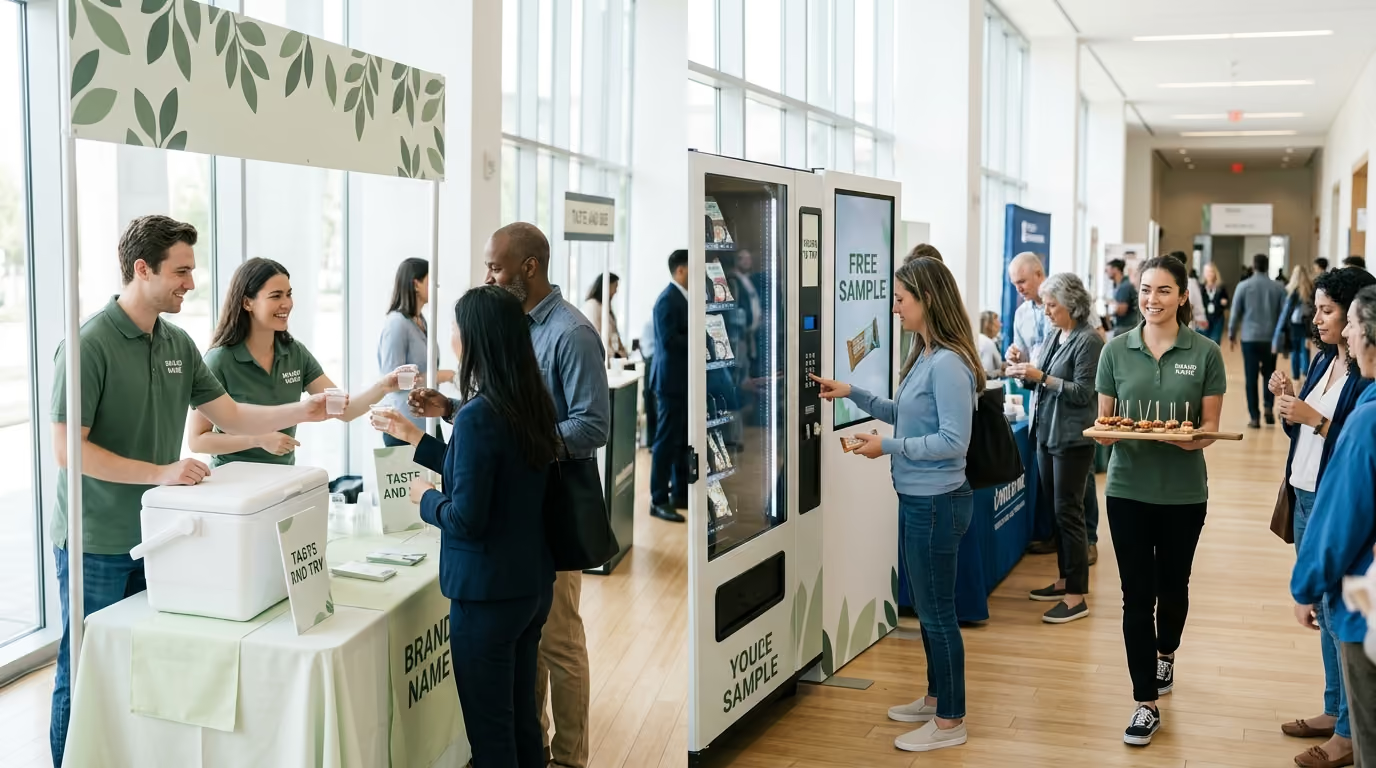
Product sampling is the distribution of a low-cost or free product experience to prompt consumers to try, evaluate, and purchase an item. The mechanism separates into distinct operational models, including staffed tasting tables, mobile units, self-serve kiosks, retailer festival days, immersive pop-ups, and sealed take-home packets.
The strategic question is never about which format achieves the rawest volume. Operators must determine what specific action the shopper must take, and which format removes the barrier to that action. A low-risk snack requires an immediate taste test right beside the checkout shelf. A premium beauty serum requires repeated use at home over several days before the consumer notices a difference.
A clear distinction exists between trial and conversion. Trial means a consumer physically tests or consumes the sample. Conversion means that consumer takes a profitable next step, such as buying a full-size unit, redeeming a tracked coupon, or joining a loyalty program.
Research demonstrates the sustained commercial power of structured sampling. A study analyzing six store-level scanner datasets across four product categories published in the Journal of Retailing found that in-store sampling produces both immediate and sustained sales effects. The authors noted that repeated sampling generates a multiplicative increase in long-term sales performance. Furthermore, research from the University of Wisconsin indicated that effective sampling expands total category sales rather than merely shifting volume between direct competitors.
Physical trial works because sensory experience cuts through advertising skepticism. When a consumer evaluates taste, aroma, texture, skin feel, or mechanical performance, physical evidence replaces marketing claims. The proximity of that sensory moment to the point of sale dictates the speed and reliability of the resulting purchase.
Choosing the right format demands a clear understanding of labor demands, equipment needs, shopper psychology, and retail proximity. For brand leaders structuring a comprehensive retail product sampling program, each option presents distinct trade-offs.
Staffed demonstrations deploy a trained product specialist, demonstrator, or brand ambassador inside a grocery, club, or specialty retail environment. The specialist prepares samples, explains key product attributes, manages food safety, and directs interested shoppers straight to the retail shelf.
This format excels when a product requires active preparation, sensory reassurance, or complex education. It is ideal for new product launches, line extensions, premium specialty foods, and items with unfamiliar functional ingredients.
A study by PromoWorks and Knowledge Networks-PDI documented a 475% average sales lift on the day of an in-store sampling event compared to non-sampled control households. The study also revealed a 177% event-day lift for established products and a 919% event-day lift for new line extensions. The parent brand franchise enjoyed a 107% event-day sales lift, proving that live engagement benefits surrounding product lines.
The primary advantages include direct human engagement, immediate objection handling, and tight proximity to the store shelf. The disadvantages involve higher labor costs, ambassador quality variance, and retail scheduling friction. A study from Massey University noted that direct event costs can exceed same-day incremental gross revenue if labor and product usage are poorly managed. Successful execution requires treating the specialist as a conversion facilitator who keeps the product visible and guides the shopper to the shelf.
Mobile sampling relies on branded vehicles, roaming street teams, or modular mobile displays to engage consumers outside traditional retail aisles. These activations target transit stations, business districts, outdoor festivals, college campuses, and high-traffic public areas.
Mobile execution works best when building regional brand awareness ahead of a retail launch, reaching consumers during specific consumption moments, or creating visual spectacle. Brands in beverage, snacking, and personal care leverage mobile assets to generate high energy and intercept consumers who do not regularly visit a specific store.
The key strength of mobile sampling is geographic flexibility and total control over the physical brand presentation. A notable mobile campaign executed for Tide Pods via the Shazam platform generated 9,136 interactions and drove a 335% increase in sample requests after optimizing its call to action.
However, mobile units suffer from lower purchase proximity. Because the consumer is not standing inside a store, the activation must bridge the gap between trial and transaction. Operating a mobile tour also introduces municipal permitting requirements, complex route logistics, weather dependencies, and vehicle maintenance. Every mobile activation must provide an explicit next step, such as a digital store locator, a localized discount coupon, or a scheduled retailer pop-in.
Self-serve stations use automated dispensers, interactive kiosks, or dedicated sample fixtures to distribute product trials without full-time staff. Shoppers trigger sample dispensing by scanning a store loyalty card, tapping a mobile app, or interacting with a touchscreen display.
This format fits high-traffic retail environments where the product is simple, shelf-stable, and universally understood. Packaged snacks, ready-to-drink cans, laundry pods, and travel-sized toiletries perform exceptionally well in automated dispensers.
The primary benefit is operational efficiency. Automated units run continuously throughout store operating hours, reducing hourly labor costs while standardizing portion control and messaging. Data reported by trade publication Strategy Online regarding Freeosk campaigns cited an average sales lift above 50%, with 70% of buyers being new to the featured brand.
The weaknesses center on machine maintenance, refilling logistics, and the absence of human conversation. An automated kiosk cannot answer ingredient questions or persuade a hesitant shopper. If an automated machine runs out of stock or suffers a mechanical jam, the brand loses trial opportunities until a store clerk intervenes.
Retailer events integrate product trial into larger retail-driven initiatives, such as new store grand openings, seasonal parking lot festivals, holiday tasting fairs, or club store roadshows. In these programs, the retailer coordinates marketing support and invites select brands to participate.
This format is ideal for brands seeking stronger trade relationships, broader distribution, or placement across high-volume retail locations. Designing high-impact Costco roadshow programs offers a proven method for moving massive inventory volumes through systematic, multi-day retail demonstrations.
The benefits include built-in shopper foot traffic, retailer marketing support, and seamless coordination with endcap merchandising. The academic findings from the Journal of Retailing confirmed that repeated sampling events yield long-term compounding sales effects.
The challenges include shared shopper attention among dozens of competing booths, rigid retailer operational guidelines, and substantial participation fees. A brand must treat a retailer event as a complete sales engine. This means securing secondary displays, confirming adequate backroom stock, and training staff to handle rapid-fire crowds without sacrificing product hygiene.
Pop-ups are temporary physical retail installations built inside storefronts, shopping malls, transport hubs, or lifestyle venues. These environments blend product sampling with interactive brand installations, customized workshops, retail merchandise sales, and media production spaces.
Pop-up environments are best suited for premium cosmetic lines, wellness brands, home technology, and specialty apparel. They serve brands that require deep narrative storytelling, consumer lifestyle alignment, and press engagement rather than raw sample throughput.
The strategic strength lies in total control over lighting, sound, interior architecture, and consumer immersion. Academic research on temporary pop-up retail highlights the power of specialized physical environments in driving consumer exploration. Visitors to a pop-up spend extended time interacting with products, generating valuable social media reach and direct customer feedback.
The strategic weaknesses are high upfront capital expenditure, complex lease negotiations, and lower raw consumer volume compared to grocery sampling. Pop-ups should be evaluated as brand equity and qualified lead generation engines. Judging a pop-up solely on immediate sample-to-sale ratios ignores its broader impact on consumer lifetime value.
Packaged takeaways deliver sealed, single-use trial sachets, mini bottles, or sample kits for consumers to use in their own homes. These packets reach consumers through e-commerce order inserts, direct mail requests, beauty subscription boxes, or street team handoffs.
This format is essential for skincare, haircare, premium supplements, baby care, and household cleaning chemicals. These categories require multiple applications in private settings before the user experiences the full product benefit.
A published brand case from NIVEA Soft recorded over 100,000 samples delivered, generating more than 150,000 marketing opt-ins and an 8% retail purchase rate within two weeks. Similarly, a campaign for prestige skincare brand Erborian showed that 89% of sample recipients were completely new to the brand, with 9.7% purchasing full-size products and 55% indicating an intent to purchase within six months.
The advantages include precise demographic targeting, home-use context, and low distribution friction. The disadvantages are delayed purchase cycles, high packaging fulfillment costs, and the risk that samples sit unused in drawers. Success requires sample sufficiency. If a sachet contains too little product for a thorough trial, the consumer cannot evaluate the claim, creating an artificial barrier to purchase.
Selecting the right sampling model requires evaluating the specific barrier standing between the shopper and the checkout counter. Marketing teams should assess their strategic objectives using a balanced decision framework before committing field resources. When evaluating your field marketing demo and activation strategy, selecting the format that directly removes purchase friction is critical.
When consumers do not know what a product tastes or smells like, deploy staffed in-store demos or self-serve kiosks. These formats eliminate sensory hesitation at the point of purchase.
When consumers do not understand how to use or prepare an item, schedule staffed cooking demos, retailer event stages, or pop-up workshops. Live demonstration clarifies usage instructions within minutes.
When consumers need several days to verify product efficacy, distribute packaged takeaways supported by digital follow-up messaging. Rushing a multi-day trial into an immediate store aisle conversation produces poor conversion.
When consumers rarely shop at your target retailer, dispatch mobile sampling vehicles or street teams. Intercepting potential buyers across public spaces builds awareness and drives new foot traffic into retail accounts.
When retail buyers demand immediate, verifiable sales velocity, implement shelf-adjacent staffed demonstrations or club store roadshows. Physical proximity to available inventory guarantees maximum conversion speed.
Brand leaders can evaluate formats systematically by scoring ten operational dimensions on a scale of one to five:
Weight these scores based on business objectives. An emerging brand fighting to retain regional shelf placement must weight retail proximity and scan data lift heavily. A direct-to-consumer brand expanding into omni-channel retail should place higher weight on data capture and targeted household reach.
Flawless live execution requires rigorous operational structure. In our experience managing national activations over three decades, operational precision in the field determines whether an activation drives sustainable retail pipeline or drains resources. Brand teams should manage their operational allocations through a detailed retail sampling budgeting framework to maintain fiscal control.
Evaluating a sampling campaign requires separating top-of-funnel activity from true commercial impact. Tracking raw sample distribution without measuring downstream conversion gives brand managers a false sense of success. Operators must track a balanced scorecard of lead and lag indicators to prove true Return on Investment (ROI). Tracking critical retail sampling ROI metrics ensures marketing leaders justify event expenditures with hard sales evidence.
To maintain measurement accuracy, never mix different denominators in performance reporting. Samples produced, samples handed out, samples consumed, self-reported purchase intent, and verified register transactions represent entirely different metrics.
Verified register scan data from exposed stores compared against matched control stores remains the gold standard for measuring retail marketing efficiency.
Examining how leading CPG, food, and beverage brands execute different sampling models provides clear benchmarks for modern campaign design.
A sparkling beverage challenger sought to accelerate retail velocity and secure permanent secondary placement across premium grocery accounts. The brand deployed shelf-adjacent staffed tasting tables during peak weekend shopping windows. Brand specialists offered chilled, two-ounce sample pours, pairing each trial with a clear explanation of the drink's low-sugar, functional prebiotic formula.
The specialist directed every positive taster to an endcap display three feet away, offering a promotional bundle deal. The campaign generated an immediate 380% event-day sales lift across target locations, with 62% of purchasers identifying as new to the brand. Sustained weekly sales remained 28% higher than baseline 12 weeks after the campaign, convincing retail category buyers to expand permanent shelf allocation from two SKUs to four.
Ancient Nutrition partnered with sampling platform Social Nature to distribute product vouchers for its functional collagen line. The campaign targeted health-conscious shoppers who regularly purchased dietary supplements. Rather than offering open tastings in aisles, the program distributed trial vouchers that consumers redeemed in physical retail stores.
The post-trial research revealed that 33% of participating consumers repurchased the full-size product three months after the initial trial. Crucially, 44% of repurchasers bought Ancient Nutrition alongside their existing supplement brands, expanding their total basket size rather than substituting items. This approach proved that targeted take-home sampling builds long-term customer value for high-consideration health products.
Prestige beauty brand Erborian utilized a targeted digital-to-home sampling campaign to introduce its CC Cream to consumers. Recognizing that beauty shoppers require multi-day application in natural light to evaluate shade matching and skin feel, the brand distributed multi-shade trial sachets directly to consumers who requested them online.
The campaign achieved an 89% new-to-brand reach, demonstrating that the activation reached an incremental audience. Post-trial tracking showed that 9.7% of recipients purchased the full-size product within the initial follow-up window, while 55% expressed clear intent to purchase within six months. Separating verified purchase data from future intent provided leadership with clear visibility into their commercial conversion pipeline.
Executing sampling programs across national retail chains exposes brands to operational and regulatory risks. Anticipating these friction points protects brand equity and prevents costly field failures.
Food and beverage sampling requires strict adherence to food safety standards. Operators must follow the FDA Food Code and relevant health regulations.
All staff handling open food or drink must maintain clean handwashing stations, wear single-use food-grade gloves, and use sanitized utensils. Temperature-controlled goods, such as dairy, meat, and refrigerated beverages, must be monitored with calibrated thermometers to prevent temperature abuse.
Allergen transparency is critical. Field teams must display clear allergen warning signs covering the major food allergens, including milk, eggs, peanuts, tree nuts, fish, crustacean shellfish, wheat, soy, and sesame. When cross-contact cannot be guaranteed, staff must advise consumers with severe allergies to avoid open samples.
Distributing expired, damaged, or poorly portioned samples damages brand reputation instantly. Operators must track batch codes and expiration dates across every field storage hub.
For packaged takeaways, the physical portion must be large enough to deliver the promised benefit. A single-use packet of laundry detergent or a three-day skincare blister pack allows the user to judge performance accurately. Providing a micro-sample that runs out before results appear creates a false negative, causing the consumer to abandon the brand.
The most brilliant field sampling execution fails if the retail shelf is empty. When brand ambassadors generate high shopper demand but full-size inventory is missing from the store shelf, the marketing investment is wasted.
Brand teams must coordinate with distributor partners and store managers at least three weeks prior to live activations. Confirm that purchase orders have been processed, warehouse stock has been delivered to store backrooms, and store clerks have brought inventory to the floor. Brand ambassadors should inspect retail shelf levels before setting up their demonstration tables.
Field marketing directors can use this checklist to guide sampling programs from initial planning through post-campaign financial reporting.
Operational excellence and disciplined format selection turn live product sampling from an unpredictable expense into a reliable, repeatable engine for retail revenue growth.

30 Years Experiential & Retail Activation Partner for CPG & Beverage Brands | Multi-Market Demos, Roadshows & Costco/Club Programs That Actually Sell