Inclusive college marketing is not a cosmetic diversity exercise or a superficial branding campaign. It is an operational framework that designs physical activations, digital touchpoints, and field staffing to serve students across every socioeconomic reality, physical ability, academic schedule, faith tradition, and cultural background.
This definitive guide establishes the standards required to execute accessible campus programs that drive authentic student engagement while eliminating institutional tokenism.
What Does Inclusive Campus Marketing Actually Mean in Practice?
A noon activation in a central campus plaza often looks successful from a distance. Music plays from a pop-up tent, students cluster around folding tables to grab branded merchandise, and field reps distribute high-fives along with energy drinks. To an untrained observer, the footprint seems vibrant and effective.
Look closer at the operational friction on the ground. A student using a motorized wheelchair stops twenty feet away because power cables are taped across the curb cut without a rubber threshold ramp. A commuter student rushing between a four-hour lab and an off-campus retail shift bypasses the footprint entirely because the event offers no asynchronous engagement or quick trial route. A Muslim student observing a fast during Ramadan watches peers grab snacks while wondering why the brand scheduled its primary tasting event during daylight hours of a holy month. Nearby, a low-income student scans a promotional poster that promises giveaways only after an individual purchases a premium subscription package on a high-end smartphone.
In our experience, these breakdowns occur when experiential teams design activations around an idealized, monolithic vision of collegiate life. We create experiential marketing programs built to connect emotion with action. Our process blends creativity, strategy, and data to ensure every brand interaction drives measurable results. We craft experiences that engage all five senses, helping people not just see brands, but feel them, turning moments into meaningful business outcomes.
When field teams rely on assumptions rather than operational accessibility standards, they unintentionally exclude broad segments of the student population. True inclusivity requires examining every physical, digital, and interpersonal touchpoint in a campaign. It means auditing the path of travel across a campus lawn, testing registration forms with screen readers, and compensating student workers fairly for their labor. Building a campus marketing strategy that drives real results requires moving past superficial performative gestures and committing to systematic operational execution.
Which Student Circumstances Must Campus Marketing Strategies Account For?
Campus marketing programs must be engineered for the real demographic and economic landscape of modern higher education. When field programs assume that every student possesses surplus disposable income, reliable transportation, typical physical mobility, and completely open schedules, campaigns fail to connect with the modern student body.
Economic Circumstances and Basic Needs Insecurity
College marketing campaigns must never assume that prospective or current students enjoy uninterrupted financial security, stable housing, or regular access to balanced nutrition. According to the Hope Center’s 2023 to 2024 Student Basic Needs Survey, which evaluated 74,350 students across 91 institutions in 16 states, 59% of respondents experienced at least one form of food or housing insecurity. Specifically, 41% reported food insecurity, 48% experienced housing insecurity, and 14% experienced homelessness.
When researchers expanded the assessment to include mental health services, childcare, transportation, and internet or technology access, the figure climbed to 73% of students reporting at least one form of basic needs insecurity.
These economic realities demand specific changes to how brands structure campus activations:
- Eliminate paywalls and financial prerequisites for basic participation, trial sampling, and promotional giveaways.
- Clearly and transparently list all ingredients, nutritional profiles, and allergen disclosures on food samples rather than using ambiguous marketing terms.
- Provide accurate transit directions, shuttle schedules, and accessible parking options in pre-event digital communications.
- Avoid framing non-attendance as disinterest or lack of brand affinity.
- Publish core promotional information, scholarship opportunities, or educational content through asynchronous, low-bandwidth web pages.
- Partner with campus pantries or basic-needs hubs to ensure surplus product samples support student wellbeing directly.
The research does not indicate that marketing adjustments alone will fix basic-needs challenges. However, the data clearly proves that activations engineered solely for affluent, unencumbered students systematically alienate a substantial majority of the campus community.
Complex Schedules and Non-Traditional Enrollment
The traditional collegiate profile of an unencumbered student residing on campus and attending daytime lectures represents only a fraction of today's campus population. Marketing teams must design campaigns that reach commuters, working parents, part-time learners, adult students, and remote participants. The National Survey of Student Engagement provides data systems that disaggregate participation based on enrollment status, first-generation status, race, ethnicity, gender, and academic discipline.
Field teams should not assume that low midday foot traffic indicates weak brand interest. When brands schedule three-hour pop-up activations strictly between 11:00 AM and 2:00 PM, they miss working and commuter populations entirely.
To resolve this gap, field programs should monitor internal engagement metrics:
- Footprint attendance segmented across morning, afternoon, and evening shifts.
- Engagement rates across commuter centers, satellite campuses, and digital channels.
- Asynchronous resource downloads, QR scans, and video completion rates.
- Student inquiries submitted outside standard daytime business hours.
- Requests for alternative engagement formats, such as recorded sessions or digital office hours.
Integrating a seasonal campus planning framework allows brand teams to align campaign timing with commuter patterns, midterms, shift work, and evening class rotations.
Faith Observances, Fasting, and Dietary Requirements
Religious and spiritual inclusion requires planning that goes far beyond generic holiday calendar posts. Faith practices directly influence dietary requirements, fasting windows, daily prayer obligations, modesty considerations, and academic schedules.
Data from the 2024 INSPIRES snapshot reveals that while 46% of higher education institutions maintain dietary accommodations in at least some dining facilities, only 30% offer those options in every dining location. Furthermore, only 20% of campuses accommodate all dining facilities around fasting schedules. The same survey revealed that 73% of institutions require students to negotiate academic religious accommodations directly with faculty members, with only 33% of institutions mandating that faculty approve those requests.
When brands plan sampling tours and interactive footprints, these operational factors must shape the plan:
- Cross-reference production schedules with interfaith calendars before booking campus tour dates.
- Avoid planning major food and beverage sampling events during significant fasting periods, such as Ramadan or Yom Kippur.
- Provide detailed ingredient declarations, preparation notes, and explicit kosher, halal, vegetarian, and vegan designations.
- Establish private, sanitary, and quiet spaces within large event footprints that can serve for reflection, prayer, or lactation.
- Review all promotional claims and imagery with campus religious life advisers to avoid cultural missteps.
Physical, Sensory, and Cognitive Accessibility
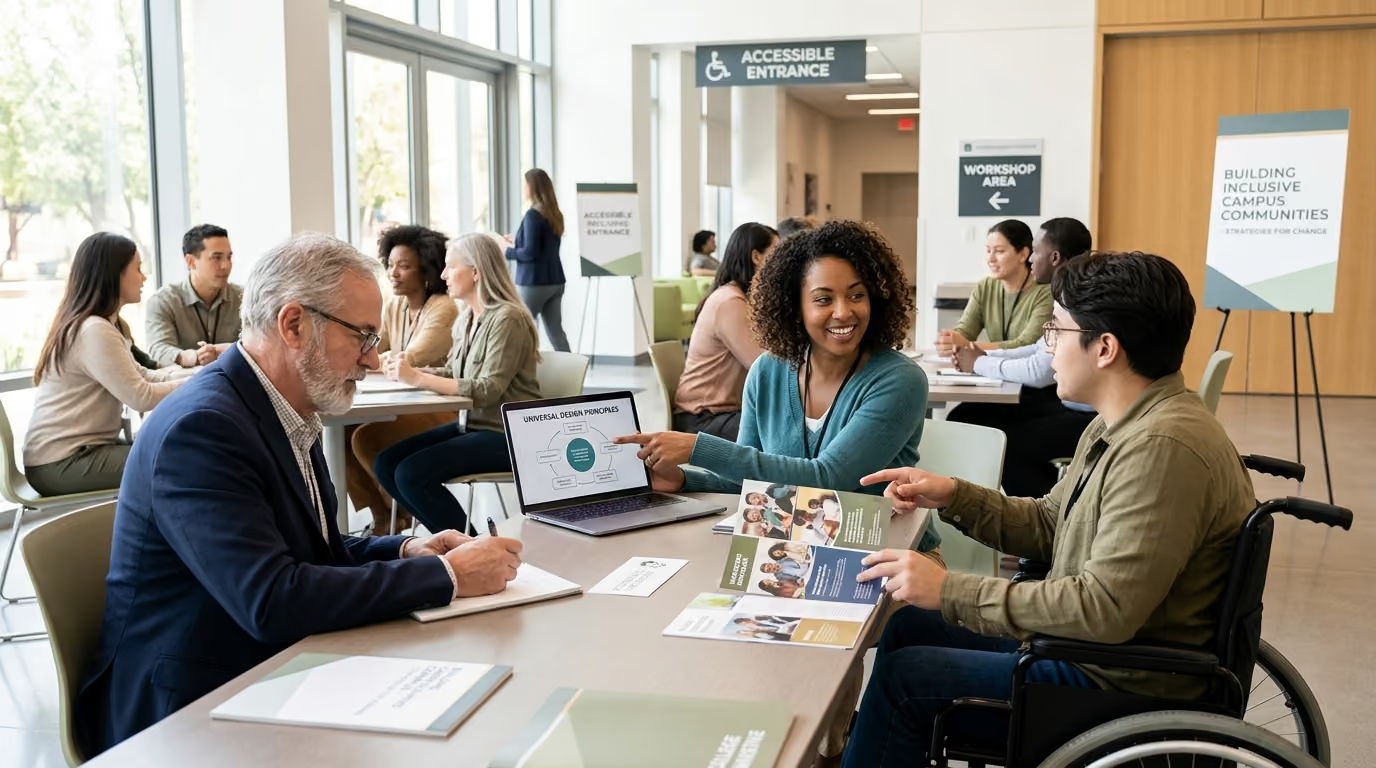
Students with visible and invisible disabilities must be treated as primary participants, leaders, and consumers. Research examining peer ambassador programs for disabled students emphasizes three core elements: peer guidance, practical skill development, and institutional barrier reduction.
Physical access must be engineered directly into the footprint blueprint:
- Maintain minimum path widths of 36 inches throughout the entire activation footprint.
- Keep interactive table heights between 28 and 34 inches with adequate knee clearance for wheelchair users.
- Route all electrical cabling, water lines, and audio wiring beneath heavy-duty ADA-compliant cable ramps.
- Provide low-sensory zones with reduced lighting and lower volume levels within high-energy promotional environments.
- Train all field staff to deliver verbal descriptions of visual displays and physical product attributes.
Planning accessible mobile sampling design ensures that every consumer can engage with the brand safely and comfortably.
- CORE PILLARS OF INCLUSIVE CAMPUS DESIGN
- 1. ECONOMIC ACCESS Zero-cost trial, public transit directions
- ingredient transparency, pantry partnerships
- 2. SCHEDULE FLEXIBILITY Asynchronous content, evening/weekend hours
- commuter hubs, low-bandwidth digital tools
- 3. FAITH AWARENESS Fasting-aligned timing, halal/kosher labeling
- dedicated prayer/quiet room accommodation
- 4. UNIVERSAL ACCESS ADA-compliant paths, low-sensory environments
- WCAG 2.2 digital assets, tactile interactions
How Should Student Ambassador Programs Support Inclusion Without Tokenism?
Student brand ambassador programs are often the front line of campus engagement. However, without intentional structural safeguards, these programs risk reducing diverse students to decorative tokens rather than empowering them as genuine brand advocates.
Recruiting for Real Perspectives Rather Than Visual Checkboxes
Academic research into student ambassadorship highlights a recurring challenge: ambassadors are often utilized purely as promotional marketing tools rather than authentic peer connectors. When brands treat ambassador recruitment as an exercise in assembling a demographic photo collage, students quickly identify the performative nature of the campaign.
Authentic recruitment focuses on varied life experiences, community leadership, and communication skills:
- Recruit across non-traditional student populations, including transfer students, student parents, military veterans, and commuter leaders.
- Partner with diverse campus organizations, including cultural associations, accessibility student unions, first-generation initiatives, and pre-professional societies.
- Make it explicit in job descriptions that ambassadors are never required to disclose personal medical histories, perform specific cultural roles, or speak on behalf of an entire demographic.
- Frame the ambassador position as a professional development opportunity focused on operational execution, project management, and community organizing.
When building Gen Z student ambassador activations, brands must align peer-to-peer engagement with ethical operational practices.
Providing Equitable Financial Compensation
Compensation is a core equity issue. Unpaid, commission-only, or product-only ambassador programs inherently filter for students who already possess outside financial support. Low-income, working, and first-generation students simply cannot afford to trade uncompensated hours for free merchandise or resume bullet points.
A fair ambassador compensation model must include:
- Transparent, competitive hourly pay that exceeds local municipal and campus minimum wage standards.
- Full compensation for all required onboarding, product training, event setup, teardown, and administrative reporting hours.
- Direct reimbursement for travel, parking, shipping pickups, mobile data usage, and operational expenses.
- Flexible scheduling policies that establish firm workload limits during midterm and final examination windows.
- Clear, accessible application, interviewing, and onboarding protocols that accommodate various assistive technologies.
Investing in building high-performing ambassador teams requires compensating student staff as professional field operators.
Training Ambassadors as Resourceful Guides
Scripted talking points fail because modern college students demand authenticity. When an ambassador is forced to recite rigid marketing slogans, peer trust evaporates. Ambassadors must be trained as knowledgeable, empathetic guides who understand institutional support systems and brand realities.
Training curricula should thoroughly prepare ambassadors on:
- Product formulations, sourcing transparency, allergy controls, and safety verifications.
- Navigating conversations around affordability, net value, and student discount structures.
- Standard operating procedures for coordinating accessibility accommodations and language support.
- Mental health, crisis intervention, and basic-needs referral boundaries.
- Appropriate language, correct name pronunciation, and respectful engagement standards.
- The operational discipline to say, "I do not know the answer to that, but let me connect you with the right resource."
Building Operational Feedback Loops and Accountability
Ambassador programs become extractive when brands collect student insights and ground-level feedback without using that information to fix operational flaws. Field leaders must establish closed-loop feedback systems that empower ambassadors to report real barriers.
A structured ambassador reporting mechanism should follow these stages:
- Post-Activation Logs: Ambassadors complete a standardized shift report documenting operational hurdles, physical obstructions, dietary concerns, and audience sentiment.
- Issue Categorization: Field managers sort reported issues into concrete operational buckets, such as physical access, scheduling, language barriers, or product messaging gaps.
- Corrective Action Assignments: Each identified friction point is assigned to a specific stakeholder with a required forty-eight-hour resolution window.
- Program Refinement: Field operations adjust activation footprints, supply distributions, or communication assets based on aggregate field reports.
- Transparent Communication: Leadership reports back to student ambassador teams to explain exactly what changes were implemented based on their field feedback.
- AMBASSADOR ACCOUNTABILITY FEEDBACK LOOP
- 1. Shift Log
- 2. Categorize
- 3. Action Plan
- 4. Adaptation
- 5. Closed Loop
What Accessibility Standards Should Govern Campus Marketing Content and Events?
Campus marketing campaigns bridge digital assets, physical environments, and interactive engagements. Ensuring compliance with established technical accessibility standards is non-negotiable for brand safety and consumer trust.
Applying WCAG 2.2 Standards to All Digital Marketing Touchpoints
All digital marketing assets, including registration portals, campaign landing pages, mobile apps, social media promotions, and QR code destinations, must adhere to the Web Content Accessibility Guidelines (WCAG) 2.2 Level AA standards.
Key digital accessibility requirements include:
- Color Contrast Ratios: Ensure standard body text maintains a contrast ratio of at least 4.5:1 against its background. Large-scale text must maintain a minimum ratio of 3:1.
- Synchronized Captions: Provide accurate, synchronized closed captioning for all prerecorded and live video assets. Never rely on automated, unedited auto-captions for core instructional material.
- Non-Text Content Alternatives: Provide concise, descriptive alternative text for all informational images, diagrams, and promotional graphics. Ensure pure decorative graphics contain empty alt attributes.
- Full Keyboard Operability: All digital interactive components, forms, dropdowns, and date pickers must be fully operable using a standard keyboard interface without requiring a mouse.
- Visible Focus Indicators: Ensure active keyboard focus indicators remain distinct, highly visible, and unobstructed across all interactive elements.
- Descriptive Hyperlinks: Replace ambiguous anchor text such as "click here" or "learn more" with explicit descriptions like "Download the campus dietary guide" or "Register for the evening session."
Digital accessibility must be audited through both automated testing tools and manual assistive-technology testing conducted by individuals who rely on screen readers, braille displays, and voice-command navigation.
Physical Footprint and Environmental Accessibility Standards
Live physical activations require careful spatial planning to guarantee unhindered access for every student, regardless of mobility limitations or sensory sensitivities.
Field operations must enforce these physical site standards:
- Clear Path of Travel: Maintain continuously unobstructed pathways of at least 36 inches across the entire activation footprint.
- Step-Free Ingress and Egress: Ensure every stage, sampling station, photo opportunity, and registration counter features step-free ramp access with a slope not exceeding a 1:12 ratio.
- Low-Profile Cable Protection: Protect all exposed electrical lines, water hoses, and signal cables with heavy-duty, ADA-compliant beveled ramps.
- Dual-Height Counters: Provide customer service and sampling surfaces at dual heights, offering standard standing heights alongside seated 30-inch accessible counters.
- Auditory and Sensory Management: Establish scheduled quiet hours or dedicated low-sensory environments featuring dimmed illumination, minimal bass, and reduced crowd density.
- Service Animal Accommodations: Maintain clear service animal relief zones and water stations, ensuring staff understand ADA regulations regarding service animals.
- PHYSICAL ACTIVATION ACCESSIBILITY AUDIT
- Clear Pathway Width Minimum 36 inches unobstructed throughout
- Ramp Slope Ratio Maximum 1:12 slope for all elevated stages
- Counter Surface Height Dual height options: 30" seated & 36" standing
- Cable Protection Heavy-duty ADA beveled thresholds across paths
- Sensory Considerations Low-stimulus zone available; scheduled quiet
Multi-Modal Communications and Language Access
An accessible campaign never relies on a single medium or language. Campuses are linguistically diverse ecosystems requiring multi-channel communication strategies.
To maximize reach across diverse student cohorts:
- Translate core campaign assets into the primary non-English languages spoken across the specific campus community.
- Avoid direct machine translations without review from native-speaking linguistic professionals.
- Provide physical print collateral using clean sans-serif typography, large point sizes, high-contrast layouts, and braille alternatives where feasible.
- Incorporate tactile feedback, distinct aromatic cues, and direct physical handling opportunities into product displays.
- Ensure all audio announcements within the activation space are paired with synchronized visual displays or real-time text transcriptions.
What Is the Step-by-Step Execution Playbook for Inclusive Campus Activations?
Executing an accessible, highly converting campus campaign requires disciplined operational sequencing. The following five-stage execution framework translates high-level inclusion strategies into rigorous field execution.
- FIVE-STAGE INCLUSIVE EXECUTION FRAMEWORK
- STAGE 1: DISCOVER
- STAGE 2: DESIGN
- STAGE 3: TEST
- STAGE 4: DELIVER
- STAGE 5: MEASURE
Stage 1: Discover and Audit Ground Realities
Before drafting creative concepts or securing campus permits, field marketing leaders must conduct a thorough audit of the local campus environment.
- Analyze institutional demographic data, including commuter ratios, non-traditional student populations, first-generation percentages, and financial aid utilization rates.
- Conduct structured listening sessions with student disability service coordinators, cultural center leaders, interfaith councils, and commuter student associations.
- Perform physical site surveys of proposed activation spaces to map out curb cuts, power connections, accessible restrooms, and public transportation hubs.
- Review campus-specific religious calendars, examination windows, and major community events to prevent scheduling conflicts.
Stage 2: Design Accessible Campaign Infrastructure
Convert discovery insights into technical specifications, event layouts, and clear operational guidelines.
- Draft footprint blueprints that integrate 36-inch pathways, 1:12 ramp ratios, dual-height counters, and low-profile cable management.
- Establish an equitable ambassador compensation structure with competitive hourly pay, fully paid training, and expense reimbursement protocols.
- Develop digital assets that comply with WCAG 2.2 Level AA requirements, including color contrast verifications and closed captioning workflows.
- Design multi-modal communication assets across digital, physical, print, and assistive formats.
- Create a clear accommodation request procedure with a dedicated email contact and direct phone line published on all marketing materials.
Stage 3: Test and Validate Operational Readiness
Subject every digital and physical campaign asset to rigorous pre-launch testing.
- Execute digital accessibility audits using screen readers, keyboard-only navigation, and automated contrast evaluation engines.
- Conduct physical dry-run walkthroughs with accessibility consultants to identify unexpected spatial barriers or pinch points.
- Verify food sample safety protocols, including ingredient labeling, cross-contamination prevention, and certified dietary packaging.
- Run simulation drills with student ambassadors to test their handling of accommodation requests and emergency escalation protocols.
Stage 4: Deliver Field Execution with Real-Time Adaptation
Deploy field staff with the tools and authority to manage inclusive operations on the ground.
- Conduct on-site morning briefings covering accessibility checklists, dietary protocols, sensory management, and safety procedures.
- Deploy multi-modal communication tools, including large-print signage, digital display boards, and live transcription feeds.
- Maintain active communication channels between field reps, campus facility coordinators, and student life directors.
- Empower field ambassadors to adjust footprint layouts instantly if unexpected crowd patterns or accessibility obstructions arise.
Stage 5: Measure, Refine, and Report
Collect quantitative and qualitative data to evaluate program efficacy and drive ongoing optimization.
- Track attendance and trial conversion across varied times, locations, and demographic cohorts.
- Quantify the volume, type, and fulfillment speed of all student accommodation requests.
- Conduct post-event surveys measuring consumer trust, brand sentiment, and perceived accessibility.
- Document all reported physical, logistical, and technical barriers along with the operational fixes applied.
- Report actionable findings back to brand stakeholders and campus partners to improve subsequent tour stops.
Which Metrics Demonstrate Real Inclusivity and Measurable Return on Investment?
Proving the business impact of an accessible campus marketing program requires measuring both lead and lag performance indicators. Tracking these metrics enables brand leaders to justify program expenditures while continuously optimizing operational performance.
The first use of Return on Investment (ROI) must demonstrate that inclusive design expands the total addressable market on campus rather than restricting it. When campaigns remove physical, economic, and sensory barriers, overall participation and conversion increase.
Leading Operational Metrics
Leading metrics evaluate operational readiness, accessibility compliance, and program reach prior to and during live activations:
- Digital Accessibility Pass Rate: Percentage of campaign digital touchpoints meeting 100% WCAG 2.2 Level AA compliance audits.
- Accommodation Fulfillment Rate: Percentage of student accommodation requests received and successfully delivered within target timelines.
- Ambassador Retention Rate: Percentage of student brand ambassadors who complete their full seasonal contract term.
- Footprint Barrier Resolution Time: Average minutes required for on-site field staff to eliminate an identified physical accessibility barrier.
- Non-Peak Hour Engagement Ratio: Volume of consumer interactions captured outside traditional midday hours compared to peak daytime foot traffic.
Lagging Business and Impact Metrics
Lagging metrics evaluate bottom-line Return on Investment (ROI), long-term brand equity, and direct retail impact:
- Qualified Lead Conversion Rate: Percentage of participating students who take high-intent post-activation actions, such as app downloads, email subscriptions, or loyalty registrations.
- Retail Sell-Through Lift: Measurable sales increase at campus-adjacent retail partners, grocery outlets, and convenience locations during and immediately following the activation window.
- Brand Sentiment and Net Promoter Score: Measured brand favorability and advocacy scores segmented across diverse student demographics.
- Cost Per Meaningful Interaction: Total program expenditure divided by the number of deep, multi-sensory consumer engagements achieved.
- Year-Over-Year Campus Re-engagement Rate: Percentage of campus administrators and student organizations that actively invite the brand back for subsequent tours.
- INCLUSIVE MARKETING METRICS DASHBOARD
- LEADING METRICS (Operational) LAGGING METRICS (Business Impact)
- • Digital WCAG 2.2 pass rate (%) • Qualified lead conversion (%)
- • Accommodation fulfillment (%) • Retail sell-through lift (%)
- • Ambassador contract completion • Brand Net Promoter Score (NPS)
- • Barrier resolution time (mins) • Cost Per Meaningful Interaction
- • Non-peak engagement volume • Multi-year campus re-booking rate
How Did a National Food Brand Apply These Principles to a Multi-Campus Tour?
A national plant-based snack brand sought to expand its collegiate presence across twenty major universities. Previous campus efforts had relied on standard midday sampling tents positioned outside main dining halls. Those previous pop-ups generated heavy trash, erratic foot traffic, and zero measurable lift at local retail stockists. Furthermore, campus accessibility directors had received student complaints regarding blocked walkways and unverified allergen cross-contamination.
The brand restructured its entire campus marketing framework around universal accessibility, economic equity, and authentic student representation.
The Operational Strategy
The updated field campaign introduced five operational adjustments:
- Equitable Compensation and Hiring: The brand recruited thirty student ambassadors across fifteen universities, paying them twenty-two dollars per hour plus full training stipends. Ambassadors were recruited through partnerships with first-generation student networks, agricultural departments, and commuter student unions.
- Accessible Spatial Footprints: Standard pop-up tents were replaced with custom modular footprints featuring 48-inch interior aisles, dual-height sampling counters, ADA-compliant cable ramps, and dedicated quiet seating zones.
- Transparent Dietary Protocols: Every sample was distributed in sealed, compostable mini-packs featuring explicit ingredient listings, certified vegan and kosher seals, and bold allergen cross-contamination warnings.
- Flexible Engagement Schedules: Activation hours were split into two distinct shifts: a morning commuter window from 7:30 AM to 10:30 AM near transit hubs, and an evening shift from 4:30 PM to 7:30 PM near campus libraries and recreation centers.
- Closed-Loop Feedback Systems: Student ambassadors utilized a custom mobile portal to log operational friction, product inquiries, and retail availability issues at campus-adjacent grocers.
The Results
The inclusive operational model yielded significant business and brand health improvements across all twenty campus markets:
- Sample Distribution: Achieved a 42% increase in total product samples distributed per campus compared to the previous single-tent midday format.
- Lead Conversion: Generated 18,400 qualified digital loyalty sign-ups, representing a 61% conversion rate from physical sample to digital engagement.
- Retail Sell-Through: Local target grocers and campus convenience stores reported an average 34% sales lift for featured snack lines throughout the eight-week tour window.
- Staff Retention: Ambassador retention reached 96% across the entire academic semester, with zero safety or physical accessibility incidents reported.
- Brand Perception: Post-event surveys revealed a 91% favorable brand perception rating, with students specifically praising clear ingredient transparency and considerate event timing.
Frequently Asked Questions About Inclusive Campus Marketing
How can brands ensure food sampling activations accommodate severe allergies safely?
Brands must implement strict food safety and labeling standard operating procedures. All distributed samples should remain in individually sealed, manufacturer-packaged containers that clearly display allergen warnings and complete ingredient listings. Field staff must be trained never to make casual verbal guarantees regarding ingredient safety. Sampling stations should feature physical ingredient disclosure cards positioned at eye level and seated height.
What should a brand do if a historic campus venue lacks step-free physical access?
If a reserved campus site presents insurmountable architectural barriers that cannot be resolved with portable ramps, the field team must relocate the activation footprint. Never host a public marketing event in a space that excludes students with physical mobility limitations. Work closely with campus facility managers to identify alternative, fully accessible central plazas, student union concourses, or wide perimeter walkways.
How can field teams prevent student ambassadors from feeling tokenized?
Prevent tokenism by structuring ambassador positions as professional, fairly compensated operational roles focused on project execution, peer networking, and campaign logistics. Never require ambassadors to share personal background stories, participate in unscripted cultural commentary, or act as the sole representative for a demographic cohort. Provide clear job descriptions, robust professional development training, and open communication channels that give ambassadors real authority to report and resolve operational barriers.
What is the most cost-effective way to audit digital marketing assets for accessibility?
Begin by incorporating automated accessibility testing engines into your digital development workflow to catch basic color contrast errors, missing alternative text, and structural tagging problems. Follow automated scans with manual keyboard-only navigation audits to ensure all forms, buttons, and links operate cleanly without a mouse. Finally, partner with specialized accessibility consultancies or student testers who utilize screen readers and assistive devices to validate the real-world user experience across multiple platforms.
Sources
- temple.edu
- insidehighered.com
- scu.edu