Robbie Thain
Founder, CEO

Higher student event turnout comes from empowering trusted campus leaders to drive authentic peer conversations rather than relying on broadcast advertising.
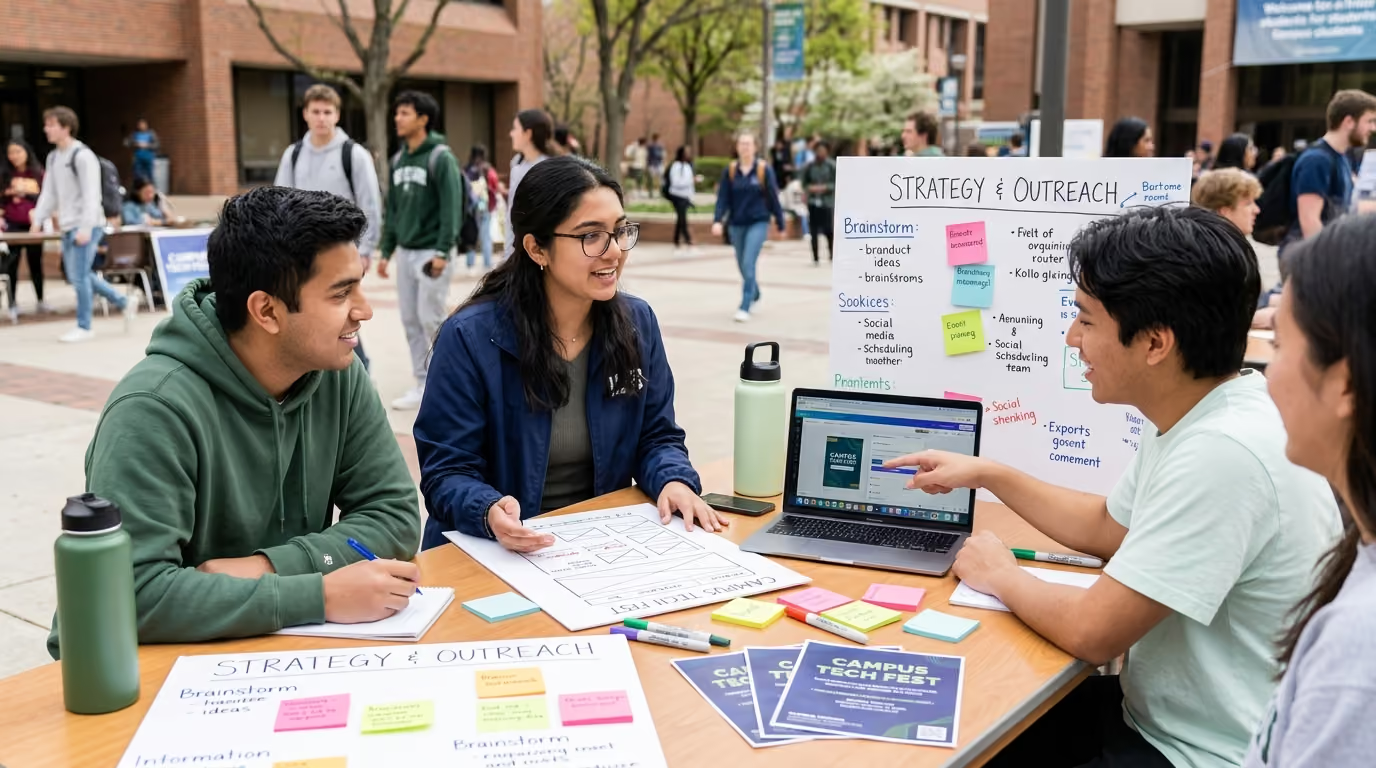
Treating college students as passive recipients of digital ads guarantees low turnout, high acquisition costs, and wasted activation budgets. Sustainable campus event engagement requires transforming trusted student leaders into an active peer-to-peer distribution network that drives awareness, removes participation friction, and secures measurable conversions.
Student-led event promotion is not an exercise in collecting superficial social media impressions. It is a structured operational system that integrates student ambassadors into every phase of event design, recruitment, on-site activation, and post-event pipeline development.
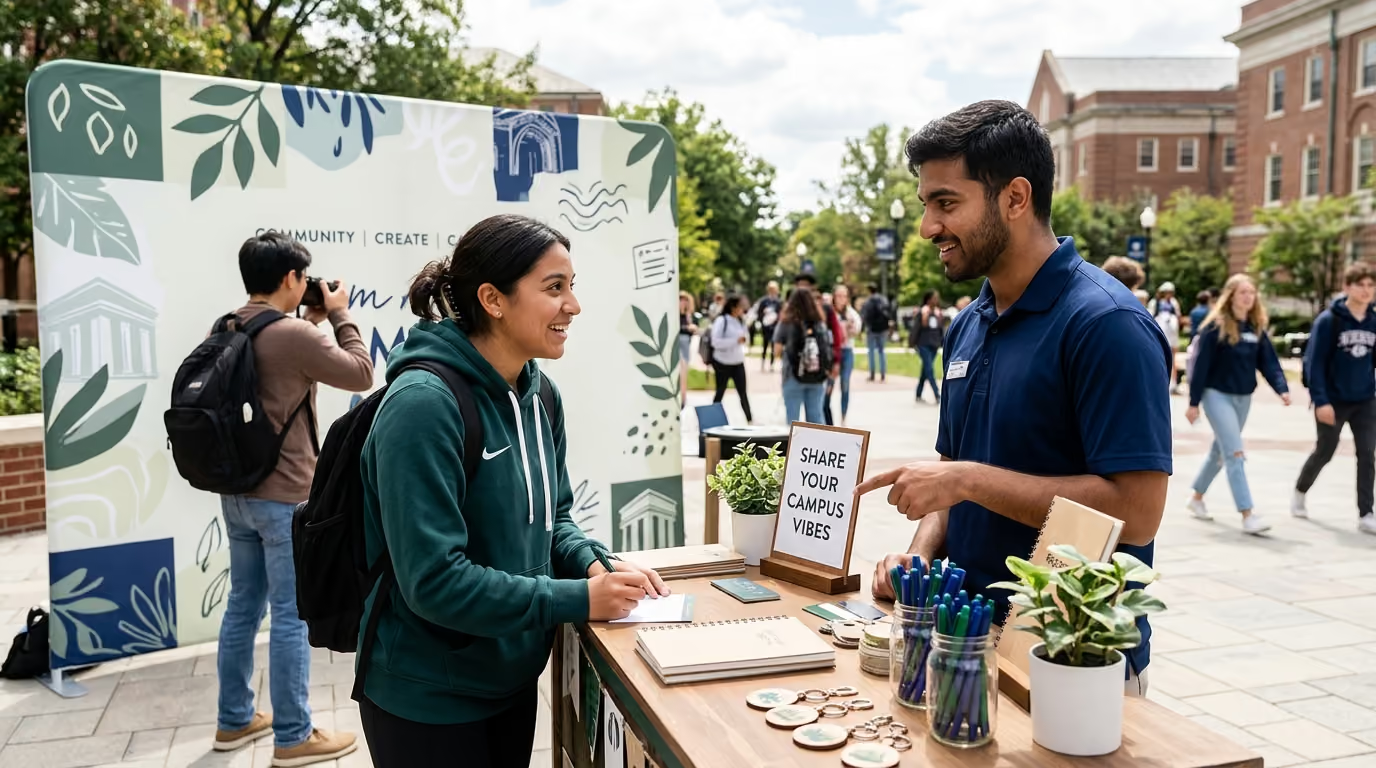
Walk across any major university student union at noon on a Tuesday. Bulletin boards sag under the weight of overlapping flyers for hackathons, club meetings, brand pop-ups, and career seminars. Brand ambassadors stand behind generic folding tables, offering unbranded pens to hurrying undergraduates who avoid eye contact. Digital banner ads and sponsored campus posts scroll past unread on smartphones during brief walks between lecture halls.
Event managers pour tens of thousands of dollars into staging high-production campus activations, only to stare at empty seats fifteen minutes before start time. The marketing team claims high impression numbers, but the room remains half-empty. The disconnect is not a lack of student interest, but a total failure of trust and distribution.
Campus social life operates through tight micro-networks, residence hall group chats, academic cohorts, and cultural affinity organizations. When an outsider tries to broadcast an institutional message across these spaces, students instinctively filter it out as commercial noise. Broadcast advertising tells students that an event exists, but it cannot convince them that their friends will be there or that their time will be respected.
Overcoming this barrier requires a fundamental shift in field execution. You must stop treating students as billboard space and start equipping them as trusted event hosts. A well-organized comprehensive campus marketing strategy bridges the gap between top-down corporate planning and the daily realities of collegiate life.
Most campus marketing fails because organizers treat promotion as an isolated announcement rather than a relationship-building progression. Peer-to-peer event promotion functions through a nine-step funnel: Recruit, Equip, Tease, Invite, Confirm, Activate, Capture, Convert, and Learn. Every ambassador action must guide prospective attendees through these progressive stages of commitment.
Campus participation is fundamentally relational. In a research study on online event participation, researcher Nicole B. Ellison and colleagues established that attendance decisions depend heavily on the nature of the event, the strength of interpersonal relationships among invitees, and whether invitations are targeted or broadly broadcast. Indiscriminate social media blasts produce low commitment, while targeted invitations from trusted peers generate personal accountability.
Every task assigned to a student ambassador must serve one of three specific operational functions:
Reach expands awareness beyond your brand's existing institutional perimeter. Ambassadors achieve reach by introducing event concepts to specialized student clubs, academic societies, commuter student associations, and campus residential channels.
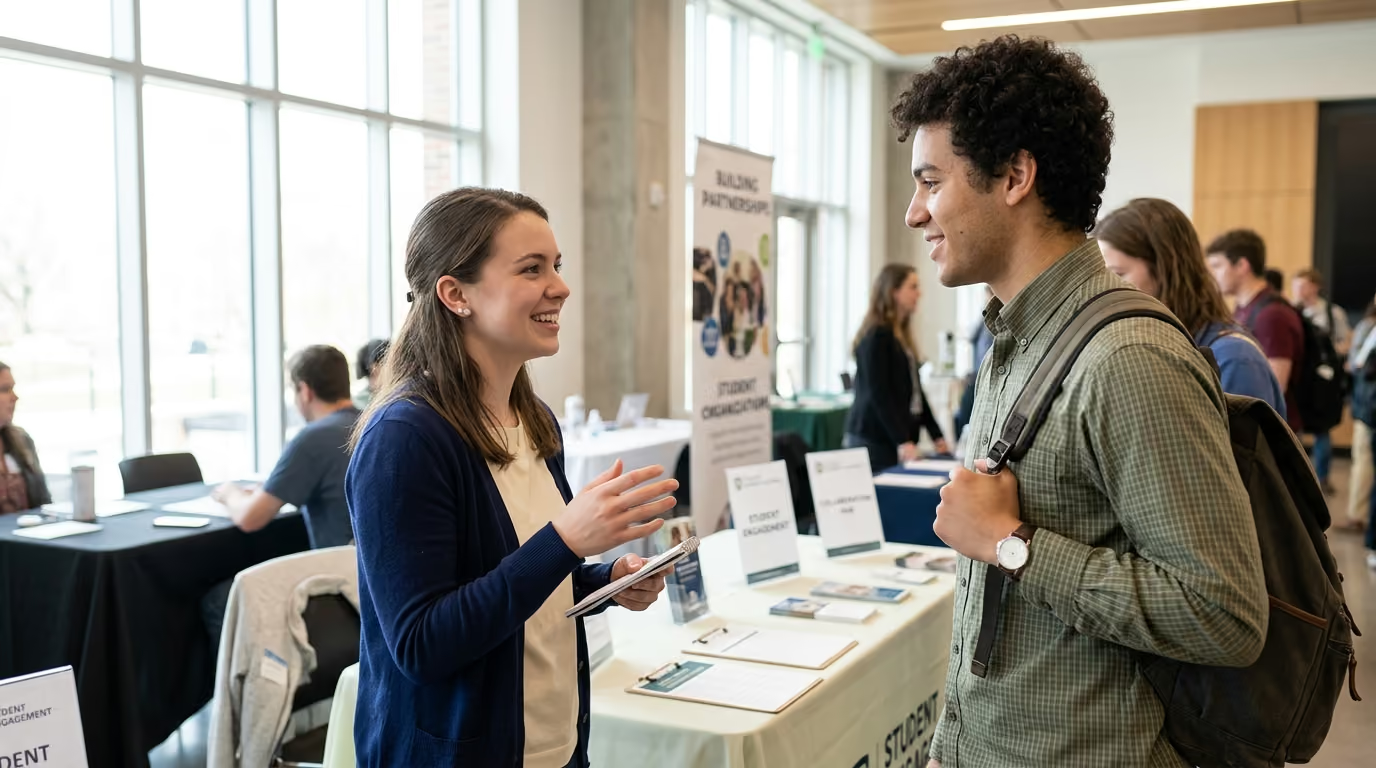
Trust validates the credibility and social safety of the gathering. When an ambassador explains why they personally plan to attend or co-hosts an information session with a recognized student organization, they eliminate the awkwardness of entering an unfamiliar space.
Action converts social intent into concrete behavior. Ambassadors drive action by distributing specific registration links, answering logistical questions in direct messages, facilitating on-site check-ins, and collecting qualified post-event survey data.
A common failure mode in experiential programs is recruiting ambassadors solely for their public reach while evaluating them strictly on immediate actions. When you ask students to demand conversions without first giving them the tools to build social trust, their outreach feels transactional and alienates their peer groups.
A high-performing campus activation team requires distinct student roles tailored to specific campus ecosystems. Relying on a single high-profile campus influencer rarely creates deep engagement. Large follower counts indicate broadcast reach, but localized interpersonal trust drives physical attendance.
Build a diversified field team that covers distinct communication touchpoints across the university:
These students hold active memberships in academic societies, professional fraternities, athletic clubs, or cultural organizations. They introduce event opportunities directly into established group chats and club meetings where trust is already high.
These ambassadors document the preparation process, film short preview videos, capture live event interactions, and produce authentic recap media. They focus on visual storytelling rather than direct administrative recruitment.
These ambassadors run the physical perimeter during the activation. They manage line logistics, facilitate small-group discussions, run product demonstrations, and ensure no newcomer stands alone.
These team members focus strictly on the conversion mechanics. They manage table registrations, distribute personal referral tracking codes, monitor show-up rates, and conduct immediate post-event digital follow-ups.
These ambassadors audit promotional plans and physical event spaces to identify barriers for commuter students, non-traditional learners, and students with accessibility requirements. Research in higher education journals links extracurricular participation directly to student identity and belonging, while noting persistent equity barriers in access. Ensuring broad access expands your potential audience and protects the brand reputation.
Ambassador authenticity must operate within clear legal and institutional boundaries. The Federal Trade Commission (FTC) explicitly requires anyone promoting a product or event in exchange for compensation, free merchandise, or employment perks to disclose that material connection clearly and conspicuously.
Disclosures must be placed where they cannot be missed, directly alongside the promotional endorsement. Hiding a disclosure in a long caption, burying it behind a click-through link, or placing it in an obscure profile bio violates federal standards.
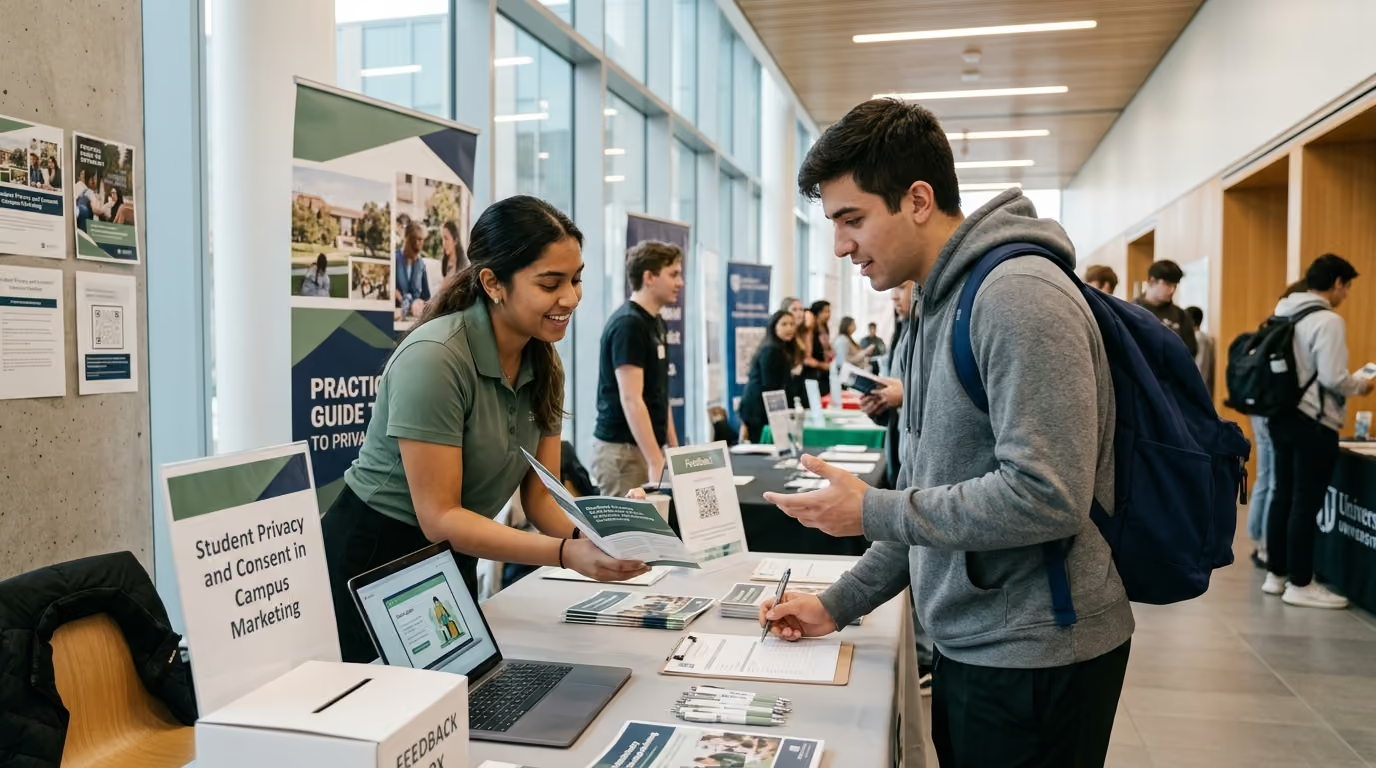
Ambassadors must also adhere to institutional privacy guidelines. Student representatives must never share private contact lists, expose registration databases, or record fellow students in private spaces without written permission. A structured field staffing plan establishes explicit operational standards, preventing costly compliance violations during multi-campus tours.
A campus promotional campaign cannot be executed in a frantic two-day rush. Professional student-led event strategies require a deliberate timeline that methodically moves audiences from casual curiosity to confirmed attendance.
Begin by defining the singular business objective of the activation. Are you driving product trials, gathering qualified user sign-ups, promoting a seasonal career recruitment drive, or expanding retail velocity at local grocery stores?
Map the target campus audience into defined segments. A morning career workshop requires entirely different communication channels than an evening beverage sampling activation. During this stage, secure all campus permits, room reservations, and commercial distribution clearances. Working with dedicated compliance and university permit management protocols eliminates the risk of campus security shutting down an activation on event morning.
Recruit and onboard your student ambassador cohort. Conduct thorough operational briefings covering event logistics, safety protocols, approved messaging pillars, and FTC disclosure rules.
Launch the teaser phase to generate intrigue without exhausting the audience. Content at this stage should focus on student-led questions, behind-the-scenes setup footage, and early previews of speakers, experiences, or exclusive access.
In an academic analysis of campus student involvement, researchers at McKendree University noted that highlighting active members and showing real organizational culture is a primary driver of student interest. When prospective attendees see authentic student leaders working together, they perceive the upcoming event as socially credible.
Ambassadors should run interactive polls in student organization channels, asking peers to vote on specific event elements, workshop topics, or product flavors to be featured. This co-creation strategy gives attendees a psychological stake in the event before registration even opens.
Publish full event specifications: exact venue coordinates, precise time windows, detailed activity schedules, speaker lineups, and immediate registration links.
Keep digital registration forms minimal. Friction destroys campus conversion rates. Request only the student's name, verified institutional email address, academic discipline, and optional dietary or accessibility needs.
Distribute unique tracking links and QR codes to each ambassador. This allows marketing directors to attribute registrations to specific ambassadors, clubs, or residential halls accurately.
Shift the ambassador team's focus from broad public visibility to direct, personal recruitment. Broadcast social media posts lose effectiveness during the final week, while personal outreach achieves peak conversion.
Ambassadors should send targeted direct messages to colleagues, classmates, and club members. A targeted invitation might read: "Hey Alex, our finance society is heading to the CPG marketing panel this Thursday at 6:00 PM because they are running direct resume reviews with the brand team. I am saving seats for our cohort, would you like the pass?"
This approach leverages existing social capital. It positions the invitation as curated professional access rather than a mass-market advertisement.
A high registration volume does not guarantee a full room. Registration numbers represent intent, whereas show rate represents physical execution.
Send automated calendar holds, SMS reminders, and localized arrival instructions to all registrants forty-eight hours prior to the event. The confirmation must outline exact entrance procedures, transit routes, campus parking validation, and check-in requirements.
Ambassadors should post real-time updates showing venue transformation, stage setup, and arriving product shipments. This visual confirmation proves that the activation is substantial, active, and worth attending.
The physical execution of an event must justify the time commitment of every attending student. The first five minutes of on-site experience determine whether a participant stays for the full program or quietly exits through the back doors.
Do not force arriving students to navigate an unstructured, intimidating room where existing organizers cluster in closed circles. Place designated ambassador hosts at the exterior entrance doors to greet students individually.
Direct newcomers immediately to clear, frictionless check-in stations. Use tablet-based QR scanners or digital tap-to-check-in systems to eliminate registration bottlenecks.
Provide immediate, visible orientation. Attendees should instantly see where to hang their coats, find refreshments, locate seating, and access interactive demonstration stations without asking for basic directions.
Not every student arrives with the same comfort level or social confidence. High-converting activations offer multiple levels of participant involvement:
Comfortable, low-pressure viewing areas where introverted or hurried students can watch demonstrations, listen to speakers, or review educational boards without being pressured into public speaking.
Hands-on trial stations managed by trained student facilitators. Attendees can taste products, trial software, or test physical equipment in guided thirty-second increments.
Small-group workshops, team problem-solving challenges, or moderated panel question-and-answer sessions that encourage meaningful dialogue among attendees.
Private breakout tables where attendees can schedule follow-up interviews, apply for campus leadership positions, or book advising sessions with visiting brand directors.
In the field, flawless physical staging and authentic personal connection must operate together. A Director of Brand Strategy in the CPG snack division shared: "The Makai team turned our product launch into a sensory event that shoppers still talk about. From creative storytelling to flawless in-store execution, they made snack time unforgettable. We couldn't have asked for a stronger partner." Our team created an in-store experience that left a lasting impression on consumers and became a memorable brand moment.
Incentives are powerful operational levers to reduce schedule and financial friction, but they cannot replace genuine event value. Relying entirely on free items to generate attendance attracts transactional crowds who leave the moment giveaways are claimed.
A 2025 empirical study conducted at St. Mary’s University evaluated event attendance across various promotional incentives. The research found that campus events offering a combination of food and a physical giveaway achieved the highest mean attendance, followed by food-only events, and finally prize-only events. Furthermore, an academic survey on student participation preferences revealed that 73 percent of surveyed undergraduates identified course extra credit as a major motivating factor in deciding whether to attend campus events.
However, transactional incentives must not obscure the core event purpose. Research examining non-mandatory university events among international students revealed that self-development, meaningful purpose, interpersonal relationship building, and personal interest were primary drivers of sustained engagement. Tangible merchandise or gift cards served as helpful entry triggers, but did not drive long-term commitment.
Use incentives with clear operational intent:
A professional campus event strategy requires rigorous measurement beyond vanity numbers. Tracking social impressions and gross registrations provides an incomplete picture of field performance. Marketers must evaluate the entire operational chain, establishing a clear Return on Investment (ROI) across lead and lag indicators.
Lead metrics measure the efficiency of your promotional engine before the activation occurs.
The volume of distinct campus visitors exploring your event landing page through ambassador referral URLs.
Direct questions submitted to ambassadors regarding event access, scheduling, or speaker credentials.
The daily rate of confirmed registrations by academic department, residence hall, and ambassador source.
Total pre-event promotional spending divided by the volume of verified student registrants.
Lag metrics measure final business impact, on-site execution quality, and post-event pipeline retention.
The percentage of registered students who physically checked into the event:
$$\text{Show Rate} = \left( \frac{\text{Verified Physical Attendees}}{\text{Total Registered Students}} \right) \times 100$$
The average duration an attendee actively remained inside the physical activation footprint.
The proportion of attendees who completed the primary business action within seven days following the event, such as submitting a program application, scanning a retail coupon, or downloading a resource.
The volume of verified attendees and post-event conversions directly credited to individual ambassador tracking links.
Integrating these data streams into a unified event reporting dashboard provides cross-functional marketing teams with immediate visibility into on-site performance and true program ROI.
The relationship between the brand and the attendee must not terminate when the venue doors close. The forty-eight hours immediately following an activation represent your highest-leverage conversion window.
Within twenty-four hours of event completion, distribute a concise digital recap to every attendee who scanned into the venue. The communication must deliver on every promise made during the promotion:
Personalize follow-up communications whenever possible. When ambassadors send personal notes to the cohorts they directly recruited, conversion rates on follow-up links increase significantly compared to generic automated brand emails.
Bring the student ambassador team together within two days to conduct a structured rapid activation debrief. Use a structured evaluation model to analyze operational successes and failures while field memories remain fresh.
Review the core debrief questions:
Examining published case models reveals how specialized organizations adapt student-led promotional architectures to achieve specific business targets.
GroupMe deployed a structured student ambassador program combining digital group creation, physical event sponsorships, and club integration across national campuses. The brand reported 67,897 student user acquisitions, 103 on-campus activations, 8,891 live attendees, 294 dedicated organization group chats, and 10,000 active participants inside ambassador-managed campus forums.
The operational takeaway is clear: building an active digital communication network around campus events sustains student engagement long after the physical activation concludes.
EETech implemented an ambassador model focused on technical students. Ambassadors represented the brand across university departments, staged engineering project demonstrations, distributed technical literature, and published student-authored technical articles.
Aligning ambassador operational tasks directly with their academic expertise ensures high credibility when promoting specialized workshops or professional events to demanding audiences.
Beauty brand OUAI deployed fifteen specialized student ambassadors across forty-five campus activations, partnering with more than seventy student organizations. The program generated over 9,610 direct product trials and logged more than 4,770 one-on-one peer interactions by focusing on targeted, high-trust campus environments, including wellness fairs, midterm study breaks, and residential chapter meetings.
Targeting smaller, high-trust campus environments often delivers superior engagement and higher conversion rates than staging massive, generic quad activations.
Skincare brand Glow Recipe integrated student-produced short-form video content with structured campus pop-up activations. The initiative generated over 150,000 monthly social impressions, distributed more than 3,100 physical samples monthly, and achieved an average of over 250 active participants per on-campus activation.
Using digital content to build familiarity before launching a physical activation significantly reduces entry friction and increases on-site participation.
Even well-funded campus initiatives can fail if organizers fall victim to common operational misconceptions.
Selecting ambassadors strictly for their public social media followings often results in low physical event attendance. Micro-ambassadors with deep, credible connections inside specific student organizations routinely outperform campus influencers who lack local trust.
Forcing ambassadors to share identical corporate flyers across their personal feeds creates visual fatigue. Provide flexible message pillars and clear factual points, allowing students to explain the event value in their own authentic voices.
Assuming all college students use the same social media platforms leads to severe audience blind spots. A robust promotional plan integrates personal outreach, group chats, approved physical signage, academic announcements, and direct partnerships with recognized campus student organizations.
Failing to establish verified indoor rain locations, electrical access plans, or campus facility permits can compromise an entire tour. Always audit venue access, power distribution, loading dock logistics, and emergency protocols weeks before physical arrival.
Live campus environments present unique operational challenges that must be anticipated during campaign planning.
When staging high-demand activations with hard fire-code capacity caps, enforce a strict digital waitlist workflow. Send dual-stage SMS confirmations twenty-four hours and two hours prior to start time, automatically releasing unconfirmed seats to waitlisted students. Ambassadors must never promise on-site entry to unverified walk-ups at capacity-controlled venues.
Campus environments can be volatile. Train all student ambassadors to communicate factual event details without engaging in public arguments or making unauthorized statements on behalf of the sponsoring brand. Establish clear emergency escalation routes, identifying exact senior operators to contact if logistical, safety, or facility challenges arise.
Commuter and international students often miss traditional residential promotion channels. Schedule activations during mid-day campus activity hours rather than late evenings. Deploy ambassadors from international student associations and commuter advocacy councils to ensure promotional messaging addresses transit, schedule, and cultural preferences.
Building a student-led campus event promotion engine requires moving beyond superficial vanity metrics to construct a disciplined, peer-to-peer distribution system. By selecting credible community ambassadors, establishing structured campaign timelines, streamlining physical check-ins, and managing post-event follow-up, brand leaders turn chaotic campus activations into measurable business growth.
Disciplined operational execution transforms student enthusiasm into a predictable, high-converting event engine.

30 Years Experiential & Retail Activation Partner for CPG & Beverage Brands | Multi-Market Demos, Roadshows & Costco/Club Programs That Actually Sell