Robbie Thain
Founder, CEO

Handing out swag on college quads often fails to drive conversions, requiring structured peer advocacy, precise timing, and multi-channel field activations.
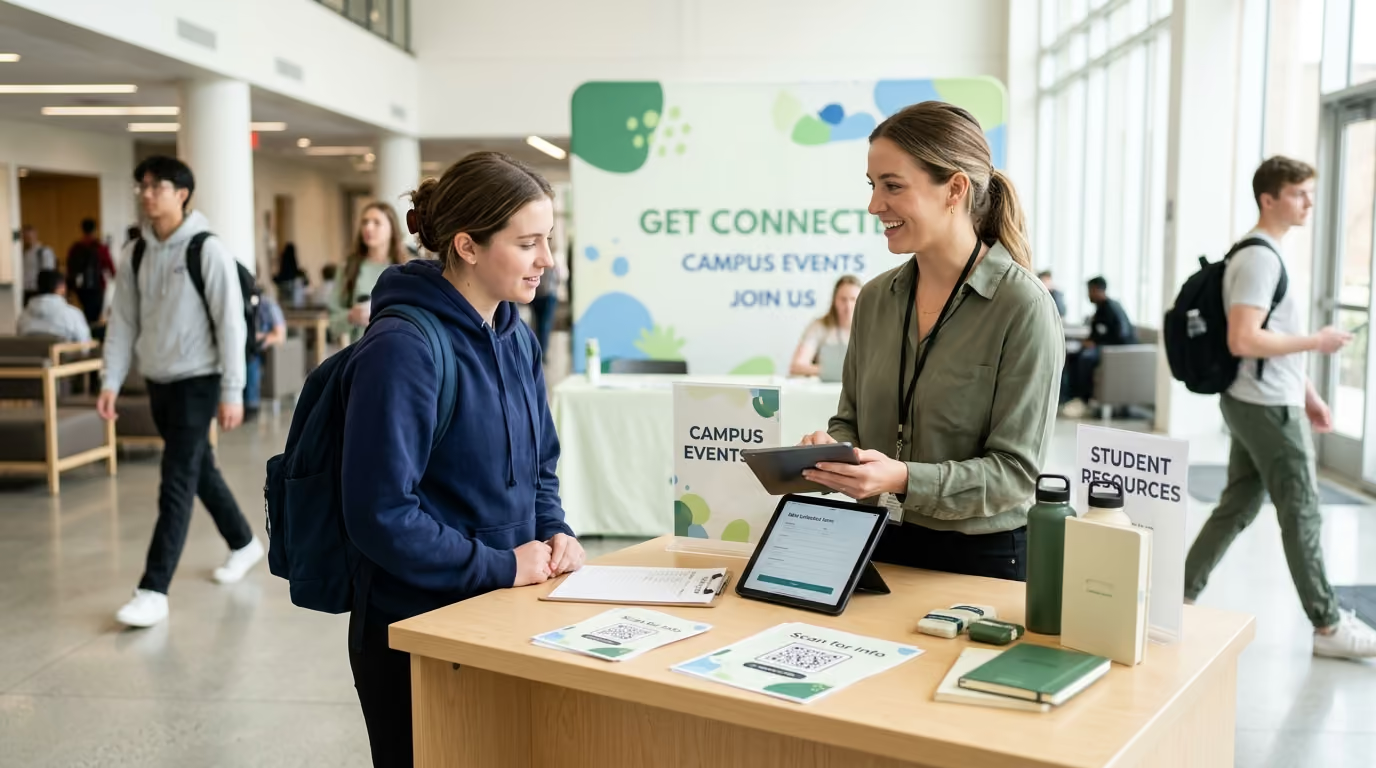
Building a campus marketing strategy that drives verifiable commercial return requires shifting from passive brand visibility to a structured, peer-led conversion engine. This resource outlines an operational blueprint for brand leaders to segment collegiate audiences, select high-yield campuses, deploy field activations, and measure incremental business lift.
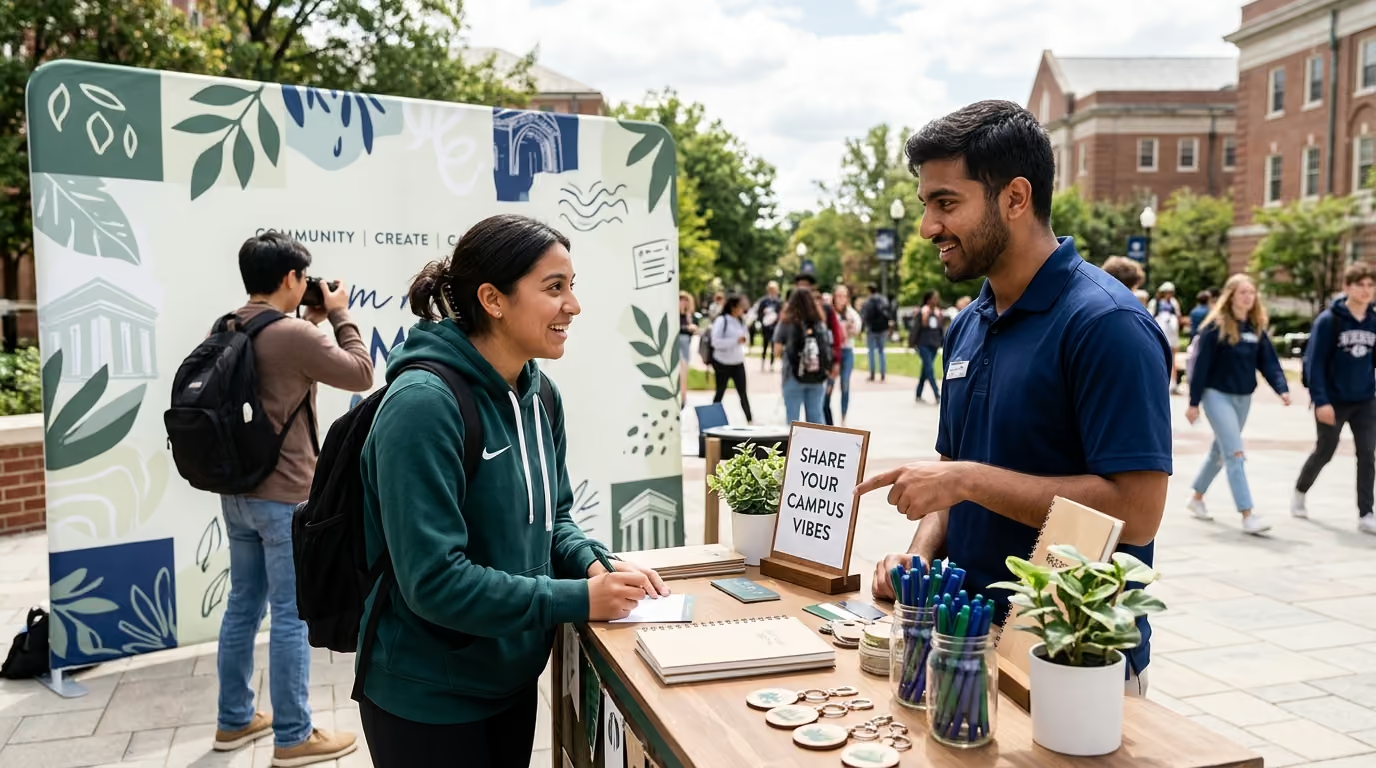
Every autumn, marketing teams deploy millions of dollars onto college campuses with the hope of capturing lifelong customer loyalty. Vans arrive loaded with vinyl banners, branded sunglasses, keychains, and ambient product samples. Student workers stand on perimeter sidewalks near dining halls, handing free items to anyone who walks past. By mid-afternoon, cardboard boxes litter the quad, flyers cover the pavement, and thousands of units are gone.
When the marketing director reviews the post-campaign report, the summary contains large numbers. It lists hundreds of thousands of estimated impressions, thousands of distributed samples, and photos of smiling undergraduates holding branded merchandise. Yet retail scan data in the surrounding zip codes remains flat. Web traffic spikes for forty-eight hours and then collapses. App downloads register in the single digits, and promo codes show zero redemptions.
This breakdown happens because traditional campus efforts confuse physical distribution with strategic activation. Handing a cold beverage or a snack bar to a student rushing between chemistry lectures creates a momentary transaction, not a brand relationship. If the interaction does not capture data, demonstrate unique value, or direct the student toward a clear commercial action, the capital spent on product and labor is wasted.
The campus environment is uniquely noisy, complex, and socially guarded. Undergraduates navigate intense schedules, dense social networks, and constant digital feeds. When an outside brand interrupts their routine without context, students treat the interaction as commercial spam. Without structured local integration, rigorous field management, and trackable conversion paths, campus activations produce vanity metrics instead of real business value.
Collegiate marketing operates through social density and localized trust rather than traditional broadcast reach. A university campus functions as a concentrated micro-city. It has its own transit systems, media channels, government bodies, and social hierarchies. To succeed, brands must move beyond superficial sponsorships and construct an integrated marketing system.
We create experiential marketing programs built to connect emotion with action. In our experience, high-converting programs integrate five fundamental elements:
The primary mistake marketing leaders make is defining their campus objective as generic awareness. Awareness is an input, not an outcome. A viable campus marketing strategy must solve a specific commercial problem. For emerging brands, the objective might be driving qualified initial trials among non-users. For established brands, the priority may be shifting purchase routines from campus convenience stores to off-campus grocery retailers.
When defining your strategic objective, avoid vague targets. Frame the goal around measurable changes in customer behavior over a defined operating window.
This discipline ensures your field marketing investments remain accountable to commercial performance. It forces your marketing team to articulate what success looks like before deploying staff into the field. You can read more about aligning field execution with broader brand goals in our guide to field marketing vs experiential marketing strategy.
Treating college students as a single demographic profile leads to poor resource allocation. An eighteen-year-old first-year student living in a traditional residence hall behaves differently from a twenty-two-year-old commuter balancing a full-time job. To build a program that converts, you must segment the collegiate audience along behavioral and contextual lines.
Effective campus segmentation evaluates how students live, commute, study, and consume media. Demographic traits like age and year in school provide a baseline, but behavioral factors dictate conversion probability.
These students already purchase your category and favor your brand. Their primary strategic value lies in peer advocacy, user-generated content, and community leadership. They serve as natural candidates for student ambassador roles.
These students actively consume products in your category but choose alternative brands. They understand the category value proposition. Your strategy must focus on direct product comparison, superior functional benefits, and trial incentives to induce brand switching.
These individuals have never engaged with your category due to perceived complexity, price, or lack of exposure. They require structured educational activations, low-friction sampling, and clear explanations of how the product solves a specific student pain point.
Connectors include student organization presidents, club sports captains, residence advisors, and creative leaders. They possess outsized social distribution across campus networks. Engaging them provides immediate credibility and organized access to high-density student groups.
Choosing target schools based on academic prestige or athletic conference visibility is a common pitfall. A large state university with sixty thousand students may possess restrictive commercial solicitation rules and dispersed off-campus housing. A mid-sized urban college might offer concentrated foot traffic, permissive event policies, and immediate proximity to key retail partners.
Institutional selection should be approached as an investment portfolio. Reliable demographic and operational data must inform your selection model. The National Center for Education Statistics (NCES) Integrated Postsecondary Education Data System (IPEDS) provides objective data on institutional characteristics, twelve-month enrollment figures, completions, and program offerings. Complementary research from the National Student Clearinghouse details sector trends, enrollment intensity, and student demographics.
Evaluate each candidate school against an objective scoring rubric:
Categorize candidate institutions into functional portfolio tiers:
Campus life runs on a strict calendar. An activation concept that generates lines during the first week of September will fail during midterm examinations in November. High-performing campus programs synchronize brand initiatives with academic rhythms.
Move-in represents a chaotic transitional window. First-year and returning students establish their living spaces, purchase household staples, and set daily routines. Brands that integrate into move-in kits, partner with local property managers, or provide logistical relief gain immediate brand affinity.
The first six weeks of the fall semester represent the highest-yield discovery phase of the academic year. Students actively look for new social networks, campus organizations, and lifestyle habits. Club fairs, Greek recruitment, and outdoor campus events offer opportunities for high-volume sampling and personal product demonstrations.
By mid-October, daily student schedules solidify. Undergraduates settle into rigid patterns dictated by classes, study sessions, athletics, and part-time jobs. Activations during this phase must provide practical utility. Focus on study-break sampling, library pop-ups, wellness initiatives, and localized retail promotions that fit into existing routines.
During midterm and final exams, student attention narrows. Elaborate experiential installations fail because students lack leisure time. Interventions must deliver functional support: late-night energy replenishment, stress-relief products, grab-and-go nutrition, and quiet study spaces. Keep the call to action minimal and frictionless.
The late spring semester shifts focus toward commencement, relocation, and career entry. Graduating seniors transition into full-time employment and experience significant changes in discretionary income. Activations centered on career readiness, moving support, professional attire, or alumni celebration capture this demographic at a critical life inflection point.
A successful campus marketing campaign orchestrates multiple communication channels around a physical experience. Relying exclusively on one channel limits total conversion velocity.
Peer-to-peer engagement forms the core of campus marketing. Research published by Inside Higher Ed and Generation Lab shows that college students rely on friends, family, and social networks as primary information sources over traditional broadcast media. When a student ambassador recommends a product within an organic social setting, the recommendation bypasses the skepticism applied to traditional corporate advertising.
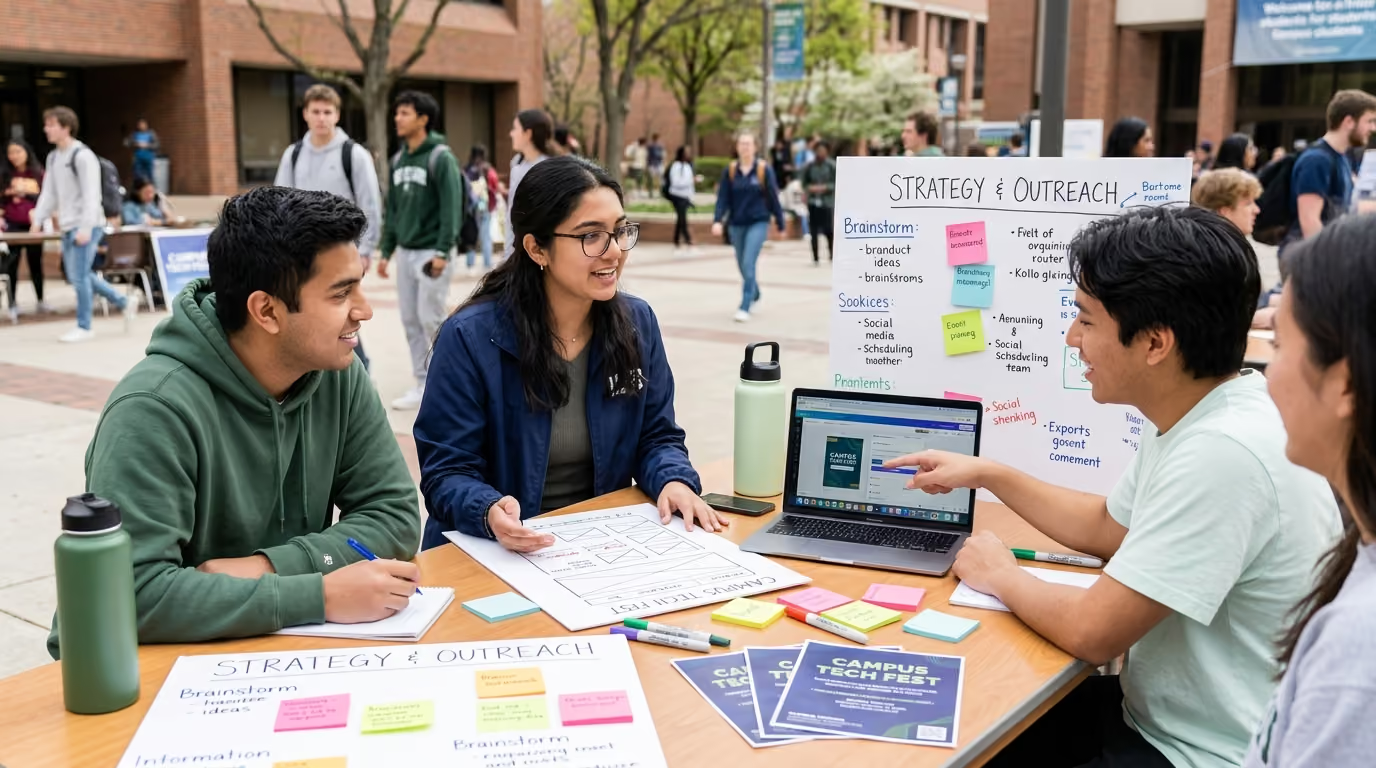
Ambassadors must operate across dorm lounges, study groups, club meetings, and personal feeds to introduce products naturally. For a complete analysis of structuring these teams, consult our guide on how to build a student ambassador program that drives sales.
Physical interaction breaks through digital saturation. Sampling tables, interactive mobile pop-ups, and branded challenges allow students to taste, touch, and test products directly. Our team crafts activations that engage multiple sensory touchpoints. This ensures students do not simply glance at a logo, but genuinely connect with the brand experience in a way that drives retail action.
Student clubs, academic societies, intramural leagues, and philanthropic organizations already possess established communication infrastructure. Rather than creating events from scratch, brands can sponsor existing chapter meetings, tailgates, philanthropies, and tournaments. Providing funding, custom merchandise, or event hospitality in exchange for structured sampling and opt-in data yields high conversion rates.
Campus newspapers, student-run radio stations, campus transit screens, and localized social media buys establish baseline credibility. Geotargeted digital campaigns running on mobile ad networks extend the reach of physical events. When students see a physical sampling station on the quad and subsequently encounter a coordinated mobile ad in their feed, conversion probability rises significantly.
Every touchpoint must contain a frictionless pathway to an immediate commercial action. Ambiguous calls to action destroy campaign efficiency.
Student brand ambassadors represent the operational backbone of on-campus marketing. However, managing distributed student teams across multiple states introduces substantial operational risk if governance systems are weak.
Do not recruit your ambassador roster based entirely on public social media follower counts. High-follower creators often lack the time or inclination to perform ground-level event logistics. Build a balanced roster incorporating complementary student archetypes:
Equip student ambassadors with professional tools to execute activations independently. An ambassador toolkit must include:
For an operational blueprint on scaling field assets and compliance systems, review our framework for building a measurable student ambassador program.
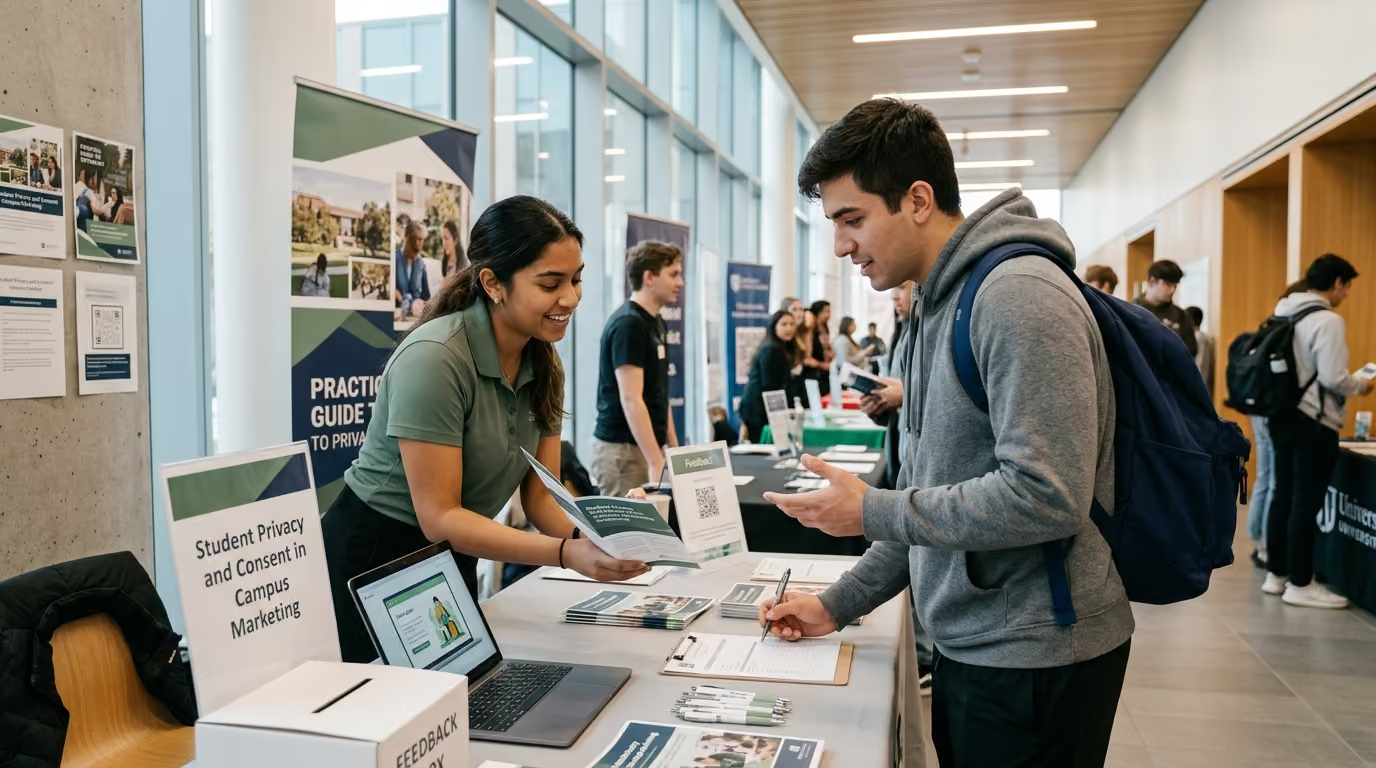
Ambassador programs must operate with strict legal and regulatory compliance. The Federal Trade Commission (FTC) enforces clear guidelines regarding endorsements and influencer disclosures. FTC guidance mandates that anyone promoting a brand in exchange for financial compensation, free products, discounts, or perks must clearly disclose that relationship.
Disclosures must be prominent, unambiguous, and placed within the same visual or audio medium as the promotional content itself. Ambiguous hashtags buried in comment sections do not satisfy FTC standards. Brands must train ambassadors on disclosure rules, monitor student posts continuously, and enforce immediate corrective protocols for non-compliant content.
Executing an on-campus marketing program requires methodical project management from pre-planning through post-event debriefs. Follow this step-by-step operational workflow to launch and manage activations effectively.
Experiential marketing investments must justify themselves through data. Brand leaders must measure field performance across every stage of the consumer journey, separating operational delivery from verified commercial impact.
Campus measurement systems require both lead and lag indicators. Lead indicators allow managers to correct operational issues in real time. Lag indicators reveal overall commercial performance.
Key lead indicators include:
Key lag indicators include:
A frequent flaw in campus measurement is attributing all regional sales to an activation without measuring baseline demand. To isolate true incrementality, marketing operators must implement structured control methodologies.
Google defines incrementality testing through its Conversion Lift frameworks as a direct comparison between an exposed test group and an unexposed control group. You can adapt this methodology to campus activations through three primary testing models:
Select two universities with nearly identical student demographics, retail access, and baseline sales volumes. Deploy your full ambassador and experiential engine at the test campus while maintaining baseline marketing at the holdout campus. Measure the differential retail sales lift between the two markets to establish causal return.
Deploy unique, serialized promotional offers that are accessible exclusively through on-campus physical activations. Compare the redemption rates and lifetime value of acquired students against users acquired through national digital ads.
Establish a twelve-week historical baseline of local retail sales in the target campus market prior to activation. Track sales lift during the four-week campaign window and monitor the decay curve over the following eight weeks. This approach quantifies both immediate revenue lift and sustained repeat purchase habits.
Different consumer product categories require distinct campus activation models. The following operational patterns illustrate how specialized brands structure campus programs to generate measurable results.
Consumer packaged goods brands in the functional food and beverage sectors face a high hurdle: convincing students to change their daily snack and drink purchases. A common execution pattern links high-volume physical trial directly to nearby retail shelves.
Consider a functional sparkling beverage brand launching into three hundred target retail stores adjacent to fifteen major universities. Rather than handing out chilled cans at random, the brand deploys ambassadors to student recreational centers, library plazas, and club sports tournaments. Each student receives a chilled sample alongside a brief, thirty-second explanation of its functional ingredients.
The ambassador hands the student a branded card featuring a dynamic QR code. Scanning the code opens a mobile coupon offering a free second can at the regional grocery store located three blocks from campus. The landing page includes an interactive map directing the student to the exact store aisle where the product is stocked.
The brand tracks:
This pattern changes campus sampling from a passive giveaway into a trackable retail foot-traffic driver. Learn more about turning campus foot traffic into retail volume in our analysis of beverage sampling sales tours.
Technology and software platforms seeking app downloads and user accounts often use a hybrid hub-and-spoke model. This strategy pairs a single, high-investment experiential installation with ongoing student ambassador amplification.
The brand deploys a fully customized mobile trailer to a central campus location for three consecutive days during the first month of the semester. The installation features interactive design stations, interactive digital games, and high-value brand merchandise for students who download the app and complete a profile.
Simultaneously, a team of twenty student ambassadors promotes the installation through campus social media channels, organization presentations, and residence-hall outreach. After the mobile pop-up departs, the ambassador team continues hosting smaller weekly demonstrations, study-session takeovers, and academic workshops throughout the term.
The platform tracks:
This multi-tiered approach generates concentrated initial excitement while maintaining sustained campus engagement over the entire academic year.
Building an effective collegiate marketing strategy requires discipline, operational precision, and early preparation. You can apply the following checklist this week to evaluate and launch your campus marketing initiatives:

30 Years Experiential & Retail Activation Partner for CPG & Beverage Brands | Multi-Market Demos, Roadshows & Costco/Club Programs That Actually Sell