Robbie Thain
Founder, CEO

Generic university pop-ups fail to prove long-term value, making a strategic event activation portfolio essential for capturing qualified student leads and product trials.
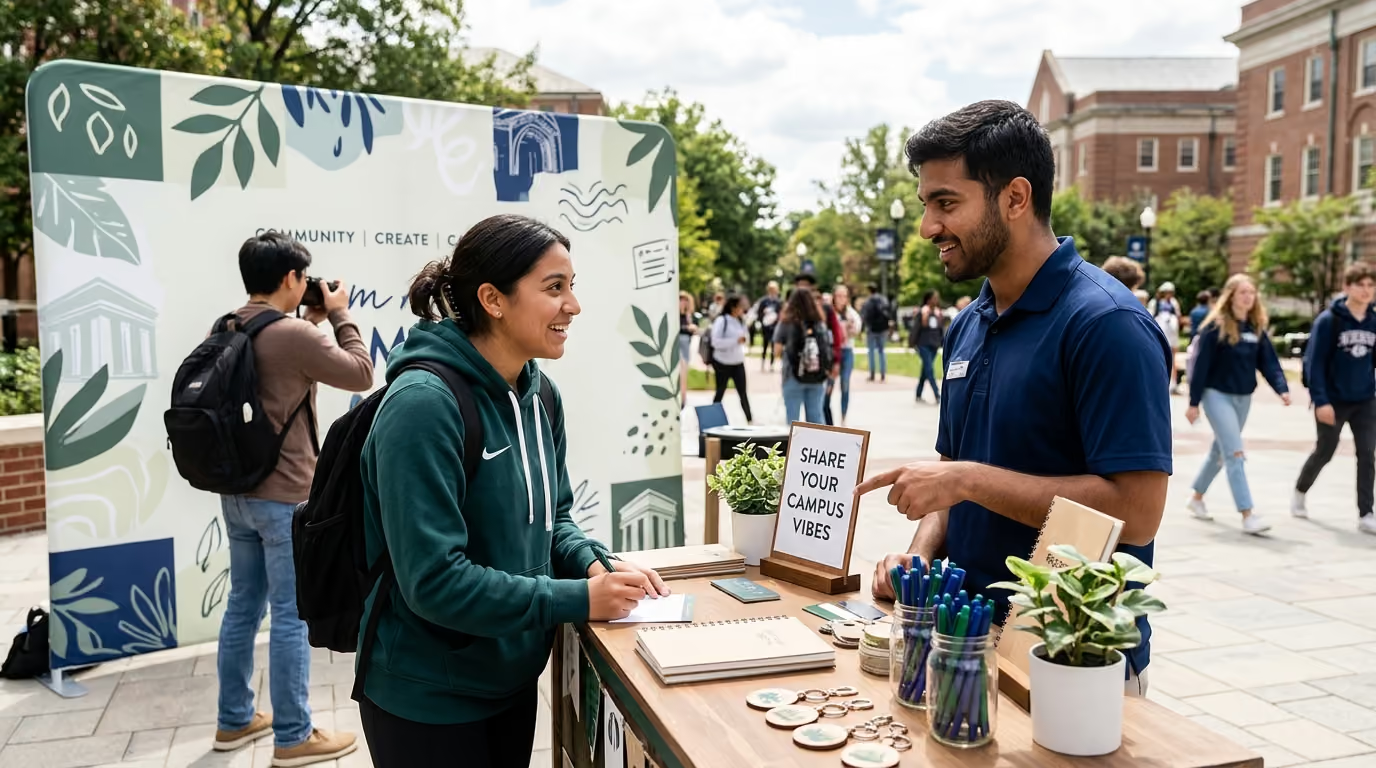
A field marketing director looks at the campus calendar and sees thirty disconnected dates across fifteen universities. One team is setting up a folding table at a career fair while another hands out branded pens outside a basketball arena. Products disappear quickly, students grab free merchandise, but three months later nobody can prove whether those interactions created a single customer, recruit, or qualified lead.
This guide delivers a systematic framework to replace ad-hoc campus visits with a high-performing activation portfolio. You will learn how to align student ambassadors, operational controls, and multi-format events to deliver measurable business Return on Investment (ROI) across college markets.
Trade show floors and university quads share a common operational trap. Brands invest heavily in physical footprints, ship pallets of collateral, and hire student staff without clear operational boundaries. The result on the ground is predictable chaos. Ambassadors stand behind branded tablecloths checking their phones, foot traffic flows past without engaging, and product samples get dumped into backpacks without context.
When campus activations operate as disconnected experiments, marketing leaders inherit significant administrative drag. Field teams re-invent logistics for every single stop. Budgets drain into generic promotional giveaways that end up in campus recycling bins before the afternoon classes end.
The core issue stems from treating every campus gathering as an interchangeable marketing moment. A pre-game tailgate demands a completely different operational posture than an engineering career fair or an esports tournament. Tailgates move quickly with high noise levels and limited dwell time. Career fairs require structured qualification scripts and precise candidate intake flows. When an organization applies the exact same table-and-banner setup across these distinct spaces, performance collapses.
Field marketing directors also face complex regulatory environments on modern campuses. Institutional facilities require permits, certificate of insurance filings, strict noise compliance, and rigid distribution approvals. When student ambassadors operate without rigorous governance, institutions revoke campus access, leaving brand investments stranded. Building a scalable program requires moving away from the isolated event mindset. You must build a cohesive activation portfolio governed by clear operational standards.
A campus event activation portfolio is a deliberately managed collection of event programs, ambassador assignments, campus partnerships, and measurement protocols. It connects high-level business goals directly to physical student interactions. Instead of asking which campus events exist this quarter, your team must identify which combination of environments delivers the lowest cost per meaningful outcome.
To construct a portfolio that performs consistently, field leaders should organize their strategy across six distinct layers.
Every activation brief must identify a single primary objective alongside strictly bounded secondary targets. If an activation attempts to drive app installs, collect resumes, distribute product samples, and capture video content all at once, ambassadors fail at all four.
Common primary objectives include driving qualified product trials, acquiring verified users, generating qualified recruitment leads, and establishing institutional partnerships. Your selected objective dictates your labor model, space selection, and technological footprint.
Defaulting to general college students guarantees generic messaging and weak conversion rates. Field teams must segment campus audiences by academic focus, residential location, athletic involvement, student organization affiliation, and purchasing habits.
An enterprise software company targeting engineering majors gains nothing from activating at a broad homecoming parade. That brand needs dedicated classroom takeovers, hackathon sponsorships, or specialized career symposiums. Consumer packaged goods brands seeking daily habit formation should target high-density pedestrian routes near residence halls and commuter hubs.
Not every high-traffic campus location provides valuable engagement. Field operators evaluate potential properties through a standardized scoring matrix before committing operational capital:
The activation mechanic represents the physical activity that bridges student attention to your business outcome. Mechanics must feel native to the setting. In high-velocity transit areas, mechanics must execute in under twenty seconds, such as rapid cold-product distribution paired with a scannable rebate code. In low-velocity environments like student unions, mechanics can extend to multi-minute product demonstrations, interactive skills challenges, or structured portfolio reviews.
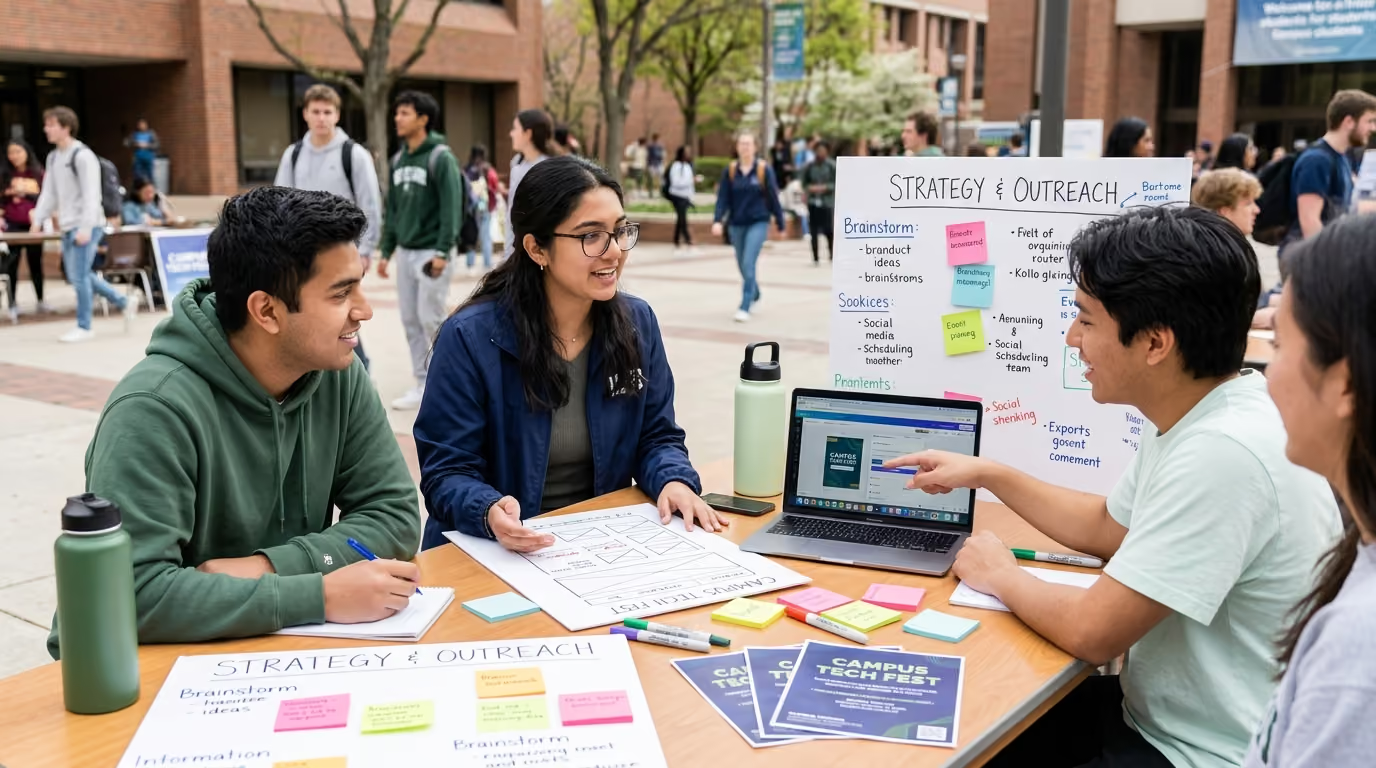
Student brand ambassadors require explicit role definitions to prevent operational drift. Assigning students to simply represent the brand creates passive behavior. Field programs must separate ambassadors into functional assignments: crowd engagement hosts, product demonstration specialists, intake coordinators, and content producers. Each role requires its own qualification checklist, task boundaries, and escalation protocols.
Performance tracking cannot be designed after an event concludes. Every asset, script, and digital touchpoint must tie directly to an attribution path. By implementing unique QR codes, geo-fenced referral incentives, and structured lead forms, field teams track the precise progression from physical contact to downstream transaction. Integrating a campus activation measurement framework allows multi-campus operators to evaluate different event formats on an equal basis.
Executing across a complex campus portfolio requires modular playbooks tailored to specific event formats. The following operational playbooks outline the staffing structures, interaction mechanics, and control points for major campus environments.
Campus conferences gather faculty, corporate recruiters, graduate researchers, and ambitious undergraduates under one roof. The operational challenge lies in sorting high-value professional leads from casual attendees while keeping booth traffic fluid.
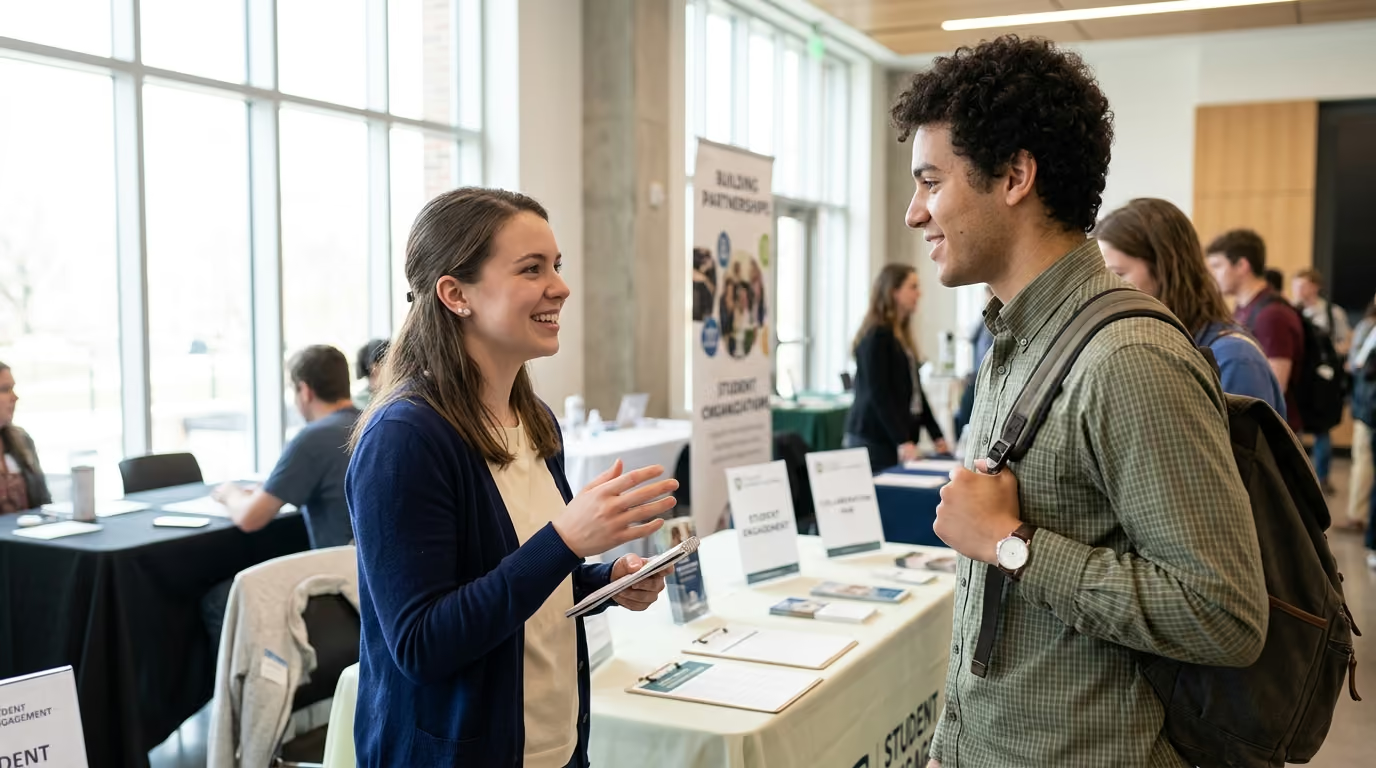
Career fairs fail when organizations treat them like high-volume giveaway stops. Success in recruitment environments depends entirely on conversation quality, candidate qualification accuracy, and rapid recruiter handoffs.
Esports activations offer exceptional dwell times and high community engagement. However, they introduce severe technical risks regarding power consumption, hardware safety, and digital moderation.
Large entertainment gatherings offer massive foot traffic but create noisy conditions with brief attention spans. The activation strategy must focus on comfort, speed, and high-impact visual utility.
Cultural festivals and heritage celebrations require deep authenticity, collaborative planning, and respectful alignment with host student groups. Organizations must avoid superficial branding that treats cultural programs as basic promotional backdrops.
A campus portfolio is only as strong as the ambassadors who operate it. High-performing organizations treat their campus workforce as an organized operational tier rather than a casual marketing club. Selecting, training, and governing your field staff requires strict standards.
Field marketing managers must structure student labor into clear tiers based on skill, experience, and commitment level:
Before an ambassador steps onto a campus footprint, they must complete an operational curriculum covering brand standards, field mechanics, and safety rules.
For larger campaigns, combining your campus teams with a structured field staffing plan ensures that shifts remain fully supported during critical operational peaks.
Executing brand activations on university property involves navigation of complex municipal and institutional regulations. Operating without formal approvals risks immediate shutdown, financial penalties, and long-term exclusion from campus grounds.
Campus land use policies differ substantially from standard municipal public property guidelines. Securing valid access requires coordination with multiple campus departments:
Many multi-campus marketing directors work with specialized partners who build centralized permit and compliance teams to eliminate legal risks across diverse campus jurisdictions.
Under Title III of the Americans with Disabilities Act, temporary campus events must remain accessible to individuals with disabilities. Field planners must guarantee step-free access routes, accessible transaction counter heights, clear high-contrast signage, and barrier-free circulation pathways through the entire footprint.
Digital registration interfaces, interactive tablets, and promotional websites must also adhere to standard digital accessibility guidelines to ensure full usability for every participant.
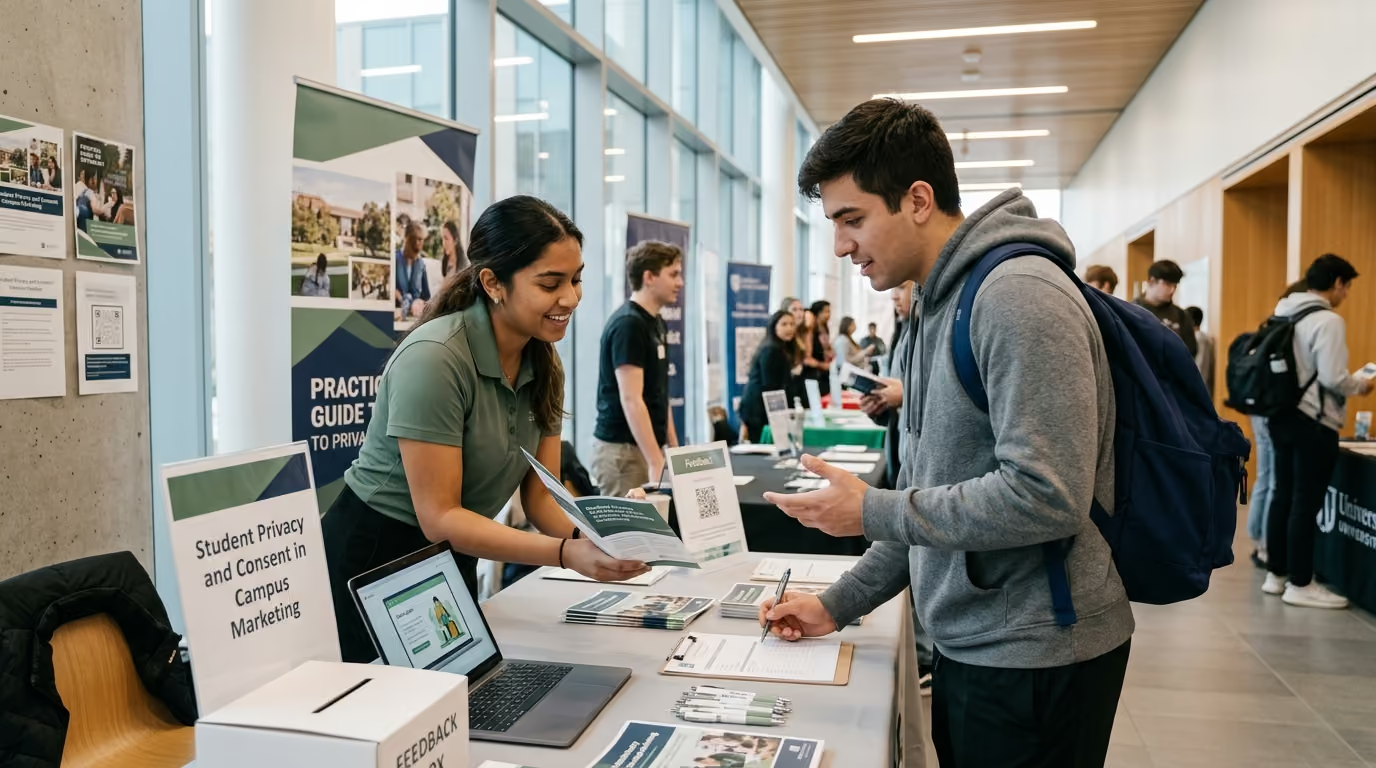
Collecting student information requires strict data privacy governance. Modern campus activations must implement clear data minimization rules:
High-performing campus portfolios track audience progression through an end-to-end activation funnel. By replacing vanity metrics with strict qualification definitions, field leaders measure real business impact.
To compare campus properties objectively, field marketing directors rely on standardized performance formulas:
$$\text{Engagement Rate} = \left( \frac{\text{Meaningful Interactions}}{\text{Verified Exposed Audience}} \right) \times 100$$
$$\text{Conversion Rate} = \left( \frac{\text{Verified Conversions}}{\text{Qualified Interactions}} \right) \times 100$$
$$\text{Cost per Qualified Interaction (CPQI)} = \frac{\text{Total Activation Cost}}{\text{Qualified Interactions}}$$
$$\text{Cost per Verified Conversion (CPCV)} = \frac{\text{Total Activation Cost}}{\text{Verified Conversions}}$$
$$\text{Ambassador Labor Productivity} = \frac{\text{Meaningful Interactions}}{\text{Total Ambassador Shift Hours}}$$
Tracking these figures across your event calendar prevents over-allocating budget to high-traffic events that yield low qualified conversion volume.
Establishing true attribution requires building unique digital tracking paths into every physical touchpoint. Deploy campus-specific QR codes, custom ambassador referral links, and unique promotional redemption codes at retail locations adjacent to university grounds.
For consumer packaged goods campaigns, tracking retail velocity lift at local grocery and convenience stores surrounding the campus perimeter proves the direct link between sampling and sales. Reviewing strategic insights on how campus activations bridge to retail sales helps align field operations with regional retail distribution channels.
Consider a functional food and beverage brand launching an all-natural focus beverage across twelve major university markets. Rather than setting up generic sampling tables across campus quads, the brand designed a structured, three-tiered campus activation portfolio.
The brand deployed an integrated event mix spanning high-reach, high-depth, and conversion-focused touchpoints:
We build festival zones, premieres, and pop-ups that turn viewers into fans and fans into advocates. We design moments people want to share, using music tie-ins, screenings, and live stunts to bring stories to life while our crews manage execution and track reach and response metrics. Applying these high-discipline operational controls transforms a chaotic campus presence into a predictable growth channel.
By enforcing consistent ambassador intake workflows, clear retail coupon attribution, and daily inventory tracking, the brand achieved notable field metrics:
Following each activation flight, conducting a structured 48-hour activation debrief allows field teams to identify operational friction, refine ambassador scripts, and reallocate budget toward top-performing campuses.
Even well-funded campus programs encounter major failure points when operational controls break down. Recognizing and mitigating these vulnerabilities protects your capital and brand equity.
Campus foot traffic moves in distinct waves between class schedules. Staffing an activation with a flat labor model throughout an eight-hour day wastes hours during quiet class periods and creates bottlenecks during fifteen-minute class change intervals. Schedule ambassador shifts with staggered overlap specifically covering peak transit windows.
Collecting thousands of student contacts without an automated, immediate follow-up mechanism destroys campaign ROI. When digital confirmations, application links, or discount codes arrive days after the physical interaction, response rates drop significantly. Ensure that your customer relationship management systems trigger personalized follow-up sequences within two hours of on-site data capture.
When ambassador compensation depends exclusively on the gross number of scans or handed-out items, ambassadors prioritize speed over substance. This leads to duplicate data entries, discarded products, and zero brand retention. Structure ambassador compensation around quality metrics, including verified data accuracy, conversion completion rates, and compliance audit scores.
Outdoor campus events are vulnerable to sudden microclimate shifts, high winds, and severe heat. Securing spaces without designated indoor backup locations or failing to install forty-pound commercial weights on every tent leg risks property damage, safety hazards, and immediate shutdown. Establish mandatory weather cancellation triggers and physical tie-down checklists for every outdoor activation.
Review this activation guide whenever your organization enters a new retail market, launches a major product line, initiates an annual campus recruitment cycle, or restructures its student ambassador operations.
Building a high-performing campus activation portfolio requires shifting focus from isolated physical appearances to a disciplined operational system that converts real-world student attention into long-term commercial value.

30 Years Experiential & Retail Activation Partner for CPG & Beverage Brands | Multi-Market Demos, Roadshows & Costco/Club Programs That Actually Sell