Robbie Thain
Founder, CEO

Six strategic phases empower campus brand teams to overcome trial barriers, train peer leaders, and drive measurable retail product velocity effectively.
Most brand leaders treat campus product launches as high-volume freebie giveaways, yet hand-to-hand distribution without a direct retail mechanism routinely yields zero measurable pipeline. A high-converting student ambassador launch requires a structured operational sequence that turns peer trust into verifiable product trial, rapid feedback, and local store velocity.
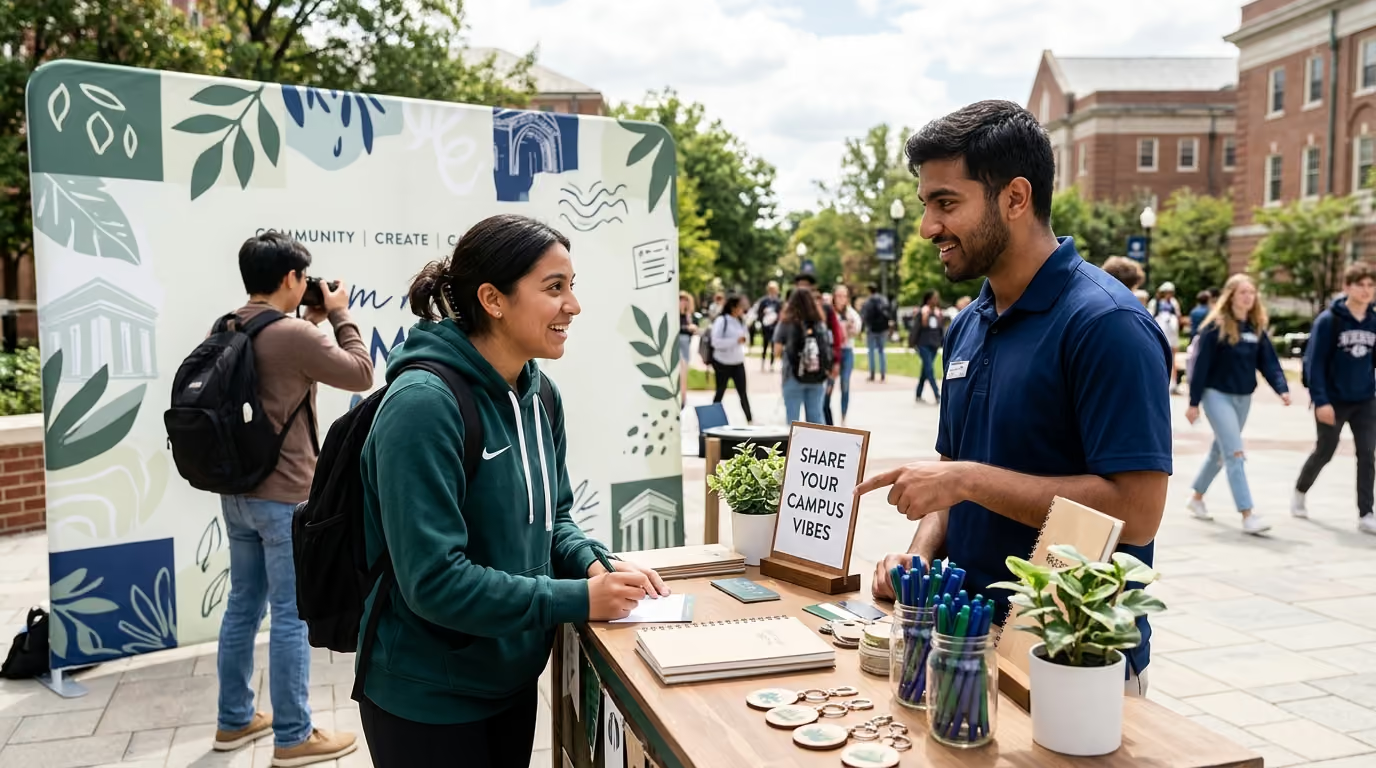
Walk across any major university quad during the third week of September and you will see the standard promotional playbook fail in real time. Folding tables bow under the weight of unchilled beverage cans. Confused student workers sit behind cardboard boxes staring at their smartphones while rushing freshmen grab three free units without learning the product name. By afternoon, discarded packaging litters the grass, the inventory is gone, and the brand marketing team receives a photo report showing high foot traffic with zero proof of customer acquisition.
This disconnected execution creates friction across every marketing department. Regional sales managers cannot verify whether campus giveaways supported the newly secured shelf space at adjacent Target, Kroger, or grocery outlets. Field marketing directors struggle to prove that expensive student staffing contracts generated qualified consumers rather than passive freebie collectors. Meanwhile, executive leadership looks at post-campaign reporting that lists total units handed out but fails to track subsequent trial, digital engagement, or repeat purchases.
Live activations fall apart when teams treat peer engagement as an uncontrolled media channel instead of a disciplined field operation. When student representatives lack clear conversation guidelines, strict handling standards, and measurable conversion goals, activations devolve into chaotic operational waste. Turning a campus presence into a repeatable engine requires rigorous logistics, continuous ambassador alignment, and structured data capture at every touchpoint.
Peer communication drives consumer adoption because collegiate networks rely on established social ties and shared daily routines. Research examining social interactions found that peer communication influences buying decisions directly through peer conformity and indirectly through product engagement. That same study confirmed that the strength of interpersonal relationships and group identification significantly amplified positive buying behaviors.
For brand operators, these dynamics show why high-follower campus influencers often underperform when compared to embedded community leaders. A student leader inside an engineering society, club sports team, or residential hall carries organic trust that external paid promoters cannot replicate. Research on college students indicates that brand consciousness connects with both normative and informational interpersonal influences. Ambassadors who explain practical use cases in normal settings lower the skepticism that traditional advertising creates.
Modern student purchasing patterns bridge physical exploration and mobile research. Capgemini reported that 53% of Gen Z consumers purchased new products through social channels in 2024, up from 46% the year prior. Capgemini also observed that 68% of Gen Z shoppers preferred discovering new products via social media in late 2024. However, digital interest still requires real-world physical validation.
Deloitte reported that 64% of Gen Z consumers utilize social media to research items, while 35% use it directly for discovery. Additionally, 33% of Gen Z consumers turn to online discussion forums to research potential purchases. SPINS reported that physical in-store discovery remains the leading discovery channel for Gen Z at 36%, outperforming social channels at 29%. Launch programs succeed when field representatives connect authentic physical trial with these digital research habits and localized retail shelves.
Distributing units on campus does not guarantee that students will consume or value the product. Launch teams must systematically resolve five common trial barriers to transform a passive sample recipient into an active brand buyer.
Students rarely travel far off campus to buy packaged goods. If a student tries an energy drink or snack between classes, they expect to find it at the campus bookstore, local convenience corner, or nearby mass retailer. When retail placement lags behind field distribution, initial sampling interest dissipates before the consumer can complete a repeat purchase. Teams must coordinate ambassador schedules with localized retail distribution schedules.
College budgets require clear justification for discretionary spending. A consumer will not swap their proven daily snack or skincare product for an untested premium alternative without a low-risk trial pathway. Programs should offer introductory trial incentives, student-specific promotional bundles, or targeted retail rebate offers. Clear pricing signals prevent sticker shock when the student visits local retail aisles.
Complex nutritional claims, unusual ingredient profiles, or novel product formats cause consumer hesitation. If an ambassador cannot explain what a product does in two concise sentences, the consumer will default to known competitors. Ambassadors must communicate clear functional benefits during the sampling moment. Simple language eliminates confusion and positions the item accurately against existing market choices.
A cold brew beverage handed out at 8:00 AM outside the library solves an immediate student need. That same beverage handed out at 9:00 PM outside a dining hall feels out of place and gets discarded. Context determines product appreciation and trial velocity. Launch teams must deploy product samples in environments where consumption fits the natural rhythm of campus life.
Younger consumers spot scripted corporate marketing immediately and reject aggressive sales pitches. When a brand ambassador admits personal preferences and answers practical questions honestly, student trust increases. This open communication allows consumers to evaluate the product on its actual merits. Peer trust turns an introductory trial into a lasting habit.
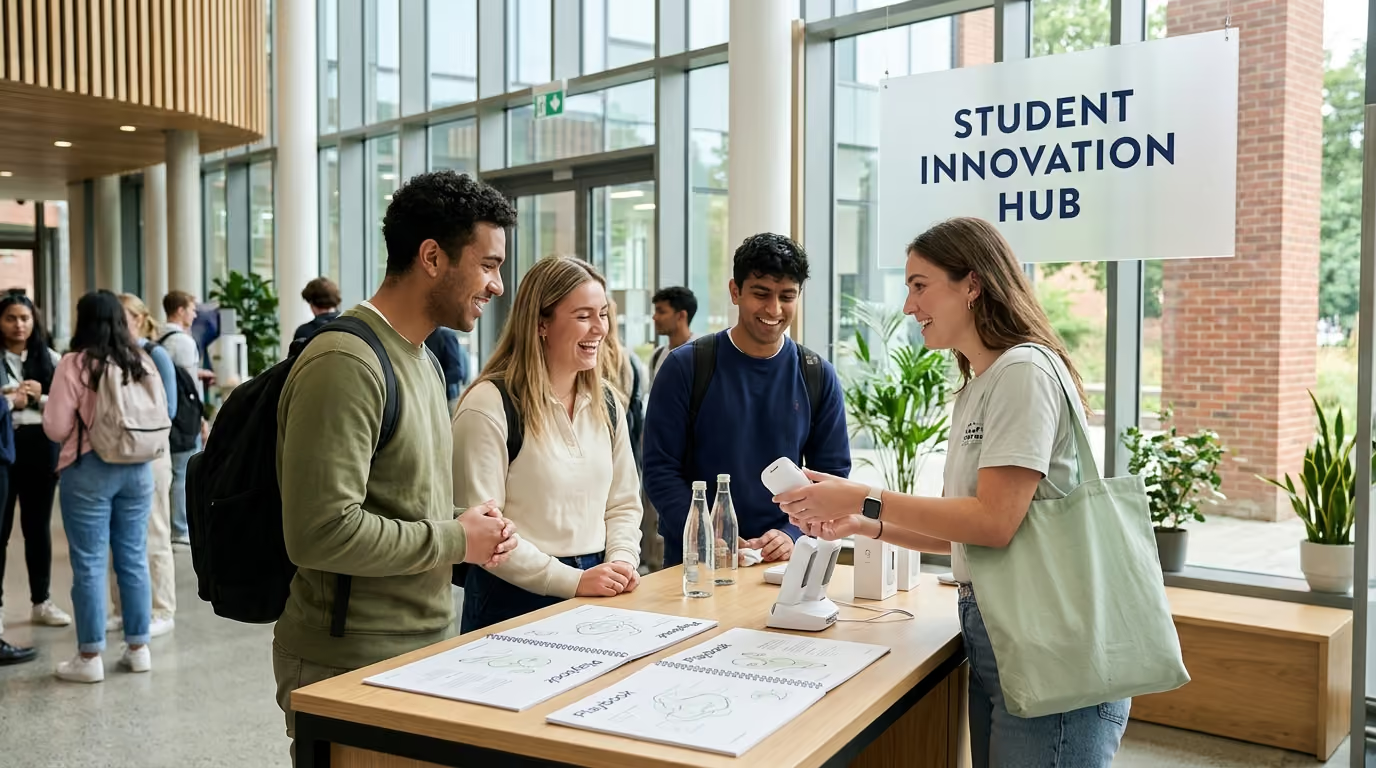
Building an effective campus launch team starts with rigorous selection criteria. Brands should avoid hiring students based solely on public follower metrics. Instead, teams should recruit student brand ambassadors who manage real student organizations, lead campus clubs, participate in intramural athletics, or work within residential housing networks.
Ambassador onboarding must provide structured operational training before any field distribution begins. Field leads should implement the guidelines detailed in our field-ready training playbook to ensure consistency across multiple campus markets. Representatives require clear instruction on product specifications, functional ingredients, approved brand claims, and sanitation procedures. They also need proactive coaching on managing consumer skepticism and common product objections.
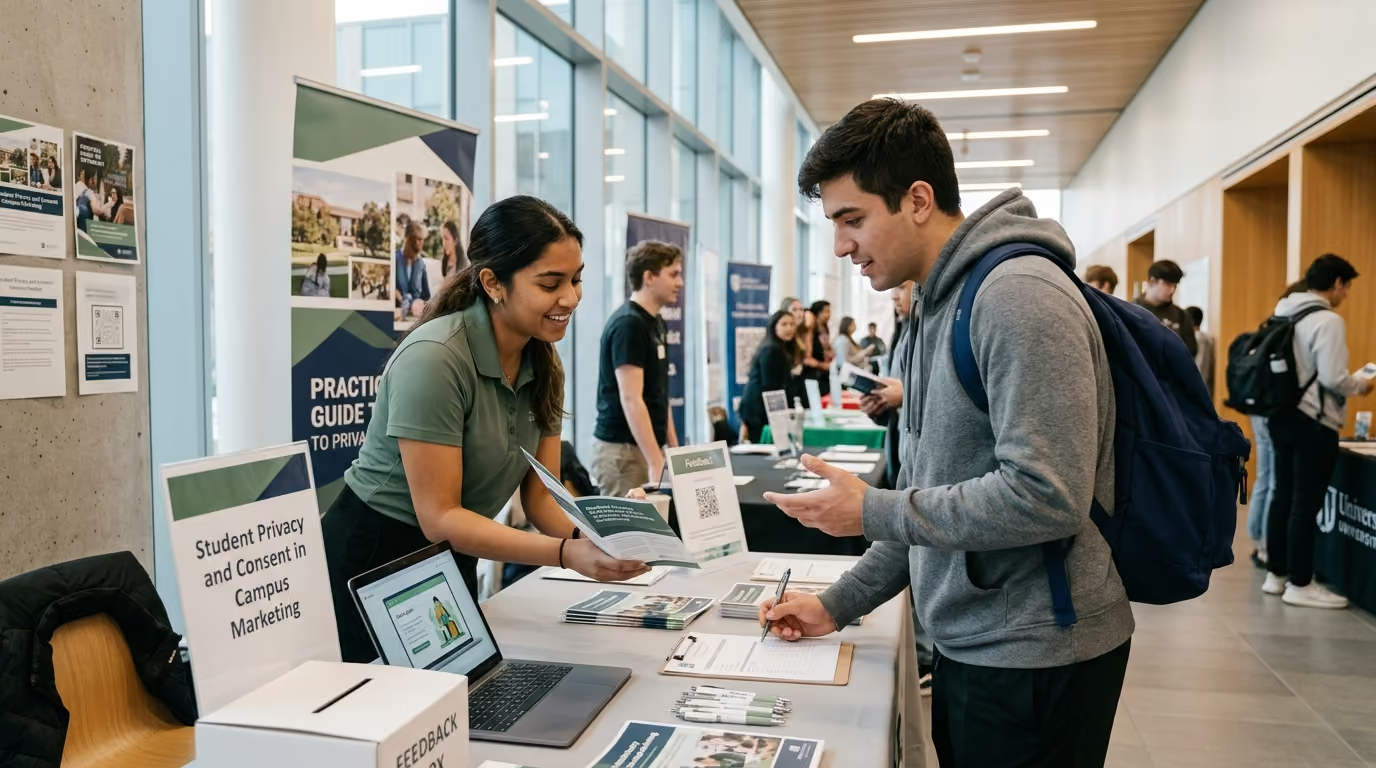
Every launch playbook must enforce absolute compliance with Federal Trade Commission disclosure regulations. The FTC requires clear, conspicuous disclosures whenever an ambassador receives financial compensation, free product shipments, or special discounts. Disclosures must appear directly on the endorsement content, using simple and unambiguous language that does not require tapping additional links. For video and ephemeral stories, the disclosure text must remain visible on the screen long enough to be read completely.
Training programs must also prepare field leads to manage administrative hurdles across different universities. Campus facilities enforce strict rules regarding commercial distribution, table permitting, noise levels, and quad usage. Program managers should train student leads using campus team leadership protocols to secure proper authorizations before setting up equipment. Structured operational preparation prevents costly permit violations and preserves brand reputation.
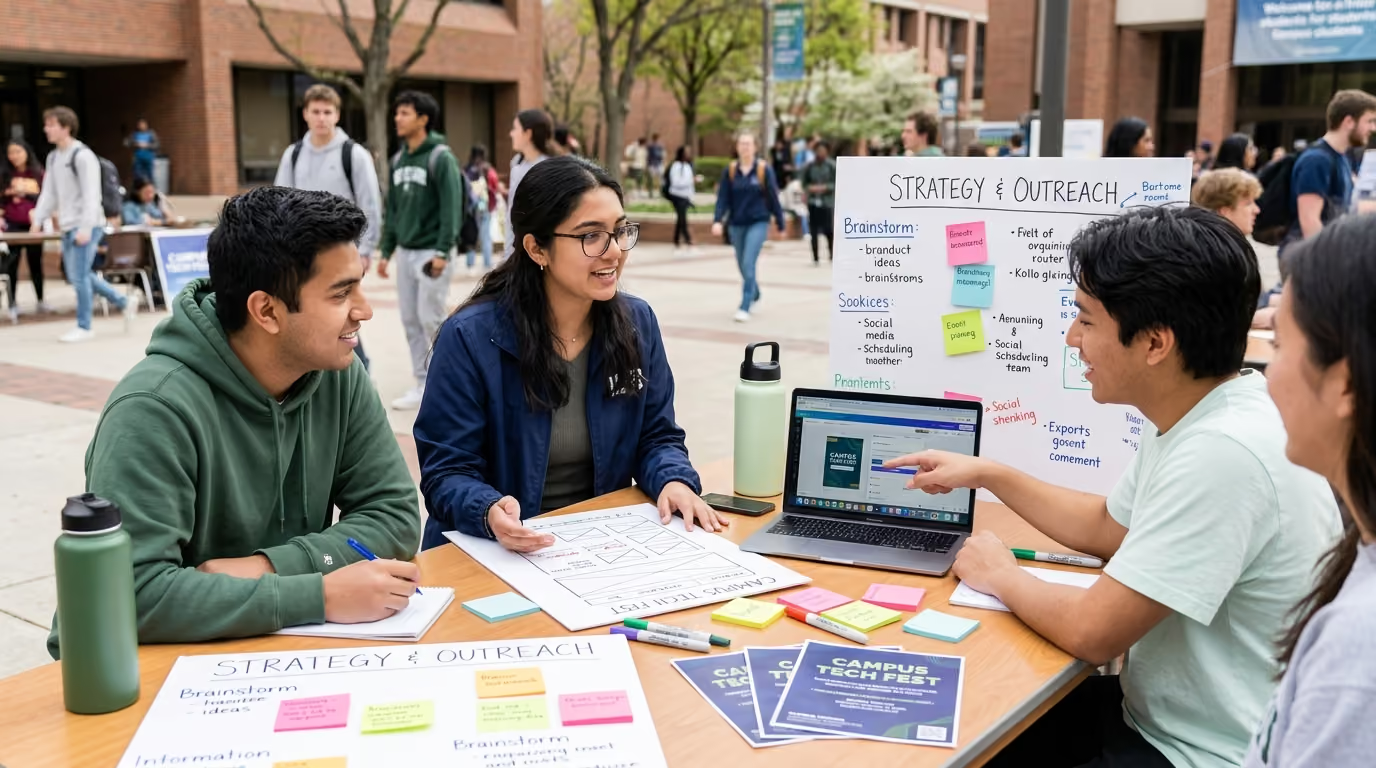
Executing a campus launch requires disciplined operational milestones. Brand managers can coordinate their teams by following this structured six-phase execution sequence.
To understand how these campus tactics scale across different consumer packaged goods categories, brand managers can review our guide on experiential marketing by category for campus programs.
A student ambassador program that operates in isolation from local retail distribution wastes marketing spend. Marketing leaders must design a closed-loop system that moves the consumer from trying a free sample on the quad to buying a multi-pack at a nearby grocery store. When brands establish this connection, campus activations turn into verifiable retail revenue drivers.
Brand teams can adapt the frameworks found in our guide on linking student ambassadors to retail demos to synchronize on-campus sampling with off-campus store merchandising. Ambassadors should hand consumers a dedicated physical voucher or point them toward a digital store finder. Point-of-sale materials, localized digital coupons, and mobile cashback platforms allow operators to track the exact path from campus trial to retail register.
Refuel Agency reported in its College Explorer study that campus ambassador interactions generated a 90% total consumer action rate. Within that surveyed population, 46% of students researched the product, 43% recommended it to friends or family, 46% made a purchase, and 42% visited a retail location. Refuel also noted that direct product sampling generated an 89% total action rate. These benchmarks demonstrate that when physical trial is executed properly, students take decisive action across both digital and physical retail channels.
Retail execution must include real-time inventory monitoring at nearby grocery, convenience, and club store partners. When an ambassador team plans a 2,000-sample activation at a major university, local retail buyers must be notified three weeks in advance to increase safety stock. If a student walks into a supermarket and finds empty shelves, the initial interest generated on campus is lost. Coordinated supply chains turn launch awareness into sustained retail velocity.
Measuring the success of a student ambassador product launch requires tracking both immediate operational leading indicators and long-term financial lag metrics. Brand managers who rely solely on vanity social impressions or total units handed out cannot defend their field budgets to executive leadership. Tracking Return on Investment requires a rigorous reporting dashboard.
Gathering post-trial survey feedback is vital for assessing product viability. In our experience, gathering feedback through structured post-trial surveys uncovers critical product insights before a brand expands nationally. In a campaign study from Home From College, personal care brand OUAI distributed more than 9,600 product samples via student ambassadors and gathered over 730 survey responses. Their findings showed that 61% of surveyed students planned to continue buying the products, while 79% indicated a strong willingness to recommend the brand to their peers.
Brand managers should consult our blueprint for building a measurable student ambassador program to configure automated field reporting dashboards. Clear data streams isolate which university campuses deliver efficient acquisition costs and which require operational changes.
Real-world execution requires balancing creative brand storytelling with strict operational discipline. In our experience working with emerging snack, beverage, and consumer packaged goods brands, the difference between an underperforming launch and a breakout success comes down to how teams manage on-the-ground details.
During a national market introduction for an emerging functional food brand, our team deployed trained campus ambassadors to coordinate simultaneous sampling activations across key university campuses and adjacent retail partners. Instead of setting up passive tables, ambassadors engaged students during peak study hours with tailored product explanations, ice-cold samples, and scannable grocery vouchers. A Director of Brand Strategy in the CPG snack division shared: 'The Makai team turned our product launch into a sensory event that shoppers still talk about. From creative storytelling to flawless in-store execution, they made snack time unforgettable. We couldn't have asked for a stronger partner.' Our team created an in-store experience that left a lasting impression on consumers and became a memorable brand moment.
By aligning on-campus trial events with nearby retailer demo days, the activation achieved immediate shelf pull and measurable register sales. For a deeper breakdown of how consumer packaged goods brands execute synchronized field campaigns, read our guide on how CPG brands expand Gen Z student ambassador programs to drive retail sales.
For enterprise brands introducing new product lines into club retail environments, field operators can adapt these collegiate marketing frameworks to retail store environments. Review our guide on in-store product sampling execution to align campus strategies with national grocery and club retail expectations.
Launching new products across college campuses presents operational hazards that can derail marketing budgets if not managed proactively. Marketing teams must guard against common execution mistakes to protect brand equity and deliver clear commercial results.
When brand teams force ambassadors to memorize rigid, corporate marketing scripts, peer credibility evaporates. Students recognize artificial talking points instantly. Marketing leaders should provide accurate product guardrails, approved ingredient facts, and clear usage contexts, but allow ambassadors to express opinions in their natural speaking style. Authentic communication creates genuine consumer engagement.
Distributing thousands of samples without verifying local retail stock levels leads to customer drop-off. If students want to buy the product but cannot find it on nearby shelves, your marketing spend produces zero ongoing revenue. Launch dates should align with verified product availability across local retail partners. Field teams should maintain constant communication with regional category managers.
Handing out product samples without qualifying the recipient or explaining the core product benefit is operational waste. Consumers quickly forget brands that do not establish clear value during the initial trial interaction. Ambassadors must follow the specific field tactics outlined in our guide on building student ambassador programs that drive sales. Every sample handover must include a brief benefit explanation and an attributed call to action.
Failing to secure required campus permits or overlooking FTC disclosure mandates can lead to canceled events and regulatory scrutiny. Brands must treat campus marketing as a professional field operation rather than an informal guerilla stunt. Campus leads should secure explicit university authorizations, follow local health codes, and enforce transparent sponsorship disclosures across all digital content. Operational discipline protects long-term brand equity.
Structured operational discipline transforms campus product launches from chaotic sampling giveaways into reliable revenue growth engines.

30 Years Experiential & Retail Activation Partner for CPG & Beverage Brands | Multi-Market Demos, Roadshows & Costco/Club Programs That Actually Sell