Robbie Thain
Founder, CEO

Measurable campus sales velocity and student brand loyalty result from executing category-specific ambassador frameworks across retail, food.
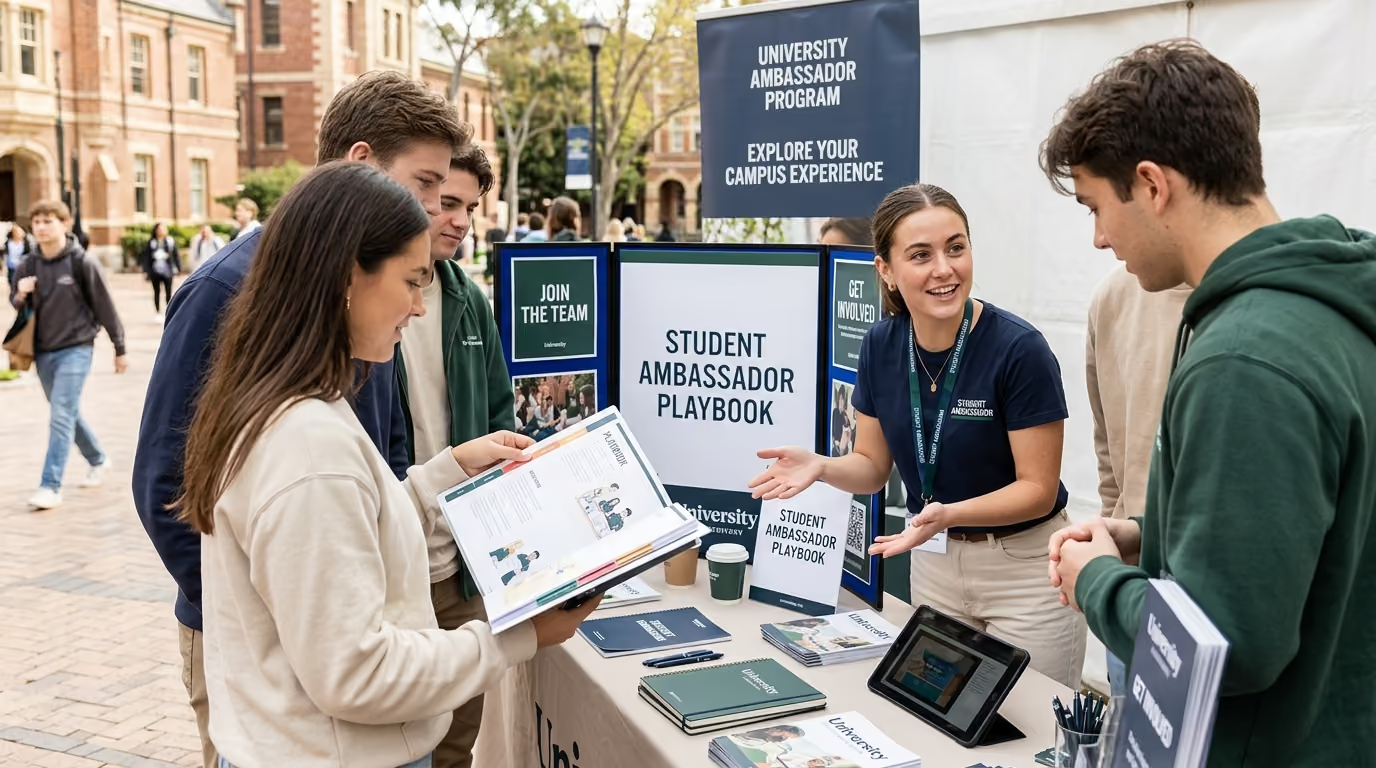
Why do most student ambassador programs fail to generate measurable sales? Brand leaders frequently search for this question after spending substantial budgets on campus representatives who hand out free items without driving commercial pipeline. This resource provides the definitive category playbooks, operating systems, and conversion frameworks required to build high-converting campus activations across every consumer vertical.
Student ambassador programs succeed only when operational design, peer credibility, and conversion mechanics align with the specific purchasing behavior of each product category. This playbook outlines the exact architectures required to turn campus interactions into sustained retail velocity, qualified pipeline, and measurable commercial Return on Investment (ROI).
Walk through any major university student union during midterm week. You will likely see three folding tables draped in branded tablecloths. At two of the tables, student workers sit behind cardboard boxes with their heads tilted down toward their phones. A passive pile of branded keychains, pens, and warm canned drinks sits untouched while thousands of undergraduates walk past without stopping.
This scene represents the classic breakdown of unstructured campus field marketing. The brand paid for sponsorship access and shipped five thousand units of inventory. However, nobody designed a structured peer interaction or a clear path to purchase. Foot traffic passes by continuously, yet zero qualified interactions occur. The marketing team receives an end of month report showing all samples were distributed, but regional retail sell-through remains completely flat.
When an unguided ambassador program operates without category-specific playbooks, chaotic execution is the default outcome. Representatives give away products to their immediate friends in dorms or leave entire cases in common rooms to hit distribution quotas quickly. No educational dialogue takes place. Nobody captures consumer contact data. Retail store locators remain unshared, and the brand gains vanity impressions instead of actual commercial lift.
Transforming this dynamic requires treating campus environments with rigorous field discipline. A college campus is a dense ecosystem governed by unique social schedules, physical transit bottlenecks, and strict administrative policies. Moving students from passive observation to active brand adoption requires structured engagement frameworks tailored specifically to what you sell.
A student ambassador program is a structured, managed partnership where enrolled students represent a brand within peer networks, student organizations, residential halls, campus events, and social channels. The ambassador is not merely an influencer or a media placement. The role combines peer recommendation, product demonstration, field logistics, content creation, qualitative research, and commercial conversion.
Understanding how to structure these initiatives begins with defining the distinct functions an ambassador performs in the field:
Experiential marketing in higher education uses live, participatory moments to anchor brand value through sensory interaction. Successful campus campaigns guide students through a clear behavioral sequence. First, the student notices the physical presence. Next, they engage in dialogue, try the product under controlled conditions, and understand its specific utility. Finally, they share the experience, convert through a commercial channel, repeat the purchase routine, and advocate to their peers.
Brand managers must distinguish between simple sampling and verified trial. Sampling is the passive distribution of a product unit. Trial is the active, guided consumption or usage experience. Research from Barnes & Noble College indicates that 84% of college students report they are more likely to purchase a product after receiving a free sample. However, handed-out samples left in a backpack do not yield the same conversion velocity as a live, peer-guided trial accompanied by a purchase incentive.
Scaling these interactions across dozens of campuses requires standardized operational kits. Leading brands utilize an event-in-a-box model to give student representatives consistent physical assets. These modular kits contain branded pop-up displays, regulatory disclosure signage, demonstration tools, sanitary supplies, digital tracking collateral, and standardized reporting templates. Structured toolkits allow programs to scale from five flagship activations to hundreds of peer-led moments nationwide. Brands looking to build structured frameworks can study our guide on building measurable student ambassador programs to standardize their field execution.
Every successful category activation follows a systematic operational methodology. The Campus Experience Ladder provides a seven-stage architecture for turning campus presence into measurable pipeline.
Map the exact physical locations and daily time windows where your product naturally integrates into student life. College routines follow rigid operational rhythms. Campus sampling data reveals that the 8:00 AM to 10:00 AM window is optimal for morning energy and breakfast items. The 11:30 AM to 1:30 PM period delivers peak foot traffic for lunch routines. The 2:00 PM to 5:00 PM window serves afternoon study breaks, athletic training, and lifestyle trial. Aligning your activation with these specific moments ensures natural product adoption.
Translate raw product features into direct solutions for collegiate pain points. A beverage is not just liquid in a can; it is sustained focus for four-hour chemistry labs or clean hydration for club sports. Packaged snacks represent portable fuel between back-to-back lectures across sprawling campuses. Technology tools represent faster project completion or simplified student group collaboration. Frame every product interaction around immediate student utility.
Define the exact sensory or functional experience required to validate your brand promise. A cold beverage requires immediate temperature-controlled consumption. A wellness product requires texture testing or ingredient explanation. Software requires hands-on interface navigation and account creation. Determine precisely what the student must see, taste, feel, or operate during the engagement.
Design low-friction interaction mechanics that draw students into the footprint. Replace passive handouts with blind taste tests, timed productivity challenges, gaming tournaments, or custom routine builders. Active participation increases dwell time and creates receptive conditions for peer education. The activity must highlight the primary value proposition of the product rather than serving as an unrelated gimmick.
Provide clear, verifiable reasons to believe the product claims. This proof comes through peer testimonials, ingredient transparency, live demonstrations, and authentic user experiences. Student ambassadors must never make claims they cannot support or promises the brand cannot legally substantiate. The Federal Trade Commission requires that endorsers only discuss products they have personally experienced and avoid making unverified performance claims.
Embed a direct, frictionless next step into the live footprint. Depending on the product category, this mechanism may be an instant checkout discount, a campus bookstore coupon, an app download QR code, or a test drive booking link. The conversion step must reflect the buying cycle of the category. Low-cost consumer goods should convert within minutes of trial, while high-consideration purchases require structured lead capture for ongoing nurturing.
Maintain momentum after the physical activation concludes. Implement automated onboarding sequences, digital replenishment reminders, and student loyalty perks. Encourage active users to join campus brand communities and create authentic social content. The true value of a campus program lies in establishing multi-year brand loyalty that endures well past graduation.
Beverages compete for high-frequency consumption routines throughout the academic week. Success depends on owning specific consumption occasions such as morning wake-up routines, mid-day study fatigue, athletic performance, or evening social gatherings.
Execution requires cold-chain discipline and precise location staging:
Track units distributed, unique tasters, taste test win rates, store locator scans, coupon redemption rates, and local retail sales lift. Brands scaling beverage initiatives can review our tactical playbook on student ambassador programs and retail velocity to maximize grocery and convenience store pull.
Manage product temperature, local health permits, waste disposal, and campus food service exclusivity contracts. Functional and energy beverage programs must enforce age-appropriate sampling guidelines and strictly avoid making unapproved health or focus claims.
Snack activations succeed on taste, portability, affordability, and social sharing. College students constantly seek convenient fuel between classes, during late-night study sessions, and within residence halls.
Implement high-volume trial systems across targeted campus micro-environments:
Barnes & Noble College benchmarking data estimates sample distribution costs between $0.15 and $1.50 per unit depending on format and staffing density. Track consumption rates, flavor preference splits, immediate coupon redemptions, campus store sales lift, and cost per consumed sample.
Control food allergen labeling, product freshness dates, sanitary portioning, and wrapper disposal. Never allow ambassadors to make unsubstantiated dietary, weight-loss, or holistic wellness claims during peer interactions.
Personal care products require trust, education, and safe trial environments. College students actively construct their adult self-care routines, making campus an ideal environment for establishing long-term brand affinity. Research from College Inc. indicates that 53% of students state quality matters more than price for personal care items, and 79% enjoy experimenting with new brands.
Execute educational, consultation-led activations across campus communities:
Ambassador training is critical in this category. Representatives must understand ingredient functionalities, skin sensitivities, and product application steps. They must understand the limits of their role. Ambassadors explain product usage, provide samples, and refer technical questions to qualified specialists. They must never attempt to diagnose skin conditions or promise medical outcomes.
Track consultation-to-sample ratios, post-trial survey sentiment, digital link clicks, ecommerce conversion rates, and subscription sign-ups.
Technology activations require guided user onboarding rather than passive viewing. The primary objective is moving students from initial awareness to account creation, feature adoption, and habitual workflow integration. Research shows that over 60% of students expect peer-led demonstrations before adopting new digital tools.
Deploy hands-on creator labs and workflow workshops across academic networks:
Track app downloads, account verifications, first-value actions, 30-day active retention, and referral volume. A successful digital activation links live demonstrations directly to trackable in-app events rather than relying purely on top-of-funnel web traffic.
Ensure data privacy compliance, secure device management, and smooth escalation pathways for technical support issues. Ambassadors must not make unverified claims regarding software capabilities, data security, or platform integrations.
Automotive is a high-consideration, long-horizon category. Campus programs influence brand consideration, electric vehicle education, lifestyle affinity, and qualified lead generation rather than generating immediate impulse sales.
Build experiential mobility showcases supported by certified operational staff:
Track qualified attendee interactions, feature demonstrations, test-drive completions, configurator sessions, and dealership referral appointments. Automotive programs require robust logistics, including comprehensive liability insurance, driver license verification, secure key management, and professional site coordination. Student ambassadors recruit, host, and collect survey responses, while professional drivers manage all vehicle operations.
Entertainment campaigns thrive on shared cultural moments, participation, and social currency. Activations must deliver authentic entertainment value rather than functioning as interruptions. Industry research on student mindsets highlights belonging, creative expression, and interactive participation as the primary drivers of entertainment adoption.
Design high-energy community experiences that spark social sharing:
Track event attendance, show-up rates, trial streaming activations, ticket sales, content creation volume, and social engagement. Secure all necessary media performance rights, manage crowd safety protocols, and ensure event environments remain accessible to all students.
Building a high-performing campus presence requires balancing local peer credibility with operational rigor. We run experiential and engagement programs coast to coast with local crews, smart logistics, and permit expertise that let us launch fast and maintain quality consistency in every region, from major metros to smaller markets. Our nationwide infrastructure enables us to activate brands wherever their audiences are located.
Selecting the right representatives requires looking beyond raw social media follower counts. Vanity reach rarely translates into reliable field execution. Evaluate candidates using a balanced operational scorecard:
Structure campus teams using specialized functional roles. Deploy experience ambassadors to manage event booths, community connectors to interface with campus clubs, and content creators to document activities. This multi-tiered structure ensures your program covers physical execution, peer networking, and digital distribution simultaneously. For teams building out their initial field rosters, our guide on building high-performing brand ambassador programs outlines key operational recruitment frameworks.
Ambassador compensation should balance operational compliance with performance outcomes. Combine hourly base pay for scheduled event execution with modest performance incentives tied to verified quality outcomes. Relying entirely on commission structures often encourages aggressive, low-quality promotion that damages brand reputation. Conversely, paying solely for hours logged without performance checks can lead to passive, low-energy activations.
Regulatory and institutional compliance must remain non-negotiable. The Federal Trade Commission mandates that any material connection between a brand and an endorser must be disclosed clearly and conspicuously. Student ambassadors must include prominent disclosures such as "#PaidPartnership" or "#Sponsored" directly within their social posts. Disclosures must appear immediately visible without requiring users to click expandable text links. Built-in platform tags alone are often insufficient under federal standards.
Campus data privacy policies also demand strict operational control. Universities enforce stringent rules regarding commercial solicitation and student data collection. For example, Syracuse University policy explicitly states that protected student information cannot be released to outside commercial entities without written consent. Ambassadors must never scrape student directories or harvest contact details without explicit, opt-in consent gathered through transparent registration forms.
Measuring the commercial impact of student ambassador activations requires moving beyond top-of-funnel vanity metrics. Event Marketer benchmark data indicates that total attendance remains the most frequently tracked event metric across the industry. However, sophisticated marketing leaders demand clear evidence linking live physical interactions directly to regional retail velocity and pipeline revenue.
Implement a structured multi-tiered measurement framework to track performance across every stage of the funnel:
Isolating the incremental lift created by campus activations requires disciplined testing methodologies. Deploy matched-market testing by pairing activation campuses with similar control campuses where no field marketing occurs. Compare baseline retail scan data across local grocery and convenience stores before, during, and after the campaign window.
Evaluate campaign Return on Investment (ROI) using standard financial accounting models:
Program ROI = (Incremental Gross Profit - Total Program Cost) / Total Program Cost
Ensure total program cost calculations account for all operational variables. Include ambassador wages, product inventory, shipping, storage, event kits, campus permit fees, liability insurance, agency management, and digital attribution software. Tracking true net profitability protects your experiential budget and demonstrates clear business value to executive stakeholders. For a deeper breakdown of attribution design, review our resource on how to measure student brand ambassador program ROI.
Examining established market activations reveals how distinct consumer categories adapt their execution to achieve measurable business results.
Haircare brand OUAI executed a multi-campus campaign designed to drive product trial and brand affinity. The brand deployed 15 trained student ambassadors who executed 45 targeted sampling activations across more than 70 campus organizations.
The program distributed over 9,610 product samples while logging more than 4,770 direct one-on-one peer interactions. Rather than relying on passive product drops, ambassadors walked peers through specific product use cases. Post-campaign surveys revealed that 61% of respondents planned to continue purchasing products, while 79% indicated they were highly likely to recommend the brand to friends.
Skincare brand La Roche-Posay combined authentic student content creation, seasonal campus activations, and direct ecommerce tracking. Ambassadors hosted educational skincare clinics during high-stress academic windows, distributing over 17,500 product samples.
The campaign generated over 1.9 million user-generated social impressions with an exceptional 18% average engagement rate. By embedding custom digital checkout links and data capture mechanics into every activation, the initiative generated over $85,000 in directly attributed website sales.
Apparel retailer Topman recruited student representatives across universities situated within immediate geographic proximity to their brick-and-mortar retail stores. Ambassadors hosted style clinics, organized student shopping nights, and captured qualified email leads on campus.
By aligning campus staffing directly with local commercial retail endpoints, the brand drove measurable in-store foot traffic and profitable retail sales lift across targeted metropolitan markets.
Fashion brand Express scaled a national campus ambassador engine that combined high-volume social content creation with unique discount attribution. The program generated over 103 million digital impressions and 53,000 ambassador-created social assets.
By assigning unique, trackable discount codes to each student representative, the program generated $2.2 million in directly attributed ecommerce sales, proving that peer-led campus activations can serve as scalable commercial acquisition channels.
Haircare brand Not Your Mother's deployed standardized event-in-a-box kits across five major university campuses. The program sampled over 8,500 full-sized and travel-sized products while conducting 7,400 direct peer interactions.
The initiative generated 530 pieces of authentic organic content. Controlled pre-campaign and post-campaign research measured an 11% increase in verified product trial, a 12% lift in total brand awareness, and a 10% increase in purchase intent across target demographics. Brands exploring national rollouts can reference our comprehensive guide to student ambassador programs and retail sales for end-to-end operational planning.
Transforming your campus marketing strategy requires taking immediate, practical operational steps. Marketing directors can execute this implementation checklist over the next seven days to audit existing programs and prepare high-impact activations:
Teams seeking experienced operational support can explore our complete brand activation services to plan and execute national experiential campaigns that deliver measurable business results.

30 Years Experiential & Retail Activation Partner for CPG & Beverage Brands | Multi-Market Demos, Roadshows & Costco/Club Programs That Actually Sell