Robbie Thain
Founder, CEO

High-density pedestrian crowds often grab free product samples without converting, requiring brands to evaluate five core formats and operational frameworks.
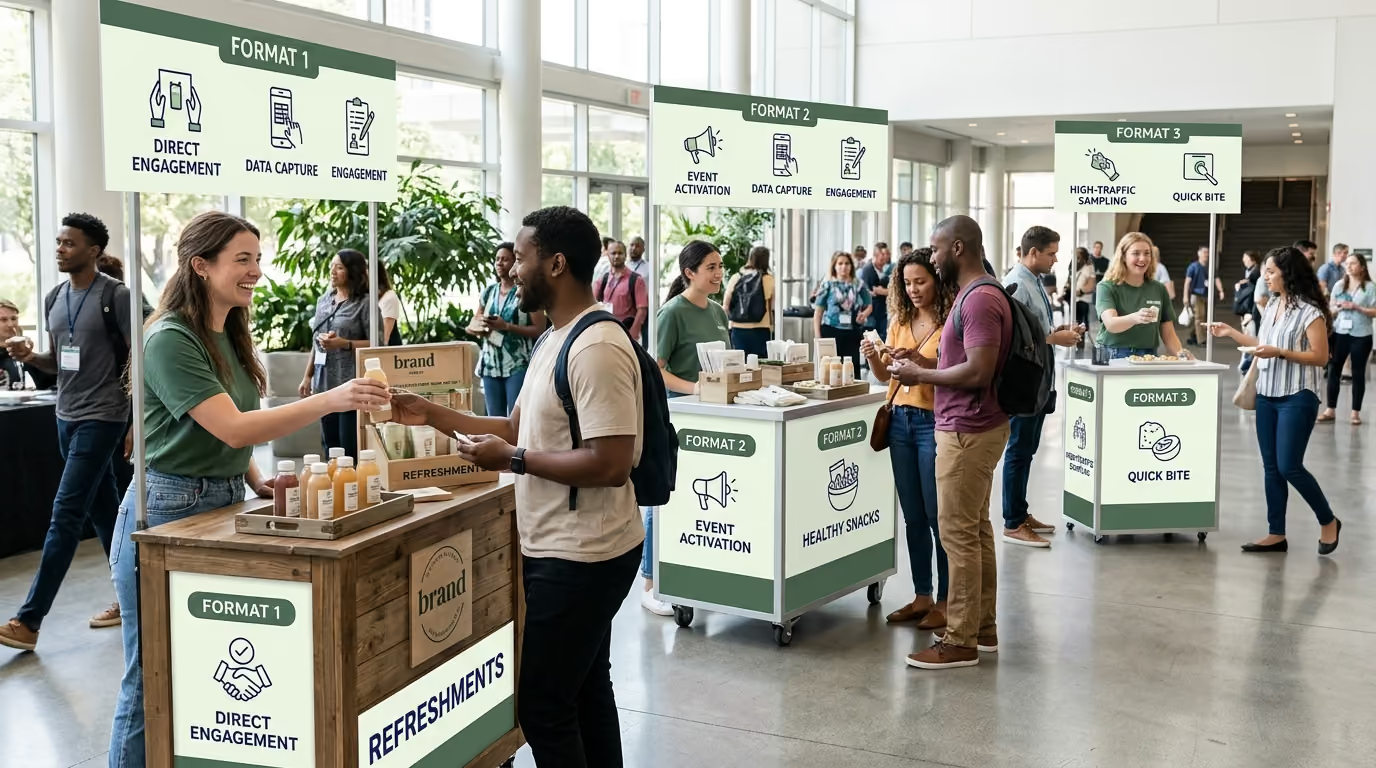
Distributing high volumes of physical product samples without strategic environmental alignment drains marketing budgets while producing negligible sales conversion. Selecting the optimal activation model requires matching consumer mindset, purchase proximity, operational complexity, and verified Return on Investment (ROI) metrics to concrete business objectives.
A crowded trade show floor or public plaza exposes the fragile assumptions of experiential marketing. Brand teams often spend months designing beautiful footprints, securing premium vehicles, and printing expensive promotional materials. Yet on activation day, unexpected friction quickly derails the mission. Coolers lose temperature under direct sunlight. Municipal inspectors question sidewalk permits because a branded table rests two inches outside an approved perimeter. Pedestrians rush past brand ambassadors without making eye contact, grabbing free items only to discard packaging in the nearest trash bin.
Meanwhile, retail shelves located two blocks away sit completely untouched. The brand team celebrates distributing five thousand units before noon, recording the day as an unvarnished success. However, nobody tracked whether those recipients matched the target consumer profile. Nobody recorded whether those consumers understood the core product benefits or planned to purchase the product during their next grocery trip. The marketing department spent significant capital on an activation that generated transient noise rather than measurable retail velocity.
This scenario repeats across consumer packaged goods categories every weekend. Teams confuse raw distribution volume with genuine commercial traction. Passing out free cans or snack bags creates activity, but activity does not equal conversion. When field execution lacks a clear operational framework, sampling programs become expensive giveaways that fail to justify their budgets to leadership.
Every physical environment dictates specific consumer behaviors, dwell times, and psychological states. A hurried commuter stepping off a train interacts with a brand differently than a relaxed shopper browsing a supermarket aisle or a music fan attending an outdoor festival. Choosing the wrong physical format guarantees wasted inventory, frustrated staff, and unprovable commercial impact. Marketers must evaluate the structural trade-offs between street distribution, retail demonstrations, event activations, mobile pop-ups, and unconventional street executions before deploying resources into the field.
Choosing an activation format requires understanding the mechanical strengths and operational limitations of each model. Physical trial remains one of the most persuasive tools in marketing, but only when executed in the right context. Academic research on product sampling indicates that high trial rates do not guarantee conversion unless consumers actively use the product and connect the experience to a distinct purchase path. Marketers must analyze each of the five primary activation formats through a rigorous operational lens.
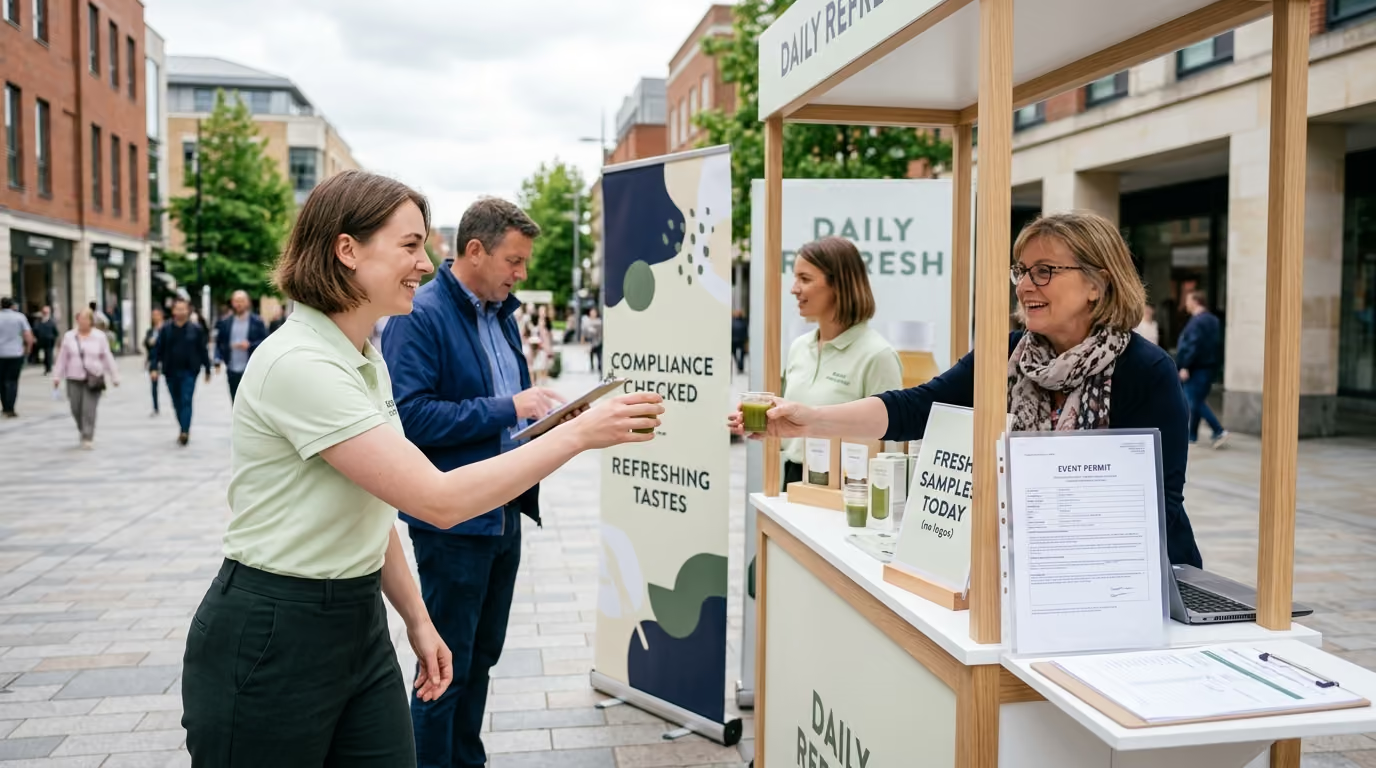
Street sampling deploys brand ambassadors into high-density public pedestrian corridors. Typical locations include transit plazas, office districts, urban parks, university campuses, and busy retail sidewalks. This format prioritizes broad reach, rapid trial generation, and geographic flexibility.
The primary advantage of street sampling lies in its sheer distribution capacity and speed. Teams can pivot quickly across city blocks to follow pedestrian traffic flow, sunny weather, or morning commute patterns. According to an industry study by Arbitron and Edison Media Research, product sampling reaches roughly 70 million consumers quarterly. That same research revealed that 64 percent of surveyed consumers accepted samples, and 35 percent claimed they purchased the sampled product on the same day. Street sampling exposes a brand to consumers outside traditional digital or retail media channels.
However, street sampling offers limited dwell time. Interactions usually last between five and fifteen seconds. Brand ambassadors cannot deliver complex educational narratives while pedestrians are hurrying to work. Furthermore, street sampling carries significant permitting exposure. Municipalities frequently enforce strict guidelines regarding sidewalk obstruction, temporary structures, and litter management.
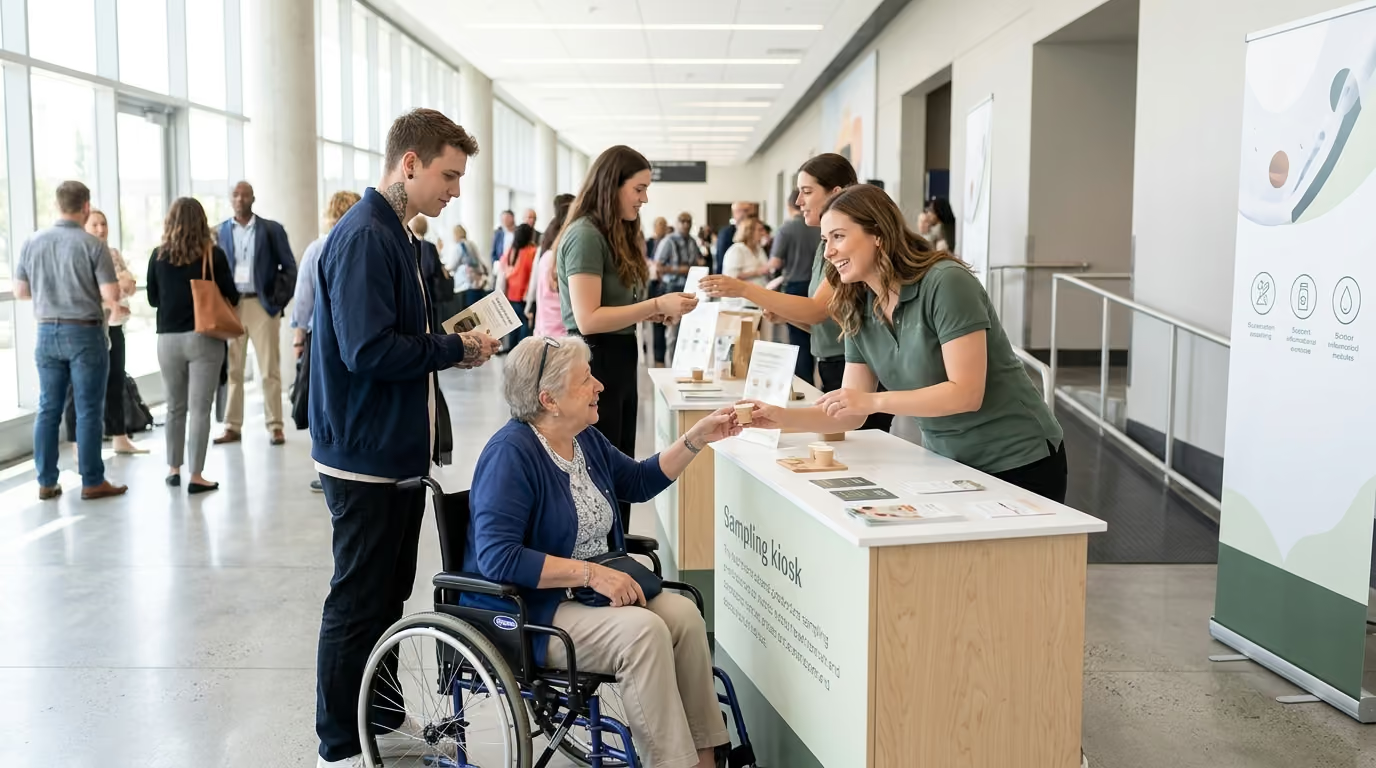
Retail sampling positions brand ambassadors inside or immediately outside a commercial retail store where the featured product is stocked. This format focuses squarely on immediate conversion, basket building, and retail velocity.
The greatest operational strength of retail sampling is minimal distance to purchase. A shopper tastes a beverage or tests a snack, experiences the product benefits firsthand, and immediately places the item into their shopping cart. A comprehensive study covering more than 20,000 in-store activations, reported by Retail TouchPoints, showed that sampled item sales peaked at more than 180 percent of baseline on the day of the event. The same study revealed that sampled products sustained an average cumulative sales lift of 74 percent over a 20-week tracking window. Retail sampling also generates an 85 percent cumulative increase in new-to-brand buyers over that same period.
The challenge of retail sampling centers on operational constraints and scheduling friction. Brands must secure retailer approvals, coordinate with store managers, and adhere to rigid setup windows. Merchandising compliance is mandatory. If retail shelves run out of stock during the demonstration, the commercial impact collapses instantly. Brand ambassadors must also follow strict food handling and sanitation standards.
Event sampling integrates a brand presence into third-party gatherings such as music festivals, marathons, community fairs, sporting events, or trade shows. This model targets concentrated audiences united by shared lifestyle interests or cultural occasions.
This format provides high audience density and natural context. Handing an electrolyte beverage to a runner finishing a half-marathon delivers immediate, relevant utility. The positive atmosphere of an organized event enhances consumer receptivity and brand recall. Experiential campaign data shows that festival environments can achieve purchase intent rates above 30 percent when product trial aligns with consumer needs. Furthermore, event activations generate authentic user-generated content and social amplification.
The primary drawback involves high sponsorship fees and intense brand competition. Major festivals often host dozens of competing sponsors fighting for attendee attention. Brands risk blending into background clutter if their visual presentation lacks distinctiveness. Additionally, event schedules and weather fluctuations remain outside the brand's control.
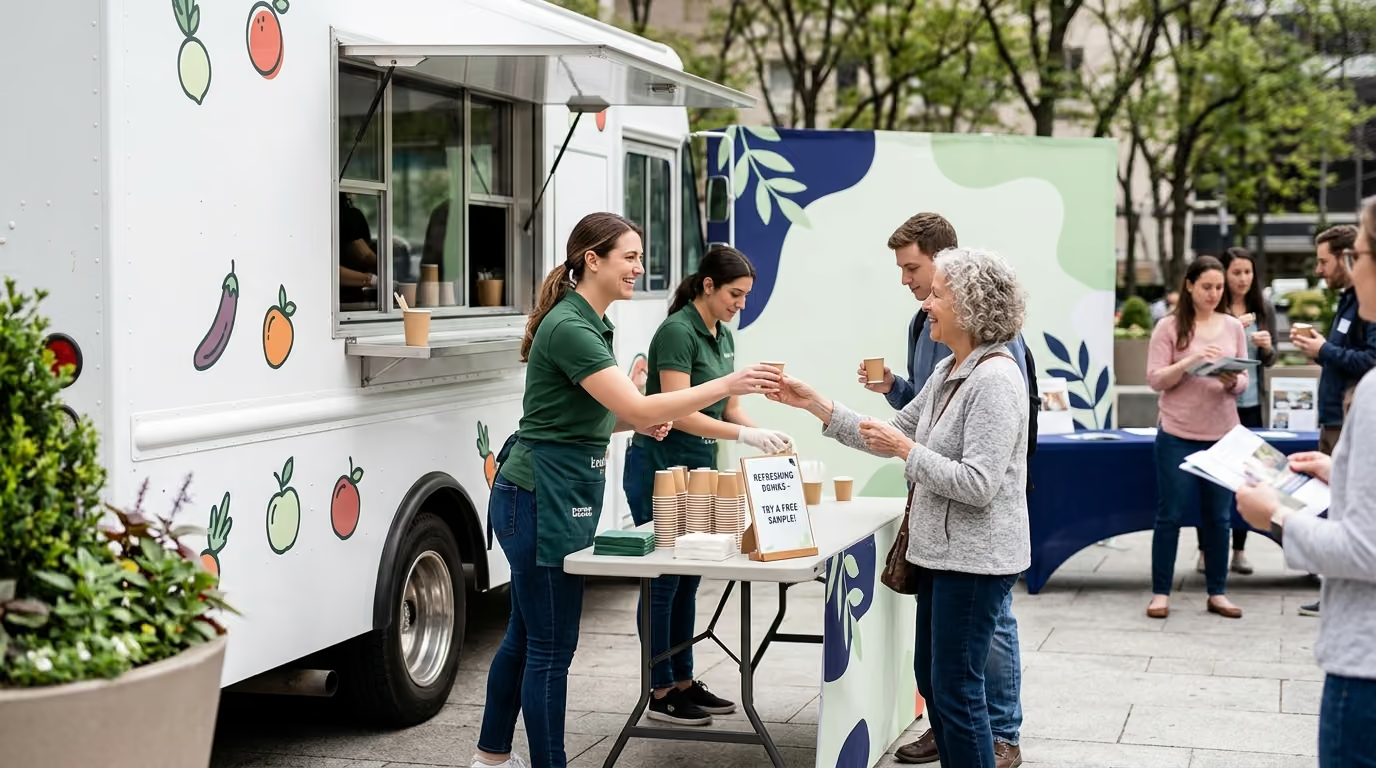
Mobile pop-up environments utilize customized vehicles, converted trailers, modular shipping containers, or elaborate tent footprints to create immersive brand environments. These portable spaces move across cities on scheduled multi-week tours.
Mobile pop-ups provide complete environmental control. Marketers can design distinct sensory zones, integrated digital kiosks, interactive product demonstrations, and comfortable lounge areas. Dwell times in pop-up footprints often range from three to eight minutes, allowing for meaningful storytelling and direct customer relationship data capture. A mobile pop-up serves as an effective platform for launching complex product lines or premium goods that demand consumer education.
The trade-off is high production cost, transport logistics, and reduced consumer throughput. Operating large vehicles requires specialized commercial drivers, dedicated staging yards, continuous generator power, and extensive municipal permits. If an experience takes ten minutes per person, total daily trial volume will remain modest regardless of overall street footfall.
Guerilla marketing relies on unconventional, high-visibility street interventions designed to surprise consumers and spark immediate earned media. Tactics include unannounced public art installations, flash brand drops, projection mapping, or rapid product distributions in cultural hotspots.
When executed properly, guerilla activations deliver exceptional earned reach and cultural relevance for challenger brands. The unexpected nature of the intervention generates spontaneous social sharing and PR coverage at a fraction of major paid media buys. It breaks through standard consumer advertising filters by delivering authentic surprise.
However, guerilla activations carry elevated operational, legal, and reputational risks. Operating in public spaces without formal permits can lead to citations, shutdowns, or public pushback. If the stunt causes pedestrian congestion or property damage, the brand suffers reputational harm. Most critically, guerilla moments often create memorable spectacles while failing to communicate the underlying product value.
Selecting the right physical format requires an objective evaluation rather than subjective preference. Brand teams must avoid choosing a mobile truck or street team simply because the concept seems exciting in a creative deck. Marketers should apply a systematic five-step framework to evaluate operational feasibility, commercial alignment, and channel capability before allocating capital.
A successful sampling initiative focuses on one primary business outcome. Attempting to drive upper-funnel cultural awareness, immediate retail velocity, and detailed customer data capture within a single activation dilutes operational focus.
Marketers must select a single priority from the following core objectives:
When the objective is immediate sales conversion, retail demonstrations represent the logical choice. When the goal centers on lifestyle association and content creation, an event sponsorship or mobile pop-up environment provides superior infrastructure.
Field success depends on aligning the activation footprint with the psychological state and schedule of the surrounding consumer. Marketers must evaluate where their target audience travels and how much time they can realistically invest in a brand interaction.
Commuters moving through a subway terminal operate under extreme time pressure. They reject long surveys or complicated product demonstrations, but they will accept a sealed, grab-and-go energy bar. Conversely, consumers strolling through a weekend food festival possess abundant dwell time and actively seek novel sensory discoveries. Parents shopping in a suburban grocery store focus on efficiency, budget management, and family preferences. Understanding these psychological contexts prevents costly mismatches between activation mechanics and real-world consumer behavior.
Reviewing matching retail sampling locations with shopper intent provides deeper insight into how specific physical settings influence consumer purchasing behavior.
Physical products impose distinct mechanical requirements on experiential execution. A ready-to-drink sparkling water requires cold-chain refrigeration, rapid can cracking, and basic sanitation. In contrast, an artisanal plant-based cheese or a high-end skincare serum requires detailed culinary preparation or personal consultation.
Simple, low-friction products succeed in high-throughput street and event sampling footprints. Highly complex products require controlled environments with dedicated demonstration stations, hand-washing sinks, display lighting, and seated consultations. Forcing a complex product into a high-speed street sampling model confuses consumers and suppresses trial quality.
Every physical activation operates under mathematical throughput limits. Field leaders must calculate theoretical and realistic consumer engagement capacity during the planning phase.
A pop-up running for eight hours with four brand ambassadors conducting three-minute demonstrations can engage a maximum of 640 consumers daily under perfect conditions. Factoring in staff rotations, setup maintenance, and uneven pedestrian flow reduces realistic capacity to roughly 450 qualified interactions. If the campaign requires 5,000 completed product trials per day, the brand must pivot from an immersive pop-up to a distributed street team model.
To remove internal bias, brand leaders should score candidate formats across five weighted dimensions: commercial objective alignment, audience lifestyle fit, purchase proximity, operational feasibility, and data measurement precision. Assigning scores from one to five for each dimension creates an objective evaluation score. This analytical approach ensures that the final activation model aligns directly with strategic marketing goals and budget reality.
Transforming a strategic concept into an operational field campaign requires disciplined execution. Brand teams must establish standardized operating procedures covering site selection, staffing, logistics, and real-time inventory management.
We design mobile activations and roadshows that accelerate consumer trial, build trust, and boost retail velocity during 90-day product launch windows. Our structured approach transforms initial product trial into sustained consumer confidence and retail performance.
Never execute an activation based purely on satellite maps or digital photos. Field directors must personally inspect target locations to evaluate physical and environmental constraints.
Public space activations require rigorous regulatory compliance. Permitting missteps can lead to immediate operational shutdowns by local law enforcement or municipal inspectors.
Reviewing contingency planning frameworks for field logistics ensures that field teams maintain operational control during unexpected weather or mechanical disruptions.
Brand ambassadors represent the human bridge between physical products and consumer memory. Field staff must embody operational discipline, product expertise, and authentic engagement skills.
For an extensive operational framework on recruitment, training, and field management, consult our guide on staffing mobile sampling and street teams.
The physical layout of an activation footprint directly governs consumer flow, safety, and engagement quality. Disorganized staging creates bottlenecks that deter passing consumers.
A sampling activation that generates consumer demand without available retail stock wastes marketing expenditure. Field operations must maintain direct synchronization with local retail channels.
Understanding the broader strategic choices between retail footprints and traveling tours is detailed in our guide on choosing between retail demos and mobile tours.
Experiential marketing campaigns often face skepticism from finance teams because post-event reporting frequently relies on vanity metrics. Reporting millions of estimated impressions does not prove business growth. Marketers must deploy a structured four-layer measurement framework that tracks real consumer movement from initial physical contact down to verified register sales.
Exposure metrics establish the foundational baseline of an activation. They measure the raw physical reach and volume of product distributed across the operational schedule.
Participation metrics quantify the depth of consumer interaction within the activation footprint. They reflect whether consumers merely grabbed a free item or actively engaged with the brand.
Brand response metrics evaluate shifts in consumer sentiment, perception, and stated buying intent. These metrics are gathered through on-site exit interviews or follow-up digital surveys.
Commercial metrics represent the ultimate test of experiential marketing. They track verified revenue generation, register sales velocity, and long-term customer acquisition.
According to the Event Measurement Benchmarking Report, 46 percent of consumer event marketers achieve an ROI ratio between 2:1 and 5:1 when utilizing structured measurement methodologies. Establishing baseline sales data prior to deployment is essential to isolate activation impact from seasonal retail fluctuations.
For a detailed analysis of commercial modeling and financial reporting frameworks, explore our resource on measuring sampling return on investment.
Analyzing real-world campaign data illustrates how distinct activation formats generate measurable business results across varied consumer categories.
A major confectionery brand sought to introduce a new premium product line while accelerating sales velocity for its existing product portfolio. Rather than relying solely on digital media banners, the brand deployed a comprehensive retail sampling program across national supermarket accounts.
According to campaign reporting published by Walmart Connect Canada, the sampling campaign generated exceptional retail velocity. The newly launched confectionery product achieved a 228 percent sales lift and generated 284 percent average new-to-brand customer acquisition during the active trial window. Concurrently, demonstrations featuring the established product line drove a 602 percent sales lift and a 601 percent surge in new-to-brand buyers.
This performance confirms findings from broader in-store research showing that physical product trial dramatically lowers purchase hesitation at the shelf. Placing product directly into consumers' hands at the point of sale converts passive consideration into immediate register transactions.
A challenger ice cream brand required massive consumer trial to support rapid national distribution expansion across grocery retailers. The brand engineered a dedicated mobile tour footprint deployed across major U.S. consumer events, street festivals, and cultural gatherings.
Experiential campaign data reported by BeCore revealed that the tour successfully distributed 135,692 physical product samples across seven major regional event stops. The footprint combined high-volume tasting stations with branded interactive photo elements. By selecting high-density lifestyle events, the brand achieved substantial qualified trial volumes while capturing valuable consumer feedback that validated regional demand to national retail category buyers.
A national beverage enterprise launched an extensive multi-city roadshow to reposition its core product portfolio and drive regional retail demand. The campaign utilized customized mobile sampling vehicles executing coordinated tour stops over a six-month operating timeline.
Campaign case metrics reported by Wolf & Matter detailed that the tour distributed more than 150,000 product samples while generating over 1.24 million verified consumer impressions across nine primary metropolitan markets. The mobile units operated at high-traffic festivals, commercial centers, and sporting events, providing cold-chain refreshments while driving consumers to local retail partners via digital store locator tools.
Similarly, a mobile tour executed for MUSH distributed 56,658 product samples, resulting in 62 percent of engaged participants being entirely new to the brand. These operational examples demonstrate that pairing high-capacity sampling vehicles with disciplined regional routing creates substantial consumer awareness and retail pull.
To understand the logistics of executing multi-market roadshows, read our guide on multi-city mobile sampling tours.
Executing physical brand activations involves complex legal, environmental, and mechanical variables. Overlooking these practical constraints can lead to campaign failure, safety violations, or severe brand damage.
Public space marketing requires detailed knowledge of municipal administrative codes. City governments increasingly regulate commercial activities on sidewalks, curb lanes, and public plazas.
In New York City, for example, the Street Activity Permit Office enforces strict guidelines for commercial promotions. Distributing samples from a fixed structure, table, cooler, or vehicle requires formal street event permits. Hand-to-hand sampling conducted while walking may not trigger structural permits, but staff must keep all inventory on their person. Placing a single supply box on the sidewalk can result in administrative summonses. Furthermore, sampling from parked vehicles in curb lanes is prohibited under municipal transit codes. Field managers must submit site plans, insurance certificates, and runs of show well in advance.
Distributing edible food and beverage products introduces serious public health responsibilities. Brand ambassadors must maintain rigorous sanitary standards to prevent foodborne contamination.
Field teams must adhere to the Food and Drug Administration (FDA) Employee Health and Personal Hygiene Handbook guidelines. Staff must wash hands thoroughly, wear approved disposable gloves, and maintain clean serving surfaces. Perishable goods requiring refrigeration must remain strictly below 41 degrees Fahrenheit, while hot items must stay above 135 degrees Fahrenheit. Brand ambassadors must utilize calibrated digital probe thermometers to record temperatures hourly. Clear allergen disclosures covering nuts, dairy, soy, and gluten must appear prominently on all display signage to protect consumer health.
Immersive experiences fail when operational design creates massive queue bottlenecks. Consumers passing through public spaces will abandon a line if wait times exceed three minutes.
Field managers must stage the activation footprint to ensure rapid flow. Position introductory greeters to answer basic questions and direct traffic. Ensure that sample preparation happens out of sight in a dedicated back-of-house staging zone so ambassadors can focus entirely on customer handoffs. If a digital questionnaire or VR experience takes four minutes, build multiple parallel stations to accommodate peak foot traffic without clogging the surrounding pedestrian corridor.
Outdoor activations remain vulnerable to shifting weather patterns. Extreme heat, torrential rain, and sudden wind gusts can damage physical assets and endanger staff.
Tents and pop-up canopies must feature commercial-grade steel frames anchored by certified ballast weights. Most municipal safety codes require a minimum of 40 to 50 pounds of weight per tent leg. Standard stakes are insufficient on urban concrete and asphalt surfaces. Field managers must monitor local radar feeds continuously and enforce mandatory shutdown procedures when sustained winds exceed 25 miles per hour or lightning strikes within a ten-mile radius.
Budgeting for experiential marketing requires evaluating direct production, recurring logistics, regulatory compliance, and analytics infrastructure. Underestimating operational costs leads to budget overruns or compromised execution quality.
Marketing leaders should approach experiential marketing as a coordinated portfolio rather than relying on a single activation format. High-growth consumer brands frequently combine multiple physical touchpoints to build an integrated customer journey across target metropolitan markets.
A balanced regional activation strategy leverages each format for its primary operational strength:
Choosing the right mobile sampling format requires balancing strategic goals against operational realities. When brand leaders match consumer psychology, physical product traits, and rigorous logistics, physical sampling transforms from an expensive giveaway into a highly profitable, scalable retail growth engine.
Executing physical product sampling with operational precision ensures that every consumer interaction builds lasting brand equity and drives measurable, long-term commercial growth.

30 Years Experiential & Retail Activation Partner for CPG & Beverage Brands | Multi-Market Demos, Roadshows & Costco/Club Programs That Actually Sell