Robbie Thain
Founder, CEO

Sustainable retail sampling programs reduce waste and cut activation costs through structured demand forecasting, closed-loop reuse systems.

Most retail sampling programs attempt to solve sustainability by swapping plastic ramekins for molded fiber cups. That swap changes the material of your trash, but it does not change the fact that your activation produces trash. True sustainability in physical brand activations requires treating sampling as a temporary service system rather than a product giveaway.
A sustainable retail sampling program requires rigorous source reduction, closed-loop asset recovery, and disciplined waste tracking rather than cosmetic material swaps. Marketing operators who implement structured inventory forecasting and verified local disposal routes cut physical waste while proving measurable Return on Investment (ROI) across retail networks.
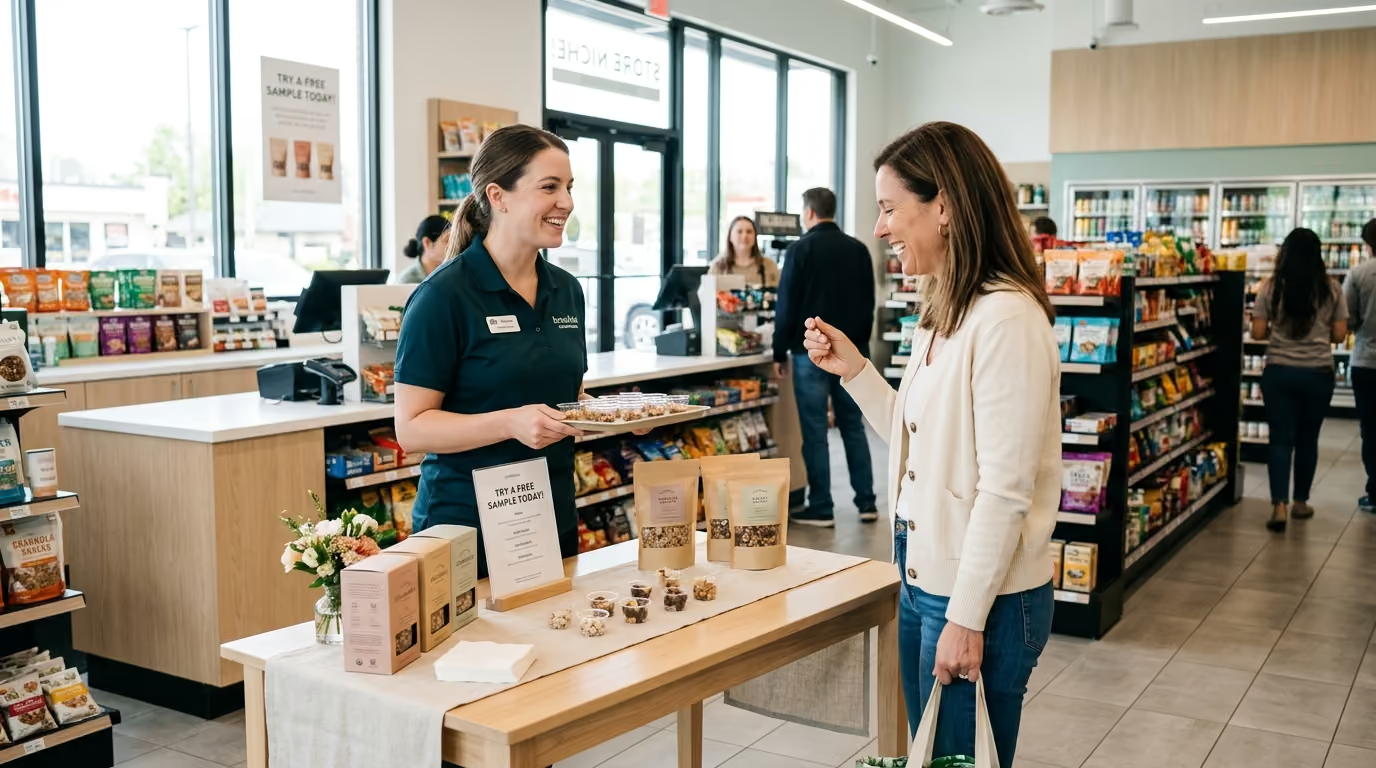
Step onto the floor of a high-volume grocery or specialty store on a Saturday afternoon. You will find brand ambassadors stationed near crowded aisles, surrounded by cardboard boxes, single-use plastic gloves, branded paper flyers, and rows of portioned plastic cups. The trash can behind the demonstration table is overflowing after two hours. Half of the pre-portioned samples sit under warming lamps or melting on ice, growing stale while foot traffic ebbs and flows.
When the shift ends, the remaining prepared samples go directly into the dumpster. Unopened boxes with damaged outer cartons are discarded because the field team lacks a reverse-logistics process. Collateral printed for that specific weekend ends up in the compactor alongside hundreds of contaminated plastic sample vessels.
This scenario represents standard operational practice across thousands of retail activations each weekend. In our experience managing field activations nationwide, when sampling operations fail to plan for waste, they default to disposal. Brand managers focus entirely on sample counts and immediate foot traffic. They leave waste management to retail staff or part-time brand ambassadors who lack the tools, time, or instructions to handle materials responsibly.
This operational disconnect creates three distinct problems for consumer packaged goods (CPG) brands. First, it wastes budget on discarded product and single-use collateral that never drives purchase intent. Second, it exposes brands to greenwashing risks when marketing claims clash with messy field execution. Third, it strains relationships with retail partners who bear the labor and disposal costs of retail demo waste. To fix these issues, brands must shift from superficial packaging updates to a systematic, operational framework.
Field teams cannot solve retail sampling waste by choosing different disposable items. Sustainable activations must follow the materials management hierarchy established by the U.S. Environmental Protection Agency (EPA). The EPA places source reduction and reuse at the top of its hierarchy, followed by recycling and composting, with energy recovery and disposal at the bottom.
For food products, the EPA wasted food scale prioritizes preventing wasted food entirely. The next preferred steps include donating surplus edible items and upcycling ingredients. Lower pathways like industrial composting or landfill disposal should only handle unavoidable scraps.
Building a sustainable program requires clear operational definitions across five core concepts:
Source reduction means preventing waste before it enters the store. In sampling, this means serving smaller, precise portions that deliver the complete taste profile without excess volume. It means replacing single-use paper coupons with high-contrast digital QR displays mounted on permanent fixtures. It also means shipping inventory based on verified store-level conversion models rather than rough foot-traffic estimates.
A reusable asset is not simply a durable container. According to research from WRAP, true reuse requires an operational system that keeps items in circulation across multiple cycles. A reusable plastic serving tray thrown into a retail dumpster after one afternoon is technically durable, but operationally single-use. True reuse requires a closed loop: tracking, collection, transport, commercial sanitation, inspection, and redeployment.
Recycling requires viable processing infrastructure, not just a chasing-arrows symbol on the package. The EPA defines recycling as collecting, sorting, and processing materials into secondary raw materials for remanufacturing. In a retail setting, field teams must confirm that the store hauler actually accepts the specific resin or fiber format. Food-soiled materials placed into dry recycling streams contaminate the entire bin and send recyclable materials to landfills.
Compostable materials are not harmless alternatives that degrade in ordinary trash cans. The Federal Trade Commission (FTC) Green Guides require marketers to substantiate compostability claims based on real-world disposal conditions. Most compostable plastics require industrial high-heat facilities and do not break down in municipal landfills or backyard piles. If a retail venue lacks a dedicated, uncontaminated organics collection stream, compostable serviceware offers zero environmental benefit over standard disposables.
Food waste and packaging waste require separate measurement streams. A brand might eliminate all single-use plastics while discarding forty pounds of spoiled dairy product per store. According to the United Nations Environment Programme (UNEP) Food Waste Index Report, 1.052 billion tonnes of food were wasted globally in 2022. Retail operations accounted for 131 million tonnes of that total. Managing both streams requires distinct operational protocols.
To evaluate these impacts systematically, operators should use life cycle assessment (LCA) principles following the ISO 14040 framework. An LCA measures the environmental inputs and outputs of an activation system across its complete life cycle. The analysis includes raw material extraction, manufacturing, transportation logistics, on-site energy use, commercial washing, and final disposal.
The evaluation must center on a standardized functional unit. In physical sampling, that unit is typically defined as one qualified consumer trial. Comparing a single-use paper cup to a reusable melamine dish is meaningless without factoring in washing water, transport weight, and the number of times the asset gets reused. The central strategic question is simple: What operational system delivers one safe, qualified product trial with the lowest total environmental burden?
Food waste in retail demonstrations rarely stems from unexpected foot traffic. It results from defensive overproduction by field teams who fear running out of product during peak hours. Brand ambassadors often open and prepare an entire day's inventory during morning setup. When afternoon traffic drops, that exposed product cannot be returned to stock, donated, or safely held for the next shift.
Preventing food waste requires conservative forecasting coupled with staged replenishment. Field managers should calculate initial prep volumes using five specific variables:
By staging inventory in small, rolling batches, field staff keep backup product in temperature-controlled, unopened retail packaging. If demand spikes, staff can prepare a new batch within ten minutes. If foot traffic stalls, the unopened cases remain fully saleable, safe for return, or eligible for food recovery organizations.
Optimizing portion size acts as another powerful source-reduction lever. Many sampling programs hand out full retail servings when a single bite or sip communicates the complete flavor profile. Sizing a portion down from two ounces to three-quarters of an ounce cuts product requirements by over sixty percent. This reduction directly decreases upstream shipping mass, refrigeration energy, and downstream waste volume.
Field teams should track whether portion adjustments impact commercial performance. In our field programs, we evaluate whether smaller tasting sizes change conversion metrics. We measure trial completion, purchase intent, and retail sell-through across comparable store clusters. When done correctly, smaller portions focus the shopper on flavor and texture without creating leftovers that get discarded. For deeper insights on managing field activations across grocery formats, review our field guide for CPG retail activations.
When food surplus does occur, field teams must handle it through a strict triage hierarchy:
Donation programs require pre-event coordination. Field teams cannot improvise food rescue at 5:00 PM on a Sunday. Operators must confirm recipient eligibility, cold-chain transport capabilities, and local health department guidelines weeks before the event. If a verified food recovery partner cannot accept the surplus at a scheduled time, the team must adjust prep forecasts rather than creating excess product that ends up in dumpsters.
Reusable serviceware eliminates disposable trash, but it introduces logistical complexity. Switching to reusable tasting cups, serving boards, and presentation trays is only beneficial if the assets complete enough operational cycles to offset their manufacturing footprints.
Scientific life cycle studies on reusable packaging systems highlight this balance. A study published in Resources, Conservation and Recycling evaluated reusable food containers in centralized collection systems. The researchers found that reusable containers achieved lower global warming potential than single-use alternatives after six to ten uses. Another comparative study published in the Journal of Cleaner Production showed that commercial washing represents the largest environmental impact for reusables, while single-use items generate their highest impacts during raw-material extraction and disposal.
If field ambassadors lose reusable trays or wash them inefficiently in cold water, the reusable program can generate higher environmental impacts than lightweight paper. Marketing operators must design their reuse systems around four operational requirements:
Select serving vessels made from durable, commercial-grade materials like high-density polypropylene, stainless steel, or melamine. Avoid complex designs with small crevices, moving parts, or glued components that trap food particles. Assets must be stackable, impact-resistant, and compatible with commercial dishwashers. Use universal, unbranded, or subtly engraved serviceware across multiple product campaigns. Universal designs prevent assets from becoming obsolete when packaging graphics change.
Never allow brand ambassadors to clean reusable food serviceware in public restroom sinks or break rooms. Field washing rarely meets health department sanitization temperatures and wastes excessive water. Partner with centralized commissary kitchens, catering hubs, or professional third-party reverse-logistics providers. Field kits are packed securely in heavy-duty totes after each event, shipped to a regional cleaning facility, sanitized in high-efficiency commercial dishwashers, inspected, and redeployed.
Track durable assets like high-value retail equipment. Each field kit should have a serialized barcode and a strict component inventory sheet. Field staff scan kits out of the warehouse and scan them back in upon completion. Tracking assets visibly reduces field loss rates and holds event managers accountable for returns.
Establish a minimum target for reuse cycles during campaign planning. For example, if a heavy molded serving dish requires twelve cycles to beat single-use paper on carbon intensity, schedule that asset for at least thirty store activations. If an asset breaks or goes missing after three shifts, the system fails both environmental and financial benchmarks.
To learn more about tracking performance and operational metrics across field campaigns, explore our guide on tracking key event metrics beyond headcount.
A national retail sampling strategy cannot rely on a single waste management protocol. Waste hauling capabilities, commercial organics collection, and recycling rules vary across municipalities and retail banners. A packaging format that is mechanically recyclable in Seattle may go straight to a landfill in rural Ohio.
Before deploying field kits, operations teams must build a Store Infrastructure Matrix for every retail partner. This matrix maps out the physical capabilities of each activation location:
Understanding store infrastructure prevents costly material mistakes. For instance, the FTC Green Guides note that marketers should qualify recyclability claims if recycling facilities are not accessible to at least sixty percent of consumers or communities where an item is sold. Deploying custom plastic cups labeled "100% Recyclable" into retail stores without municipal recycling infrastructure frustrates store staff and misleads shoppers.
Operators must also evaluate alternative service models based on specific store constraints:
Staff portion product from commercial bulk packaging into reusable, washable vessels. This model delivers the lowest packaging mass per sample. It requires reliable reverse logistics and access to commercial dishwashing hubs.
Liquids, powders, or small dry snacks are dispensed from large, sealed hoppers or manual pumps. Consumers sample directly into small, edible wafers or lightweight paper vessels. This approach reduces serving labor, protects food safety, and eliminates individual sample wrappers.
Consumers receive a sample portion directly from standard retail packaging displayed on the counter. This model avoids secondary packaging entirely. It works best for items like premium beverages, condiments, or specialty baked goods where the product can be cleanly portioned in view of the shopper. For strategies on selecting optimal retail venues for these models, see our insights on matching physical activation environments to shopper intent.
For select beauty, personal care, and household items, consumers experience the product through fragrance testing, tactile displays, or visual demonstrations without consuming single-use items. Eliminating physical sample distribution avoids waste while maintaining high shopper engagement.
When source reduction and reuse systems cannot meet specific campaign needs, operators must select disposable items with care. Packaging choices should focus on mechanical recyclability and simple material structures.
Avoid multi-material packaging assemblies. A paper cup lined with low-density polyethylene cannot enter standard paper recycling streams, and municipal plastic systems will reject it. Laminated foil pouches, metallic stickers, and mixed-plastic blister packs create sorting headaches that guarantee disposal.
Follow design recommendations from organizations like the U.S. Plastics Pact:
Recycled content is fundamentally different from recyclability. Recycled content measures the percentage of post-consumer material used to manufacture the item. Recyclability measures whether the item can actually be collected, sorted, and reprocessed in real-world systems. An item made with post-consumer resin is not sustainable if food residue condemns it to a landfill after a single use.
Paper alternatives must be evaluated within an operational context. Paper materials are renewable and degrade faster than conventional plastics in open environments. However, producing virgin bleached paper requires substantial water and energy. If heavy paperboard cups are coated in synthetic barriers, they contaminate both paper and plastic recovery streams.
Promotional collateral requires similar discipline. Never print dates, seasonal slogans, or limited-time promotional pricing directly on durable booth signage. Build modular displays with durable aluminum or wood frames. Use interchangeable graphic panels made from unlaminated, recyclable paperboard. Design hardware to withstand at least twenty-four field activations across an annual campaign cycle.
Transforming sustainability principles into field habits requires clear operational routines. Brand ambassadors must know what to do at every stage of their shift. Incorporate these steps into field marketing playbooks:
For broader frameworks on designing high-conversion sampling activations that run smoothly in retail aisles, review the complete guide to retail product sampling programs. If your field team encounters execution friction on the floor, reference our guide to troubleshooting retail demo failures.
You cannot manage what you do not measure. If marketing teams only track consumer impressions and unit sales, field teams will prioritize speed over material discipline. Operators must build a Material Flow Ledger to record resource inputs and outputs for every activation.
From this ledger, calculate program intensity metrics to evaluate operational efficiency:
Calculate the food waste rate by dividing total discarded food weight by the total weight of food opened during the activation, multiplied by one hundred.
$$\text{Food Waste Rate (\%)} = \left( \frac{\text{Kilograms Discarded}}{\text{Kilograms Opened}} \right) \times 100$$
A high-performing retail demo program should maintain a food waste rate below five percent.
Measure the packaging mass generated per trial. Divide the total weight of single-use materials discarded by the total number of qualified consumer samples served.
$$\text{Packaging Intensity} = \frac{\text{Grams of Discarded Serviceware}}{\text{Qualified Samples Served}}$$
Transitioning from individual plastic cups to bulk dispensing should reduce this metric from eight grams per sample to under one gram per sample.
Track the durability and retention of reusable assets. Divide the total cumulative uses across all events by the total number of durable assets originally deployed.
$$\text{Average Reuse Cycles} = \frac{\text{Total Sample Cycles Completed}}{\text{Initial Assets Deployed}}$$
If this number falls below your modeled life-cycle break-even threshold, redesign your reverse-logistics process to cut asset loss.
Measure the percentage of total waste diverted from landfills. Divide the combined weight of recycled, composted, and donated materials by the total weight of all discarded program outputs, multiplied by one hundred.
$$\text{Diversion Rate (\%)} = \left( \frac{\text{Recycled + Composted + Donated Mass}}{\text{Total Waste Mass Generated}} \right) \times 100$$
Field teams must report both absolute numbers and intensity metrics. A program that doubles in store count will generate more total waste, but its waste intensity per sample served should decrease as operations scale.
To understand how these principles work on the ground, consider a mid-sized organic snack manufacturer launching a refrigerated dip across sixty regional supermarket locations.
Under its historical demo model, the brand deployed two-ounce single-use plastic cups with foil lids. Ambassadors received sixty units per master carton, pre-portioned in a warehouse. Field staff set up displays, opened three cases simultaneously, and left them on ice trays. By the end of each four-hour shift, warm ambient air softened the dip, making it unappealing.
Ambassadors discarded an average of thirty-five percent of opened product. The plastic cups could not be recycled due to heavy food residue, resulting in sixty pounds of landfill trash per store weekend.
The brand restructured its sampling program around a closed-loop service model:
By eliminating pre-portioned cups and staging bulk product, the brand cut food waste by over ninety percent. The commercial dishwashing and asset collection system achieved an average of forty-two uses per melamine ramekin. This performance exceeded the asset break-even footprint within the first month. Furthermore, sales conversion rose twenty-two percent because shoppers received cold, fresh samples served with clean, professional presentation.
Sustainable sampling programs create compelling marketing stories, but public claims require rigorous substantiation. In recent years, regulatory agencies have stepped up enforcement against deceptive environmental marketing.
The FTC Green Guides state that broad, unqualified claims like "eco-friendly," "sustainable," or "zero waste" are inherently deceptive. They imply broad environmental benefits that brands cannot prove. Marketers must substantiate claims with clear, reliable scientific evidence. They must clearly explain whether the claim applies to the product, the packaging, or the sampling fixture.
Maintain an internal Claim and Proof File for every public statement made at the point of sale. This file must contain supplier certificates, ASTM test standards, local infrastructure studies, and life-cycle calculations.
Point-of-sale communication should focus on clear disposal instructions rather than self-congratulatory marketing copy. If customers must place a reusable dish into a return bin, mount clear signage with simple icons right above the drop tray. If an item is compostable in the store's organic waste system, tell the shopper which bin to use.
Clear operational signage prevents contamination, supports store staff, and demonstrates genuine environmental accountability.
Sustainable retail sampling requires shifting from disposable mindsets to operational discipline, proving that physical brand engagement can deliver high retail velocity with minimal environmental waste.

30 Years Experiential & Retail Activation Partner for CPG & Beverage Brands | Multi-Market Demos, Roadshows & Costco/Club Programs That Actually Sell