Robbie Thain
Founder, CEO

Busy grocery aisles often leave product trials disconnected from sales, requiring digital bridges, dynamic QR codes, and follow-up messaging to drive retail.
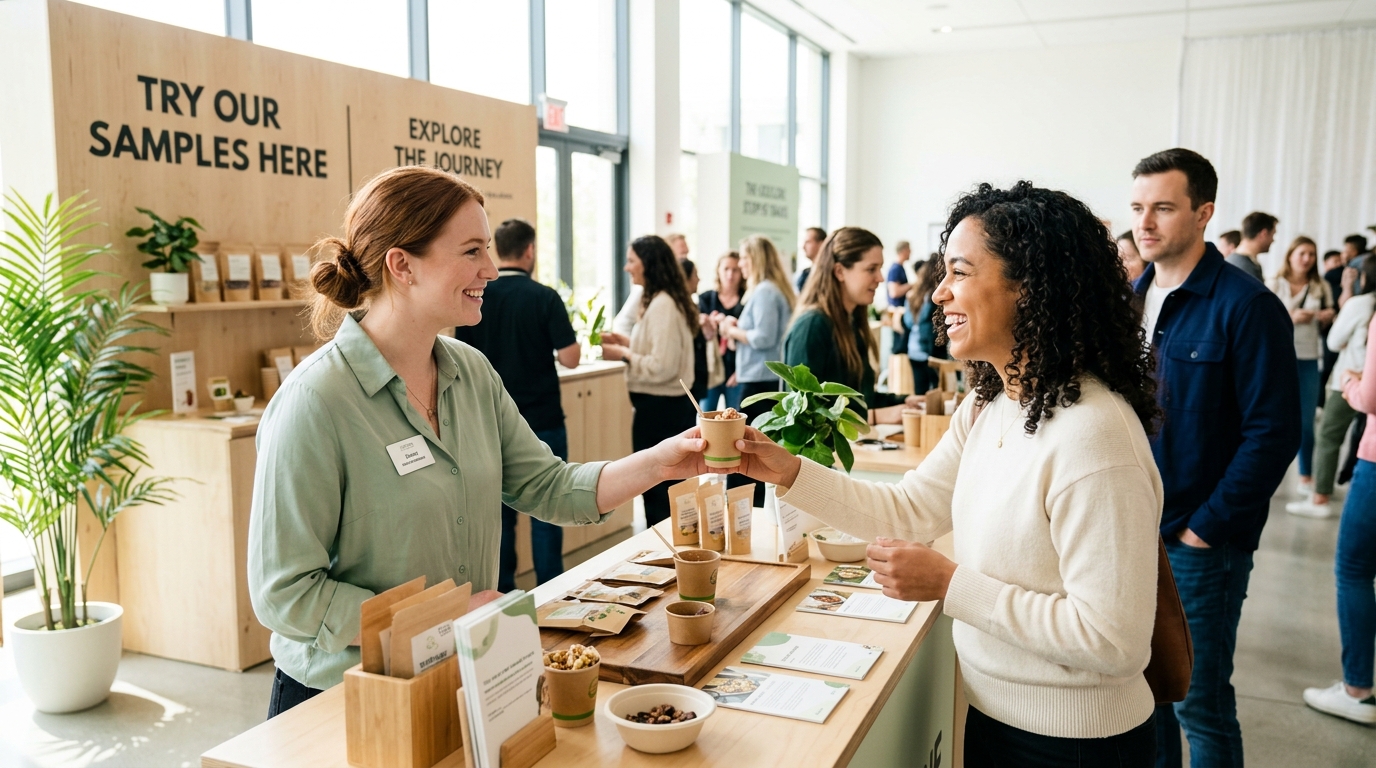
Physical product sampling delivers immediate sensory engagement, but brands often lose momentum the second a shopper walks away from the demonstration table. Connecting real-world product trials to digital touchpoints transforms a one-time bite or sip into a trackable, repeatable pathway to purchase.
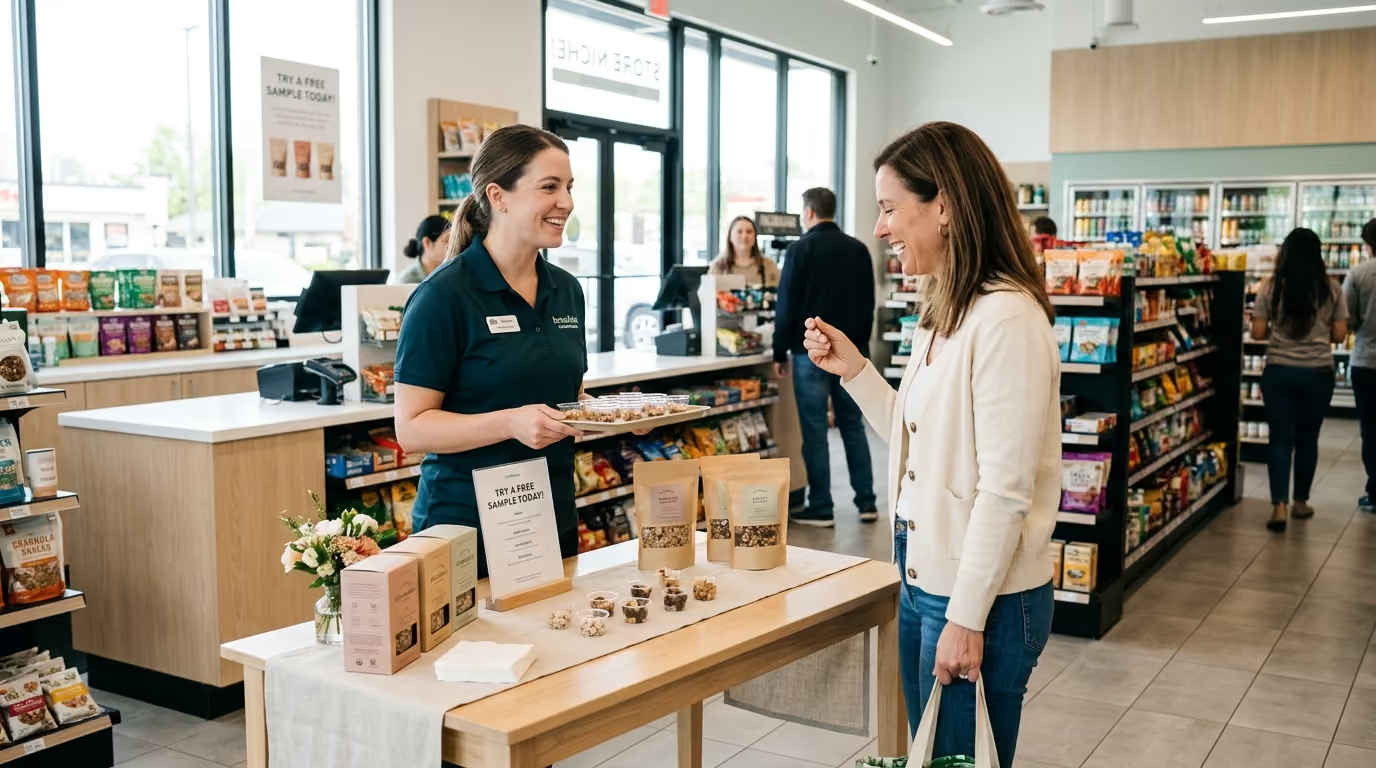
A crowded grocery aisle on a Saturday afternoon presents an operational test for any brand. Shoppers navigate congested carts through the center store while field brand ambassadors manage warming trays, ice baths, and allergen declarations. A consumer accepts a sample cup of a new pasta sauce, nods in approval, and walks away toward the produce section without placing a jar in their cart.
Field teams often treat this interaction as a completed transaction. The brand ambassador marks a tally on a paper clip board under the assumption that a positive reaction automatically leads to retail velocity. Meanwhile, marketing directors at headquarters review weekly field reports showing thousands of distributed samples alongside flat inventory movement at store level.
Physical trial is a powerful persuasion tool, but trial without structured follow-up leaves conversion to chance. Research on consumer grocery shopping patterns indicates that while sample acceptance rates are routinely high, conversion to actual purchase remains low unless the shopper puts the item to immediate use or receives a clear, timely prompt. Without a bridge connecting the physical trial to digital engagement, brands fail to capture shopper identity, measure true retail lift, or influence the next shopping trip.
The chaotic nature of live events makes data collection difficult. Asking a busy shopper with a screaming toddler to fill out a lengthy survey on an iPad creates an immediate barrier. The goal is not to turn a sampling station into a high-friction data intake desk. The objective is to build a low-friction digital bridge that delivers immediate consumer value while preserving data integrity for the brand.
To transform isolated product handouts into a structured acquisition funnel, field marketing teams must apply a systematic architecture. We utilize the SAMPLE framework to design, deploy, and evaluate integrated sampling campaigns across retail networks.
Every campaign must begin with product performance. For food and beverage products, taste, texture, aroma, and ingredient quality drive initial interest. Academic research on food retail demonstrations confirms that taste quality outweighs price considerations during initial trial evaluations. For personal care or household goods, the immediate physical experience of scent, texture, or cleaning efficacy establishes product value.
Field teams must focus on product preparation standards to ensure consistency. A cold soup sample or a melted chocolate bite ruins the initial brand promise before digital mechanics can even begin.
The physical sample package or hand-out card must display a single, unmistakable call to action. Providing four different social icons, a website link, a sweepstakes entry, and a loyalty sign-up confuses the consumer. When presented with too many options, shoppers choose none.
The single call to action must solve an immediate consumer need. In an aisle, that call to action might be a digital coupon valid for that specific grocery chain. In an outdoor event, it might be a text-in keyword that returns a locator showing which local store stocks the product.
Once the consumer scans or texts, the digital destination must match their immediate context. Generic homepages fail to convert. If a shopper sampled a spicy marinade, the landing page must present recipes, pairing guides, and usage tips specifically tailored to that flavor profile.
Content serves as a consumption bridge. Academic studies demonstrate that sampling can expand an entire product category rather than just shifting brand choices. Providing a simple recipe turns a curious taste test into a planned mid-week family dinner.
Data capture must prioritize mutual value and regulatory compliance. Brands should collect zero-party data, such as flavor preferences or dietary requirements, through simple one-click options rather than cumbersome form fields.
Every communication channel requires explicit consent. Under Federal Trade Commission guidelines and the CAN-SPAM Act, commercial emails must provide transparent sender identification and clear opt-out mechanics. SMS outreach requires explicit written consent under Telephone Consumer Protection Act regulations, confirming that message frequency is clear and purchase is not a condition of consent.
The interaction must reduce physical and digital friction between product interest and purchase. The digital interface should direct shoppers directly to store-level availability, aisle locators, retailer loyalty card clip buttons, or one-click cart-building features.
Connecting product trials directly to retailer commerce engines ensures that interest translates into verified transactions. When shoppers can add ingredients to an existing digital grocery cart with a single tap, the barrier to trial conversion drops significantly.
Measuring campaign success requires tracking beyond gross sample volume. Marketing leaders must evaluate true incremental lift by comparing scanned cohorts against holdout control markets.
True performance evaluation separates vanity engagement, such as total page visits, from verified financial return. By tracking coupon redemptions, repeat purchase cycles, and store-level velocity changes, brands isolate the true causal impact of their field activations.
The transition mechanism from a physical sample to a digital session determines overall participation rates. If the technology creates delay, friction, or technical errors, conversion collapses.
Static QR codes that point to a static destination URL limit measurement and operational flexibility. Brands must deploy dynamic QR codes that route through a centralized redirect engine. Dynamic routing allows campaign managers to adjust destination URLs, swap promotional offers, and correct broken links after materials have already been printed and distributed to field teams.
Dynamic QR systems allow granular tracking across multiple operational dimensions:
Dynamic links also support the GS1 Digital Link standard. This architecture allows a single 2D barcode on consumer packaging to serve multiple purposes. A retail point-of-sale scanner reads standard inventory data, while a consumer smartphone accessing the same code receives rich product information, nutritional disclosures, and localized store offers.
When a shopper scans a code in a retail aisle, network speeds may be slow and attention spans are brief. The landing experience must load in under two seconds on standard mobile browsers without requiring an application download.
The mobile landing architecture must follow a strict informational hierarchy:
Requiring an immediate account creation or a multi-field personal profile before revealing a promised recipe or discount causes high abandonment rates. Field campaigns must deliver value first, establish relevance second, and request contact permissions third.
Maintaining contact after the initial sampling interaction requires a structured, multi-channel messaging cadence. Automated communications must balance immediacy with respect for consumer attention.
Text messaging delivers exceptional open rates but carries high consumer sensitivity. Brands must treat SMS as a high-priority channel focused on time-sensitive utility rather than broad promotional broadcasts.
A standard SMS sequence following an in-store trial should follow a controlled schedule:
All SMS operations must maintain auditable records containing the exact consent language presented to the user, time stamps, originating phone numbers, and campaign attribution codes.
Email workflows accommodate deeper educational content, brand storytelling, and multi-product exploration. Once a consumer opts in, the post-sampling email drip should guide them through five specific stages over a three-week window.
The first email must arrive immediately to confirm the value exchange. This message delivers the primary asset, such as a high-resolution recipe booklet, a store-specific printable voucher, or a digital wallet pass. Keep the copy focused entirely on fulfilling the initial promise without distracting cross-promotions.
The second email, sent forty-eight hours later, addresses common barriers to product usage. For food items, provide short preparation videos, kitchen tips, and answers to common ingredient questions. For personal care items, explain proper application techniques and expected timelines for results.
The third email targets retail conversion by resolving availability questions. Include a localized map highlighting retail partners in the consumer's postal code, direct links to regional delivery services, and answers regarding certifications, sourcing, or allergen standards.
The fourth email introduces a commercial incentive to drive trial conversion. Present a limited-time retailer promotion, a bundle discount, or a cross-category recipe idea that incorporates other common household staples.
The fifth email, delivered three weeks post-trial, focuses on retention and brand advocacy. Invite the consumer to leave an authentic review on a retailer product page, suggest complementary products from your catalog, or introduce the brand loyalty program.
Understanding the science of better product sampling ensures these automated communications connect sensory memory directly to repeat purchasing behavior.
Physical sampling achieves maximum commercial value when linked directly to existing retailer ecosystems. Driving consumers into proprietary brand channels often creates unnecessary purchasing friction, whereas integrating with retailer platforms leverages established buying habits.
Coupons bridge the gap between initial trial and shelf pull. However, brands must structure discounts carefully to ensure they drive incremental volume rather than merely discounting purchases that shoppers would have made regardless.
Digital promotional formats vary in utility and integration complexity:
According to retail commerce benchmarks compiled by IAB Europe, promotional offers influence up to 45 percent of consumer packaged goods buying decisions. The key is ensuring offer mechanics match the technological capabilities of the specific retail partner hosting the activation.
Connected sampling campaigns can feed directly into retailer media networks. When a consumer scans a physical sample package, the landing destination can utilize deep linking to add the product directly to an active online cart at partners like Walmart, Target, or regional grocery chains.
This integration enables omnichannel continuity:
Coordinating physical trials with digital retail media prevents stockout frustrations and ensures field marketing investments amplify digital marketing performance. Reviewing our in-store product sampling playbook offers additional operational frameworks for executing these integrations at scale.
A product sample answers a simple question: "Do I like the taste or feel of this product?" Strategic content answers the more important commercial question: "How does this product fit into my weekly routine?"
For food and beverage brands, recipe content is not decorative marketing material; it is a direct sales conversion tool. An isolated sample of almond butter is a fleeting snack. A digital recipe for a fifteen-minute high-protein breakfast bowl turns that almond butter into a recurring household grocery staple.
A comprehensive recipe platform linked to physical sampling should allow consumers to filter content across four core operational criteria:
Documented sampling case studies from industry providers such as Brandshare confirm that up to 85 percent of consumers who interact with post-sample digital destinations search specifically for recipe ideas. Providing instant utility bridges the gap between tasting a product at noon and preparing a meal at six in the evening.
For household, personal care, and wellness categories, educational content resolves consumer skepticism and prevents product misuse. Physical product samples often lack the packaging space required to explain multi-step applications or full product benefits.
Effective educational content assets include:
Providing clear usage guidance reduces consumer hesitation, prevents post-trial dissatisfaction, and increases the likelihood that a physical sample leads to a full-size retail purchase.
Executing a connected sampling campaign requires operational alignment across field operations, digital technology, creative assets, and retail compliance.
Our team specializes in creating retail demos, product sampling programs, and roadshows that bring brands face to face with their audiences. Each program is designed to drive trial, build consumer relationships, and accelerate retail velocity across multiple locations. We rely on a standardized execution playbook to keep multi-market activations on schedule and fully integrated with downstream digital systems.
For broader operational planning across regional networks, consult our complete guide to retail product sampling programs.
Measuring connected sampling requires an analytical framework that tracks consumer progression from physical touch to verified financial impact. Teams must distinguish between leading engagement indicators and lagging financial metrics.
Lead metrics measure immediate operational execution and digital capture efficiency. These numbers highlight friction points in real-time during live campaigns:
Lag metrics evaluate commercial outcomes, category expansion, and true fiscal efficiency. Calculating Return on Investment requires isolating verified sales lift against baseline historical sales:
Research from the Journal of Retailing demonstrates that repeated in-store sampling events create a sustained multiplicative effect on retail velocity rather than an isolated temporary spike. Long-term measurement tracking must account for repeat purchase cycles over extended periods.
For detailed measurement templates and data structures, review our guide to retail product sampling KPIs.
Integrating physical retail experiences with digital data architecture introduces unique operational failure points. Brand teams must anticipate and mitigate these challenges before deploying field teams.
The most common mistake in connected sampling is forcing immediate user registration. Requiring a consumer standing in a supermarket aisle to download a proprietary mobile application, verify an email address, or enter a home mailing address creates immediate drop-off. Always deliver instant value anonymously first, then offer permissioned registration as an optional upgrade.
Many major retail locations have poor cellular reception, and public in-store Wi-Fi networks often feature cumbersome splash screens.
To overcome connectivity barriers:
Directing a consumer through an engaging digital flow only for them to find an empty retail shelf destroys brand trust. Field ambassadors must verify on-shelf inventory before each shift begins. If inventory falls below critical thresholds, dynamic QR destinations must instantly re-route shoppers to alternate local retailers, online ordering portals, or direct-to-consumer sample bundles.
Marketing teams must avoid treating digital contact capture as an unregulated broadcast channel. Capturing mobile phone numbers without proper disclosure violates federal regulations.
Ensure compliance by:
Our analysis of targeted in-store sampling provides additional guidance on balancing compliant data capture with high-conversion field execution.
Examining structured field campaigns illustrates how the integration of physical trial and digital workflows operates in live retail environments.
A specialty organic food brand introduced a new line of slow-simmered pasta sauces into 250 regional grocery stores. Traditional shelf placement generated low initial discovery against entrenched legacy brands.
The brand deployed an integrated sampling program across 100 target locations over four consecutive weekends:
A functional beverage brand launched an all-natural electrolyte mix targeting endurance athletes and active consumers. The brand sponsored several major urban half-marathons to distribute product samples.
The execution connected high-volume event sampling to subsequent grocery purchases:
Review and refine your connected sampling architecture whenever introducing a new product line, expanding distribution into new retail banners, or when digital acquisition costs on paid social platforms rise significantly.
Building a connected journey around product sampling transforms temporary physical engagement into lasting retail velocity, predictable pipeline growth, and measurable brand equity.

30 Years Experiential & Retail Activation Partner for CPG & Beverage Brands | Multi-Market Demos, Roadshows & Costco/Club Programs That Actually Sell