Robbie Thain
Founder, CEO

Student sampling creates retail demand only when structured field activations coordinate directly with local shelf availability and store inventory.
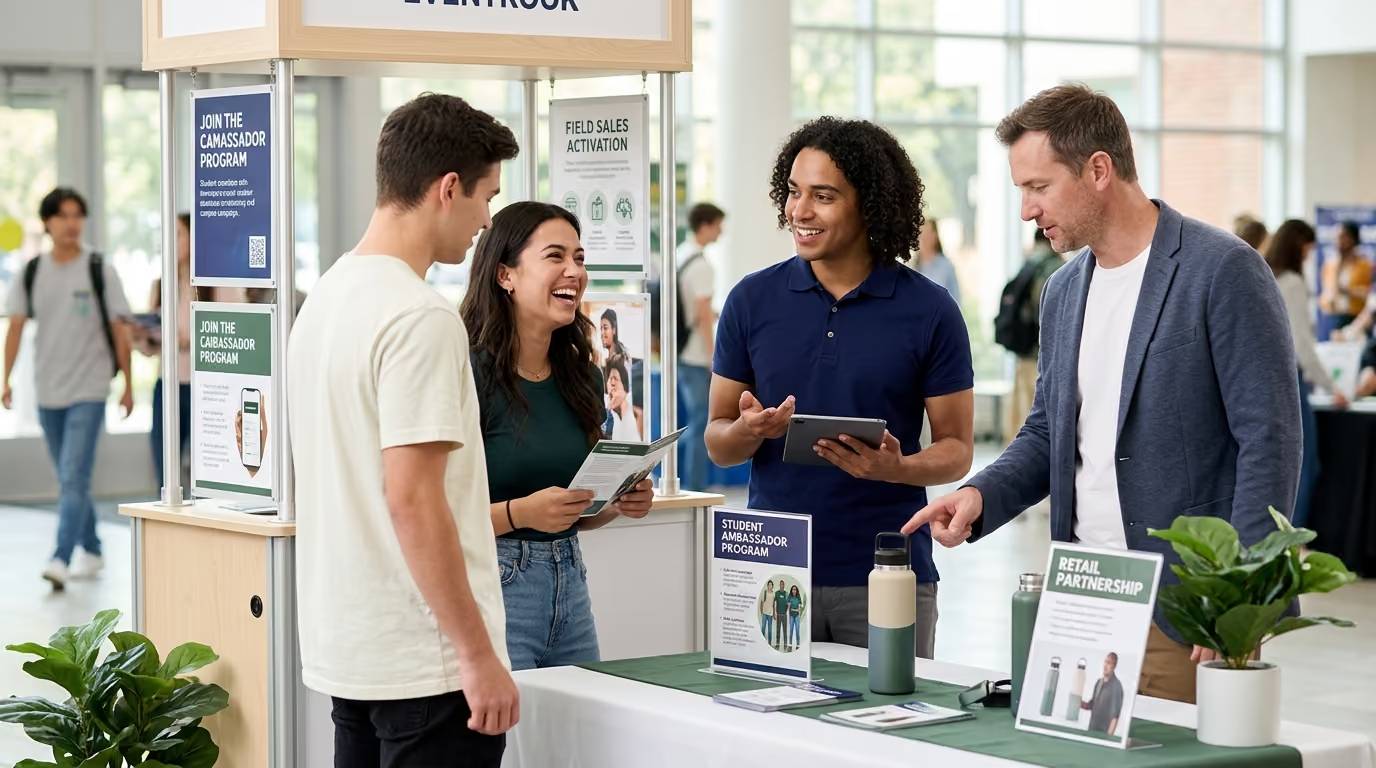
How do you connect campus brand ambassadors with retail stores to drive verified product purchases instead of wasted samples? This guide provides the complete framework for integrating student field teams, sales brokers, retail distributors, and store managers into a single sales engine.
Building an effective campus marketing program requires connecting student attention directly to verified on-shelf availability and store conversion. When field marketing coordinates with retail sales teams, brands turn peer influence into measurable category growth and sustained retail velocity.
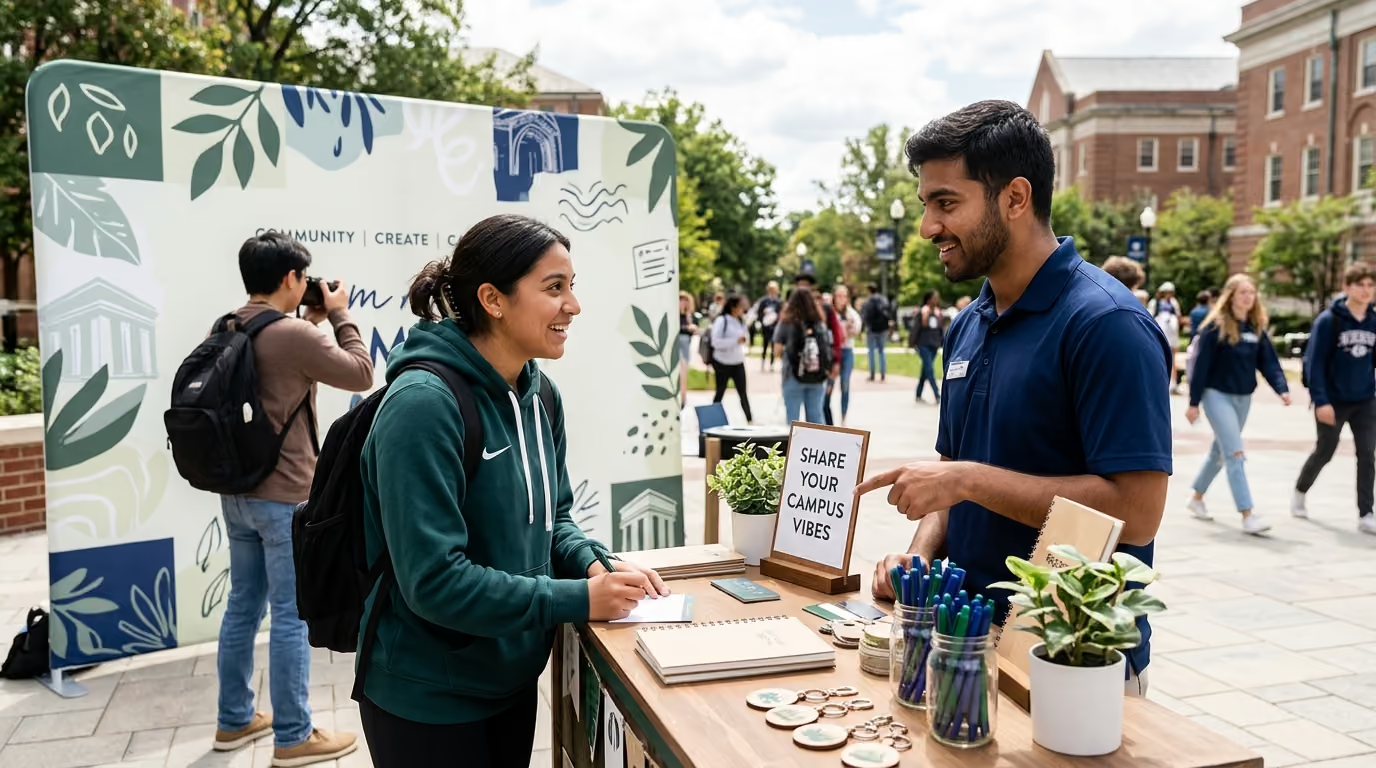
Every fall, consumer brands send thousands of student brand ambassadors onto college grounds. These reps hand out energy drinks, protein bars, and skincare samples to passing classmates. The campus quad looks energetic, and social media channels fill with user-generated content. Yet, when brand managers examine the local retail data three weeks later, unit sales in surrounding stores remain flat.
This breakdown happens because marketing activations operate in total isolation from local commercial realities. Ambassadors distribute cold products to students between classes, but they cannot tell those students which local stores stock the items. Meanwhile, the grocery store three blocks away sits with empty shelves or hidden inventory tucked behind competing brands. The student wants to buy the product, but cannot find it. The retailer sees no immediate demand lift and decides against reordering.
Refuel Agency reports in their College Explorer study that campus ambassador interactions trigger clear consumer behaviors. After speaking with an ambassador, 46% of students researched the product, 43% mentioned it to friends or family, 46% bought the product, and 42% visited a retail store. These figures show that peer interactions can motivate shopping trips. However, if the local supply chain is not ready, that consumer interest evaporates immediately.
NielsenIQ defines on-shelf availability as a measure of a shopper's ability to purchase an item when they want it. According to historical Grocery Manufacturers Association research, the average retail out-of-stock rate sits around 8.3%. When shoppers encounter an out-of-stock item, between 21% and 43% visit another store, while 7% to 25% abandon the purchase entirely. NielsenIQ data reported by Supermarket News indicates that 70% of shoppers will buy a competing brand if their desired item is unavailable. When campus teams drive students to retail stores without verifying inventory, they end up funding sales for their direct competitors.
Treating campus marketing as a localized demand-generation system bridges the gap between field events and store registers. This approach uses trusted student networks to generate awareness, trial, and direct purchase intent within a defined geographical radius. Campus activations must include both demand creation and purchase execution. A program that tracks only distributed samples or social impressions remains incomplete.
Begin by mapping student density against the local retail environment. Identify where students live, walk, study, and spend discretionary money. A large university campus might have high enrollment, but limited commercial retail within walking distance. Another urban campus might feature five high-volume convenience stores and two grocery outlets directly along primary student walking corridors.
Makai recommends mapping grocery and convenience locations within a strict two-mile campus radius. Track the walking paths, transit lines, and vehicle routes students use to travel between residence halls and commercial retail centers. Field marketing teams must evaluate whether target retail stores are easily accessible before assigning ambassador headcount to a campus.
Demand generation should never precede verified product supply. Field sales representatives must confirm that local stores have product inventory physically stocked on shelves before ambassadors begin sampling.
Verify that targeted accounts have accepted the correct stock keeping units, secured appropriate shelf placement, and scheduled necessary replenishment orders. If a target convenience store has product sitting inside backroom storage boxes, the shelf remains functionally out of stock.
Ambassadors serve as community connectors rather than basic media distribution units. They require clear training on product attributes, approved claims, and local store availability. Equip ambassadors with specific store addresses and digital store-locator tools. Their primary instruction should be guiding peers to nearby retail shelves immediately after handing over a sample.
Field sales teams need continuous visibility into campus marketing schedules. Territory sales managers should know the exact dates, times, and expected sample volumes of every campus activation.
Ambassadors can serve as real-time field scouts for sales managers. When ambassadors enter local retail stores, they can photograph shelf conditions, spot missing tags, and report out-of-stock items directly to sales leads.
Every physical student interaction must include a clear, low-friction path to purchase. Tell students exactly where to buy the full-sized item, such as the corner bodega, the campus bookstore, or the mass merchant on the edge of campus.
Google research shows that 50% of consumers check product inventory before visiting a physical store. Google also notes that 82% of smartphone users consult their mobile devices about purchases they plan to make in a store. Providing mobile store locators, digital wallet passes, or trackable coupon links allows students to confirm local availability before making a trip.
Campaign tracking should connect top-of-funnel student interactions to register sales. Measure distributed samples, QR code scans, store-locator clicks, digital offer redemptions, and store-level velocity lifts.
Use matched market controls to evaluate whether sales increases were driven by campus marketing efforts or general market trends. Triangulating digital signals with retail scan data demonstrates true commercial return on investment.
A commercial campus program moves students systematically through six specific behavioral stages. Each stage requires distinct operational handoffs between campus ambassadors, digital tracking mechanisms, and field sales teams.
Reach establishes brand visibility across key campus gathering points. This stage includes residential activations, campus club sponsorships, intramural sports partnerships, and peer-to-peer social media content. For example, a collegiate campaign for Under Armour generated over 1.8 million social impressions and 209,000 interactions across 350 activations. While these reach figures establish scale, they do not prove that students bought merchandise. Reach serves merely as the initial invitation to engage with the brand.
Engagement occurs when passive exposure turns into an active two-way conversation. Ambassadors introduce the brand story, answer ingredient questions, and explain use cases. Measure engagement through completed peer conversations, digital survey submissions, and event registrations. An active dialogue establishes the personal trust required to influence purchase habits.
Trial puts physical product directly into student hands. Product sampling should be focused, sanitary, and tied to high-relevance campus moments like study sessions or athletic training. In a collegiate campaign for Not Your Mother's hair care, student teams distributed over 8,500 samples across five campuses, leading to 7,400 direct interactions and 530 pieces of user content. The campaign resulted in a measured 11% increase in product trial and a 10% increase in purchase intent among surveyed students.
Retail direction converts product trial into store foot traffic. When an ambassador hands a student a sample, they must provide immediate purchase directions.
Direct the student to a specific aisle at the campus store, or hand them a digital card featuring a QR code linked to a local inventory locator. Google research shows that retail search strategies showing nearby inventory generated an 80% higher rate of incremental store visits. For stores within one mile of a searcher, Google observed a 28% increase in click-through rates and a 57% increase in store-visit rates.
Purchase occurs when the student buys the full-sized product at a local retail register. Brands track this stage using unique promotional codes, paper coupon redemptions, retailer loyalty card data, and regional point-of-sale scanner figures.
In categories like beverage and packaged snacks, the target purchase window typically falls within 48 hours of product sampling. Connecting product sampling campaigns on college campuses directly to retail redemption mechanics helps turn casual trial into verified unit sales.
Sustainable retail performance requires repeat transactions and steady weekly inventory turnover. A single sales spike during orientation week does not justify long-term shelf space. Field marketing teams should track store-level unit velocity for at least four consecutive weeks following an activation. Continued velocity encourages retail category buyers to expand product facings, authorise secondary endcap displays, and place regular reorders.
Alignment between marketing and sales requires a structured timeline. Teams must establish clear operating rhythms weeks before handing out the first product sample.
Begin campaign planning by cross-referencing priority universities with regional retail distribution maps:
Shift operational focus toward physical store preparation and student ambassador onboarding:
Execute field marketing events while maintaining continuous oversight of retail inventory conditions:
Measure the lasting commercial impact of the campaign on store sales performance:
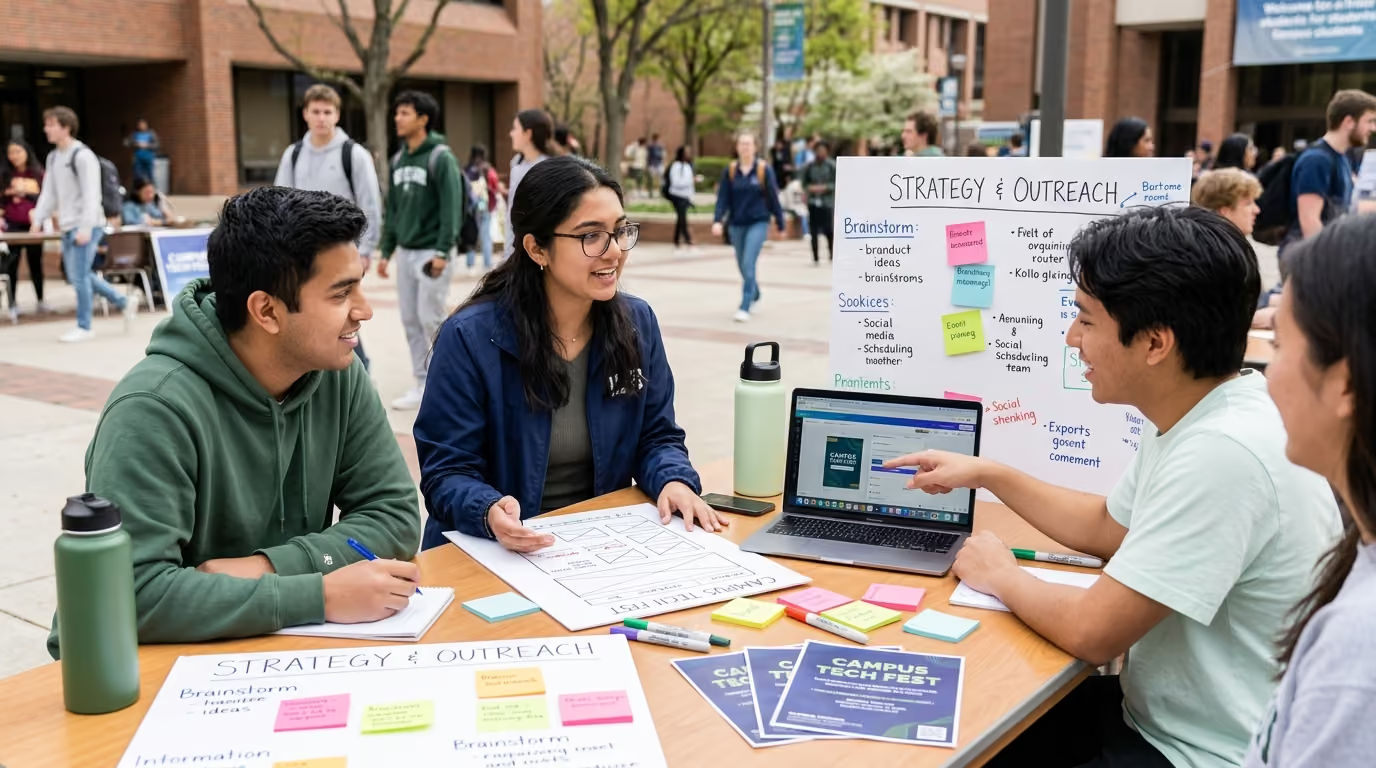
Flawless execution requires defining clear operational responsibilities across internal teams and external agency partners. When every team member knows their exact role, field operations run smoothly.
Establish direct communication channels between field sales representatives and campus leads. Use real-time messaging groups to share live updates during activation days. When an ambassador notices that a local store shelf is empty, they must submit a standardized alert within fifteen minutes:
The territory sales representative reviews the alert and contacts the store manager or visits the location to pull backroom stock onto the sales floor. Closing this communication loop prevents student foot traffic from going to waste.
Complex product categories require strict operational guidelines:
Establishing clear operational standards helps brand managers build field staffing plans that protect activation return on investment across every college market.
Measuring physical marketing performance requires moving beyond basic reach metrics. Marketers must evaluate lead indicators, lag metrics, and true sales incrementality to prove business impact.
Document retail sales volume across target stores for eight weeks prior to activation. Record average weekly unit movement, distribution baseline rates, typical price promotions, and historic out-of-stock rates. Documenting clean baseline data ensures that post-campaign sales lifts are calculated accurately.
Evaluating sales simply by comparing numbers before and after an event leaves programs vulnerable to external noise, such as seasonal weather, local holidays, or national digital ad campaigns. A more reliable method compares retail stores exposed to campus activations against matched control stores that received no marketing support.
To execute a difference-in-differences analysis:
Applying this analytical method provides marketing leaders with credible data when presenting core field marketing performance metrics to executive leadership.
Organize commercial reporting around an attribution hierarchy rather than searching for a single performance metric:
Field programs often face logistical hurdles. Preparing for these common operational challenges prevents lost sales and protects brand reputation.
Sending enthusiastic students to empty retail shelves damages brand trust and wastes marketing budget. Require mandatory retail readiness audits forty-eight hours before any campus sampling event begins. If target stores experience stockouts that cannot be replenished immediately, pause campus activations or redirect ambassadors to alternative retail partners.
Reporting millions of digital impressions without showing retail sales creates executive skepticism. Tie every campus marketing event directly to measurable retail objectives. Pair brand awareness campaigns with digital store locators, scannable point-of-sale offers, and matched-store sales tracking.
Ambassadors who know product taglines but cannot name the nearest retail store fail to convert interest into purchases. Provide every ambassador with a pocket guide and digital app detailing local store addresses, stocked product flavors, and aisle numbers. Ambassadors must be able to answer retail availability questions instantly during peer conversations.
Executing a major campus push on a Monday when local distributors do not deliver until Thursday afternoon leads to midweek stockouts. Coordinate activation dates directly with local distributor delivery schedules. Ensure retail shelves are restocked immediately prior to peak campus sampling days.
When university administrators prohibit commercial sampling on campus property, pivot to off-campus execution strategies. Partner with officially recognized student organizations to host private on-campus informational sessions. Alternatively, set up experiential activations along high-traffic public sidewalks and commercial corridors directly bordering campus boundaries.
When a campus generates thousands of sampled products and positive student surveys but zero retail sales lift, investigate the retail environment for friction:
Reviewing successful field campaigns illustrates how connecting student marketing to local retail operations drives commercial success.
A national confectionery brand partnered with Follett Media Network to drive student trial and retail sell-through across collegiate bookstores. The campaign combined direct email outreach, ambassador social media content, and high-volume product sampling directly inside campus store locations.
The program reached 500,000 students, achieving a 39% email open rate and distributing 250,000 samples across 235 participating campus store locations. Fifty-eight student ambassadors across 30 campuses created local social content, generating a 5.15% engagement rate.
Most importantly, the campaign linked field sampling directly to point-of-sale checkout counters. Participating stores registered an average 21% year-over-year in-store sales lift, with one featured product flavor experiencing a 165% sales increase. Integrating sampling with on-site retail availability converted student trial into immediate register sales.
Prestige haircare brand OUAI executed a targeted collegiate sampling campaign to build brand adoption among Gen Z consumers. The program deployed 15 student brand ambassadors across university campuses, partnering with more than 70 student groups and Greek-life organizations.
Ambassadors executed 45 targeted sampling sessions, distributing over 9,610 product samples and leading 4,770 direct peer conversations. Following the activations, the brand collected more than 730 detailed consumer surveys.
The campaign demonstrated strong commercial intent. Among surveyed students, 61% stated they planned to purchase OUAI products, and 79% indicated they were likely or highly likely to recommend the brand to peers. Partnering with established student organizations allowed the brand to drive product trial in comfortable, high-trust social settings.
Chamberlain Coffee executed a multi-state campus campaign to support the launch of its ready-to-drink canned beverage line at mass retail stores. The brand deployed over 30 student ambassadors across 22 university campuses in 12 states, distributing 7,200 cans to student groups and campus organizations.
The operational design featured two distinct product shipments spaced three weeks apart. This split delivery structure allowed ambassadors to engage student groups multiple times, reinforcing brand recognition and driving repeat trial.
Every interaction directed students to purchase full-sized cans at local Walmart stores near campus. Providing clear retail directions connected campus product trial directly to mass retail shelf velocity.
A VP of Marketing reflected on our partnership: 'Robbie, it was a pleasure working with you and your team. You turned our launch into an experience that connected with shoppers and built lasting excitement for our brand. We're already looking forward to the next project together.' Our team created a launch experience that resonated with retail shoppers and generated momentum for future collaborations.
Executing structured student ambassador programs that drive retail sales requires combining creative consumer engagement with disciplined retail coordination. When brands master connecting campus marketing to retail sell-through, they turn short-term campus excitement into lasting shelf space and category growth.
Transforming campus marketing activations into an integrated retail sales engine requires immediate, practical execution. Focus on completing these core alignment tasks:
Establishing disciplined alignment between campus field teams and retail sales departments ensures marketing budgets drive measurable commercial growth. By connecting consumer trial directly to verified on-shelf inventory, consumer brands turn campus attention into sustainable category leadership.

30 Years Experiential & Retail Activation Partner for CPG & Beverage Brands | Multi-Market Demos, Roadshows & Costco/Club Programs That Actually Sell