Robbie Thain
Founder, CEO

Five distinct retail channels help collegiate brands bridge student campus activations with measurable store sell-through and sustained local market velocity.
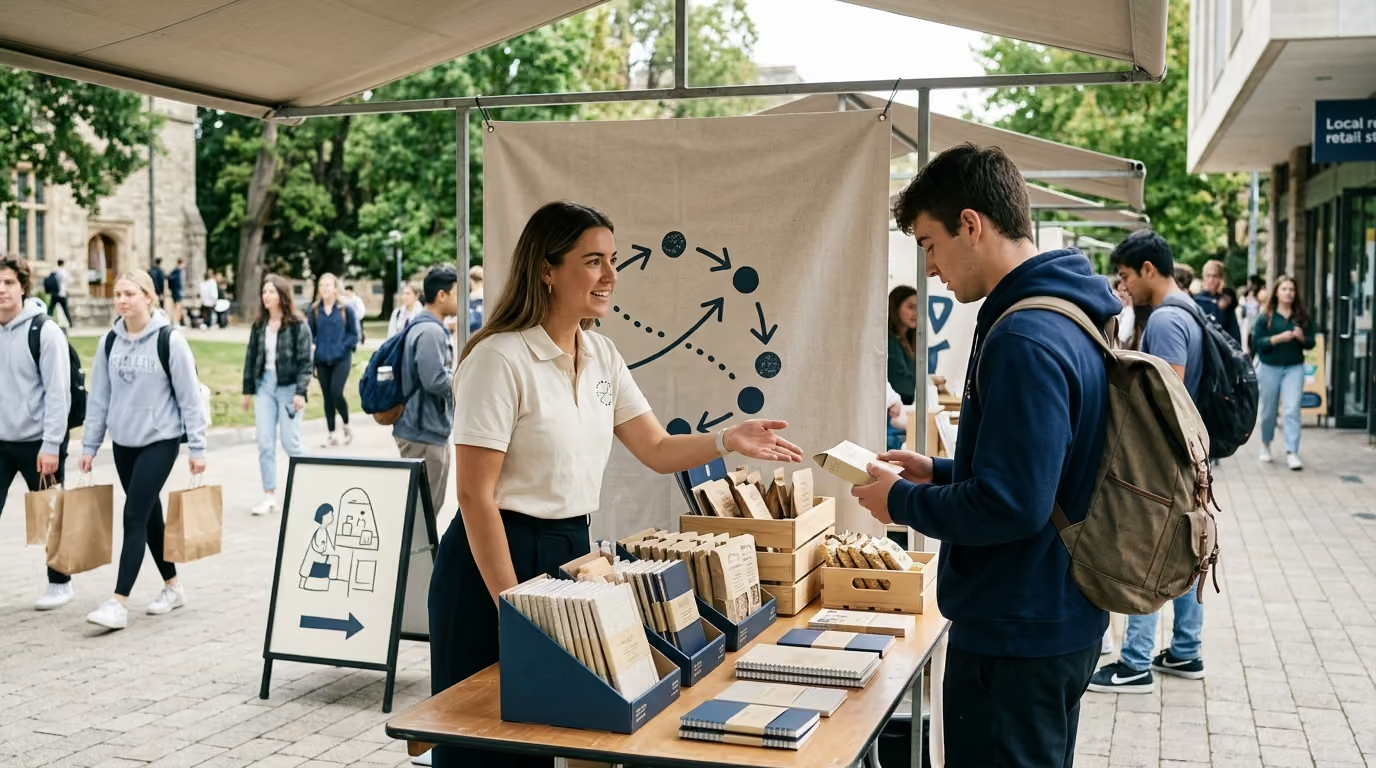
Campus marketing produces measurable commercial growth only when brand teams build direct pathways from student engagement to local retail channels. This guide outlines the operational framework, tracking systems, and field strategies required to convert campus brand awareness into verifiable retail sell-through.
Most collegiate marketing campaigns generate vanity metrics while failing to move product off retail shelves. Brand managers celebrate thousands of distributed samples, high foot traffic, and social media impressions, yet local retailers see no measurable change in sales velocity. Distributing free product without a frictionless commercial bridge creates awareness without transaction. If a student holds a sample but cannot easily buy the product within their daily campus routine, the marketing investment evaporates at the edge of the quad.
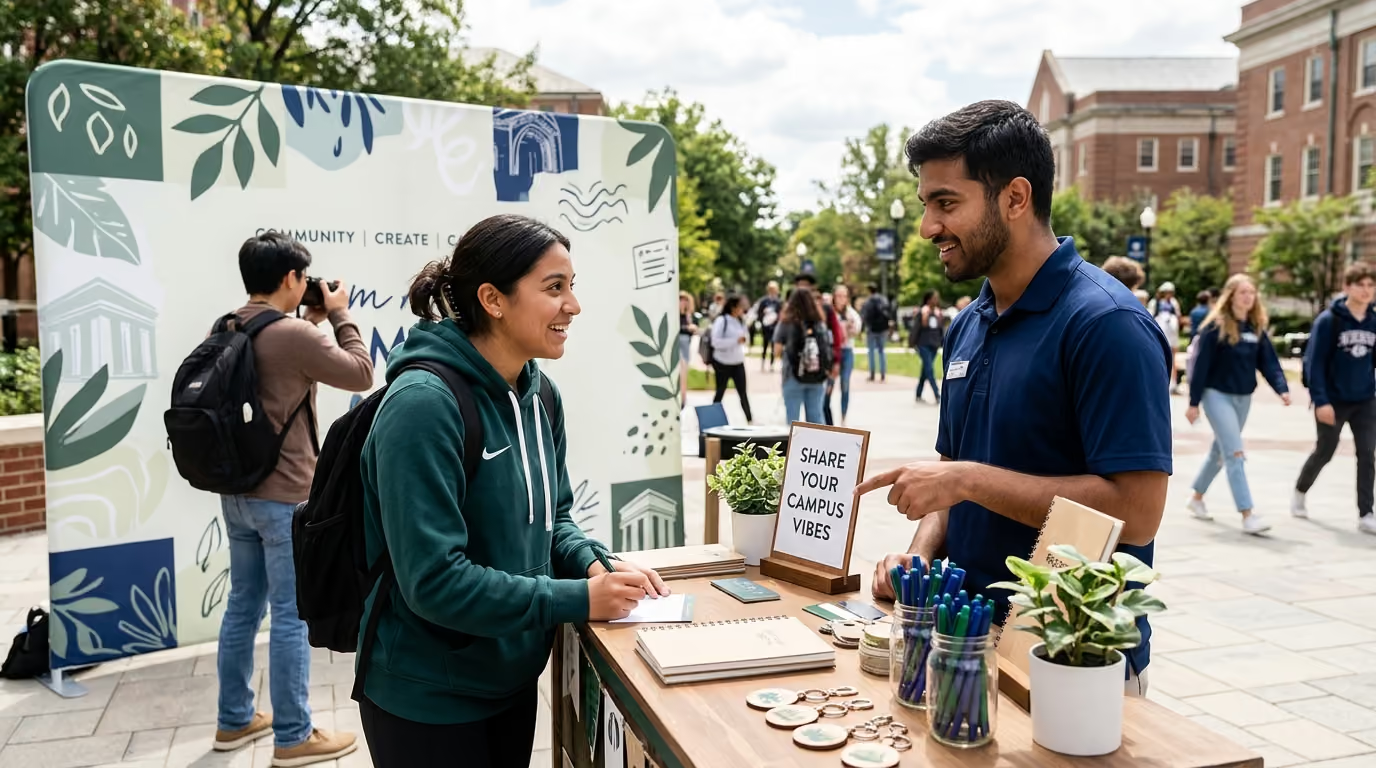
The typical campus sampling event is chaotic and commercially disconnected. Brand ambassadors hand out cold beverages, snack bars, or product samples to students rushing between morning lectures. The tent looks busy, the music draws a crowd, and hundreds of items disappear from sampling bins within two hours. The activation report shows high engagement, but sales data from the convenience store across the street tells a completely different story.
The breakdown happens at the point of commercial transition. Field teams often operate in isolation from retail sales teams and local channel partners. Ambassadors tell students that the product is great, but they rarely tell them the specific aisle, store, or app where they can buy it immediately. The retail store three hundred yards away runs out of stock by noon, or worse, never received the promotional display inventory in the first place.
When execution lacks operational discipline, marketing leaders cannot determine if their activation caused any financial return. Student traffic disperses across residence halls, libraries, and off-campus apartments without a clear prompt to purchase. The brand paid for product distribution, event permits, and student labor, but captured no commercial pipeline. Connecting collegiate activations to retail checkout requires treating the university campus as an integrated, distributed commerce ecosystem.
A successful campus program links peer trust, retail availability, and conversion tracking. Ambassadors generate initial trial and interest. Local retail and digital partners provide inventory access. Conversion bridges direct student attention to specific checkout locations. Sales analytics confirm whether the activation produced incremental retail volume.
To run an effective program, marketing leaders must understand the distinct operational terms that govern retail performance:
A planned brand interaction occurring within or adjacent to a college environment. This includes high-volume sampling, interactive demonstrations, dorm drops, club sponsorships, and peer-to-peer outreach. Every activation must identify the intended consumer action, the specific purchase location, potential friction points, and the tracking mechanism used to record the outcome.
The volume of product purchased by end consumers through retail channels over a set timeline. Sell-through differs fundamentally from sell-in, which represents inventory sold into distributors or retail warehouses. Brand teams must monitor units sold, dollar volume, store-level velocity, SKU movement, and baseline comparisons. Standards set by industry bodies distinguish between gross sales, which record initial payment, and net sales, which deduct returns, cancellations, and refunds.
The rate at which a product moves off shelves within an individual store or distribution point. Velocity metrics normalize sales performance across retail locations of varying size. Key indicators include units sold per store per week, revenue per store per week, and velocity per thousand students in the target radius. A targeted campaign that drives rapid inventory turnover in three perimeter stores delivers stronger operational value than broad distribution across twenty low-performing locations.
Availability represents the physical or digital presence of the product at checkout. Conversion requires verifying inventory before launching field operations. When sales stall, marketing operators must diagnose the failure point using a structured model:
This diagnostic framework ensures marketing teams do not blame ambassador performance for inventory stockouts or poor on-shelf placement.
A conversion bridge is the explicit mechanism that directs a student from a brand experience to a verified purchase. Effective bridges include store-specific mobile coupons, scannable codes linked to local inventories, campus bookstore promotions, and on-demand delivery offers. The bridge must be clear, frictionless, and localized to the student's immediate walking path.
The practical geographic footprint surrounding a campus where students live, study, and shop. Defining the retail radius requires evaluating transit corridors, pedestrian paths, residence hall density, and late-night commercial districts. Mapping grocery, mass, and convenience retailers within a two-mile perimeter allows field teams to track localized sales lift against historical baselines.
College students move between physical stores and digital applications throughout the day. A study on Generation Z shopping behaviors published in the Journal of Theoretical and Applied Electronic Commerce Research found that 37.21% of surveyed students preferred physical stores, while 36.28% preferred digital shopping channels. Physical retail provides immediate sensory evaluation and proximity. Digital storefronts offer convenience, price comparisons, and rapid home delivery.
Research from Refuel Agency indicates that U.S. college students manage $347 billion in annual discretionary spending. The grocery category represents $78.3 billion of this total, while apparel accounts for $28.5 billion and dining out represents $25 billion. Furthermore, 75% of college students pay for their own food and beverage purchases. These students act as independent decision-makers who respond directly to localized retail promotions.
Convenience stores and small-format grocers situated along campus borders serve as prime channels for single-serve items, ready-to-drink beverages, and grab-and-go snacks. Field teams should establish relationships with store operators before activating on campus. Ensuring that products are fully stocked in cold vaults and endcap displays allows ambassadors to point students directly to specific retail shelves. You can read more about how linking student ambassadors to retail demos drives immediate in-store lift.
Campus bookstores operate as central commercial destinations for licensed merchandise, apparel, personal care, and packaged goods. Retail partnerships within campus stores allow brands to execute coordinated window merchandising, register promotions, and digital newsletter inserts. When apparel or consumer technology brands run campus events, directing traffic to the campus bookstore creates a trusted point of sale that accepts student payment cards.
Dining halls, student union food courts, and campus cafes provide high-volume channels for food and beverage brands. Integrating products into campus meal plan retail outlets allows students to spend discretionary dining dollars. When sampling a new food item on the quad, ambassadors should highlight its availability in the student union cafeteria or grab-and-go kiosk.
Delivery applications are deeply embedded in campus life. Survey data published by DoorDash revealed that 70% of surveyed college students use third-party delivery platforms in a typical week, averaging four orders per week. An academic study on college food delivery habits published in 2025 noted that 40% of surveyed students exceeded personal budgets due to app promotions, with 65% making unplanned purchases triggered by digital notifications. Brands can capture this demand by linking sampling campaigns to delivery promo codes and featured merchant listings.
Digital storefronts provide a vital purchase route when regional retail distribution is incomplete, or when the promoted line includes complex SKUs. Direct ecommerce capture gives brands first-party consumer data and repeat subscription opportunities. Direct-to-consumer routes should feature specialized campus landing pages, clear student discount codes, and bundled offerings that lower shipping friction.
Driving verified retail revenue from campus marketing requires an end-to-end operational process. The following eight phases guide brand teams from initial site selection through final financial reconciliation.
Define the target student demographic, the specific product usage occasion, and the primary retail pathway before planning on-site logistics. Review local distribution files to verify which regional grocers, convenience chains, or campus stores stock the targeted SKUs. Establish historical retail sales baselines for four to eight weeks prior to activation across all stores within the designated market.
Audit the commercial environment surrounding the university. Document the exact shelf location, retail price, inventory depth, and store hours for every retailer within a two-mile perimeter. Identify pedestrian walking patterns between major academic halls, student housing complexes, and commercial strips. Rank retail destinations based on physical convenience and student foot traffic rather than simple geometric distance.
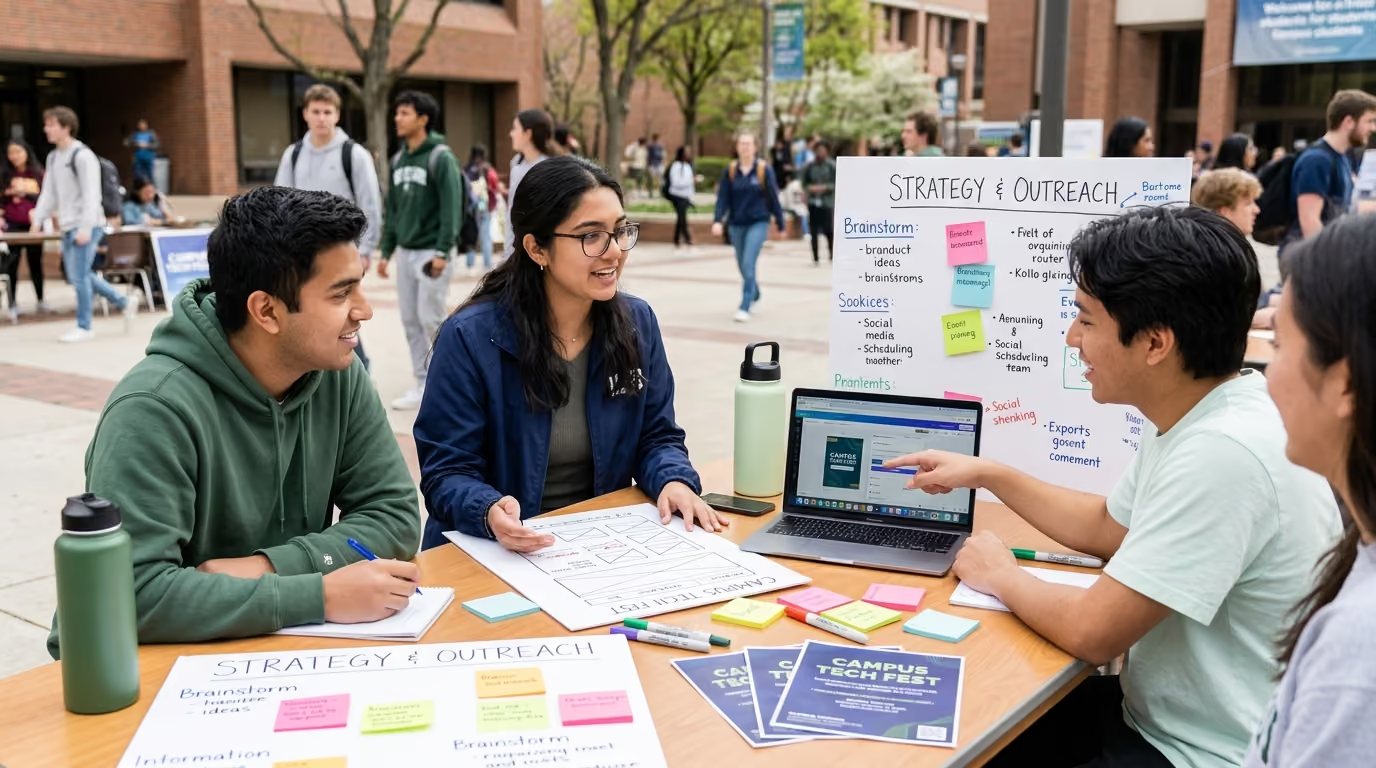
Select student ambassadors who possess genuine leadership roles within campus organizations, athletic clubs, or academic societies. A survey from Barnes & Noble College Marketing found that 59% of students consider peers their primary buying influence, while 68% expressed interest in becoming on-campus brand representatives. Prioritize students who demonstrate strong communication skills, local community trust, and the operational discipline required to track retail metrics.
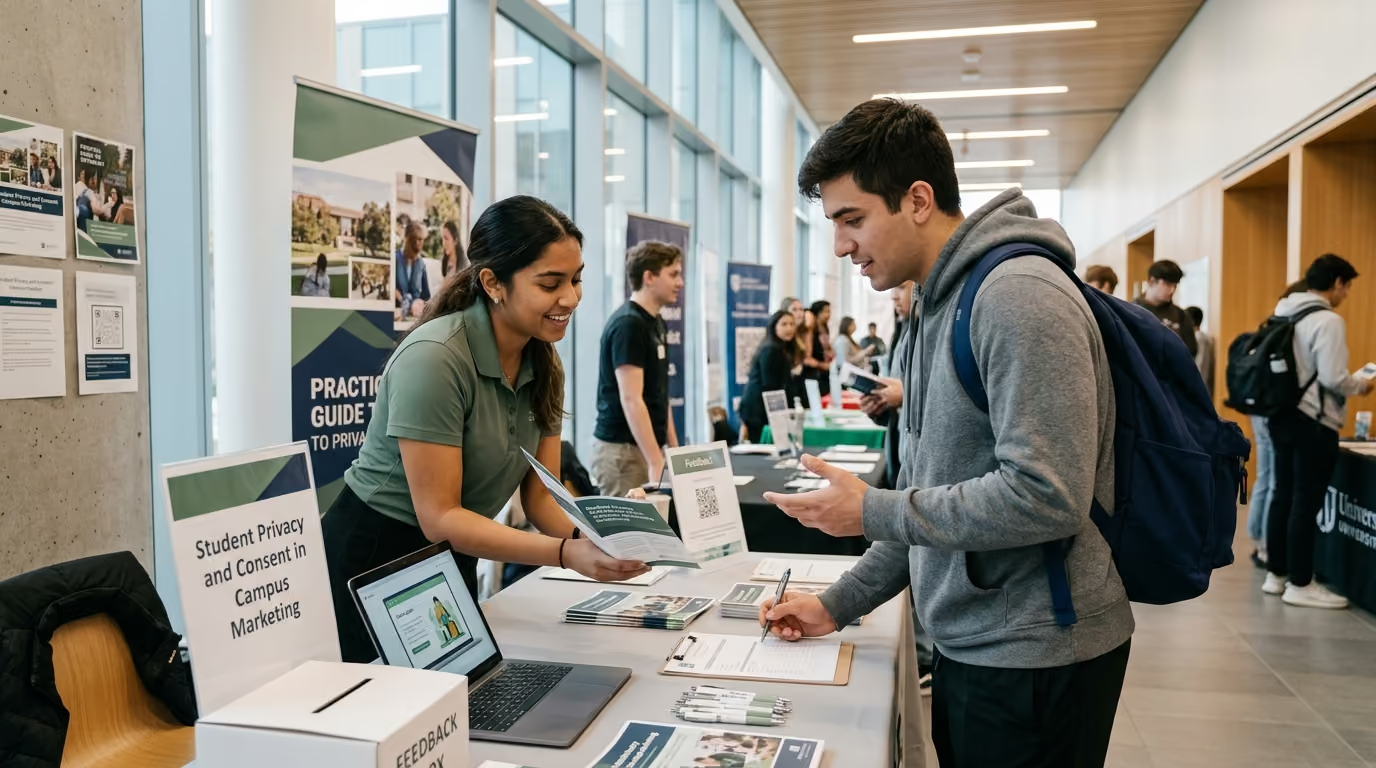
Train ambassadors on product value propositions, approved regulatory claims, and the exact locations where inventory is stocked. Ambassadors must be able to explain the purchasing process in a single, direct sentence. Provide clear instructions on distributing trackable digital assets, logging consumer interactions, reporting retail stockouts, and adhering to regional privacy standards.
Build consumer anticipation two weeks before major sampling events through micro-influencer content, digital student newsletters, and targeted geo-fenced promotions. Distribute initial product kits to campus organization leaders and seed digital invitations containing unique retail offers. An effective preheat strategy introduces the product message early, making the physical sampling encounter an immediate trigger for transaction. For more on tactical digital connections, review our insights on connecting event leads to retail sell-through.
Deploy high-energy sampling footprints at approved, high-density campus locations. Brand ambassadors must deliver an engaging product trial and immediately provide the conversion bridge. Direct students to scan a dynamic QR code on the packaging or display signage to claim an exclusive store-level discount. Field managers should monitor nearby retail inventory throughout the day, restocking shelves or coordinating with store managers as velocity accelerates.
Review scan data, landing page visits, and store sales reports within twenty-four hours of field activation. Identify retail locations experiencing rapid inventory drawdown and coordinate immediate replenishment with local distributors. Redirect digital media spend and ambassador messaging toward high-converting retail partners while addressing stores with low conversion rates.
Collect post-campaign checkout data across activated stores for four to six weeks following the campaign. Compare gross and net sales against historical baselines and non-activated control stores in matching markets. Calculate the incremental volume generated by the campaign to establish true operational performance.
A conversion bridge must remove friction while capturing attribution data. If an ambassador requires thirty seconds to explain how to redeem an offer, conversion rates plummet. Keep the call to action singular, immediate, and geographically specific.
Place dynamic QR codes on sampling cups, product flyers, and ambassador apparel. When scanned, the landing page detects the student's physical location and provides walking directions to the closest stocking retailer, complete with real-time stock status and retail pricing.
Deliver mobile coupons directly to Apple Wallet or Google Pay using location-based mobile advertising around campus borders. Digital wallet passes can trigger push notifications when the student walks within two hundred feet of a participating grocery or convenience store, reminding them to redeem their promotional discount.
Assign distinct promotional codes to individual ambassadors or student organizations. When students enter the code on a delivery application, campus bookstore portal, or ecommerce site, the system attributes the order to that specific ambassador. This structure allows brand managers to incentivize field teams based on verified commercial output rather than raw sample distribution.
Coordinate campus activations with retail media networks such as Kroger Precision Marketing or Target Roundel. Deploy targeted digital display ads to students within campus zip codes while sampling on the quad. This dual exposure reinforces physical product trial with digital reminders across the retailer's mobile application. You can examine how top brands manage this in our analysis of CPG brands expanding Gen Z ambassador programs.
When retailers cannot integrate custom coupon barcodes at point of sale, implement receipt-scanning promotions. Students scan their physical checkout receipt through a mobile landing page to unlock cash-back rebates, branded merchandise, or sweepstakes entries. This method provides verified store-level basket data without complex point-of-sale programming.
Evaluating collegiate marketing requires separating descriptive engagement from causal sales impact. Data published by Refuel Agency indicates an 89% action rate following product sampling, with 46% of students reporting they purchased the product and 42% visiting a retail store. However, self-reported survey data does not prove incremental revenue. Brand operators must apply rigorous measurement frameworks to calculate true Return on Investment (ROI).
These operational indicators track top-of-funnel activity. Key measures include samples distributed, verified student conversations, event foot traffic, and social media reach. These figures confirm that field teams executed on-site commitments, but they should never serve as the final metric of campaign success.
These indicators capture consumer movement toward checkout. Key data points include dynamic QR scans, clicks on retailer directions, digital wallet coupon saves, and delivery platform menu views. Rising intent metrics indicate that the brand message resonated with the audience and created interest in purchase.
These metrics track commercial output. Key figures include units sold, gross and net dollar revenue, velocity per store per week, and coupon redemptions. Measuring incrementality requires comparing activated stores against matched control stores in non-activated markets.
Calculates the raw percentage change in sales volume during the activation period compared to the pre-campaign baseline:
$$\text{Sales Lift} = \frac{\text{Activation Period Sales} - \text{Baseline Sales}}{\text{Baseline Sales}} \times 100$$
Isolates true campaign impact by removing external market trends observed in non-activated control stores:
$$\text{Incremental Lift} = (\text{Treatment}{\text{Post}} - \text{Treatment}{\text{Pre}}) - (\text{Control}{\text{Post}} - \text{Control}{\text{Pre}})$$
Determines the financial efficiency of the campaign by dividing incremental gross margin by total campaign expenditure:
$$\text{iROAS} = \frac{\text{Incremental Gross Margin Revenue}}{\text{Total Campaign Investment}}$$
The Retail Media Measurement Guidelines published by the Media Rating Council (MRC) and the Interactive Advertising Bureau (IAB) recommend randomized control trials, synthetic control groups, and matched-market tests to establish causal incrementality. NIQ market research emphasizes that multi-touch attribution models explain how a transaction occurred, but controlled incrementality tests prove whether the marketing campaign caused the purchase. For a deeper look at measurement methodologies, explore our resource on connecting live events to retail sell-through.
Managing large-scale campus activations presents operational hurdles. Marketing managers must avoid standard pitfalls that degrade campaign performance:
Distributing ten thousand product units proves that students appreciate free items. It does not prove they will spend money at retail. Every sampling encounter must include a clear path to purchase, a compelling reason to buy today, and an easy method to locate the product on local shelves.
While college students are digital natives, they regularly purchase essentials at physical stores near campus. Relying solely on ecommerce links ignores the significant volume moving through local grocery stores, pharmacies, and convenience channels. Campaigns must connect physical sampling directly to physical checkout counters.
Executing an exceptional campus activation while nearby store shelves sit empty destroys campaign ROI. If students walk into a convenience store and cannot find the promoted SKU, the conversion bridge collapses. Brand managers must audit store inventories, confirm delivery schedules with distributors, and place secondary merchandising displays before deploying ambassadors.
University campuses operate on unique calendars. Activating during midterms, finals week, or holiday breaks yields diminished foot traffic. Furthermore, operating without proper municipal and campus permits risks immediate shutdown by campus administrators. Align field schedules with move-in weeks, homecoming games, and major campus festivals while maintaining strict compliance with local university guidelines.
Examining documented collegiate campaigns reveals how structured field execution drives retail revenue.
A global confectionery manufacturer executed an integrated sampling and retail campaign across college bookstores managed by Follett Higher Education. The brand distributed 250,000 product samples across 235 campus retail stores, combining physical sampling with targeted student emails and ambassador social posts. The campaign generated a 21% year-over-year sales lift across participating campus stores, with one featured flavor experiencing a 165% year-over-year increase in sales velocity.
Under Armour deployed collegiate ambassadors across university campuses to drive foot traffic and merchandise sales at local partner bookstores. Over a fifteen-week campaign, ambassadors conducted 350 live activations, generating 209,000 direct interactions and 1.8 million social media impressions while driving retail traffic to bookstore checkout counters. Similarly, fashion retailer Topman executed a four-week campus activation generating 10,200 direct student interactions and driving targeted foot traffic directly into local retail storefronts.
Skincare brand Aerie engaged college ambassadors to distribute localized promotional offers, achieving an 11% coupon redemption rate across retail channels, outperforming general retail benchmarks. La Roche-Posay executed a collegiate tour combining experiential events, skin consultations, and trackable digital links, securing more than $85,000 in direct attributed product sales and an 18% consumer engagement rate. Glow Recipe deployed on-campus product sampling and customized ambassador referral codes, generating 2,500 monthly website visits and consistent digital product orders.
In our experience across national retail and field activations, precision execution separates successful campaigns from wasted budgets. A Vice President of Marketing reflected on our execution partnership:
> "Robbie, it was a pleasure working with you and your team. You turned our launch into an experience that connected with shoppers and built lasting excitement for our brand. We are already looking forward to the next project together."
Our team structured a targeted launch experience that resonated with retail shoppers, synchronized field teams with retail stock levels, and generated verified commercial momentum.
Bridging the gap between on-campus marketing and local retail shelves transforms brand awareness into a repeatable, high-velocity engine for commercial growth.

30 Years Experiential & Retail Activation Partner for CPG & Beverage Brands | Multi-Market Demos, Roadshows & Costco/Club Programs That Actually Sell