Robbie Thain
Founder, CEO

Crocs introduced a six-foot mascot named Niles on August 13, 2026. Analyze the strategic choice between living character platforms and static brand identity.
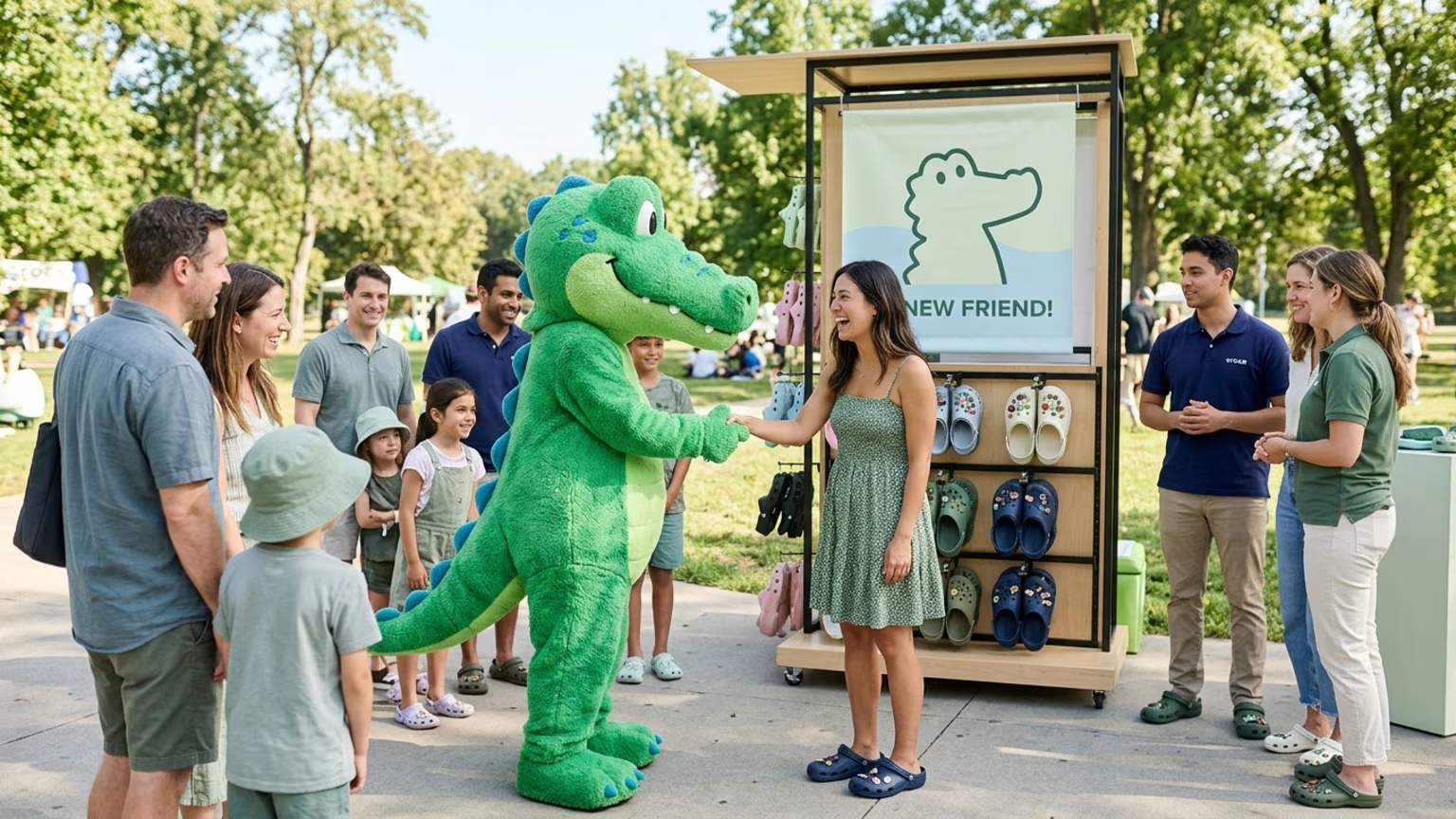
A three-foot egg sitting alone in a TikTok Shop livestream waited patiently to hatch into a real-world activation. The decision to introduce a six-foot crocodile mascot named Niles on August 13, 2026, frames a critical choice for modern marketers. You either rely on static brand identity to move product, or you deploy a physical character system that can walk directly into retail spaces and live events. The choice dictates how a company translates digital awareness into physical consumer action.
The standard playbook for retail marketing relies heavily on digital graphics, flat promotional displays, and conventional product advertising. In this model, brands build recognition through repetitive visual impressions on screens and billboards. The strategy treats physical retail environments as end points for transactions rather than venues for ongoing narrative development. Marketing teams focus on optimizing media spend and packaging design to catch the consumer's eye before they even arrive at the store.
This approach requires a massive volume of impressions to generate a memorable connection. Shoppers navigate crowded aisles filled with similar static logos and cardboard cutouts. Standing out requires significant ad spending to ensure the brand stays top of mind before the consumer even enters the physical space. The logistical footprint is incredibly light, but the emotional connection relies entirely on passive consumption.
Field execution for static campaigns is highly predictable and easy to scale across multiple regions without heavy oversight. Brands simply ship printed materials to retail partners or deploy standardized digital assets across social channels. There are no specialized staffing requirements, no complex transport logistics for large props, and minimal risk of on-site execution errors. The trade-off is a glaring lack of tactile engagement that might convince a hesitant shopper to finally pick up the product.
A living character platform completely upends the traditional approach by giving the brand a physical body and an active personality. This tactic replaces passive logos with life-sized, interactive assets designed to command attention in any physical or digital space. The launch of Niles represents Crocs’ move into what The Wall Street Journal describes as its first comprehensive advertising mascot. The strategy hinges on creating an ongoing narrative that consumers can actually touch and engage with directly.
Crocs designed Niles as a life-sized and huggable character rather than merely a flat graphic. The mascot draws its shape directly from the crocodile silhouette associated with the Classic Clog. That original shoe design first sold in 2002. By anchoring the character to a recognizable product truth, the company bridges its historical footwear legacy with a modern engagement strategy.
Execution relies on a tight content loop that connects social anticipation with eventual real-world appearances. Crocs built initial momentum using the three-foot egg and a 24-hour countdown before Niles officially hatched on social platforms. The brand plans to release weekly episodes to build a continuous storyline over time. The first micro-series featured a mockumentary-style workplace format filmed at Crocs headquarters with real employees.
This episodic approach sets the stage for future in-person interactions. Crocs explicitly stated that real-world appearances are a core part of the Niles rollout plan. A scheduled character program gives retailers and consumers a reason to gather, interact, and participate in brand activations that connect digital and physical spaces.
The conventional approach wins unconditionally when marketing budgets prioritize broad digital reach over deep physical engagement. Brands lacking the resources to support complex field logistics should stick to traditional advertising assets. Managing a heavy physical footprint drains resources quickly if a company is not structurally prepared for live event execution. Static campaigns deliver clear cost controls and reliable media metrics without the friction of live consumer interactions.
Static assets also dominate when the product category demands serious, high-velocity transactions without prolonged consideration. If a consumer simply wants to grab an everyday household staple quickly, a large interactive mascot might actually cause unwanted friction in the shopping aisle. Brands focused entirely on rapid fulfillment often benefit from clean, uncluttered pathways rather than theatrical retail interruptions. Fast-moving environments require efficient navigation rather than physical obstacles.
Brands without a distinct personality or recognizable visual hook struggle to justify the creation of a living character. A mascot needs a strong narrative foundation to avoid feeling like a random corporate gimmick. If a company lacks the creative bandwidth to produce weekly content or establish character guidelines, flat graphics remain the safest operational choice. Simple and predictable execution often protects the marketing budget from unnecessary risks.
Startups and emerging brands often need to prove product-market fit before investing in expensive brand theater. If a company is still finalizing its core product messaging or packaging design, introducing a character adds unnecessary complexity. Marketing teams should prioritize clear communication over entertainment when establishing initial brand trust. Until the core product proves it can sell on its own merits, static assets provide the safest path forward.
Living characters become mandatory when a brand needs to break through extreme digital fatigue and force a physical reaction. Consumers frequently ignore standard advertisements, but a six-foot crocodile walking through a public space demands immediate attention and documentation. Crocs Chief Marketing Officer Carly Gomez said Niles embodies all that the brand stands for. The Wall Street Journal reported that Crocs hopes Niles will support both sales and brand prestige while expressing its relaxed positioning.
This strategy excels during major product launches or when trying to bridge the gap between online viral trends and local retail traffic. Mascots act as consistent hosts for demonstrations, photo moments, and trade show booths that attract real attention. Character-led branding is expanding rapidly across diverse industries. The Wall Street Journal noted that brands are now using mascots to market products ranging from artificial intelligence to tap water.
A recognizable character also gives regional field teams a powerful tool for localized promotions and retailer partnerships. Instead of simply handing out samples from a generic table, field teams can stage memorable interactions that draw larger crowds. Retailers frequently welcome these high-energy activations because they reliably increase foot traffic and create a lively shopping environment. A physical mascot essentially turns a standard product demonstration into a scheduled community event.
Scale and consistency are the main hurdles for this tactic, which requires robust operational support. We run experiential and engagement programs coast to coast with local crews, smart logistics, and permit expertise that let us launch fast and maintain quality consistency in every region, from major metros to smaller markets. Our nationwide infrastructure allows us to activate brands wherever their audiences are located. Deploying a character like Niles effectively demands this level of logistical rigor to ensure the physical execution matches the digital hype.
Deciding between static awareness and a living character platform requires a brutal assessment of a brand's operational capability.
The sheer operational burden of keeping a physical character system running is massive. A six-foot mascot requires careful transportation, trained handlers, strict safety procedures, and rigorous brand-guideline discipline. Without a detailed field playbook, a mascot can easily devolve into an expensive and chaotic photo opportunity that fails to communicate any actual product value.
The potential to build a repeatable, highly visible asset that drives sustained attention is unparalleled. A well-executed character creates an ongoing storyline that seamlessly connects weekly digital episodes with tangible retail appearances. When properly managed, this system transforms passive audience members into active participants who actively seek out the brand in the real world.
The ultimate success of a program like Niles depends entirely on proving Return on Investment (ROI) and measuring actual retail lift instead of vanity metrics. Marketers must verify that character appearances translate into product trials, qualified interactions, and measurable sales. Before ordering a custom mascot suit, map out exactly how that character will guide consumers toward a specific commercial action.
Brands launching any high-profile physical asset must prioritize concrete commercial outcomes over simple novelty. While digital reach matters, the true measure of a field campaign is whether it moves inventory off the shelf. Tracking qualified interactions, direct product demonstrations, and retailer-specific sales lift proves the program's worth to senior leadership. Without that hard data, experiential investments risk being labeled as mere entertainment rather than vital sales infrastructure.
Makai creates high impact experiential marketing campaigns and trade show activations that turn fleeting consumer interactions into qualified leads for premium CPG brands. We solve the difficulty measuring real ROI from live events and navigate complex event logistics so your team can focus on driving retail conversion.

30 Years Experiential & Retail Activation Partner for CPG & Beverage Brands | Multi-Market Demos, Roadshows & Costco/Club Programs That Actually Sell