Robbie Thain
Founder, CEO

Seamless urban brand activations require navigating municipal clearance rules, pedestrian flow regulations, and agile mobile formats to maximize field.
Executing experiential sampling in dense metropolitan centers requires strict operational discipline rather than theatrical guesswork. This definitive field operations guide details how brand leaders navigate municipal space controls, select high-mobility distribution formats, and measure authentic consumer pipeline without obstructing public rights-of-way.
Most brand leaders believe that winning in major cities requires massive physical footprints, towering displays, and booming sound systems. In dense metropolitan centers like New York, Chicago, and San Francisco, that mindset leads directly to confiscated gear, regulatory fines, and shuttered activations. True field efficiency is not about dominating physical space through sheer volume. It comes from maintaining rapid operational mobility, respecting pedestrian flow, and executing precise micro-interactions.
Imagine launching a high-profile beverage campaign during the morning rush at a major metropolitan transit hub. Your field team arrives in a branded box truck, drops heavy aluminum tables onto the sidewalk, and sets up a six-foot branded backdrop. Within twelve minutes, pedestrian movement stalls, commuters bottleneck against subway stairs, and transit officers arrive with citation clipboards. Before a single sample opens, local law enforcement shuts down the footprint for blocking emergency access routes. The brand loses thousands of dollars in wasted inventory, staff downtime, and reputational damage.
Dense urban environments present unique operational challenges that suburban parking lots and convention centers never create. Sidewalk space is scarce, contested, and heavily regulated by multiple municipal agencies. Parking enforcement operates with zero tolerance for idling commercial vehicles. High-density pedestrian corridors can transform from quiet walkways into impassable crowds in seconds. When field teams treat public streets like private festival grounds, failure is predictable and expensive.
Brand teams often make the mistake of deploying suburban field marketing playbooks in metropolitan cores. They pack heavy coolers, oversized banners, and static structures that anchor field staff to a single patch of concrete. When security guards or transit police request relocation, static teams take forty minutes to pack and move. That lost time destroys sampling velocity and inflates your cost per contact. Understanding the real physics of the street is the only way to safeguard your event budget and protect brand equity.
Executing compliant field activations requires a clear understanding of the regulatory boundary between personal activity and physical infrastructure. Municipalities do not view sampling through the lens of creative marketing. They view it as a physical use of public space that affects pedestrian safety, transit flow, and public order.
According to the New York City Street Activity Permit Office, promotional or commercial activity on a city street, sidewalk, or curb lane requires a Street Event permit. Activations staged within public pedestrian plazas require a dedicated Plaza Event permit. New York City establishes an operational distinction for product distribution: a permit is not required when products remain entirely on the distributor's person and nothing touches the sidewalk or street.
The moment an activation places a cooler, folding table, branded banner, queue stanchion, or storage crate onto the pavement, the operation loses its exempt status. That physical placement legally classifies the activation as an infrastructure-based event. Field teams that set down a single plastic tub of ice to rest their backs have crossed the legal line into unpermitted commercial occupation.
Municipal jurisdictions strictly regulate commercial vehicles. New York City explicitly prohibits sampling from the back of a parked vehicle. A branded van cannot serve as an open-air retail counter or an impromptu sampling booth at the curb. Doing so invites immediate towing, commercial parking summonses, and health code citations. Branded vehicles must serve strictly as mobile replenishment hubs, transport assets, or rolling billboards rather than stationary serving bars.
Lead times for municipal permits require rigorous advance scheduling. In New York City, mobile-unit permit applications must be submitted 60 days before the scheduled activation date. Standard Street Event applications require between 14 and 45 days of advance filing depending on the overall size and footprint. Every commercial application requires a comprehensive liability insurance certificate naming the City of New York as an additional insured for a minimum of $1 million.
Specialized operational elements introduce extra layers of departmental oversight according to the New York City Street Design Manual. Distributing prepared food or open beverages requires direct permitting from the Department of Health and Mental Hygiene. Amplified sound systems require dedicated sound permits issued by local police precincts. Heavy power generation introduces strict safety protocols. Electric generators require Fire Department review, while generators exceeding 40 kilowatts require certification from the Department of Environmental Protection. Any temporary physical structure exceeding ten feet in height triggers mandatory review from the Department of Buildings.
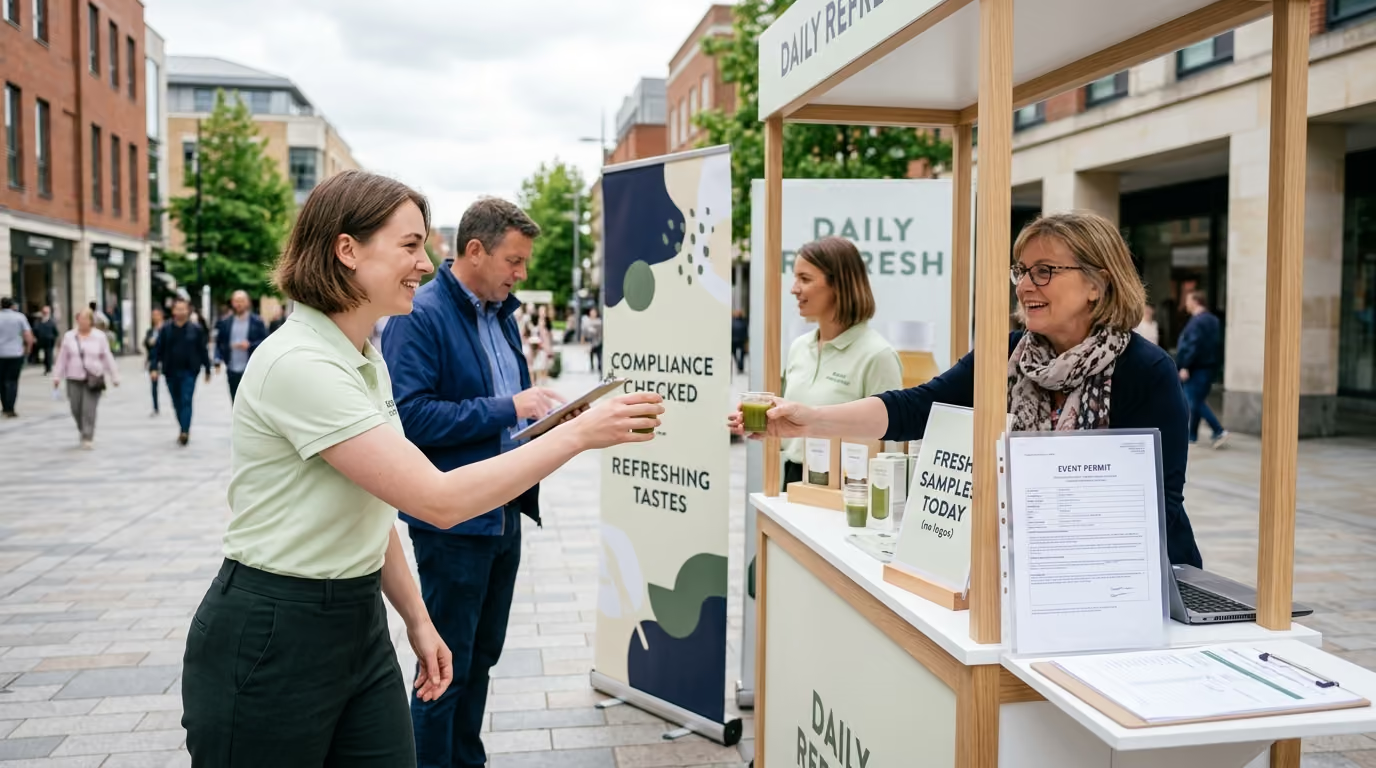
International urban centers enforce similarly stringent spatial protocols. Dublin City Council enforces a dedicated protocol for commercial sampling and merchandising that requires permit applications at least 15 working days prior for minor activations. Major campaigns involving temporary infrastructure require at least 20 working days. Dublin explicitly bans sampling across major shopping arteries like O'Connell Street, Henry Street, and Grafton Street. Permitted sampling hours are strictly limited to morning transit windows between 7:00 and 10:00 AM and evening commuter windows between 4:00 and 7:00 PM.
Dublin's regulatory framework also links brand permits directly to municipal cleanliness. Consent holders are legally required to maintain a litter-free zone extending 100 meters in every direction from their distribution point. Field teams must supply dedicated recycling receptacles, wear high-visibility uniform elements, and produce valid permits instantly upon inspection. Staff members are prohibited from approaching moving vehicles, boarding public transit vehicles, or operating within 50 meters of another sampling crew. Dublin applies a clear fee structure consisting of a 250 euro daily sampling permit fee, a 250 euro daily site rental charge, and infrastructure fees reaching up to 1,000 euros per day plus value-added tax.
Urban field marketing leaders must design operations backward from the public clearances that municipal codes mandate:
City regulations typically require maintaining at least five feet of continuous, unobstructed sidewalk width for normal pedestrian transit. In heavy transit corridors, planners should expand that buffer to eight feet to prevent pedestrian bottlenecks.
Field teams must maintain a minimum clear buffer of five feet on both sides of any municipal fire hydrant. Staging inventory, parking support carts, or standing staff within this zone constitutes an immediate safety violation.
Brand teams cannot position staff or stage equipment within eight feet of an active bicycle lane. Sidewalk activations must never spill into transit station portals, bus shelters, or light rail boarding zones.
Full street closures and pedestrian plaza activations must preserve a continuous 15-foot unobstructed lane for emergency vehicles. Any temporary kiosk, shade tent, or display structure placed within this lane faces immediate removal by emergency personnel.
To manage these complex geographic requirements across multiple target markets, leading teams establish a centralized playbook for local compliance. You can learn more about codifying these operational standards in the complete guide to building a field marketing playbook.
Selecting the right activation format determines your regulatory exposure, physical agility, and operational throughput. Field operators must evaluate the trade-offs between physical brand presence and operational mobility before deploying teams to metropolitan centers.
Person-carried teams represent the highest level of urban agility and carry the lowest regulatory friction. In this format, brand ambassadors carry product inventory using specialized backpacks, wearable sampling trays, or branded cross-body satchels. Because no equipment, coolers, or signage ever touch the sidewalk, this format complies with New York City's permit-free sampling rules.
The operational advantages are substantial. Person-carried teams can relocate instantly when pedestrian patterns shift, weather conditions deteriorate, or transit security requests movement. They avoid fixed queue bottlenecks by engaging pedestrians in natural walking motion. However, this format restricts total inventory capacity and limits secondary display branding. It requires disciplined replenishment networks to keep field staff continuously stocked without cluttering public spaces.
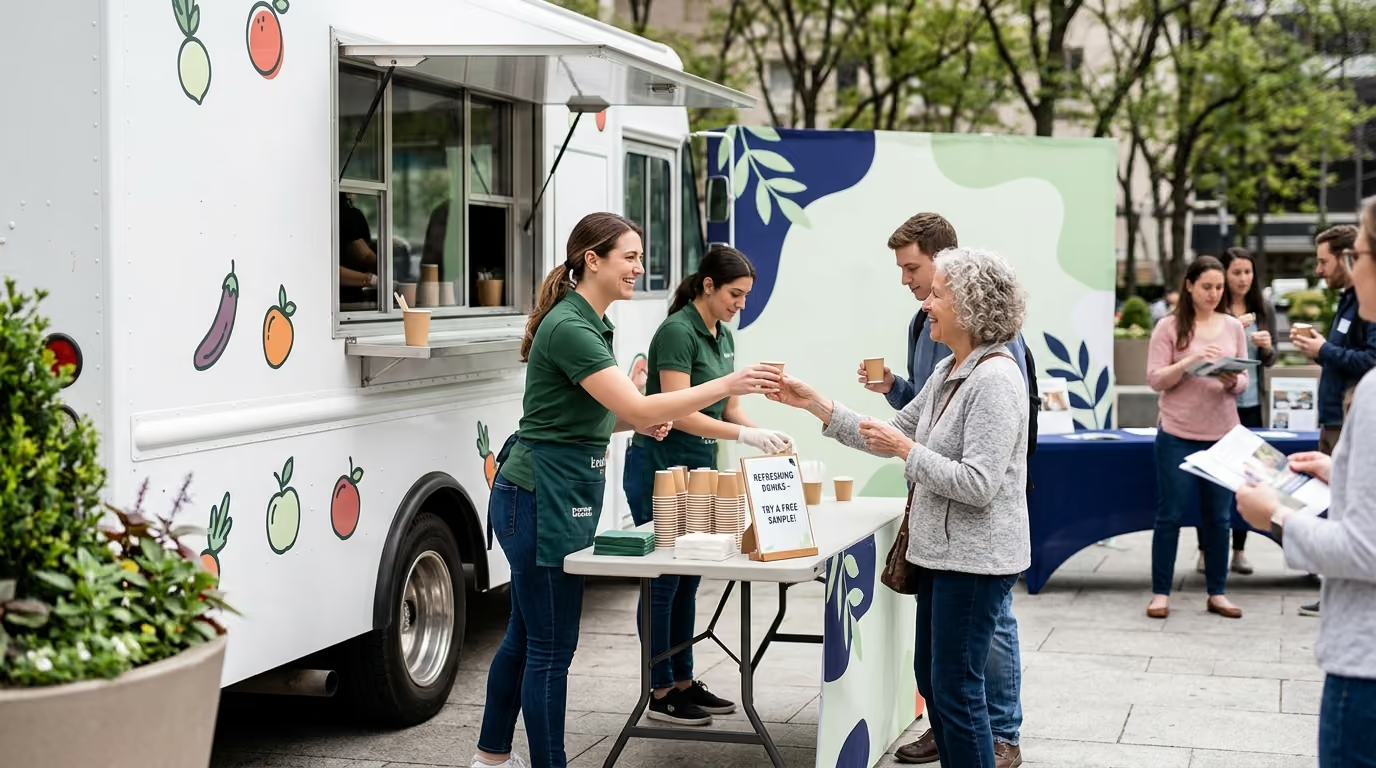
Branded vans, custom food trucks, and glass-walled display vehicles provide high visual impact and massive on-board storage capacity. They solve refrigeration challenges, provide secure lockups for staff gear, and double as mobile billboards while moving between target zones.
The primary disadvantage is the friction of curbside management. Commercial vehicles face aggressive parking enforcement, limited loading zones, and strict anti-idling laws. Because regulations prohibit sampling directly from the vehicle interior in major markets, vehicles must act as remote logistics bases. They should park legally in off-street commercial structures or designated loading bays, dispatching person-carried brand ambassadors into high-density pedestrian corridors. For teams managing large mobile fleets across multi-city routes, integrating fleet operations best practices for mobile marketing ensures vehicles remain reliable logistics assets rather than costly parking liabilities.
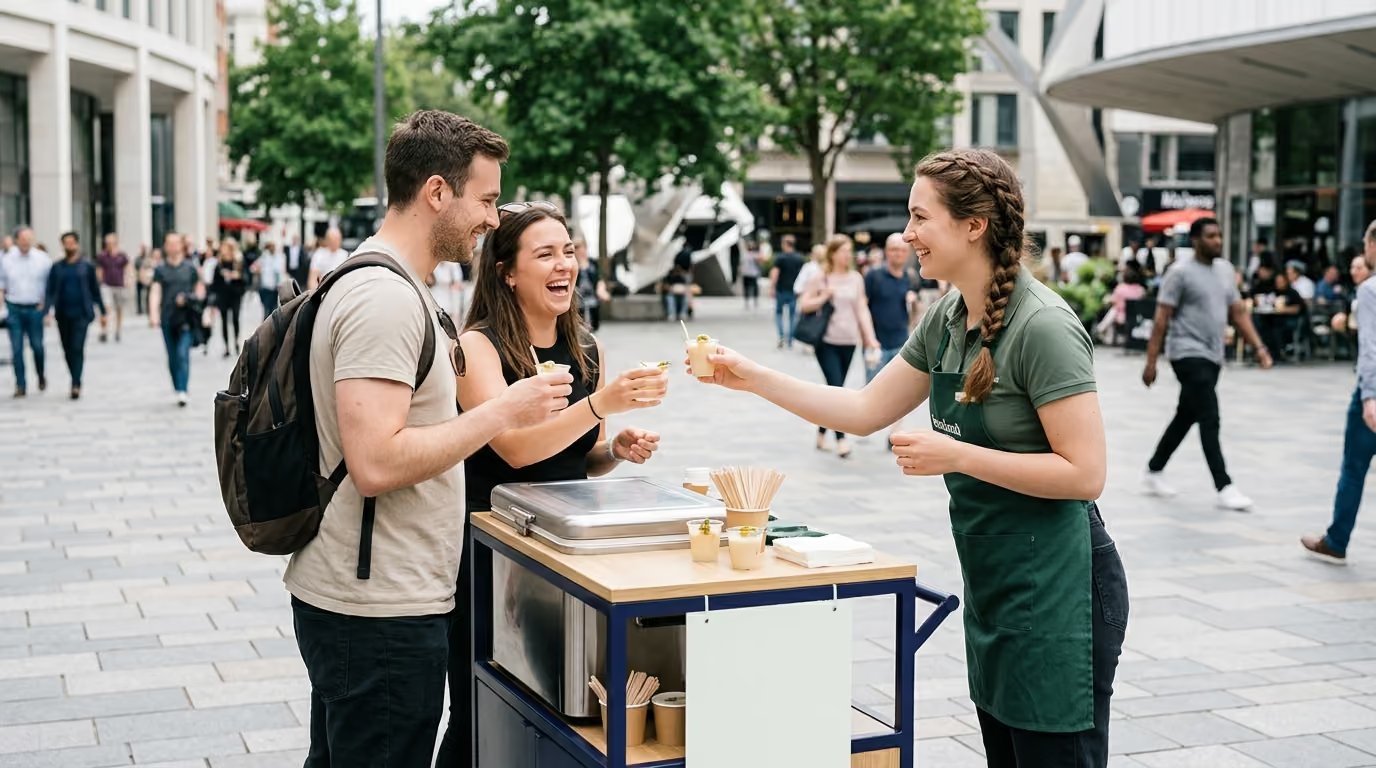
Branded pushcarts and custom cargo bicycles strike an effective balance between visibility and agility. They carry significantly more product than wearable backpacks while retaining the ability to navigate crowded pedestrian promenades. Specialized cargo bikes can house onboard cold storage, digital display screens, and integrated waste bins.
The trade-off lies in physical footprint. Once a cart or bicycle stops rolling, municipal enforcement officers often classify it as static infrastructure. If parked in public spaces without temporary permits, carts risk impoundment or civil citations. Field teams must operate carts around designated pause points, maintaining complete readiness to move immediately if pedestrian flow thickens or local officials intervene.
Static footprints utilizing pop-up canopies, modular sampling counters, branded flags, and stanchions deliver maximum dwell time and deep brand immersion. They allow for complex product demonstrations, live culinary prep, and integrated audiovisual presentations.
This format carries the highest regulatory burden and lowest physical flexibility. It demands formal site permits, comprehensive insurance riders, certified safety ballasting, and long setup times. Static footprints are ideal for permitted plaza activations or private property takeovers, but they are entirely unsuitable for agile street-level sampling campaigns.
Review the operational parameters of each format:
To understand how high-agility formats fit into broader brand strategy, review our comprehensive breakdown in guerilla marketing tactics explained.
Winning consumer attention in dense urban centers does not require blocking sidewalks or shouting over traffic. Aggressive tactics that corner pedestrians or create sudden human walls alienate consumers and trigger enforcement interventions. True street-level engagement relies on visual salience, clear messaging, and smooth interaction mechanics.
Salience means designing brand assets that stand out against visual clutter without expanding physical dimensions. Field teams should wear high-contrast, clean uniforms that immediately communicate authority and brand identity. Dublin's municipal protocol explicitly mandates high-visibility uniforms for field distributors, illustrating how clear identification supports operational transparency. A clean, brightly colored uniform tells the pedestrian who you are before they reach your personal space.
The interaction mechanics must respect the physical pace of the city. Commuters moving toward subway entrances or office towers operate with high cognitive load and strict time constraints. Brand ambassadors must deliver value within four seconds. A crisp verbal hook combined with an extended, fully prepared product sample creates an effortless interaction.
Consider these core principles for non-obstructive attention design:
Never group six brand ambassadors in a tight circle on a single corner. Clustering blocks pedestrian sightlines, creates artificial sidewalk choke points, and intimidates approaching consumers. Instead, distribute team members in a staggered formation along the natural flow of foot traffic. Position distributors twenty yards apart so consumers can see the first interaction, process the brand context, and willingly accept a sample from the second ambassador.
Eliminate open-ended questions that require long answers. Asking "Do you have two minutes to learn about our new organic snack?" invites an immediate, defensive refusal. Instead, use a direct, polite benefit statement: "Good morning, grab an iced cold cold-brew for your walk." Hand the product forward with label facing upward, allowing the consumer to accept without breaking stride.
Never force consumers to fill out manual clipboards or long paper surveys on an active sidewalk. If your campaign requires digital data capture, print high-contrast QR codes directly on sample packaging or wearable ambassador trays. The physical packaging should incentivize scanning later, offering instant digital coupons, sweepstakes entries, or retail locator maps.
Align your sampling timing with natural physiological demand states. Distribute functional energy drinks, iced coffees, and breakfast bars between 7:30 and 9:30 AM outside commercial employment centers. Distribute sparkling waters, savory snacks, and refreshing treats between 12:00 and 2:00 PM along retail corridors. Distribute relaxing herbal beverages, premium treats, or dinner meal solutions between 4:30 and 6:30 PM outside transit hubs.
Flawless urban execution requires rigorous operational planning across every hour of the field deployment. Field managers must master route scouting, supply replenishment, staff coordination, and incident management to prevent minor disruptions from derailing the activation.
Successful activations begin days before staff arrive on the street. Operations managers must conduct physical site walks during the exact hours of planned deployment to map micro-conditions.
Urban sampling campaigns fail most frequently due to inventory starvation or improper product condition. A street team distributing 400 cold beverages per hour will exhaust manual supplies rapidly, requiring a continuous, hidden replenishment pipeline.
Managing brand ambassadors across decentralized city blocks requires disciplined communication and strict operational roles. For deep guidance on building and leading specialized street crews, reference the complete guide to staffing mobile sampling and guerilla activations.
A brand that litters public streets damages its reputation and invites immediate regulatory fines. Urban field teams must maintain total ownership of the waste their activations generate.
When operating in dynamic metropolitan centers, interactions with building security, transit police, and municipal inspectors are inevitable. How your field lead handles these encounters determines whether the activation continues or shuts down.
Unpredictable weather patterns can introduce operational risks to urban street campaigns. Field directors should integrate the operating procedures outlined in our manual on weather-proofing mobile sampling and guerilla activations.
Field marketing leaders face intense pressure to prove that street-level activations generate authentic commercial value. To defend field budgets, marketers must measure clear lead and lag indicators that connect real-world sampling directly to brand equity and retail sales lift.
Academic research demonstrates that sampling produces measurable, sustained sales impact when executed properly. A landmark study published in the Journal of Retailing analyzed six store-level scanner data sets across four distinct product categories to measure the short-term and long-term effects of product sampling. The researchers discovered that sampling generated both immediate sales spikes and sustained sales growth over extended post-event windows. The study also revealed that the sales lift was moderated by the retail environment and that repeated sampling exposures produced a multiplicative increase in long-term sales performance.
However, street sampling operates without the immediate purchase proximity of in-store grocery demos. Marketers must construct a multi-tiered measurement architecture to track how street trials convert into sustained retail velocity.
Research published in the Journal of Marketing highlights the importance of sample sequencing and consumer experience. Across five empirical experiments, researchers found that when consumers evaluate a series of experiential products, they prefer the product sampled second when both items are desirable, but prefer the first item when both are undesirable. In field environments where consumers encounter multiple brand touchpoints or competitor products, the precision of the sensory experience directly shapes evaluation.
Furthermore, an experimental study published in Marketing Letters across 1,080 participants in the United States, Britain, and the Netherlands revealed that sampling products of varying quality strengthens the consumer association between product quality and personal enjoyment. Experiencing a high-quality sample elevated product enjoyment, while experiencing a flawed or poorly served sample significantly reduced brand enjoyment. Sampling a product under improper serving conditions, such as warm beverages or stale snacks, actively damages consumer perception.
Field leaders must also avoid confusing consumer gratitude with purchase intent. A study published in the Journal of Electronic Commerce Research analyzed sampling dynamics and established an important behavioral distinction: perceived reciprocity significantly improved general product ratings but had no measurable effect on actual purchase intention. In contrast, perceived diagnosticity, the degree to which the sample provided clear, helpful information about product performance, directly drove purchase intention. Distributing free samples creates positive brand sentiment, but clearly demonstrating product benefits drives actual retail sales.
Urban field campaigns must track metrics across five distinct operational tiers:
For an operational framework on building enterprise measurement systems, review the complete guide to field marketing measurement plans and our guide on how to measure the business impact of mobile sampling and guerilla marketing.
Operational theory matters little until it faces the practical realities of urban field execution. Reviewing real-world deployments illustrates how disciplined planning turns physical constraints into commercial performance.
Consider the launch of a premium functional beverage expanding distribution into key metropolitan markets. The brand faced heavy competition on grocery shelves and needed to drive rapid retail sell-through across fifty urban grocery locations. Rather than renting static promotional booths outside select stores, the brand deployed an agile, person-carried sampling campaign across dense commuter corridors feeding those retail accounts.
Our team designed a multi-point distribution model utilizing high-mobility brand ambassadors equipped with custom, ergonomic thermal backpacks. These units kept canned beverages at an exact 36 degrees Fahrenheit without requiring static ice bins on the sidewalk. Mobile replenishment vans parked legally in off-street commercial structures three blocks away, dispatching foot runners to restock ambassadors every 25 minutes.
By keeping all inventory and equipment on the ambassadors' bodies, the activation operated entirely within municipal permit exemptions. Teams engaged morning commuters emerging from subway stations, delivering cold samples alongside physical coupon cards directing shoppers to nearby retail coolers. Over a three-week campaign, the deployment distributed 85,000 cold samples, drove a 28 percent lift in local retail baseline sales across target grocery accounts, and incurred zero municipal citations or operational downtime.
A VP of Marketing reflected on our partnership: "Robbie, it was a pleasure working with you and your team. You turned our launch into an experience that connected with shoppers and built lasting excitement for our brand. We're already looking forward to the next project together." Our team created a launch experience that resonated with retail shoppers and generated momentum for future collaborations.
Developing an ongoing metropolitan presence requires building structured annual programs rather than executing isolated, one-off stunts. Brand leaders can examine long-term program development in our guide on how to build an annual mobile sampling and guerilla marketing program.
Mastering the operational realities of dense urban environments transforms chaotic city streets into your brand's most predictable, high-converting customer acquisition channel.

30 Years Experiential & Retail Activation Partner for CPG & Beverage Brands | Multi-Market Demos, Roadshows & Costco/Club Programs That Actually Sell