Robbie Thain
Founder, CEO

Learn how experiential marketing leaders use fleet operations best practices, safety protocols, and utilization data to drive ROI on mobile tours.
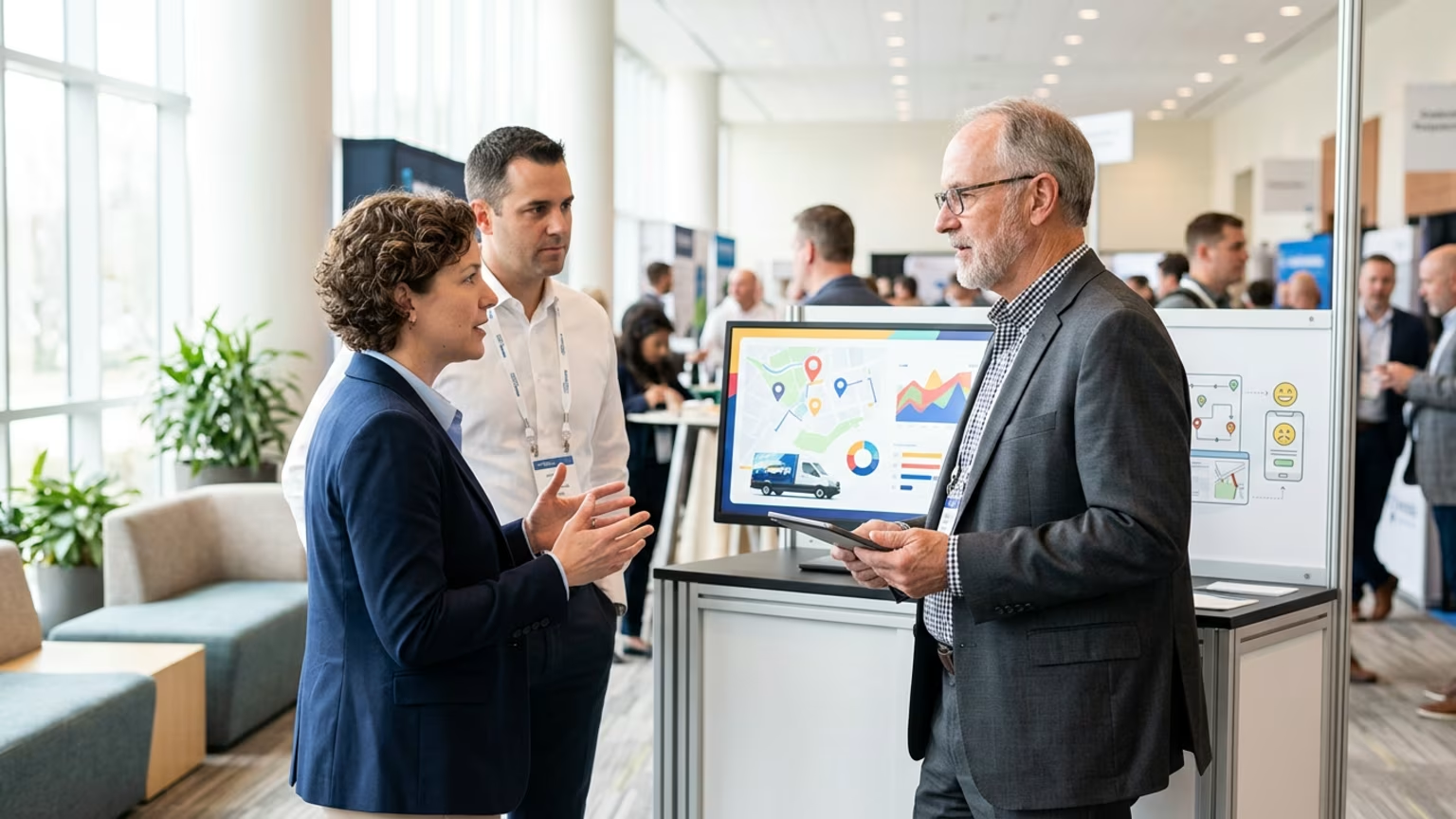
Treating mobile brand assets like a true fleet with standardized training and rigorous utilization analytics unlocks cleaner execution and clearer commercial outcomes. By shifting to a centralized operations mindset, field marketing leaders can protect their budget and prove that live experiences drive measurable pipeline.
The wrapped sampling truck sits idling in a high traffic retail parking lot with a drained auxiliary battery. Two brand ambassadors scroll through their phones as the store manager repeatedly asks when the demonstration will begin. Thousands of dollars in premium product wait inside warm refrigerators. This scene plays out regularly when experiential marketing runs on creative vision but lacks operator-grade discipline.
Marketing executives often view mobile tours and roadshows as moving billboards. That perspective creates fragmented ownership where agencies manage the aesthetics but nobody tracks the operational reality. The solution requires adopting the exact oversight frameworks used by commercial transportation managers. According to risk advisory experts at IMA Corp, documented safety policies and a designated transportation leader reduce incidents and improve overall execution.
Brands risk massive liability when they treat heavy commercial vehicles like simple trade show props. A localized street team requires entirely different guardrails than a multi-state mobile tour. Proactive safety programs directly influence insurance costs and availability according to industry advisors. When you implement a structured center of excellence for field marketing operations, every team member understands their exact responsibilities.
Creative teams spend months designing the perfect consumer interaction but spend zero hours planning the load-in process. This disconnect leads to beautiful concepts failing in the real world. Treating a marketing tour like a true logistics operation bridges the gap between vision and reality. The most successful experiential marketing leaders act as fleet managers first and creatives second.
Without proper oversight, field marketing campaigns bleed budget through inefficient routing and poor maintenance. The lack of standard inspection protocols leads to canceled activations and damaged retail relationships. Fleet management best practices focus heavily on preventative checks to keep assets moving safely. Applying these same concepts to marketing vehicles protects your brand reputation and your consumer relationships.
Fleet management principles remove the emotion from logistical decisions. A centralized data register provides full visibility into every piece of equipment your brand owns. Automated reminders for maintenance prevent the embarrassing scenario of a broken refrigerator ruining a high profile sampling day. Operators who adopt these frameworks consistently get more stops, more samples, and cleaner execution from the exact same budget.
Creating a secure and structured mobile marketing campaign requires moving from isolated spreadsheets to systematic guardrails. We design mobile activations and roadshows that accelerate consumer trial, build trust, and boost retail velocity during 90-day product launch windows. Our structured approach transforms initial product trial into sustained consumer confidence and retail performance. You can build this exact operational discipline into your own brand campaigns.
DOT and fleet compliance guidance demands detailed records for vehicle inspections and driver qualification files. Translating this to experiential marketing means keeping clean records of asset locations and staff assignments. Thorough documentation makes your marketing team retail ready and sponsor ready at a moments notice. Incomplete documentation remains a primary reason fleets fail compliance audits according to Clue Insights.
When legal teams or retail partners request proof of compliance, digitized records end the conversation quickly. Relying on text messages and scattered emails from brand ambassadors invites unnecessary risk. Centralized data repositories hold everything from incident reports to proof of performance photos. This operational maturity proves to your C suite that you treat the marketing budget with profound respect.
Agencies execute the events, yet the brand always owns the risk and the Return on Investment. Best-in-class brands set non-negotiable standards and require their activation partners to operate within them. By tying vendor payments to complete compliance reporting, you eliminate sloppy execution. Clear accountability frameworks separate professional marketing operators from amateurs.
Developing a comprehensive incident response plan stops minor issues from becoming major crises. Your field teams need clear escalation paths for vehicle breakdowns, extreme weather, or accidents. Providing laminated quick reference guides in every vehicle gives ambassadors exactly what they need during high stress moments. The goal is building simple guardrails that empower your staff to act decisively.
Leaders need exact numbers to justify their live activation budgets to skeptical finance departments. Telematics experts at Teletrac Navman report that many organizations struggle to use equipment data effectively. Closing that data gap provides a massive advantage for marketing executives. Monitoring the metrics that prove mobile roadshows drive sales lift allows your team to scale winners and cut losers quickly.
Every moment your vehicle sits in traffic or deadheads across the state drains your budget. Applying commercial routing logic prioritizes high traffic retail partners and key demographic clusters. Even a basic GPS paired with an event log gives you far more control than typical experiential reporting.
Fleet management principles teach us that idle time is the enemy of profitability. When marketing vehicles sit empty in parking lots, the cost per qualified lead skyrockets. Telematics dashboards allow leaders to track engine usage patterns and harsh braking events. Identifying risky driving behavior early prevents catastrophic accidents and protects the brand image.
Leaders should track cost per trial alongside traditional fleet metrics. Combining your marketing data with vehicle utilization numbers gives you the true cost of consumer acquisition. If a specific retail location requires excessive drive time but yields low sample distribution, the data tells you to reroute. Treating your mobile assets as commercial investments changes how your entire team views the activation budget.
Electric vehicles and sustainable mobile tours introduce entirely new operational layers to brand activations. The U.S. Department of Energy highlights the growing complexity of fleet electrification planning and infrastructure. Consumer packaged goods brands adopting sustainable vehicles must integrate specific charging and range management rules into their training. Transitioning to electric fleets requires ongoing micro training rather than a single onboarding session.
Sustainability pressures now dictate how many national tours operate. Beverage brands face increasing demands to lower their emissions footprints during multi-city roadshows. Electric vehicles require drivers to understand load impact on battery range and regional charging availability. Planning a route without considering these factors leads to stranded teams and missed retail stops.
Rotating seasonal staff and temporary agency partners make standardized training an absolute necessity. Relying on tribal knowledge guarantees inconsistent in-store presentation and unsafe driving behavior. Short quizzes and scenario based validations should be required before anyone touches the steering wheel of a wrapped brand vehicle. The brands seeking to turn product sampling into retail pipeline understand that frontline staff education drives the entire campaign.
Continuous learning programs keep frontline teams aligned with changing venue rules and vehicle technologies. The best field marketing operators treat their playbook as a living document. Updating materials for every new market entry keeps the field teams sharp and focused on the commercial outcome.
Taking control of your mobile assets transforms a chaotic expense into a predictable revenue driver. Marketing leaders who prioritize structural discipline see higher retail sell through and happier field teams. If your team needs operational clarity before launching your next national tour, it is time to take action. Book a strategy call.
Keep your route optimized and your brand moving forward.

30 Years Experiential & Retail Activation Partner for CPG & Beverage Brands | Multi-Market Demos, Roadshows & Costco/Club Programs That Actually Sell


