Robbie Thain
Founder, CEO

High retail conversion rates and protected profit margins emerge when brands structure conditional sampling promotions, promotional bundles.
A successful retail sampling incentive is not a margin-slashing fire sale designed to clear inventory for a single weekend. It is a precision mechanism engineered to eliminate consumer financial hesitation while protecting the long-term reference price of the brand. This framework establishes the operational rules for deploying coupons, basket thresholds, loyalty triggers, and bundles that turn physical product trial into repeat retail velocity.
The retail sampling incentive design framework provides marketing leaders with a systematic methodology for structuring conversion offers at the physical point of purchase. By aligning incentive architecture with shopper psychology and retailer economics, brands can secure immediate checkout conversions without establishing dangerous discount expectations.
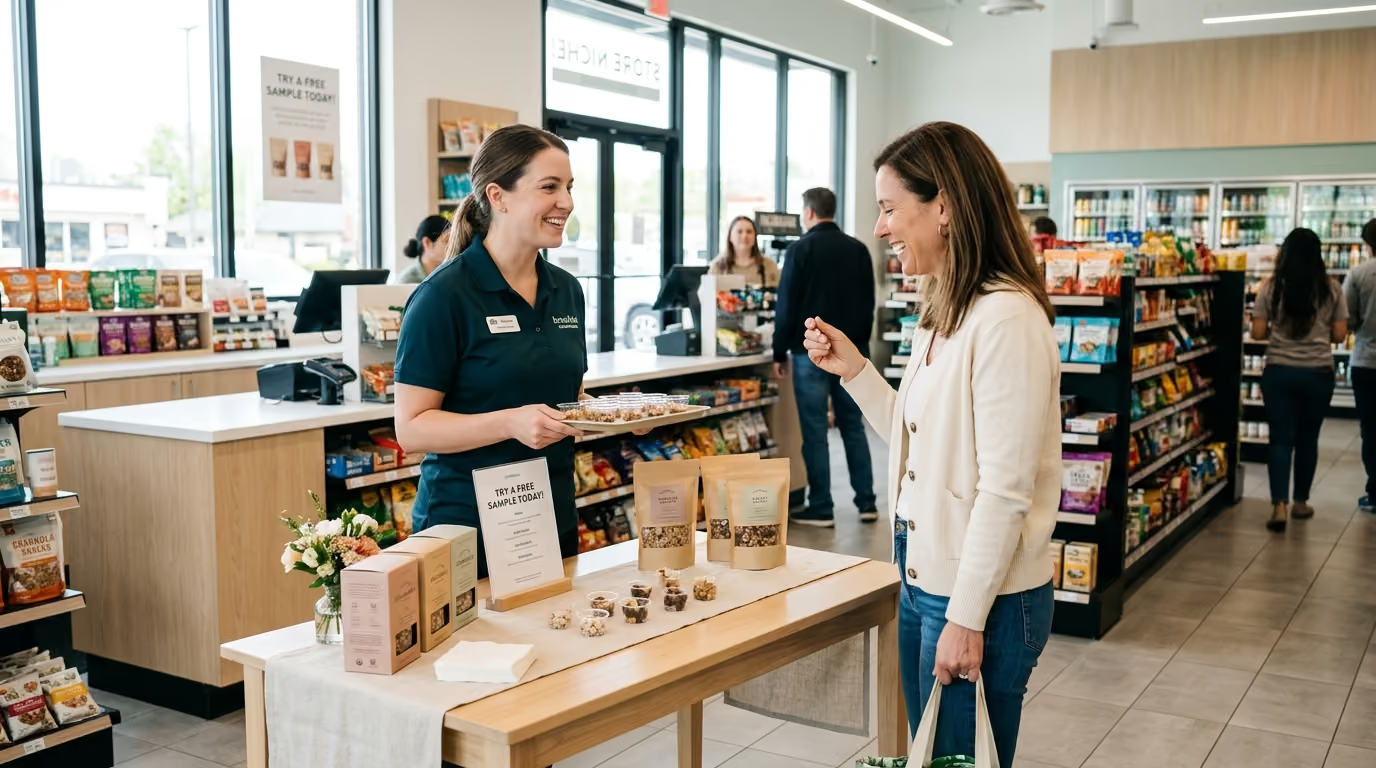
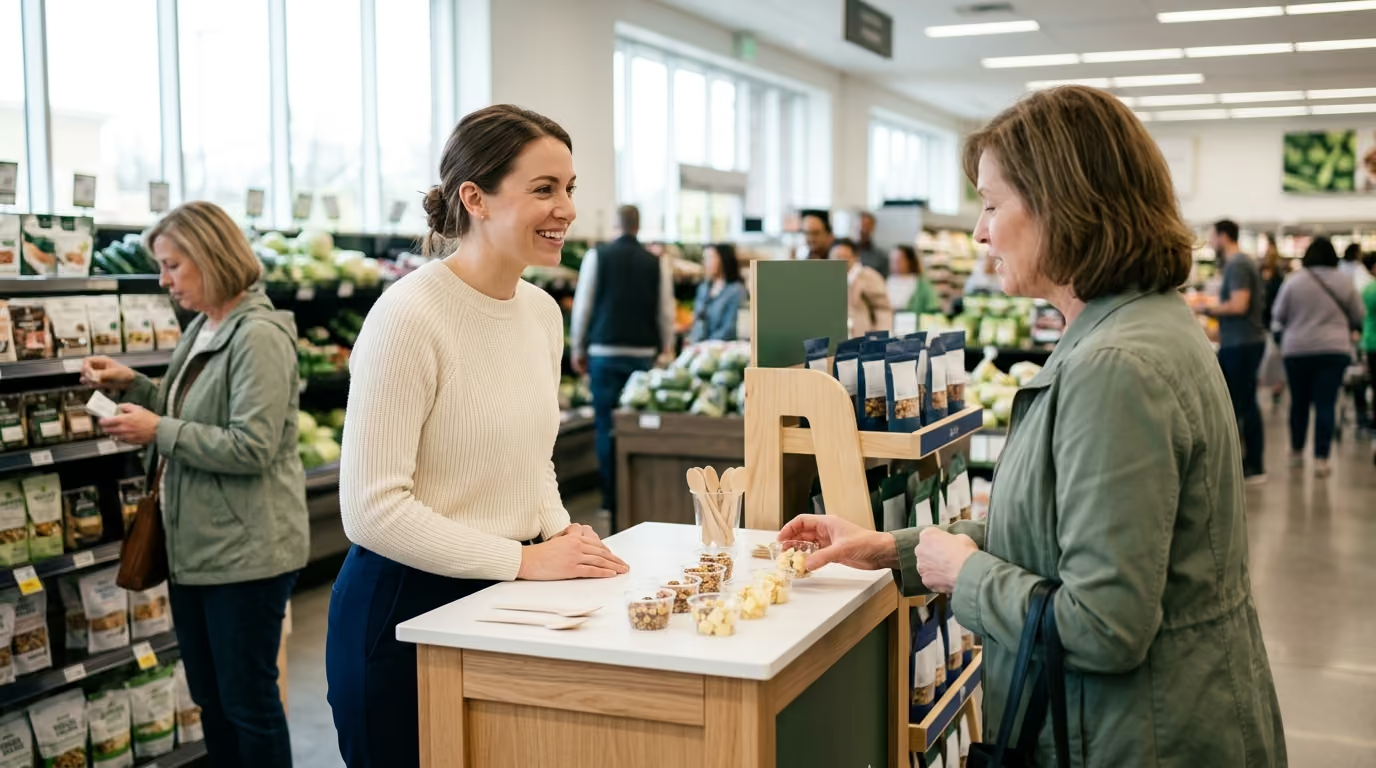
The floor of a high-volume grocery store or club outlet on a Saturday afternoon is loud, crowded, and unforgiving. Brand ambassadors stand behind branded demo carts, preparing product bites while shoppers move past with full carts, crying children, and tight schedules. In this environment, a product sample often becomes nothing more than a free mid-shopping snack.
Field teams routinely encounter shoppers who take a sample, offer polite praise, and walk away without ever glancing at the shelf. To counter this friction, brand managers often resort to indiscriminate price slashing. They tape bright yellow paper coupons directly to the package or drop shelf prices by thirty to forty percent.
This blunt approach creates immediate operational chaos. Field teams burn through promotion budgets, while bargain hunters sweep the shelf clean without any genuine interest in the brand. The demo report shows a temporary spike in unit movement, creating the illusion of a successful activation.
On Monday morning, the true cost becomes apparent. Brand margins are eroded, inventory runs out before standard-price shoppers arrive, and baseline velocity collapses the moment the promotion ends. The brand has inadvertently trained local shoppers to wait for the next price drop instead of establishing the product as a regular purchase.
Standard percentage discounts fail because they treat all consumer hesitation as purely monetary. Research by Gupta and Cooper demonstrates that consumers do not evaluate price cuts in a smooth, linear fashion. Instead, shoppers discount the price discounts, meaning their purchase intention remains unchanged until a promotion crosses a specific perceptual threshold.
Once a discount crosses this threshold, it enters an effective conversion window. If the discount is pushed too deep, it hits a saturation point where additional price cuts produce negligible sales gains while destroying product margin. Research published in the Journal of Consumer Research confirms that the impact of a promotion depends heavily on retailer image and brand equity.
When a brand cuts its shelf price too deeply during a demo, it damages the perceived quality of the product. Mela, Shimp, and Urbany found that frequent and deep discounts fundamentally alter consumer price judgments. Over time, shoppers adjust their internal reference price downward, viewing the promotional price as the true value of the item.
When the product returns to full price, consumers view the regular price as an unfair surcharge. This dynamic leads to postponed purchases, brand switching, and deal dependency. Academic research on permanent discounts and order coupons indicates that product-specific price cuts produce diminishing quantity gains over time. To build sustainable retail velocity, brands must stop subsidizing trial through unconditional unit price cuts.
A more effective alternative to the flat discount is the conditional threshold promotion. A 2026 study published in the Journal of Consumer Research examined threshold promotions against capped promotions across seven preregistered studies and a field trial. Threshold promotions require a minimum spending commitment, such as saving five dollars on an order of ten dollars or more. Capped promotions offer a percentage savings up to a fixed maximum, such as fifty percent off up to five dollars.
The findings showed that threshold promotions produced significantly higher purchase intentions and conversion rates when the trigger value was low. In one experimental study, 67.82 percent of participants redeemed the threshold promotion, compared to only 56.22 percent who redeemed the capped discount.
Threshold promotions succeed because they provide a concrete goal that encourages basket building. When a shopper at a retail demo is offered three dollars off a twelve-dollar category purchase, they actively look for complementary items to hit the mark. The transaction shifts from a passive discount into an active shopping mission.
To implement threshold promotions effectively during product sampling, brands must set attainable hurdles. If the threshold requires buying four units of an unfamiliar snack, the shopper will abandon the transaction. The spending requirement should sit just above the price of a single unit or pair naturally with a routine basket addition.
By using low-hurdle thresholds, brands motivate immediate purchase while protecting the perceived single-unit value of their product.
The psychological framing of an incentive changes how consumers evaluate product value and future price increases. Research on promotional packages reveals that presentation dictates whether shoppers assign price discounts to the primary item or the secondary reward. The way a bundle is framed determines whether a customer repurchases the product at full price later.
When two distinct, complementary products are offered together, framing the secondary item as a free gift yields superior brand perception. Studies show that participants assigned a higher baseline price to the primary product when the secondary item was framed as a gift. They perceived future price increases as lower and expressed greater intention to repurchase the primary item at regular price.
The opposite effect occurs when offering identical items under a buy-one-get-one-free structure. When two identical products are bundled as a free-gift promotion, consumers perceive the standard price as inflated. They anticipate future price shocks and demonstrate lower repurchase loyalty once the promotion ends.
For premium and natural food brands, framing incentives around complementary utility preserves product integrity. Pairing a high-end pasta sauce sample with a coupon for free artisan pasta protects the premium identity of the sauce. The shopper attributes full monetary value to the primary product while enjoying an elevated overall basket experience.
Careful framing protects brand equity, supports retail partners across multiple categories, and secures checkout conversion.
A high-converting retail sampling program requires a disciplined strategy that matches specific incentives to shopper barriers. In our experience executing national retail programs, treating sampling as an isolated brand awareness exercise leads to wasted budget. Product sampling reduces sensory and quality uncertainty, while the incentive eliminates immediate financial hesitation.
Research published in the American Journal of Agricultural Economics confirms that coupons operate through two distinct mechanisms. They provide a direct price-discounting effect, and they serve an advertising function that enhances product salience at the shelf. A physical coupon handed to a shopper after trial acts as a tangible reminder during their path to the cash register.
Brands must design their sampling incentives around a structured operating framework. First, identify the primary friction point preventing purchase. Second, set the incentive level above the behavioral activation threshold but below the margin saturation limit. Third, ensure the physical format of the offer guides the shopper from the demo table directly to the store shelf.
Executing this strategy requires deep operational alignment between brand marketing teams and field operators. Makai specializes in creating retail demos, product sampling programs, and roadshows that bring brands face to face with their audiences. Every activation is designed to drive trial, build consumer relationships, and accelerate retail velocity across multiple locations.
To evaluate current field campaigns, brand leaders should execute a comprehensive retail sampling performance audit across regional retail accounts. Auditing field operations ensures promotional spend generates incremental volume rather than subsidizing existing brand buyers.
Turning strategy into reliable in-store performance requires a structured field execution playbook. Field marketing teams need clear, repeatable instructions to execute flawless demos. The following step-by-step process ensures consistent execution across high-volume retail environments.
When brands adopt a disciplined launch-ready demo plan for retail sampling, field teams operate with complete clarity. Structured execution bridges the gap between tasting a sample and placing the product into the shopping cart.
Proving the real Return on Investment (ROI) of a retail sampling activation requires looking beyond simple sample counts. High sample distribution numbers can mask poor commercial conversion and severe margin erosion. Marketing leaders must evaluate both leading operational indicators and lagging financial metrics to measure true success.
Academic research shows that product sampling drives trial more reliably than conversion. Therefore, measurement frameworks must separate sample acceptance from actual consumption and subsequent store checkout. Tracking the full consumer journey reveals operational bottlenecks that traditional sales audits overlook.
Field teams should track real-time conversion rates during activations by comparing distributed incentives against register redemptions. Modern trade marketing strategies link physical demo interactions directly to digital point-of-sale data. Understanding how brands connect physical trial to digital measurement helps teams optimize their in-store experiences that improve retail sell-through.
By evaluating these metrics, brand directors can ensure that investments in refining retail demo and sampling strategies produce verified profit and lasting market share.
A emerging plant-based snack brand faced significant conversion challenges across eighty regional grocery stores. The brand produced a nutrient-dense, grain-free chip priced at $5.49 per bag, competing against legacy grain chips priced at $3.29. Previous retail demos relied on twenty percent off register coupons, which produced brief sales spikes followed by immediate velocity declines.
Field data revealed two structural issues. First, mainstream shoppers viewed the standard price as too expensive for an unproven snack. Second, deep discounts attracted bargain shoppers who refused to buy the product at regular price. The brand needed an incentive design that validated product taste, educated shoppers on premium ingredients, and protected full-price margin.
The marketing team redesigned their field strategy around a complementary threshold framework. Instead of offering a direct price cut on single bags, they introduced a two-unit basket threshold: save two dollars when purchasing two bags of chips. Additionally, they partnered with a premium guacamole brand to offer a cross-category bundle coupon: buy one bag of chips and get one dollar off fresh guacamole.
Field ambassadors were trained to deliver structured taste tests highlighting the crunch and ingredient profile of the chips. Once a shopper validated the flavor, the ambassador handed them the threshold coupon and pointed directly to the endcap display.
The results validated the research on threshold promotions and bundle framing:
By moving away from blunt discounts, the snack brand proved that structured incentives drive profitable trial and accelerate retail distribution. This operational rigor is the cornerstone of high-converting retail demo sampling strategies across modern retail channels.
Building an enduring retail presence requires balancing live experiential engagement with strict commercial discipline. When brands deploy carefully designed purchase incentives, they protect their margins and build sustainable consumer loyalty. To learn how your team can execute high-performing field programs, explore our full-funnel sampling programs designed for national scale.
Brands should establish their minimum discount threshold by running controlled in-store tests across matched store clusters. Test three distinct pricing tiers: a modest ten percent incentive, a moderate twenty percent threshold, and a deep thirty percent price cut. Track conversion lift and margin erosion across each group. The ideal operating point is the lowest incentive level that produces a statistically significant increase in conversion without eroding gross margin.
Digital loyalty offers reduce fraud and capture valuable consumer purchase data, but physical paper coupons often produce higher immediate same-day conversion. A physical coupon handed directly to a shopper after trial serves as a visual and tactile reminder inside the shopping cart. For maximum impact, brands should utilize a dual approach: provide physical threshold coupons at the cart while using on-pack QR codes to drive digital loyalty enrollment for future repeat purchases.
When retail category managers request aggressive price reductions, propose a conditional threshold or multi-unit bundle instead of a flat unit price cut. Present data showing that threshold promotions, such as saving three dollars on two units, increase total category ring and boost basket size. This positions your brand as a collaborative partner committed to driving total aisle revenue rather than simply discounting existing unit sales.
Repeat purchase velocity should be monitored across thirty, sixty, and ninety-day windows following an activation. The thirty-day window reveals immediate consumer adoption and pantry loading behavior. The sixty and ninety-day windows provide the truest measure of baseline velocity lift, confirming whether demo-acquired shoppers are returning to buy the product at regular price.

30 Years Experiential & Retail Activation Partner for CPG & Beverage Brands | Multi-Market Demos, Roadshows & Costco/Club Programs That Actually Sell