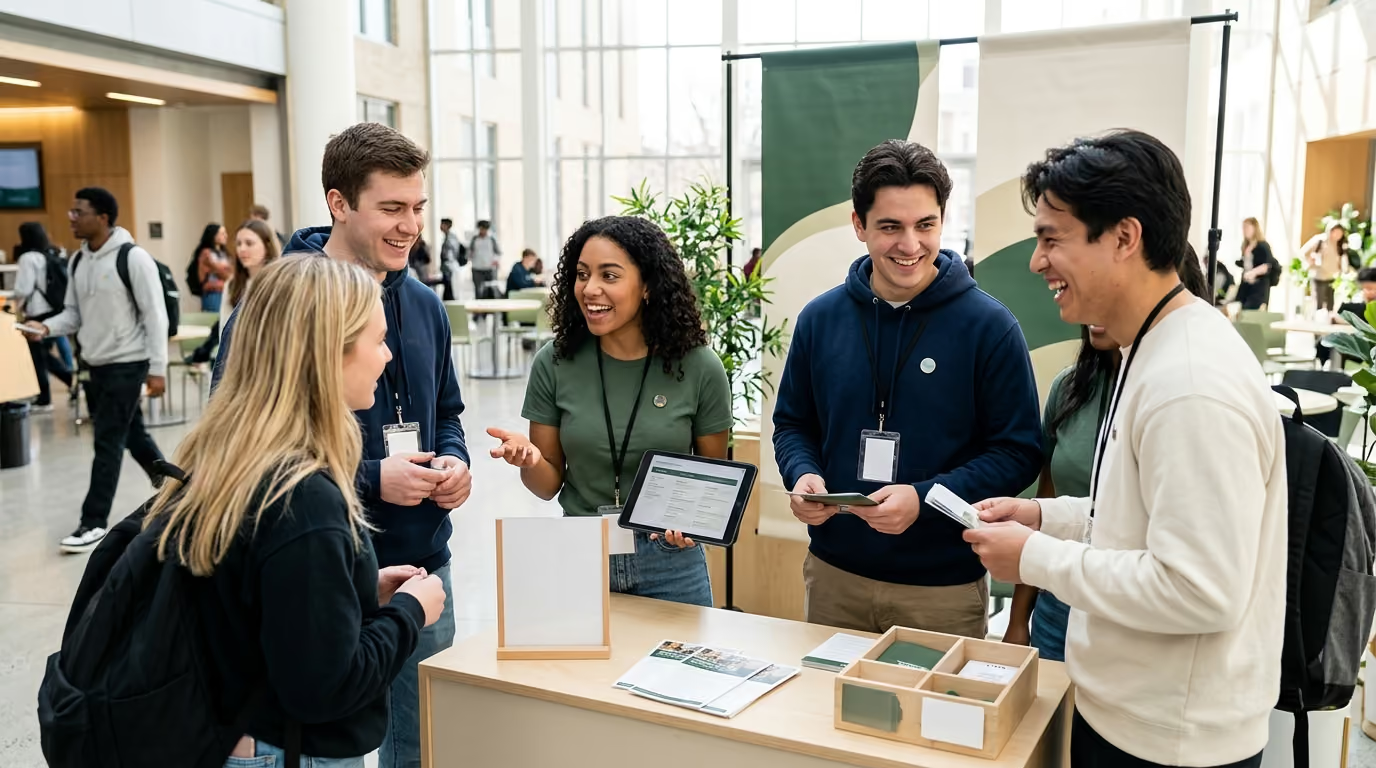
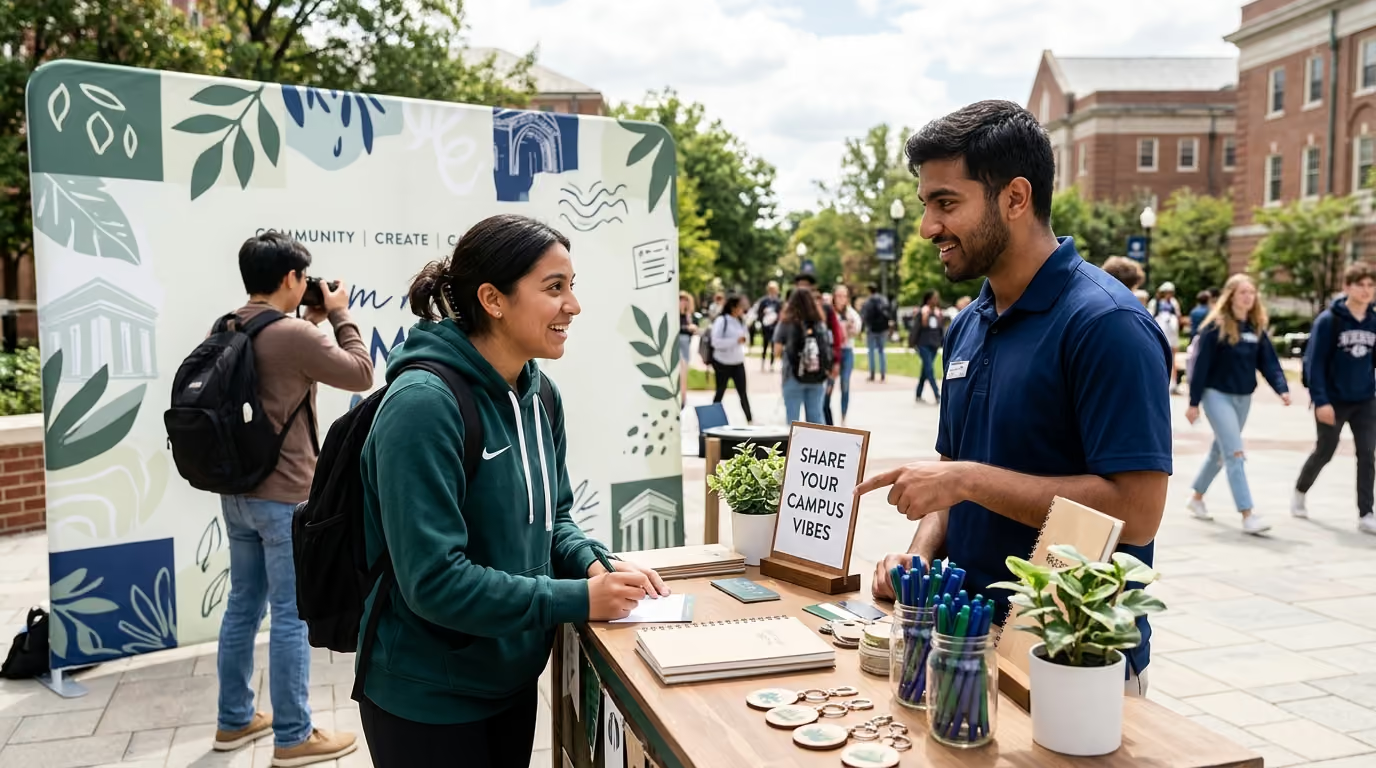
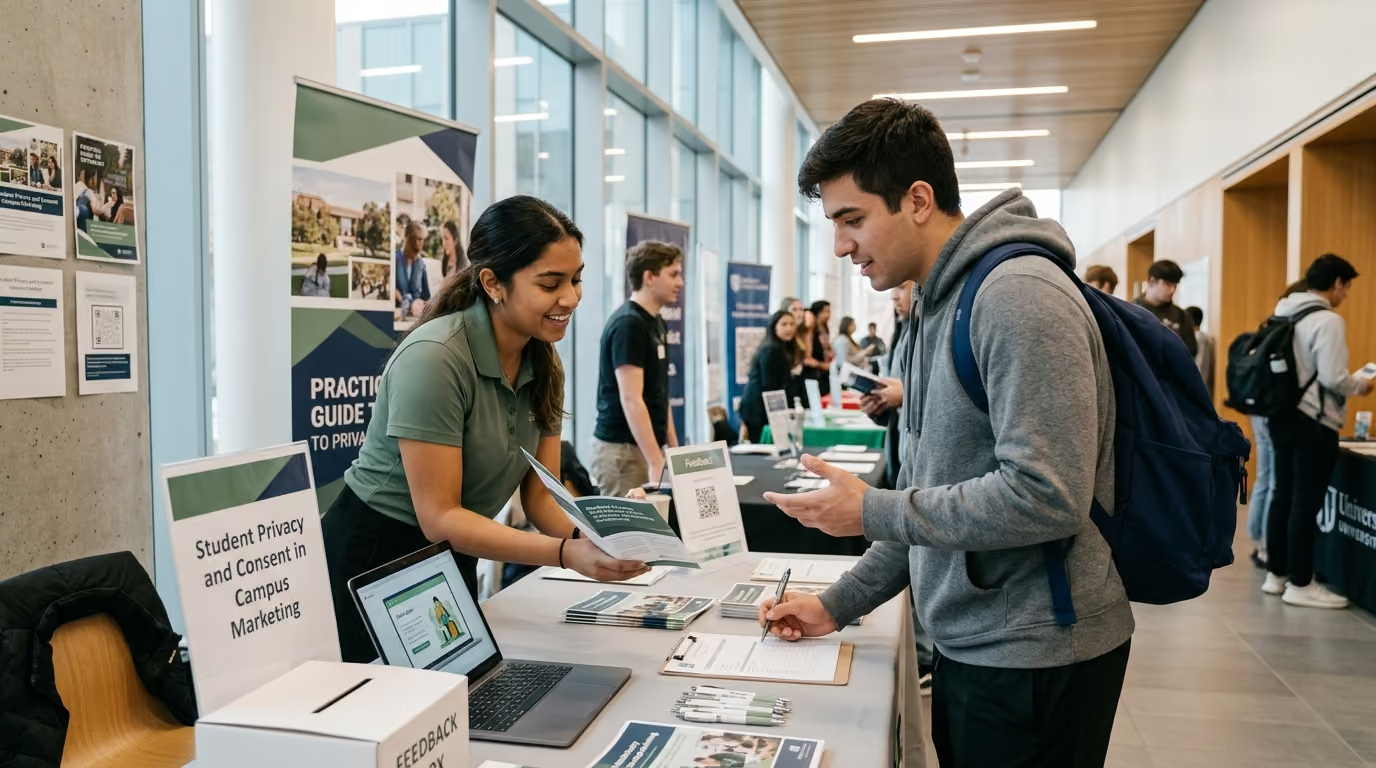
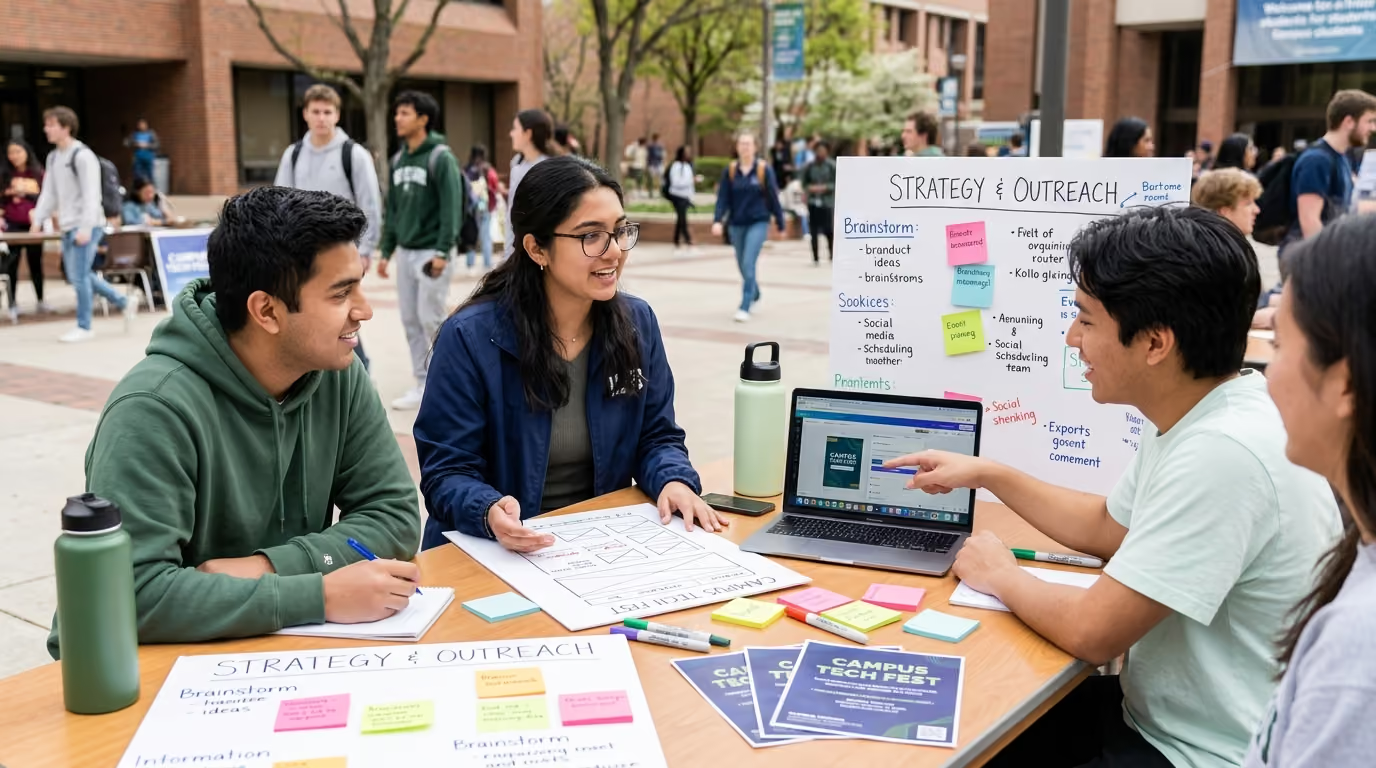
Building an effective student ambassador program requires connecting peer-to-peer campus advocacy with rigorous operational discipline and clear revenue attribution. When structured properly, campus networks generate verified product trials, increase local retail sell-through, and produce sustainable pipeline growth for modern consumer brands.
The Reality of Campus Field Marketing
A pallet of product arrives at a campus mailroom with damaged boxes and zero staging instructions. Two student representatives set up a folding table in the quad, hand out four hundred units in thirty minutes to passersby seeking free merchandise, and collect zero email addresses. By Friday afternoon, the brand team receives blurry selfies, an empty inventory report, and no measurable movement in nearby store velocity.
This scenario plays out across collegiate marketing every semester. Brands invest substantial budgets into college tours and student seeding programs, only to walk away with vanity metrics and disconnected social impressions. Without structured workflows, campus activations quickly turn into chaotic giveaways that fail to generate commercial value.
Field execution on a college campus introduces unique logistical hurdles. Campus security teams enforce strict permitting rules on short notice. Academic midterms disrupt activation schedules. Student representatives frequently prioritize coursework over deliverable deadlines if clear operating boundaries are missing.
We have been connecting brands with people through live experiences, retail programs, and national activations since 1995. Over three decades, our team has built a track record of creating meaningful brand moments across the country. Turning student energy into predictable business performance demands an operational framework that treats student ambassadors as a professional field marketing force.
Strategic Framework for Campus Ambassador Programs
A student brand ambassador program is a distributed operating system. It deploys enrolled collegiate representatives to drive brand education, physical product trial, retail store discovery, and digital conversions within their trusted local networks.
Unlike traditional influencer campaigns that buy transient access to an audience, an ambassador program establishes continuous community presence. Campus representatives integrate products into the daily routines of their peers. They activate in residence halls, dining commons, athletic clubs, and local retail corridors.
To establish commercial clarity, programs must link tactical campus actions directly to core enterprise goals.
Mapping Business Objectives to Campus Roles
Every student action must address a specific marketing challenge. Selecting the primary goal shapes the recruitment criteria, activity requirements, and performance indicators for the entire program.
- Brand Unfamiliarity: If target consumers do not know the brand, deploy peer educators to conduct dorm study break takeovers and social storytelling. Track unaided brand recall and aided awareness gains.
- Low Product Trial: If target consumers know the name but hesitate to buy, focus on high-volume sampling and live demonstrations. Track total units distributed and verified trial completion rates.
- Stagnant Retail Velocity: If product sits on shelves at local grocery or big-box stores, mobilize students for retail visits and geofenced promotions. Track local store sales lift and coupon redemption counts.
- Digital App Adoption: If an application requires active user registration, run live onboarding tables at campus activity centers. Track verified downloads, account completions, and thirty-day active usage.
- Corporate Recruiting: If the enterprise needs entry-level talent, direct ambassadors to host professional workshops and resume clinics. Track qualified applicant submissions and event attendance.
Focusing on one primary objective prevents fragmented field execution. Programs that attempt to solve six distinct commercial problems at once often generate disorganized activity without moving any single core metric.
The Five-Level Campus Measurement Hierarchy
Measuring the commercial return of field marketing requires separating initial budget expenditures from true enterprise value. Tracking programs across five distinct tiers ensures total visibility into program health.
Level 1: Operational Inputs. Track the foundational investments required to launch the campaign. This includes active ambassador counts, target campus locations, allocated product inventory, training hours, and total field budgets.
Level 2: Field Activities. Monitor the volume of tactical work executed across each market. Track social media assets published, physical sampling tables hosted, student organization presentations delivered, and local store shelf audits completed.
Level 3: Direct Outputs. Measure immediate audience engagement generated by field actions. This includes verified reach, live peer conversations, QR code scans, promotional link clicks, event RSVPs, and coupon redemptions.
Level 4: Marketing Outcomes. Evaluate shifts in student consumer perception and short-term behavior. Measure changes in aided brand awareness, verified product trial rates, purchase intent, and foot traffic to local retail partners.
Level 5: Business Impact. Quantify the bottom-line financial contribution of the program. Measure incremental retail unit sell-through, customer acquisition costs, customer lifetime value, and Return on Investment (ROI).
The Collegiate Consumer Funnel
Collegiate peer influence operates along a clear behavioral pipeline. Successful activations systematically move target students from passive observers to active brand advocates.
- Reach: Target students encounter the brand during their normal campus routines.
- Attention: Physical installations, sampling tables, or local social posts pause the student during daily transit.
- Understanding: The ambassador delivers a thirty-second value proposition addressing a student-specific pain point.
- Trial: The student tests the product physically, samples the food or beverage, or installs the digital application.
- Conversion: The student purchases the product at a local retailer, redeems a targeted promo code, or signs up for a recurring service.
- Retention: The student incorporates the brand into ongoing weekly habits and repurchases regularly.
- Advocacy: The consumer shares organic recommendations across peer networks and personal digital feeds.
Designing the Program Architecture
Choosing the correct organizational structure dictates how well a program scales across multiple universities. Brands must balance corporate governance with local campus flexibility.
Management Models
A centralized management model places all recruitment, asset creation, scheduling, compliance tracking, and payroll directly under headquarters. This structure guarantees strict brand safety and consistent data collection. However, it can slow down tactical execution and prevent ambassadors from adapting to hyper-local campus nuances.
A decentralized management model gives student teams broad goals and complete operational freedom. Ambassadors plan events, spend local stipends, and create unvetted promotional materials. While this approach encourages high autonomy, it introduces severe compliance risks, irregular brand messaging, and unreliable performance tracking.
A hybrid management model provides the optimal balance for modern consumer brands. Headquarters sets strict compliance rules, provides core assets, and defines quantitative targets. Local campus leads select physical activation spots, tailor outreach to regional campus culture, and manage peer schedules.
Functional Ambassador Roles
Treating every student representative as a generic marketer dilutes overall effectiveness. Assigning specialized responsibilities creates operational clarity and plays to individual student strengths.
- Campus Program Manager: Manages regional onboarding schedules, audits weekly reporting deliverables, verifies compliance, and conducts milestone reviews.
- Campus Lead: Oversees on-the-ground execution at an assigned university, coordinates weekly team logistics, secures physical spaces, and resolves local blockers.
- Experiential Ambassador: Focuses exclusively on physical execution, including tabling setups, high-traffic sampling, classroom drops, and event logistics.
- Content Creator Ambassador: Produces short-form vertical video, campus lifestyle photography, and localized social assets that follow regulatory disclosure standards.
- Community Outreach Lead: Builds co-marketing partnerships with Greek life organizations, academic departments, intramural clubs, and student government bodies.
- Retail Merchandising Specialist: Conducts weekly store inventory audits at off-campus retail partners, checks shelf placement, and distributes local retail promotions.
- Consumer Insights Lead: Collects structured survey feedback, documents product objections, and conducts focus groups to provide qualitative field intelligence.
Structuring an operationally disciplined campus ambassador program requires defining these functional scopes before opening public recruitment.
Campus Selection and Prioritization Strategy
Selecting target universities requires quantitative analysis rather than relying on brand familiarity or athletic conference popularity. According to postsecondary enrollment reporting from the National Student Clearinghouse Research Center, over 19 million students attend postsecondary institutions nationwide. Navigating this vast landscape requires data-driven prioritization.
Campus Evaluation Criteria
Treating universities as uniform marketing environments creates expensive operational missteps. Program leaders must evaluate candidate campuses across critical structural variables:
- Student Body Density: Differentiate between heavily concentrated residential campuses and distributed commuter campuses. Residential campuses offer continuous foot traffic, while commuter schools require localized transit hub activations.
- Administrative Regulations: Review institutional policies governing outside commercial solicitation, tabling permits, flyer distribution, and corporate sponsorships.
- Retail Footprint Density: Evaluate the physical proximity of regional grocery, convenience, and big-box retail partners to campus housing centers.
- Greek and Student Organization Scale: Measure the active membership density across Greek life, club sports, and professional student associations.
- Academic Calendar Nuances: Account for quarter systems versus semester calendars, extended mid-term periods, and regional spring break schedules.
Prioritization Scoring Model
To allocate field capital efficiently, brands should score potential target campuses using a weighted index.
Assign each candidate campus a score from one to five across five strategic dimensions:
- Target Audience Fit (30% Weight): Alignment of local student demographic profiles with the core consumer persona.
- Commercial Opportunity (25% Weight): Physical density of target retail partners and existing brand distribution nearby.
- Activation Feasibility (20% Weight): Simplicity of local tabling permits, physical campus access, and administrative openness to commercial engagement.
- Community Potential (15% Weight): Active density of student organizations, athletic spirit, and Greek life communities.
- Measurement Infrastructure (10% Weight): Ability to track localized retail sales lift, geofenced digital traffic, and point-of-sale redemptions.
Tiered Campus Deployment Models
Deploying a multi-campus campaign functions best when structured in operational tiers. This prevents overextending field management resources across unproven markets.
Hero Campuses represent the highest tier of investment. These high-priority universities receive dedicated physical event footprints, significant sampling inventory, dedicated retail support, and comprehensive content production teams.
Growth Campuses operate with moderate resource allocations. These campuses focus on weekly peer sampling distributions, digital content syndication, and student group partnerships without large-scale physical stage footprints.
Pilot Campuses function as test environments. Small ambassador pods of two to three representatives test specific promotional hooks, messaging angles, and conversion mechanisms before the brand commits large field budgets.
Using a hub-and-spoke strategy allows brands to anchor regional marketing around Hero locations while extending lighter ambassador footprints across adjacent colleges.
Recruitment and Selection Systems
An ambassador network is only as dependable as its selection process. Relying purely on public application forms often attracts students looking for free products rather than reliable field execution.
A 2025 student market intelligence report from REACH College Index revealed that 69% of college students place the highest trust in mid-tier and local micro-influencers. In contrast, celebrity endorsements ranked last, with only 29% of students expressing trust. This finding reinforces the necessity of recruiting trusted, embedded campus connectors rather than chasing vanity follower counts.
Sourcing Candidate Pools
To build a resilient campus team, source candidates across diverse university networks:
- Academic Leadership Societies: Students in marketing, communications, finance, and entrepreneurship clubs often display high accountability and strong project management skills.
- Campus Recreation and Athletics: Club sport captains and fitness instructors possess natural social authority and deep community reach.
- Residence Life Staff: Resident advisors understand dorm logistics, move-in schedules, and community guidelines better than external agency reps.
- Student Media Organizations: Campus radio staff, student newspaper writers, and local content creators understand localized visual storytelling.
Structured Candidate Evaluation
Screen candidates using a rigorous multi-stage funnel to verify operational reliability before extending contracts.
Begin with a concise online application that requires candidates to submit a sixty-second unlisted video. Ask them to pitch a favorite everyday product to a fellow student. Review the video for clarity, natural charisma, and concise communication.
Conduct a fifteen-minute scenario interview. Evaluate how the candidate handles real-world friction using structured prompts:
- "How would you pivot if campus security instructed you to dismantle your sampling table ten minutes into an event?"
- "Describe how you would approach a Greek life president to secure a five-minute announcement slot at their weekly chapter meeting."
- "If a peer publicly claims our product is overpriced during an activation, how do you respond without creating an argument?"
- "How do you plan to balance weekly deliverable deadlines during final exam weeks?"
Score each candidate systematically across core operational competencies:
- Reliability and Punctuality: 25%
- Verbal and Interpersonal Communication: 20%
- Community Network Access: 20%
- Content Creation Proficiency: 15%
- Critical Thinking and Problem Solving: 10%
- Brand and Category Alignment: 10%
Reject candidates who show high social follower counts but fail to demonstrate personal organization, punctual communication, or follow-through.
Training, Enablement, and Regulatory Compliance
Untrained student ambassadors expose brands to significant legal liability, campus disciplinary friction, and reputational damage. Robust enablement systems establish non-negotiable operational and legal guardrails.
Regulatory Compliance and FTC Mandates
Federal regulations apply directly to collegiate marketing initiatives. The Federal Trade Commission (FTC) explicitly states that material connections between endorsers and brands must be clearly disclosed. A material connection includes financial compensation, free product shipments, exclusive access, or discounted merchandise.
Disclosures must be prominent, immediate, and unavoidable. Ambassadors cannot bury disclosures inside collapsed captions, conceal them beneath "see more" links, or obscure them within long hashtag lists.
Approved disclosure formats include clear statements placed at the beginning of posts or spoken directly in video content:
- "#Ad" placed visibly in the initial post caption lines.
- "Paid partnership with [Brand]" displayed prominently.
- "Sponsored by [Brand]" stated clearly within the first three seconds of a video.
- "Product gifted by [Brand]" clearly overlaid on unboxing content.
Ambassadors must also understand that they cannot make unverified health, functional, or performance claims. For consumer packaged goods and beverage programs, establish strict lists of approved benefits and strictly prohibited claims. For a detailed breakdown of regulatory risk management, review our guide on compliance-first ambassador training.
Institutional Policies and Commercial Permissions
Campus commercial solicitation rules vary widely across public and private universities. A national program must review local guidelines for every individual market.
Institutional policies demonstrate the diversity of campus regulations:
- Mississippi State University enforces detailed operational policies regarding commercial solicitation, requiring formal administrative authorization before external entities can distribute promotional items or erect signage.
- Missouri University of Science and Technology maintains explicit guidelines stating that student organizations cannot be utilized purely as commercial marketing fronts for outside enterprises.
- The University of Miami strictly regulates the distribution of commercial flyers, leaflets, and promotional materials across its campus grounds without prior administrative permits.
Build a central compliance matrix that tracks venue booking rules, tabling fees, food handling certificates, insurance requirements, and flyer posting permissions for every target university.
The Three-Phase Enablement System
Equip student representatives through a structured, multi-format educational program.
Phase 1: Live Interactive Onboarding. Conduct a mandatory digital workshop covering brand history, core consumer personas, non-negotiable compliance rules, and tactical scenario handling.
Phase 2: The Operational Field Playbook. Provide a standardized digital resource containing product one-sheets, approved copy snippets, emergency escalation contacts, event checklist templates, and reporting schedules.
Phase 3: Ongoing Tactical Coaching. Host weekly office hours and provide continuous creative feedback on content submissions to refine student execution throughout the semester.
Ambassador Workload and the Academic Rhythm
Expecting students to maintain consistent marketing activity during major academic deadlines leads to abandoned campaigns and unfulfilled scopes. Successful program designs align weekly deliverable workflows with the collegiate calendar.
Setting Defined Monthly Scopes
Ambassadors perform best when requirements are explicit and bounded. A balanced monthly commitment of eight to ten total hours should include:
- Physical Activations: One major campus tabling activation or residence hall sampling session per month.
- Digital Content: Two approved short-form video assets or photo sets featuring clear regulatory disclosures.
- Community Partnerships: One co-hosted activation or product drop with an approved campus organization.
- Field Feedback Reporting: One completed market intelligence report capturing student sentiment, retail observations, and product objections.
- Operational Admin: Attendance at bi-weekly team alignment calls and weekly reporting submissions.
Navigating the Academic Calendar
Field marketing efficiency fluctuates according to academic seasons. Program leadership must design activation waves around high-receptivity windows.
- Welcome Week and Fall Move-In: Highest receptivity for product discovery, lifestyle integration, and high-volume trial.
- Mid-Semester Exam Periods: Shift physical footprints toward high-stress relief activations, library study drops, and functional energy support.
- Homecoming and Athletic Tailgates: High-energy group sampling moments ideal for social content generation and beverage activations.
- Spring Break Lead-Up: Prime window for travel-oriented promotions, apparel styling campaigns, and outdoor recreational activations.
- Final Exams and Move-Out: Lowest responsiveness for complex engagement; limit activity to grab-and-go convenience drops and care packages.
Never schedule major activation quotas during midterm or final examination weeks. Student burnout during these windows directly causes dropped communications and compromised work quality.
Live Execution Playbook
Executing memorable live experiences on campus requires systematic operational steps. Field teams must transform simple distribution moments into structured consumer acquisition funnels.
High-Volume Peer Sampling Protocol
Handing a sample to a student without conversation generates minimal commercial return. Train ambassadors to execute structured trial interactions.
- Step 1: The Contextual Hook. Stop passing students with a friendly, relevant question tailored to the environment: "Need a functional caffeine boost before your next lecture?"
- Step 2: The Value Proposition. Deliver a concise fifteen-second explanation highlighting one core functional differentiator.
- Step 3: The Trial Hand-Off. Hand the chilled or open sample directly to the student for immediate consumption.
- Step 4: The Digital Bridge. Direct the student to scan a physical QR code printed on the sampling booth or product collateral to unlock a regional retail coupon.
- Step 5: Logging the Interaction. Record the distributed unit count, general student reaction, and notable verbal feedback in the daily field log.
For brands connecting sampling to retail velocity, review our framework for linking student ambassadors to retail demos.
Student Organization Co-Marketing
Partnering with established campus clubs provides immediate access to tight-knit communities.
- Identify Aligned Groups: Map clubs whose core interests match the product category, such as intramural athletic clubs for sports nutrition or design societies for creative software.
- Offer Genuine Value: Provide value to the organization rather than asking for free promotional space. Fund meeting refreshments, provide professional development workshops, or co-sponsor philanthropic events.
- Secure Administrative Buy-In: Ensure the student organization secures legitimate room reservation approvals that permit corporate product distribution under university policy.
- Execute Structured Drops: Deliver product cases alongside branded educational materials, gathering immediate group survey feedback at the end of the meeting.
Driving Retail Sell-Through
Campus ambassadors can serve as an agile field force supporting local grocery, drug, and convenience retail accounts.
- Local Retail Mapping: Identify every retail partner within a two-mile radius of student housing clusters.
- Shelf Audits and Out-of-Stock Reporting: Train ambassadors to conduct weekly visual checks of retail shelves, photographing product displays, stock levels, and promotional tag compliance.
- Retailer-Specific Promos: Distribute digital coupons and trackable rebate codes redeemable specifically at regional retail partners to stimulate immediate local store turns.
- Geo-Targeted Content: Have ambassadors create "where to buy" social content directing peers to exact campus-adjacent store aisles.
Brands seeking deeper retail impact should examine how CPG brands expand student ambassador programs to accelerate grocery velocity.
Incentive Models and Legal Worker Classification
Compensating student representatives fairly while incentivizing high performance requires carefully balanced reward systems and strict legal compliance.
Structuring Compensation Packages
Choose a compensation model that reflects the complexity and time commitment of the required field deliverables.
- Flat Monthly Stipend: Provides students with predictable income in exchange for a set monthly scope. Best for sustaining ongoing engagement and deep operational alignment across full semesters.
- Per-Deliverable Payments: Links payments directly to verified task completions, such as completed sampling activations or approved video submissions. Best for episodic or project-based activations.
- Performance Milestone Bonuses: Offers additional financial incentives for hitting verified commercial benchmarks, such as driving high coupon redemption volumes or recruiting new student organization partners.
- Professional Development Equity: Supplements financial pay with executive mentorship, certified marketing training credentials, and professional reference letters.
Never rely solely on free product as compensation for structured, ongoing commercial work. Programs built exclusively on product gifting suffer from high mid-semester attrition and low reporting accountability.
Worker Classification and Legal Safeguards
Classifying campus ambassadors requires thorough review with qualified legal counsel. Labor standards and independent contractor tests vary significantly across state jurisdictions.
Legal precedents emphasize that worker classification depends heavily on behavioral control, financial terms, and the essential nature of the business relationship. As noted in employment law analyses from Polsinelli, evaluating independent contractor status involves examining whether the worker is customarily engaged in an independently established trade or business of the same nature as the work performed.
Key compliance considerations for program administrators include:
- Contractual Clarity: Draft explicit independent contractor or temporary employment agreements detailing payment schedules, intellectual property ownership, and grounds for termination.
- Supervisory Boundaries: Avoid dictating precise hourly schedules or micromanaging minute physical actions if contracting independent student creators.
- Safety Protocols and Insurance: Establish clear risk management protocols for physical events, including liability insurance coverage and emergency reporting chains.
Measurement, Attribution, and Performance Dashboards
Tracking collegiate marketing performance requires combining digital attribution mechanisms with physical retail auditing. Relying on self-reported ambassador metrics inevitably inflates performance figures.
Core Tracking Mechanisms
Deploy multiple attribution layers to trace commercial activity back to specific campus teams.
- Localized Promotional Codes: Assign each campus pod a unique checkout code to track direct digital sales and e-commerce conversions.
- Geofenced Dynamic QR Codes: Place unique QR codes on physical sampling collateral, pop-up signage, and print materials to monitor scan-to-action conversion rates by campus.
- Digital Rebate Clearances: Deploy mobile rebate systems where students upload store receipts showing proof of local retail purchases to receive instant cashback rewards.
- Pre- and Post-Campaign Brand Lift Surveys: Run structured awareness and perception surveys across target campus cohorts before launch and immediately following campaign completion.
Leading Versus Lagging Indicators
Maintain operational control by monitoring short-term leading signals alongside long-term business returns.
Leading indicators highlight field execution health in real time:
- Weekly deliverable completion rates across ambassador cohorts.
- Physical sampling volume distributed per activation hour.
- Student organization partnership approvals secured.
- QR code scan volumes and digital landing page visits.
Lagging indicators prove commercial return to enterprise leadership:
- Sustained retail unit sales lift in campus-adjacent zip codes.
- Customer acquisition cost compared to standard digital paid media channels.
- App retention rates at thirty, sixty, and ninety days post-onboarding.
- Attributed incremental revenue generated through program coupon channels.
Weekly Reporting Workflows
Establish a non-negotiable reporting rhythm to maintain accountability across hundreds of distributed students.
- Monday: Distribute the weekly activation brief and campaign priorities.
- Tuesday through Thursday: Execute live campus tabling, sampling, and content creation.
- Friday Afternoon: Ambassadors submit high-resolution photo proof, verified interaction logs, digital content links, and survey receipts through a centralized portal.
- Monday Morning Review: Program managers audit field submissions, flag incomplete deliverables, and release weekly milestone approvals.
For advanced analytics design, explore our framework for building a measurable student ambassador program.
Real-World Case Patterns and Blueprint
Examining reported results from published campus campaigns illustrates how different consumer sectors combine physical activations with student networks.
Sector Activation Patterns
Different product categories demand tailored field architectures:
- The High-Touch Beauty and Wellness Pattern: In 2025, personal care brand OUAI deployed fifteen student ambassadors across college markets. The team executed 45 targeted activations and collaborated with over 70 student organizations. The program distributed 9,610 samples, created 4,770 direct peer interactions, and generated 730 post-trial survey responses. Follow-up survey data revealed that 61% of participants planned to continue purchasing, while 79% expressed high intent to recommend the product.
- The Retail Sell-Through Pattern: Haircare brand Not Your Mother's executed a multi-campus campaign distributing over 8,500 samples across five universities. The activation generated 530 pieces of student-created social content and 7,400 direct student interactions. Survey measurements documented a 12% increase in brand awareness, an 11% lift in product trial, and a 10% increase in purchase intent.
- The Large-Scale Commercial Attribution Pattern: Retailer Express mobilized student ambassadors across national universities to generate 53,000 localized social content assets, resulting in 103.2 million impressions. The program directly attributed $2.2 million in sales to trackable ambassador coupon codes. While promo code redemptions represent attributed rather than purely incremental revenue, the campaign demonstrates the power of tying peer advocacy to trackable commercial mechanisms.
- The Digital Application Scale Pattern: Software provider Adobe Express combined major physical activations across six primary universities with ambassador amplification across 30 campuses. The initiative engaged 5,345 students directly, achieving a reported 47% trial conversion rate across eight major events.
- The Skincare Footprint Pattern: Skincare brand La Roche-Posay combined sampling and localized digital advocacy, distributing over 17,500 product units and generating 1.9 million user-generated impressions. The campaign drove over $85,000 in directly attributed product sales while achieving an 18% social engagement rate across collegiate audiences.
These program results demonstrate that linking physical trial with verified tracking creates measurable commercial value across consumer categories.
The Seven-Phase Program Blueprint
To deploy a professional student brand ambassador program from scratch, follow a structured seven-phase timeline:
- Phase 1: Commercial Scoping
- Define core business objective - Establish target budget - Select priority geographic markets - Establish attribution mechanics
- Phase 2: Operational Design
- Build compliance matrix - Define role architectures - Create compensation packages - Produce field playbooks
- Phase 3: Targeted Recruitment
- Source candidate pools - Review application videos - Conduct scenario interviews - Execute formal contracts
- Phase 4: Enablement & Onboarding
- Host live training - Distribute starter kits - Run compliance role-playing - Verify reporting tool access
- Phase 5: Pilot Activation
- Launch in 3-5 target markets - Test activation workflows - Gather baseline survey data - Identify operational bottlenecks
- Phase 6: National Rollout
- Expand to Hero and Growth campuses - Deploy retail audits - Scale community partnerships - Automate weekly dashboards
- Phase 7: Optimization & Retention
- Reward top performers - Reallocate low-performing budgets - Retain proven leads - Document learnings
When to Revisit This Resource
Review this guide whenever your brand prepares to enter new regional retail distribution, plans a national campus tour, launches a Gen Z product line, or reorganizes an underperforming collegiate field marketing team. Maintaining operational rigor, enforcing regulatory compliance, and demanding verified commercial measurement ensures your campus ambassador program delivers predictable revenue rather than empty marketing noise.
#
Sources
- Federal Trade Commission: Disclosures 101 for Social Media Influencers
- Federal Trade Commission: Endorsement Guides
- University of Miami: Campus Marketing and Solicitation Policies
- Polsinelli: Legal Analysis on Brand Ambassador Worker Classification