Robbie Thain
Founder, CEO

Five strategic launch stages and core exhibition models help brands turn trade show product debuts into measurable pipeline and verified sales revenue.
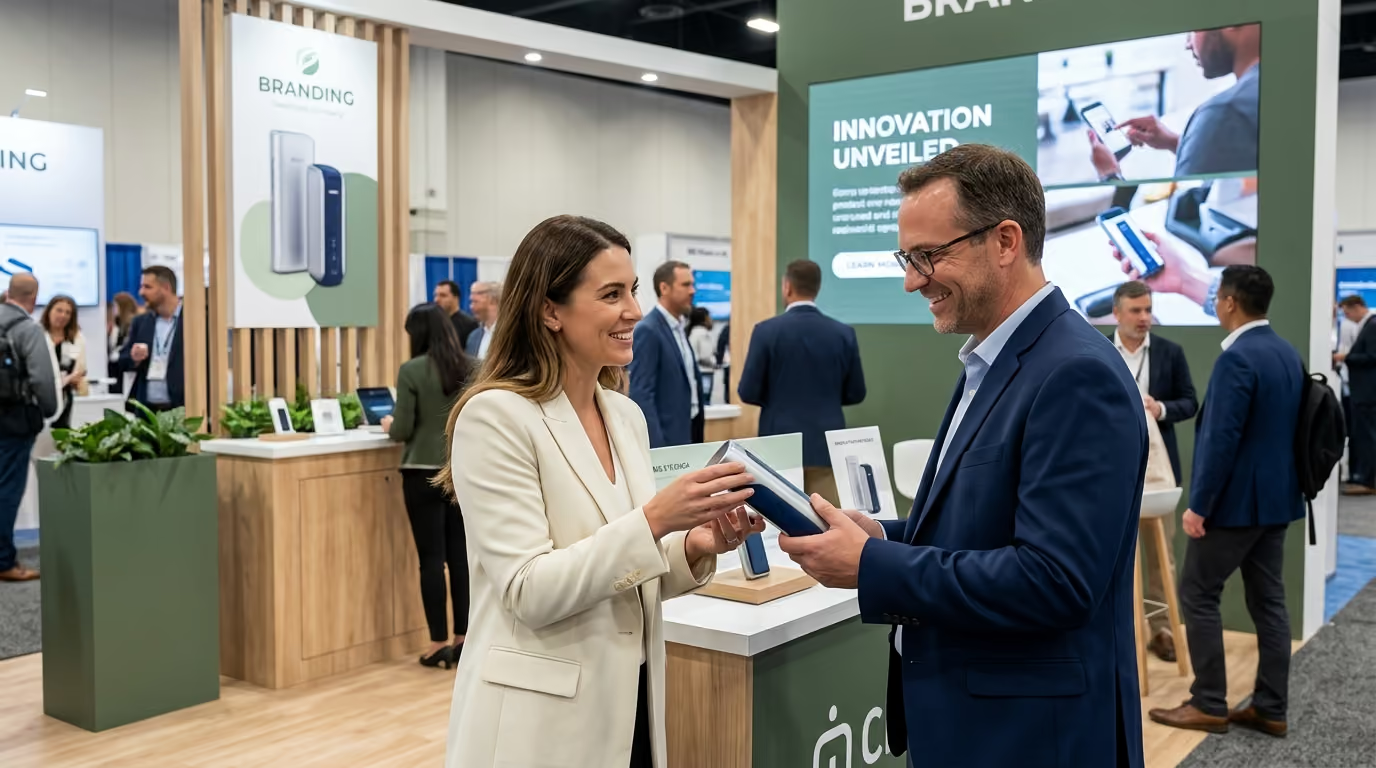
Trade shows offer a rare concentration of qualified buyers and industry press who gather specifically to discover new market innovations. When executed with operational discipline, an expo launch transforms live product trials into immediate commercial pipeline and long-term retail velocity.
Every marketing leader recognizes the sensory chaos of a major trade show floor. Aisles swell with distracted attendees glancing at hundreds of competing exhibits. Music blares from neighboring stages while overhead lighting washes out digital displays. In the middle of this environment, your team stands ready to unveil a new product line. You have invested substantial capital in booth space, custom fabrication, travel logistics, and inventory.
Yet without a clear conversion system, the event quickly degrades into passive brand theater. Visitors grab free samples, drop business cards into glass bowls, and walk away without understanding what makes the product different. Staff members deliver disjointed elevator pitches to anyone who pauses near the aisle. By the final afternoon, the team holds thousands of unqualified badge scans but lacks clear sales pipeline. Converting fleeting floor interest into verified revenue requires treating the trade show as a structured conversion engine rather than a passive display stage.
Many product debuts collapse because teams treat the exhibition as a standalone announcement rather than a conversion midpoint. Launching a product requires staging, proof, qualification, and immediate follow-through. When brands skip these operational steps, attention evaporates as soon as the hall lights turn off.
Staff members often overwhelm visitors with long lists of technical specifications. Attendees walking the floor do not have the cognitive bandwidth to absorb twenty features at once. They want to understand the exact business problem the product eliminates. When presentations focus entirely on product mechanics rather than customer outcomes, potential buyers walk away confused.
Distributing thousands of free samples creates the illusion of a successful activation. If those samples do not connect directly to a qualification mechanism or digital data capture, the product becomes an unrecoverable operational expense. Sampling must act as the entry point for a structured business dialogue. Handing out product without qualification merely subsidizes attendee snacking.
The most severe point of failure occurs after the hall closes. Marketing teams frequently wait days or weeks to process lead badges and distribute contacts to sales representatives. During this delay, prospect excitement fades and competitors step into the vacuum. Establishing rapid data routing protocols before arriving on site protects the commercial value of every booth interaction.
Selecting the appropriate launch model dictates booth architecture, staffing ratios, and presentation pacing. A brand must decide whether the event serves as a broad market debut or a targeted commercial preview.
A hard launch reveals a finished product that is immediately available for purchase or wholesale ordering. This model requires finished packaging, validated inventory pipelines, and complete pricing tiers. The booth functions as a high-volume order-writing and contract-generation environment. It suits established brands with reliable supply chains ready for immediate retail fulfillment.
A controlled preview restricts product access to preselected partners, priority retailers, and key media outlets. The general public might see brand messaging, but the actual innovation remains inside private meeting suites. This approach protects sensitive intellectual property while building immense anticipation. It gives leadership direct feedback from key retail buyers before finalizing production runs.
A demo-led launch proves performance through live, continuous operational testing. This format suits functional food products, consumer hardware, or technical equipment where seeing is believing. The booth layout prioritizes functional demonstration stations over static graphic displays. Attendees witness direct comparisons between legacy solutions and the new product.
A successful trade show debut extends far beyond the exhibition dates. Structuring your activation across five clear chronological stages ensures sustained buyer engagement.
The seed phase builds targeted curiosity weeks before the exhibition opens. Marketing teams deploy teaser imagery, problem-centric video clips, and direct outreach to high-value retail accounts. The goal is booking VIP booth appointments well before setting foot on the convention floor. Securing locked calendar slots with priority buyers ensures your return on investment does not rely on random foot traffic.
The preview phase occurs behind closed doors during the initial hours of the event. Industry analysts, key trade media, and anchor retail accounts receive early briefings under embargo. Our team often coordinates private tasting suites or controlled product trials to capture initial buyer reactions. These controlled sessions validate messaging hierarchies and surface lingering technical objections before the general hall opens.
The reveal is the coordinated public disclosure of the product to the broader industry. It requires clear staging, precise timing, and unified multi-channel amplification. The on-site presentation should align with digital announcements, email broadcasts, and paid distribution. The visual presentation must communicate the category definition and primary consumer benefit within seconds.
Immediately following the reveal, the booth pivots from stage theatrics to operational proof. Staff members transition visitors into interactive tasting stations, hands-on trials, or structured technical demonstrations. This phase validates the marketing claims made during the reveal through physical interaction. Visitors observe tangible evidence that justifies switching from their current supplier.
The final phase converts live floor engagement into commercial momentum across retail channels. High-intent retail buyers receive automated follow-up sequences containing wholesale sheets and broker contact information. Field marketing teams use early event momentum to support downstream regional promotions. In our experience managing complex brand expansions, bridging trade show momentum into retail roadshows transforms initial buyer interest into verified sell-through velocity across national retail accounts.
Every physical zone and conversational script within your booth must answer three fundamental buyer questions. Organizing your launch around this framework prevents message dilution.
The reveal layer captures physical attention from the aisle and establishes category context. Large overhead graphics, clean lighting, and concise headlines communicate who the product serves. Within three seconds of viewing the space, an attendee must understand what problem the product solves. Avoid cluttered corporate mission statements that force the visitor to guess your business model.
Once an attendee steps across the booth threshold, the proof layer provides objective credibility. For food and beverage products, this layer centers on high-volume sampling stations with trained brand ambassadors. For consumer hardware, it incorporates live stress tests or head-to-head performance benchmarks against category leaders. Highlighting third-party certifications and customer case studies reinforces product reliability.
The path layer dictates the exact commercial action the visitor must take before exiting. Depending on buyer qualification, this step might involve scheduling a formal line review or requesting a wholesale sample kit. Clear signage and dedicated tablet stations streamline digital data entry. Leaving the next step open-ended guarantees lost pipeline.
Live trial is the single most persuasive tool available during an exhibition. Turning passing foot traffic into committed buyers requires disciplined operational pacing.
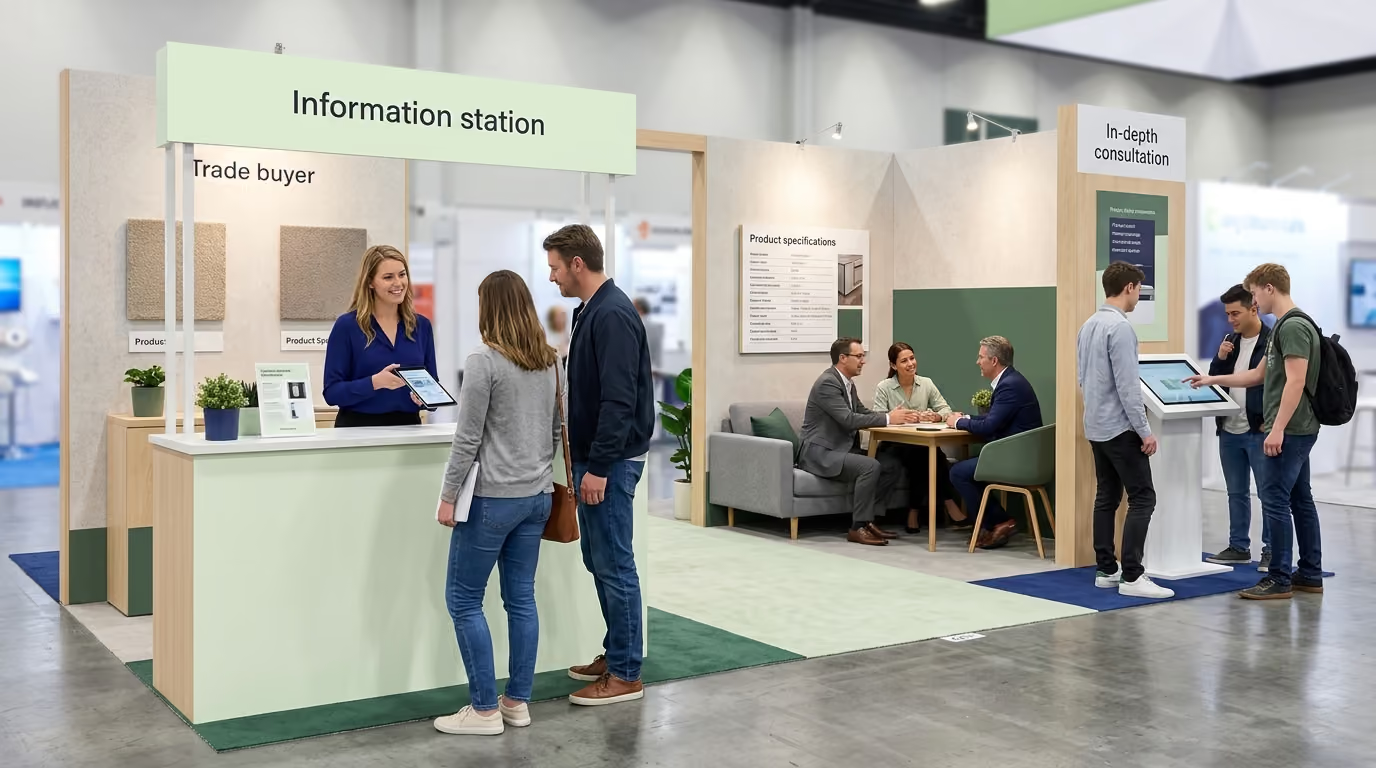
A modern launch booth must accommodate visitors with differing schedules and levels of interest. Structuring your presentations into three distinct tiers optimizes staff bandwidth.
Consumer goods require sensory validation before retail buyers commit shelf space. When managing high-volume trials, teams must apply rigorous product sampling protocols to preserve product consistency. Handing an attendee a cold beverage or fresh snack must lead directly to a structured feedback prompt. Brand ambassadors should immediately ask how the profile compares to existing market options.
High-volume food preparation or technical hardware testing demands rigorous floor management. Maintain strict sanitation schedules, temperature monitoring logs, and allergen disclosures at all food stations. Keep backup hardware, extra cables, and offline demonstration media ready for instant deployment. A single technical failure or warm beverage sample permanently damages buyer confidence during a launch window.
A trade show booth is a physical conversion funnel. Dividing the floor plan into dedicated zones ensures that casual browsers never disrupt high-value retail negotiations.
Effective layout management directs visitor progression from high-energy public spaces to private meeting rooms. Reviewing strategic insights on designing trade show booths for buyer engagement helps optimize these physical transitions.
Bottlenecks occur when sampling lines spill into the main walkway or block private meeting entrances. Position high-throughput demonstration counters along the interior perimeter to draw crowds inside the booth footprint. Ensure adequate storage space behind graphic walls for continuous product restocking. Cluttered boxes and empty display cases instantly signal operational immaturity to retail buyers.
Your physical booth assets are only as effective as the field personnel managing the interactions. Staff members must act as disciplined brand operators rather than passive attendants.
Avoid expecting every team member to perform every task. Divide your booth staff into dedicated operational roles based on their individual strengths.
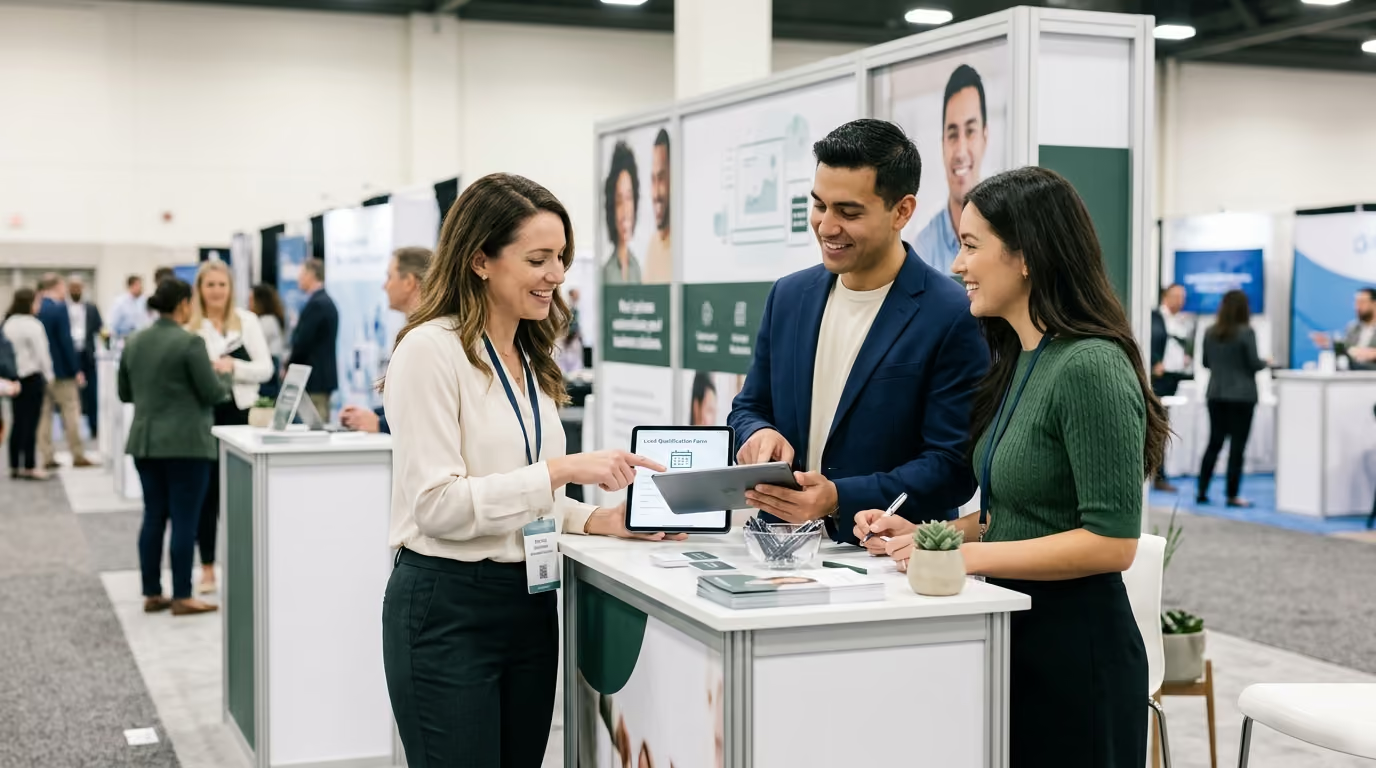
Staff members should quickly identify whether a visitor possesses genuine purchasing authority. Training staff on structured questioning prevents hours wasted on non-buying curiosity seekers.
Trade shows provide an exceptional environment for gathering unvarnished market feedback. Hundreds of buyers compare your product directly against established competitors in real time.
Establish structured data entry fields inside your lead retrieval tools to track qualitative insights. Capturing standardized metrics reveals critical product adjustments needed before full-scale commercialization.
Polite praise on the expo floor often masks commercial hesitation. Marketing operators must separate general compliments from verified purchase intent. A buyer saying "this looks delicious" is polite conversation. A buyer stating "send our procurement team a five-case sample pack for line review next Tuesday" represents commercial interest. Always tie qualification metrics to specific requested next actions rather than verbal praise.
Lead generation investments decay rapidly once the exhibition hall closes. Capturing long-term value requires executing a rapid, multi-stage communication sequence.
Academic research on sales response times indicates that reaching out to prospects within hours dramatically increases conversion rates. Waiting several days allows competitors to capture the buyer's focus. Deploying interactive lead capture workflows ensures contact details flow instantly into your CRM platform for immediate routing.
Avoid sending a generic broadcast email to every badge scanned at the booth. Group contacts by tier and reference the exact conversation topic or product sample tested during the event.
Measuring the performance of a product launch requires evaluating both immediate operational activity and downstream financial yield. Always spell out Return on Investment on first use to establish standard reporting rigor.
Lead metrics track immediate on-site engagement and floor throughput. Monitoring these figures daily allows managers to adjust staffing levels or demonstration pacing mid-show.
Lag metrics quantify downstream commercial pipeline and revenue generation over 90- to 180-day windows. Consulting industry research on exhibitor performance metrics confirms that top-performing brands evaluate events on pipeline creation rather than raw badge volume.
A growing functional beverage brand prepared to launch an innovative ready-to-drink product line at a national trade exhibition. Rather than relying on standard booth banners and passive product giveaways, the leadership team implemented a structured launch system. They constructed a multi-zone footprint featuring an outward-facing high-volume tasting bar and an enclosed private meeting suite.
Trained brand ambassadors engaged passing attendees with short flavor profile questions. When an attendee identified themselves as a category buyer, staff members transitioned them to the tasting counter. Within the first two minutes of trial, staff captured structured feedback regarding sweetness, packaging clarity, and pricing expectations. High-value retail accounts were immediately escorted into the private suite for formal margin reviews with company executives.
The brand captured over 600 verified retail leads across three days, with 85 percent qualifying as active category buyers. Automated CRM workflows routed meeting notes and digital wholesale sheets to regional sales managers every evening. Within 90 days of the exhibition, the brand secured new distribution authorizations across four major regional supermarket banners, driving a measurable Return on Investment that exceeded initial annual projections.
Review this strategic playbook whenever your organization plans a major product launch, undergoes retail channel expansion, or evaluates its annual exhibition calendar. Applying these operational frameworks ensures your live brand moments consistently turn into measurable commercial pipeline.

30 Years Experiential & Retail Activation Partner for CPG & Beverage Brands | Multi-Market Demos, Roadshows & Costco/Club Programs That Actually Sell