Robbie Thain
Founder, CEO

Student brand ambassador retention improves when companies offer clear career advancement, structured mentorship, and transparent rewards instead of relying solely on free merchandise.
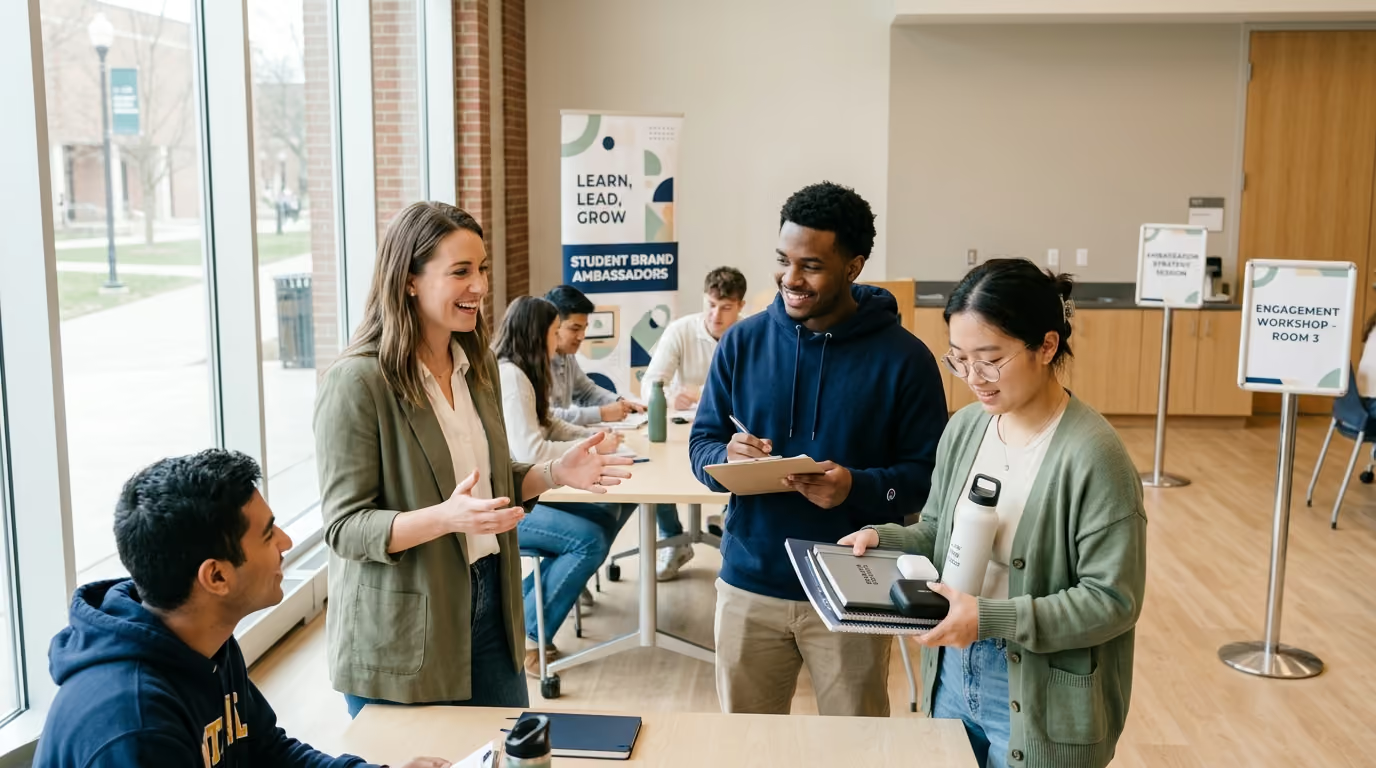
Retaining student brand ambassadors requires treating campus programs as structured leadership pipelines rather than transactional distribution channels. When brands combine transparent compensation with continuous feedback, peer visibility, clear advancement, and career development, ambassador retention transitions from an ongoing operational headache into a predictable driver of brand growth.
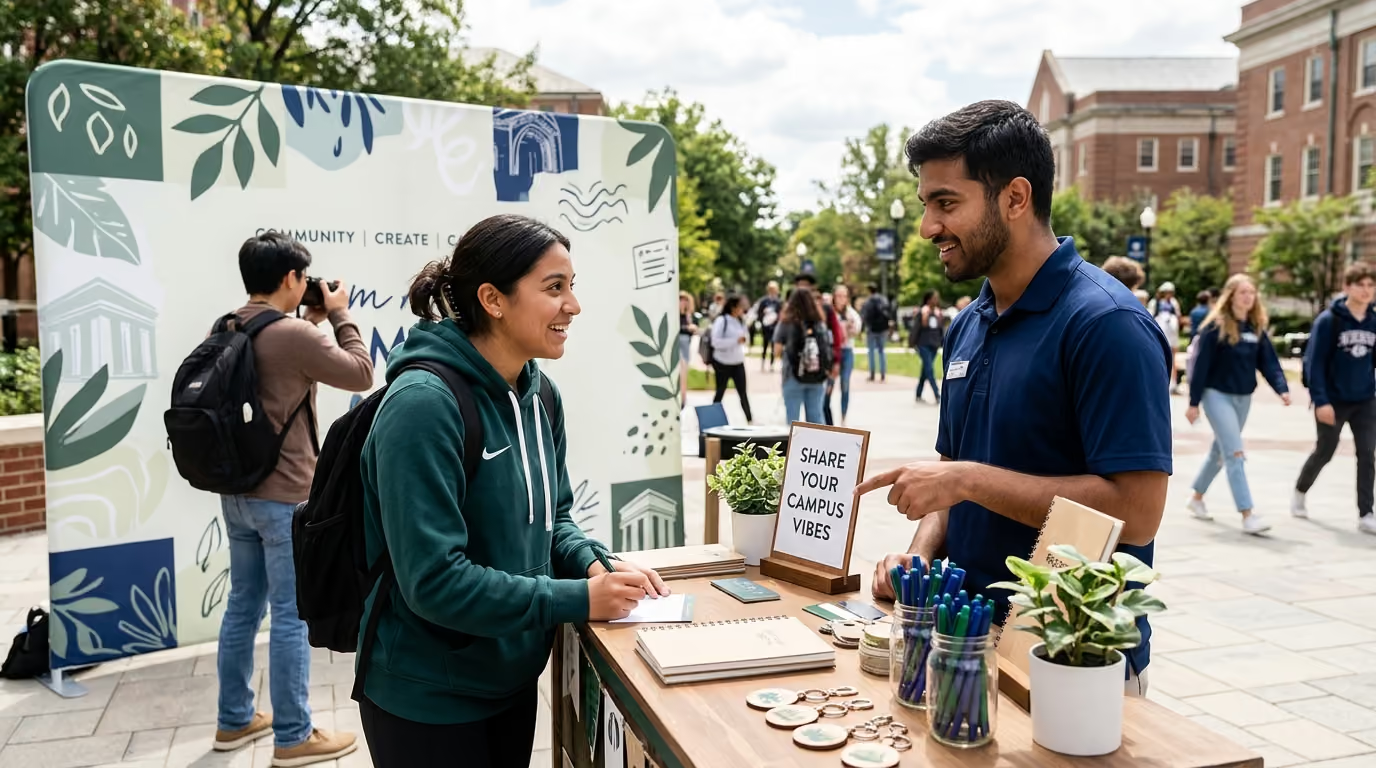
The typical campus activation often degenerates into uncoordinated chaos. Marketing directors ship boxes of merchandise, energy drinks, and flyers to campus reps, hoping for organic enthusiasm. Instead, ambassadors hand out samples silently, leave branded banners wrinkled on folding tables, and vanish before midterms arrive. When field managers try to contact their student team, messages go unanswered, leaving regional retail accounts unsupported and campaign budgets drained.
Most brands assume college students only care about free apparel, product drops, and flashy party sponsorships. That assumption is why many campus ambassador initiatives collapse after six weeks. Free merchandise sparks initial sign-ups, but it fails to sustain disciplined execution across an academic semester.
Students operate under intense time constraints, academic pressures, and shifting career ambitions. If a brand treats them merely as cheap distribution nodes for coupon codes, students will treat the role as an expendable hobby. When exam week arrives, disposable hobbies are the first things students drop.
Building long-term engagement requires viewing the role through the lens of human motivation. Educational and workplace research grounded in Self-Determination Theory shows that sustained engagement depends on meeting three psychological needs. Those needs are autonomy, competence, and relatedness.
When ambassadors feel competent at their duties, retain ownership over execution, and belong to a respected team, their performance stabilizes. Our team has been connecting brands with people through live experiences, retail programs, and national activations since 1995. Over three decades of managing field operations across the country, we have observed that student teams operate with high reliability when structured like true leadership incubators.
Brand leaders must distinguish between simple headcount retention and behavioral retention. A program roster might boast one hundred students on paper, but if only twelve submit weekly reports, the program has failed. Sustainable field marketing demands ambassadors who show up on schedule, run polished product demonstrations, and gather direct consumer feedback. Achieving that operational consistency requires moving beyond sporadic praise and designing an integrated operational framework.
For marketing operators expanding their field footprints, utilizing a complete program guide offers the blueprint necessary to structure these programs effectively from day one.
Systematic retention does not happen by accident. Field directors must replace gut feelings with a repeatable management model. The REACH framework organizes the critical drivers of student commitment into five distinct operational pillars.
Role ambiguity breeds immediate disengagement. When students do not know exactly what success looks like, they hesitate, delay execution, and eventually drift away. Ambiguity also sparks friction over compensation, scheduling, and performance reviews.
Every student ambassador must receive a detailed scope of work before their first shift. This document must clearly define weekly hourly commitments, mandatory check-ins, reporting requirements, and compliance guidelines. It must also define what the ambassador is not responsible for, preventing scope creep and burnout.
When ambassadors understand their operational boundaries, they execute with confidence. To learn more about setting foundational standards, explore our insights on hiring and managing field teams across distributed markets.
Students need continuous validation that their effort produces tangible outcomes. Waiting until the end of a semester to review performance guarantees high attrition during the campaign. Feedback must occur in tight, predictable cadences.
Field managers should provide rapid coaching within 48 hours of an ambassador completing an activation. According to workplace research from Gallup, employees who strongly agree they receive valuable feedback from colleagues are five times as likely to be engaged. Applying this cadence to campus programs keeps ambassadors aligned with brand goals while correcting procedural mistakes before they become ingrained habits.
Ambassadors must possess a clear path upward. A flat program structure offers no incentive for exceptional contributors to exceed minimum expectations. When high performers see that their additional effort yields the exact same status as low performers, their engagement drops.
Agency complements advancement by granting students ownership over how they achieve campaign targets. Providing autonomy in selecting activation formats, designing campus event themes, or pitching student organizations improves buy-in. A meta-analysis published in educational research confirms that autonomy support correlates positively with student performance and general engagement. Setting clear brand guardrails while granting tactical freedom produces superior field execution.
Isolation is a major cause of mid-semester ambassador dropouts. A student working alone on a satellite campus quickly feels disconnected from the broader corporate mission. Building a shared identity across the field network insulates students against apathy.
Research on college student persistence demonstrates that a sense of belonging serves as a vital foundation for sustaining engagement. Structuring ambassador teams into regional pods with dedicated captains creates mutual accountability. When students build authentic friendships with fellow reps, leaving the program means walking away from a community, significantly increasing retention rates.
Incentive structures must reflect the economic and personal realities of modern undergraduate life. Generic corporate swag does not pay for textbooks, tuition, or groceries. Programs that rely solely on unpaid labor or product trades face steep turnover and severe legal vulnerabilities.
A human-centered reward strategy separates guaranteed base compensation from performance incentives. Baseline pay compensates ambassadors fairly for their required hours and logistical labor. Performance bonuses, professional mentorship, and exclusive brand access layer on top to reward exceptional initiative. Research by Gallup and Workhuman indicates that employees receiving multidimensional recognition are far less likely to seek outside opportunities.
Feedback is the mechanism that transforms raw student enthusiasm into professional operational execution. Without regular guidance, students assume their contributions go unnoticed at corporate headquarters. When field reps believe their reports disappear into a corporate black hole, their data accuracy plummets.
Effective coaching requires a disciplined three-part feedback structure:
For instance, a field manager might tell an ambassador: "Your setup outside the student union generated 40 product trials because you tailored the pitch to commuter students. For your next activation, record the two most common flavor preferences so our regional sales reps can stock local grocery shelves accordingly."
This precision reinforces competence. It eliminates vague platitudes like "good job" in favor of actionable intelligence that improves retail sell-through. For brands linking field activations to grocery store velocity, reviewing methods for training field brand ambassadors for retail conversion ensures your coaching loops target measurable sales outcomes.
Field managers must also conduct structured midpoint development conversations. College schedules shift dramatically halfway through a semester due to midterms, club elections, and housing changes. A scheduled fifteen-minute check-in allows managers to assess capacity, resolve local bottlenecks, and re-align goals before performance falters.
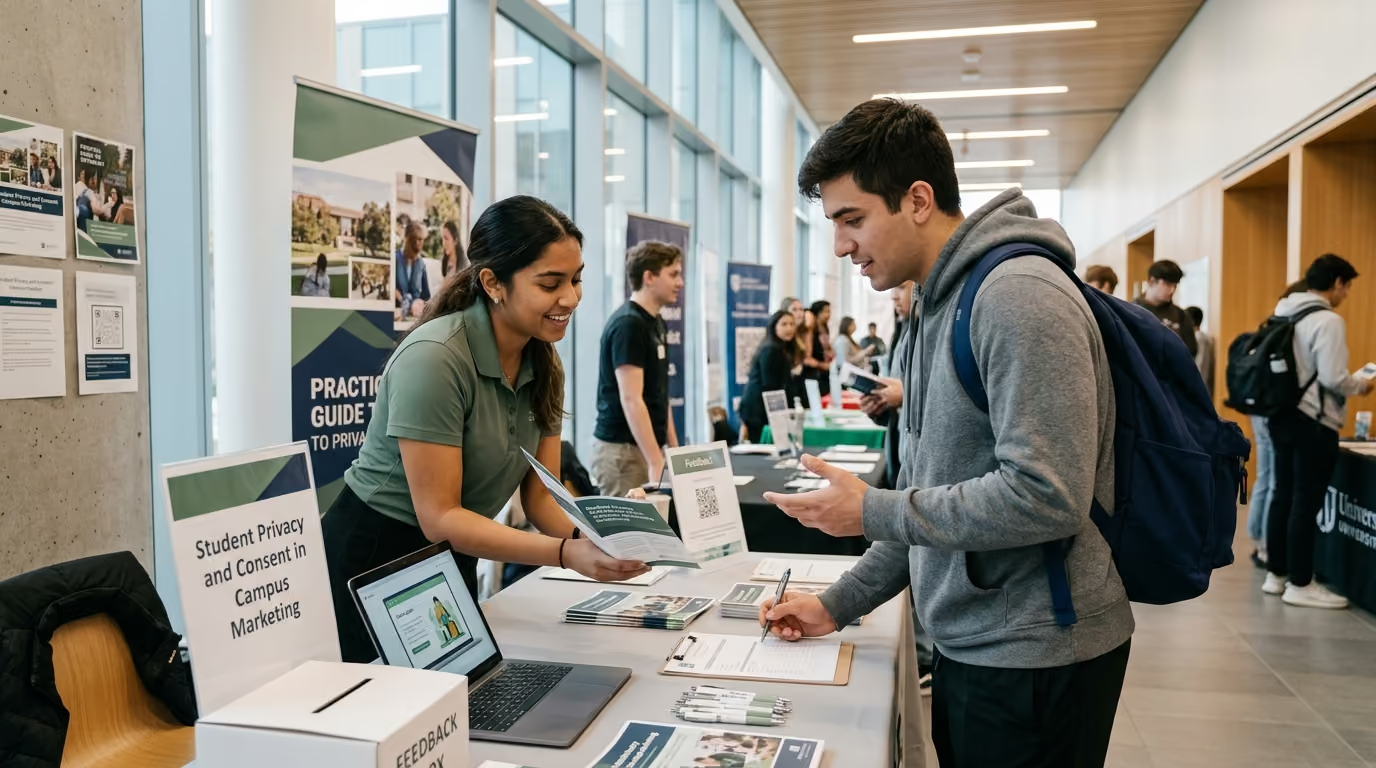
Data collection must support coaching rather than create a feeling of micromanagement. Tracking QR scans, foot traffic, and sampling distribution numbers helps managers identify reps who need extra coaching. However, if students feel tracked without receiving actionable support, trust erodes. Managers must explain why metrics are tracked and how those metrics help ambassadors build verifiable career accomplishments.
Treating every student ambassador identically limits the potential of your campus network. Students bring diverse talents to field marketing. Some excel at direct peer engagement, others at content creation, and others at operations and logistics.
A modern ambassador program requires tiered progression and parallel career tracks. Tiers provide concrete benchmarks for students who want to earn greater status, higher compensation, and leadership titles.
Level 1 serves as the baseline entry point. The student completes onboarding, masters core brand messaging, executes basic sampling activations, and submits timely activity logs. Focus remains on operational consistency, reliability, and consumer-facing communication.
Ambassadors reach Level 2 after demonstrating flawless reporting and consistent field execution across an initial campaign phase. Senior ambassadors assist with onboarding new cohort members and help coordinate co-branded activations with student organizations. They receive higher hourly rates or increased milestone stipends.
Campus Leads oversee scheduling, asset logistics, and event execution for their specific university. They maintain relationships with campus facility directors and resolve local permitting issues. They serve as the primary communication bridge between student reps and the brand marketing team.
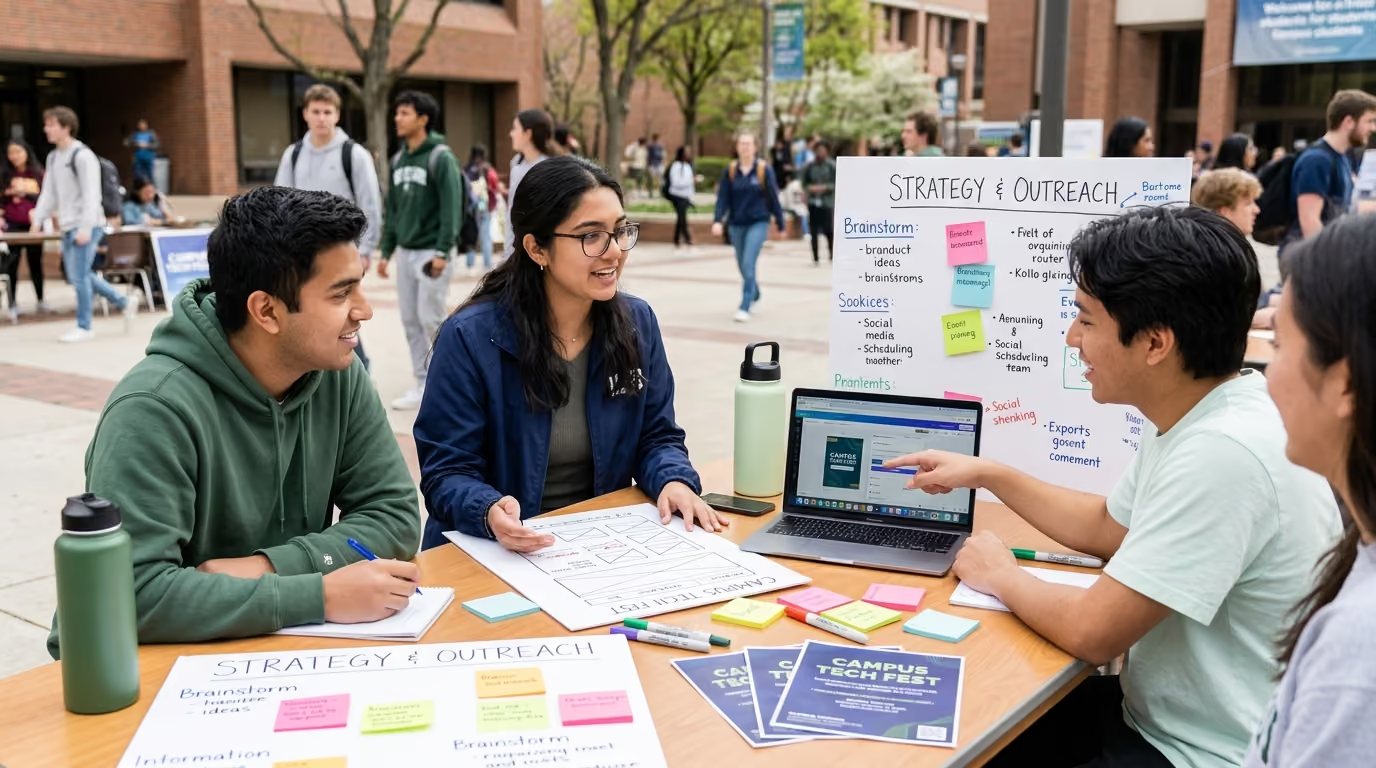
Student Strategists participate directly in regional marketing planning. They analyze student consumer feedback, assess competitor activations, and advise brand executives on campus trends. They present field data during quarterly strategy reviews and receive executive-level mentorship.
In addition to vertical tiers, brands should build specialized functional tracks. A rigid leadership track forces creative students into logistical roles they dislike, which drives turnover. Offering functional specialization retains diverse student talent.
Published criteria must govern all promotions. If students feel advancement depends on personal favoritism or social media popularity, morale will collapse. Transparent rubrics ensure that quiet, highly reliable operators advance alongside outgoing creators.
Recognition is distinct from compensation. Base compensation answers the question of what the student is owed for their time. Recognition answers whether anyone noticed the quality and impact of their work.
To build an equitable system, marketing managers should apply a structured five-part recognition test before sending praises across team channels.
A weak recognition message says: "Great work this weekend, Taylor." That message lacks substance and fails to motivate the wider team.
A strong message says: "Taylor noticed that freshman dorm residents had questions about our functional ingredients. She redesigned the tabletop display to highlight allergen facts, increasing product trials by 40%. We are sharing her layout with the entire Midwest team."
Public leaderboards based strictly on sales or sample volume can unintentionally harm retention. When leaderboards ignore campus size, student foot traffic, or weather conditions, reps on smaller campuses become discouraged. Instead, construct recognition categories that reward varied operational contributions:
When building incentive menus, offer ambassadors choice. Allowing students to select from varied reward options ensures the incentives align with their personal needs.
The primary currency for ambitious college students is career readiness. Students constantly evaluate whether their extracurricular commitments will help them land a competitive full-time job upon graduation. If a campus program provides genuine professional skills, ambassadors remain fiercely committed.
Workplace studies documented by Gallup indicate that employees who strongly agree their organization encourages skill development are 47% less likely to look for other employment. Transforming your field program into a legitimate professional apprenticeship provides a compelling retention engine.
Field training must cover transferable business skills:
At the conclusion of every academic semester, provide each active ambassador with a comprehensive Career Evidence Packet. This packet translates field labor into quantifiable bullet points for their resumes.
In our experiential work connecting campus initiatives with retail partners, measuring Return on Investment (ROI) is crucial. When ambassadors understand how their ground-level activations impact retail sell-through, their professional investment deepens. For an analysis of metrics that justify program budgets, see our guide on measuring campus ambassador Return on Investment.
Furthermore, formalize your mentorship initiatives. Rather than promising vague networking access, assign brand marketing managers to conduct structured thirty-minute career coaching sessions. Topics can include mock marketing interviews, LinkedIn portfolio critiques, and career trajectory mapping. This hands-on investment builds loyalty that keeps ambassadors engaged throughout their college tenure.
Student brand ambassador programs face distinct operational hurdles rarely encountered in corporate office settings. Academic calendars, campus politics, and legal guidelines require dedicated contingency planning. Ignoring these edge cases causes sudden mid-season roster collapses.
Final exams, midterms, and spring breaks disrupt operational consistency. Forcing students to choose between academic standing and their ambassador role guarantees high attrition.
Establish clear pause policies. Allow ambassadors to enter a temporary reduced-load status during heavy exam weeks without sacrificing their standing. Cross-training peer pods ensures activations continue smoothly when individual reps take study leaves.
Undergraduate students rarely possess the personal cash reserves to cover event supplies, parking fees, or travel expenses while waiting weeks for reimbursement. Payment delays create immediate resentment and cause ambassadors to stop scheduling activations.
Utilize modern digital payout systems that disburse hourly earnings and approved expenses rapidly. Maintain clear, straightforward expense guidelines so students know exactly which items are covered.
Not all high-performing ambassadors can execute physically demanding shifts involving heavy lifting or standing for six consecutive hours. Designing flexible activation formats ensures broad participation across your student network.
Include digital content creation, campus partnership coordination, and survey research alongside physical sampling setups. This operational diversity expands your talent pool while accommodating diverse student needs.
Many international students face strict legal limits regarding off-campus employment and compensation models. Mismanaging these guidelines exposes both the brand and the student to serious institutional risks.
Consult legal counsel to ensure student compensation models comply with federal and institutional work requirements. Structuring specific roles as educational stipends or approved internships protects international students while keeping their valuable contributions within the program.
Student leaders frequently face pointed questions regarding corporate sustainability, ingredient sourcing, labor practices, or brand partnerships. Without training, ambassadors may panic, make inaccurate public statements, or quit out of frustration.
Equip student teams with clear communication guardrails. Train them to de-escalate aggressive confrontations, provide approved messaging sheets, and route sensitive press inquiries to corporate communications teams.
The first 30 days dictate the long-term retention rate of an ambassador cohort. If an ambassador experiences disorganized onboarding, delayed communication, or a confusing first activation, their likelihood of completing the semester drops significantly.
During the initial seven days, establish absolute operational clarity. Provide the ambassador with their formal scope of work, access to digital communication channels, and event logistics guides.
The goal of Week 2 is securing a successful first activation. Keeping the initial scope simple builds immediate competence and prevents early overwhelm.
Week 3 shifts focus toward autonomy and social connection within the cohort. Give the ambassador ownership over selecting their next activation format.
Week 4 concludes the initial onboarding phase and establishes the trajectory for the remainder of the semester.
Connecting ground-level campus sampling with local grocery sell-through completes the loop. To see how field teams bridge physical sampling with retail shelves, explore our analysis of connecting student field teams to retail sell-through.
Field marketing leaders must track both leading and lagging indicators to maintain an accurate pulse on program health. Relying solely on lagging metrics like semester completion rates obscures emerging operational breakdowns until it is too late to intervene.
Leading indicators provide early warning signs of ambassador burnout or logistical bottlenecks. Monitoring these weekly allows managers to adjust workloads before ambassadors drop out.
Lagging indicators demonstrate the overall Return on Investment and operational stability of the campus program over an entire academic year.
Field leaders should deploy brief monthly pulse surveys to identify internal operational friction. Keep surveys under five questions to ensure high completion rates.
Regularly auditing your recognition systems ensures praise is distributed equitably across varied roles. If an audit reveals that 80% of awards go exclusively to high-profile content creators, managers must rebalance recognition criteria to highlight operational consistency, insight generation, and peer support.
Reviewing documented campus campaigns highlights the real-world operational challenges and measurable impacts of structured ambassador programs. Commercial field studies illustrate how intentional execution drives significant brand outcomes.
A vendor-reported campus sampling campaign for haircare brand OUAI demonstrated the power of focused, high-touch execution. Utilizing a dedicated team of 15 student brand ambassadors across 45 campus activations, the program distributed more than 9,610 product samples and generated over 4,770 direct peer-to-peer conversations. The campaign engaged more than 70 distinct campus student organizations. Post-campaign surveys indicated that 61% of surveyed students planned to continue purchasing products, while 79% indicated a high likelihood of recommending the brand to friends.
In another agency-reported case study for fashion retailer Topman, a focused four-week campus activation sprint generated 10,200 direct, face-to-face student conversations. The student team produced over 1,000 pieces of organic, campus-generated content, securing 366,000 impressions across student social channels.
Similarly, an agency case study for haircare brand Not Your Mother's examined a campus sampling effort across five key universities. The brand ambassadors distributed more than 8,500 product samples, collected over 530 pieces of student-generated content, and executed more than 7,400 verified consumer interactions. Follow-up research noted a 12% increase in general brand awareness, an 11% lift in product trial, and a 10% gain in retail purchase intent among the campus demographic.
These commercial examples demonstrate that when brands back student ambassadors with structured training, clear goals, and reliable logistics, campus activations deliver measurable marketing and retail outcomes.
Building a resilient, high-performing student brand ambassador network requires balancing operational discipline with genuine career investment to turn campus presence into predictable commercial growth.

30 Years Experiential & Retail Activation Partner for CPG & Beverage Brands | Multi-Market Demos, Roadshows & Costco/Club Programs That Actually Sell