Robbie Thain
Founder, CEO

Build a retail demo shortlist around shopper fit, demand, inventory and execution. Use pilot results to decide which stores to book next.

The biggest mistake in retail sampling is treating every store you can book as a store you should book. A full calendar can make a program look ready before anyone has asked whether the right shoppers will be there, whether they can buy what they try or whether the store can run the demo as planned.
That is our hot take: a shorter store list can be the more ambitious choice. It forces the team to say what each location is there to prove. If the only reason a store made the cut is that it had an open slot, it belongs on the candidate list, not the schedule.
The trouble starts when store count becomes the brief. The team books what it can, then asks the same setup to work across stores with different shoppers, assortments and operating conditions. The calendar fills up. The reason for choosing each location gets harder to explain.
That leaves the CMO with a budget question the recap may not answer: what did the spend produce beyond activity? A busy table looks good in a photo. But if the team cannot say whether it reached intended buyers or moved product, it has little basis for choosing the next set of stores.
Traffic is an easy number to lean on when that decision feels uncertain. But for planning purposes, total traffic and relevant traffic are different questions. Who is likely to pass the demo during the proposed shift? Are they shopping for something the product can do for them? A store can look attractive on a traffic report and still give the team a weak reason to book that particular shift.
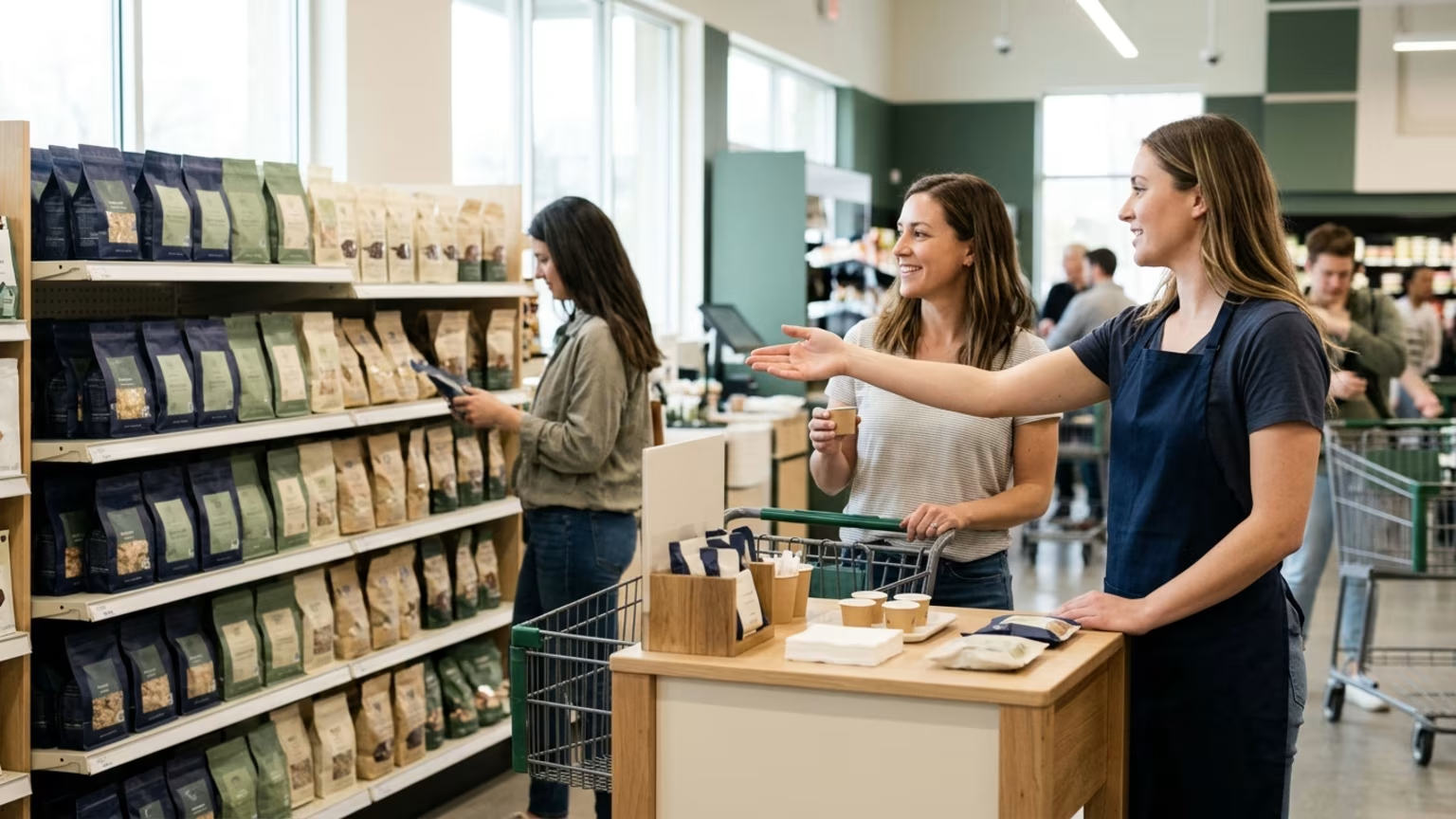
At Makai, we design retail demos and sampling programs around face-to-face trial. Our view is that the conversation should feel easy for the shopper because the operating plan is doing the hard work. A trained ambassador can listen, explain the product in plain language and give the shopper room to decide. That interaction has a clearer path to purchase when the product is available and the shopper knows where to find it.
In FoodNavigator, fractional CMO Janice Greenwald advised emerging brands to focus limited budgets close to the point of purchase and evaluate sampling locations carefully. She also recommended knowledgeable ambassadors who can support conversion and bring back shopper insights. That last part matters for store selection: the person running the demo can hear why a shopper stops, what they ask and what gives them pause.
We would assess candidate stores against the questions below. Use the answers to make the reasoning visible, not to turn a judgment call into a score with false precision.
The point of this screen is to separate a store worth testing from a store worth booking right now. If purchase stock or staffing is unresolved, hold the date rather than asking a high traffic estimate to make up for it. The same logic applies when choosing stops for a sampling route: the location and the plan have to work together.
Give each pilot location a reason to be on the list. If the question is whether assortment matters for your product, choose stores that help you compare that difference. Keep the offer and the way shoppers try the product as consistent as practical, then log changes in timing, placement, signage or retailer support. Otherwise, a stronger sales read may reflect a different demo rather than a better store fit.
Choose the outcome before the first shift. If the goal is trial, count samples distributed to the intended audience rather than treating every sample as equally useful. If the goal is immediate purchase, track units sold during the demo window and agree on a comparison period where sales data are available. If retailer follow-up is a separate goal, count meetings booked separately from shopper results.
The FoodNavigator coverage also discusses cost per unit moved, repeat purchase and new buyers. Those measures answer different questions. A same-day purchase may matter for a sell-through program, but it does not tell you whether the shopper came back. Pick the measure that answers the campaign’s question and use the same definition at every store.
We managed a multi-market Costco sampling program for Pulmuone that recorded sample volume and a purchase measure. For store selection, the lesson is to keep the program recap separate from the next booking decision. A campaign total describes the campaign. To decide where to go next, read each store’s outcome alongside what was actually available and what the team was able to run.
Write down what happened while it is still fresh. Record the shift that ran, any changes to the setup and whether product stayed available for purchase. Capture the questions shoppers asked and the reasons they gave for passing. Keep those notes next to the sales measures that guide the rollout, not in a separate recap that nobody sees when the next schedule is built.
A before-and-during sales comparison is directional on its own. It does not isolate the demo’s effect. Use a suitable comparison store or comparison period where practical, and look for patterns across locations with similar conditions rather than treating the busiest shift as the winner.
Expand where the store met the campaign objective and the team can repeat the conditions that made the test useful. Retest when the audience fit still looks promising but a fixable issue, such as a stock gap or a changed setup, clouded the read. Hold locations where the shopper fit is weak or the retailer cannot support the planned demo. That gives the next round of spending a reason beyond filling the calendar.
Choose stores for the action you want a shopper to take, then demand the execution that makes that action possible. A polished table cannot make up for missing inventory or a shift that reaches the wrong audience. The best rollout case is not the prettiest recap. It is a store-level result you can explain and a setup your team can repeat.
A shortlist becomes a rollout when the work moves from picking stores to putting people on the floor. Makai runs retail demos with trained ambassadors. Those ambassadors guide shoppers through a product trial and talk with them about what they are trying, right where the product is sold.

30 Years Experiential & Retail Activation Partner for CPG & Beverage Brands | Multi-Market Demos, Roadshows & Costco/Club Programs That Actually Sell