Robbie Thain
Founder, CEO

Plan a clear path from retail sample to shelf with a pre-demo stock, price, and signage checklist, plus guidance on staffing and sales measurement.
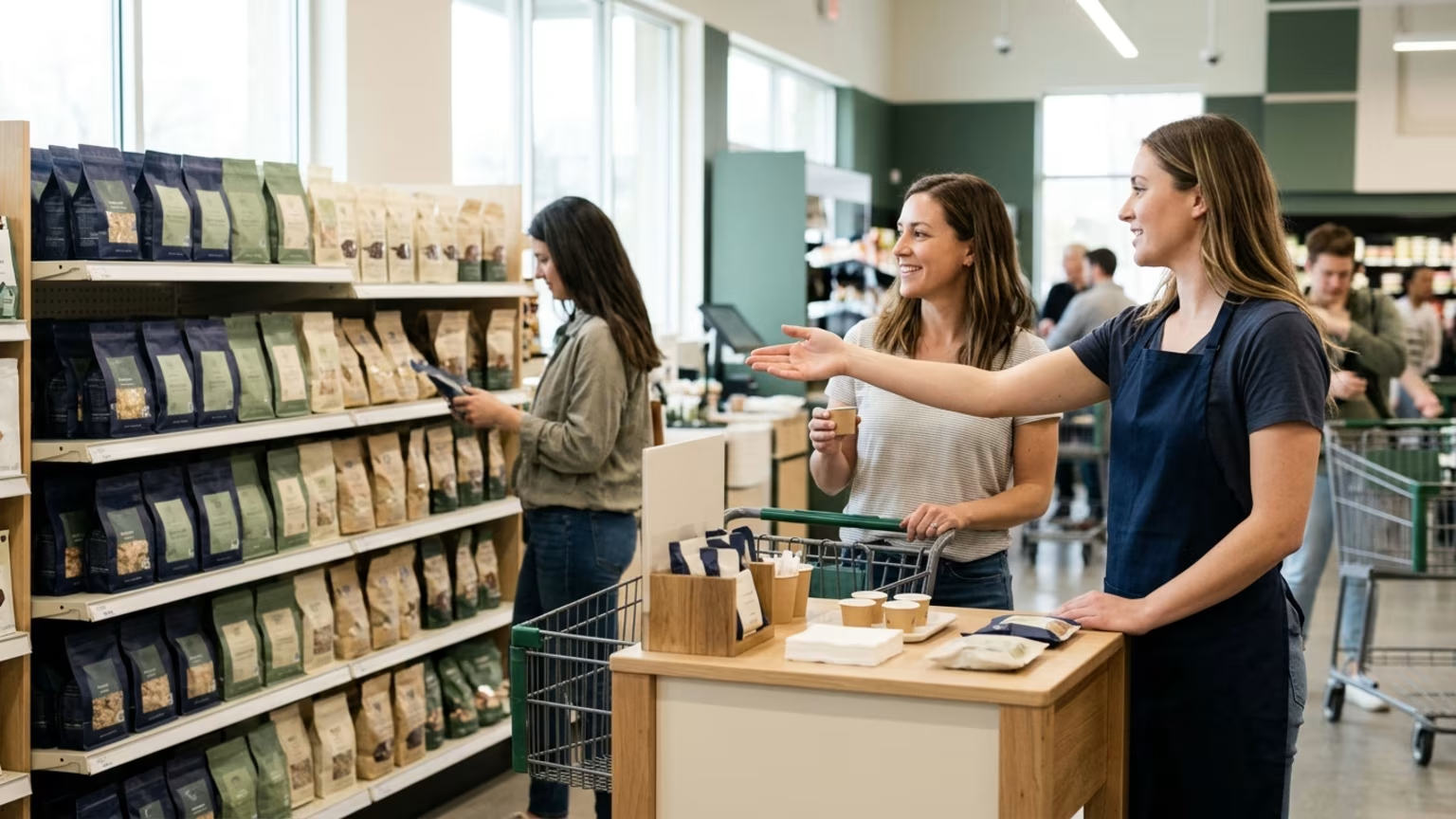
At the tasting table, the shopper should be able to match the sample to the package. From there, a sign or a brand ambassador should point to the shelf or display where it’s sold. At the shelf, the shopper should find the sampled item in stock at the price they were told.
Plan those moments together. At a StartupCPG webinar reported by FoodNavigator, fractional CMO Janice Greenwald recommended putting limited marketing dollars where shoppers can buy the product. Ithaca Hummus VP of Marketing Dennis Katsnelson pointed to product, price, placement, and promotion as retail fundamentals. He also stressed the need to catch the shopper’s attention quickly at the shelf.
There’s a reason to give interested shoppers a clear next step. A Harris Poll cited by Food Trade News & Food World found that 69% of surveyed consumers said sampling made them more likely to buy a food product. Another finding was that 86% said they had bought something after trying an in-store sample. Those are self-reported responses, not measured conversion rates for a demo.
Start with where the product is sold, then choose where to serve it. If shoppers can see the shelf or display from the station, make it easy to tell which package is theirs to look for. If the product is out of sight, give the ambassador and the sign the same directions. The placement decision is about how easily a shopper can get from the tasting to the item, not just how many people can see the table.
Signage has a practical job: identify the sampled product, state the verified price or offer if you’re promoting one, and point shoppers to the right place. There’s no established lift for a particular sign format or distance from the shelf. Treat planning around the shopper’s purchase decision as a way to remove guesswork, not a layout formula.
We managed a multi-market Costco sampling program for Pulmuone. For a program that spans markets, it’s useful to separate the message that stays consistent from the details that need a store-level check. The product description can be shared across the program. The stock on hand, the price on the shelf, and the directions from the table need to match the store where the demo is running.
Give the ambassador enough information to answer the questions a shopper is likely to ask after tasting: Which product was that? Where can I find it? What does it cost? FoodNavigator reported that knowledgeable ambassadors matter when brands use demos to introduce a product. On the floor, knowing the item means being able to point to the right package as well as talk about what’s in the sample.
For us, an aloha approach means offering a warm welcome and a useful answer without pressing for a sale. We specialize in retail demos, product sampling programs, and roadshows that bring brands face to face with shoppers. The conversation should leave room for a shopper to ask about the product or simply move on. When someone is ready to buy, a precise direction is more useful than another pitch.
Use the readiness check to brief ambassadors on what shoppers will see at the shelf. Cover the package they should point out, the current price or offer, and the route to the product. Keep the wording natural. The product details should stay consistent whether shoppers hear them from the ambassador or read them on the sign.
Decide what the report needs to show before counting samples. Samples distributed describe activity at the station. For a demo intended to move product, look at units sold against an appropriate sales baseline. Record whether the product was available and easy to find during the demo so the sales review reflects what shoppers could actually buy.
Experts quoted by FoodNavigator recommended looking beyond coupon redemptions to measures such as new buyers, repeat purchases, post-promotion baseline sales, and cost per unit moved. Use the measures the available data support. Sales during a demo tell a different story from repeat purchases later. And a comparison with baseline sales gives the team context without proving that the demo caused the difference. A retail sales measurement plan helps keep those questions separate.
If lead capture is part of the program, carry qualified follow-up from the face-to-face conversation into the customer relationship management (CRM) record. Capture what the shopper expressed interest in and the next step discussed, rather than treating the interaction itself as a lead. Keep that record separate from the store’s sales report. A lead is a follow-up opportunity, a tasting is trial activity, and an item sold belongs in the purchase count.
Address what shoppers are being told before sending anyone else to the shelf. A product that can’t be found at the stated price breaks the purchase path even if the tasting station is still busy.
Use those notes when reviewing a weak sales result. If the tasting generated interest but the item was unavailable for part of the demo, those are two different observations. Keeping them separate gives the team a better starting point than changing the tasting itself before checking the shelf.
Walk the store from the tasting spot to the selling location before finalizing the setup. Write down what the ambassador will say about the product and compare it with what the shopper will see on the way to the shelf. Then choose the sales measures and baseline you’ll use afterward. That gives the next demo a clear purchase path to check on the floor and a sales question to answer once it’s over.
Field marketing leads own the day-to-day connection between the tasting station and the shelf, with Makai taking on the face-to-face work of the demo. Makai staffs retail demonstrations with trained brand ambassadors who guide product trials and talk with shoppers to support in-store sales.

30 Years Experiential & Retail Activation Partner for CPG & Beverage Brands | Multi-Market Demos, Roadshows & Costco/Club Programs That Actually Sell


