Robbie Thain
Founder, CEO

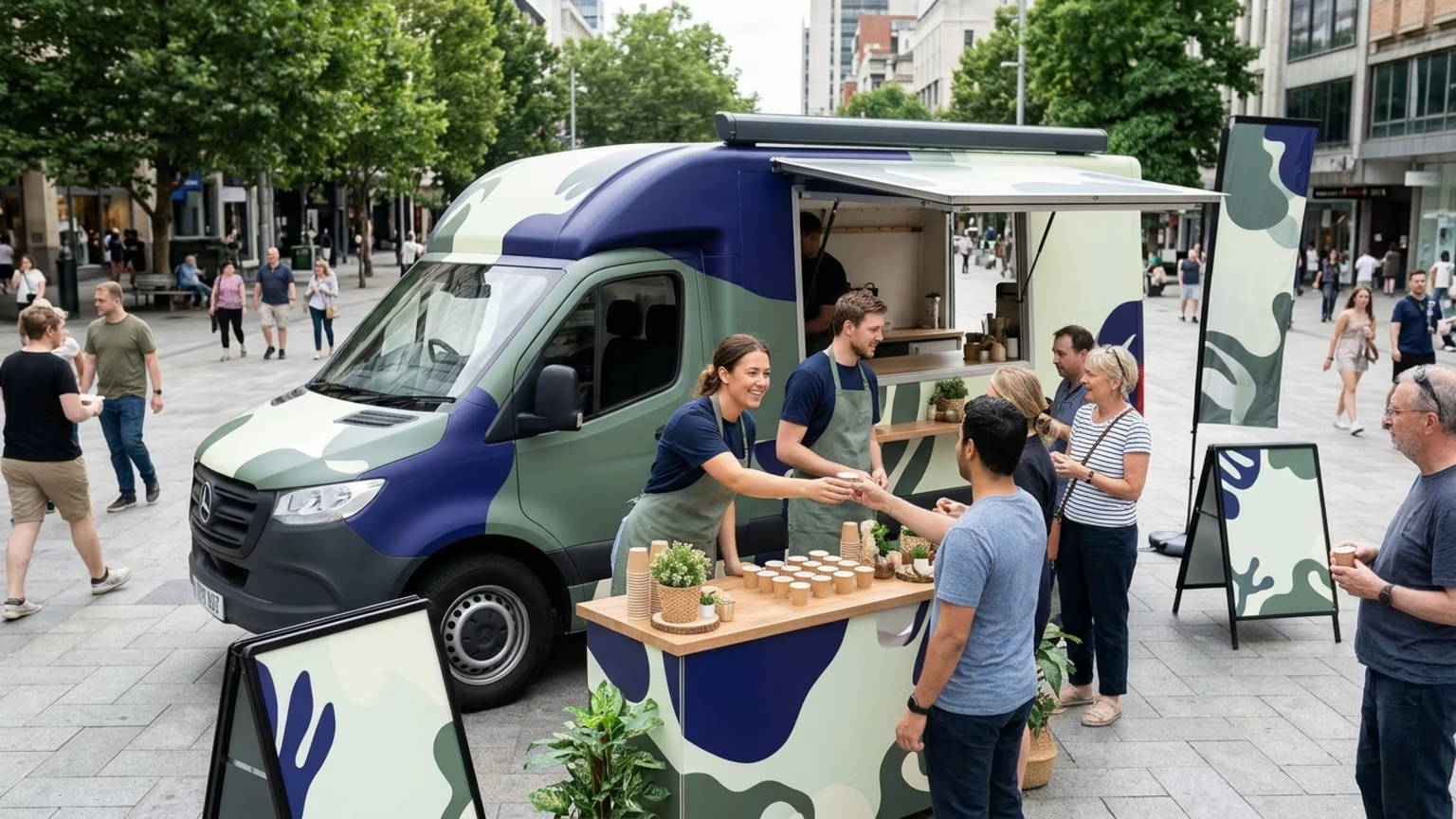
Plan a mobile brand tour around trial, retail sales, qualified leads or launch awareness. Align stops, staffing and measurement with the goal.

232,081 samples went out during the Pocari Sweat U.S. launch program, Evolve reports. The program was designed to build trial and awareness in three priority markets. The count shows the scale of distribution, which matters when getting the product into people’s hands is part of the goal.
A mobile brand tour should deliver one clearly defined business outcome. Choose whether the tour is primarily for product trial, retail sell-through, qualified leads or launch awareness. Then use that choice to decide whom to reach, where to stop, what people should do on site and how the team will measure it. Make those decisions before the first stop, not when the recap is due.
We design mobile sampling programs to bring products directly to the people brands want to reach. When a launch calls for both trial and retail sales, we treat them as separate questions. One is about who gets to try the product. The other is about what shoppers buy.
A tour can support more than one goal. Naming a primary outcome gives the team a way to choose between stops that offer different things.
Start with the stops that fit the outcome. In its field marketing guidance, Evolve describes a trial objective aimed at a specific consumer segment in selected markets while supporting availability at nearby retailers. For a tour tied to retail sell-through, that means looking at where shoppers can buy before giving a busy location the edge.
Mobile-tour vendor MOGXP lists permits, staging, setup and security among the work that goes into execution. Its guidance also calls out staffing and ambassador training. Put that work into route planning rather than leaving it until the calendar is full. For each stop, the practical question is whether the planned setup supports the experience in the brief.
At Makai, our logistics work includes storing sampling product and event gear and coordinating delivery nationwide. That work belongs in the same planning conversation as the route. If the stop’s main job is a hands-on demo, the team needs the product and gear for that demo where the interaction is scheduled to happen.
For us, aloha means greeting people warmly and giving them room to decide how they want to engage. In our retail demos, sampling programs and roadshows, face-to-face contact gives people a chance to ask a question and get a real answer. The training brief should give ambassadors a reason for the conversation without turning every exchange into a pitch.
Train for the moment that matters to the goal. At a trial stop, that means inviting someone to try the product and leaving time for questions. If the goal is sell-through, ambassadors should be able to connect the demo to where the product is available. For launch awareness, give the team a clear way to explain what’s new.
For a lead-focused tour, train ambassadors to recognize the kind of interest the team has agreed to follow up on. Invite a sign-up after a relevant exchange rather than making it the first thing a visitor hears. If trial is the priority and lead capture is secondary, don’t let the sign-up step take over the product interaction. A clear brief helps ambassadors make that call when a stop gets busy.
Plan the handoff before the first conversation. Makai’s work can span permitting through customer relationship management (CRM) reporting. The key decision is to define what makes a lead worth following up on so ambassadors and the follow-up team work from the same definition.
A retail sales objective needs a different data handoff. Evolve recommends setting the measurement plan before launch and describes matched markets or holdout audiences as ways to compare exposed consumers with a control group. Agree on what retail sales data the team will have and what comparison those data can support. Evolve’s simpler option is a before-and-after sales comparison adjusted for baseline trends.
Attendance, impressions and sample counts describe activity. Even a sales increase after a tour may reflect seasonality or other marketing that ran at the same time. Keep activity, sales and pipeline separate in the readout. Report Return on Investment (ROI) only when the financial evidence supports it, not as another name for pipeline.
If the lead capture tool goes down, keep any working sign-up option in use. If none is available, flag the gap in the stop report. A trial stop calls for a different decision: If the demo can still run, keep the focus on product trial and record what the team delivered.
Use the same logic if an ambassador doesn’t show. Give the primary interaction the staff time it needs before trying to keep every secondary activity running. At a trial stop, that means keeping the demo staffed ahead of optional sign-ups.
MOGXP also flags weather and venue changes as routing risks. Put a decision in the field contingency plan before the tour starts: If a stop moves, does the revised setup still reach the intended audience and support the action in the brief? Record what changed so the team can distinguish a problem with the location from a problem with how the stop ran.
Write a short outcome brief before building the stop list. Name the result, the audience and the action the experience should prompt. Add the main measure and where the evidence will come from. Review the draft with field operations and whoever will own the retail or CRM data before committing to the route.
The test is whether those teams would describe success the same way. If they wouldn’t, settle that question before putting stops on the calendar.
Product trial gives a mobile tour a clearer target than the size of the crowd. For CPG marketers managing permits, staffing and logistics across multiple stops, Makai runs mobile sampling tours designed to reach the intended audience in person and build trial and awareness.
30 Years Experiential & Retail Activation Partner for CPG & Beverage Brands | Multi-Market Demos, Roadshows & Costco/Club Programs That Actually Sell