Robbie Thain
Founder, CEO

Plan a mobile sampling launch around the right stops, trained crews and stocked shelves. Track handouts, observed trial, follow-up and sales separately.
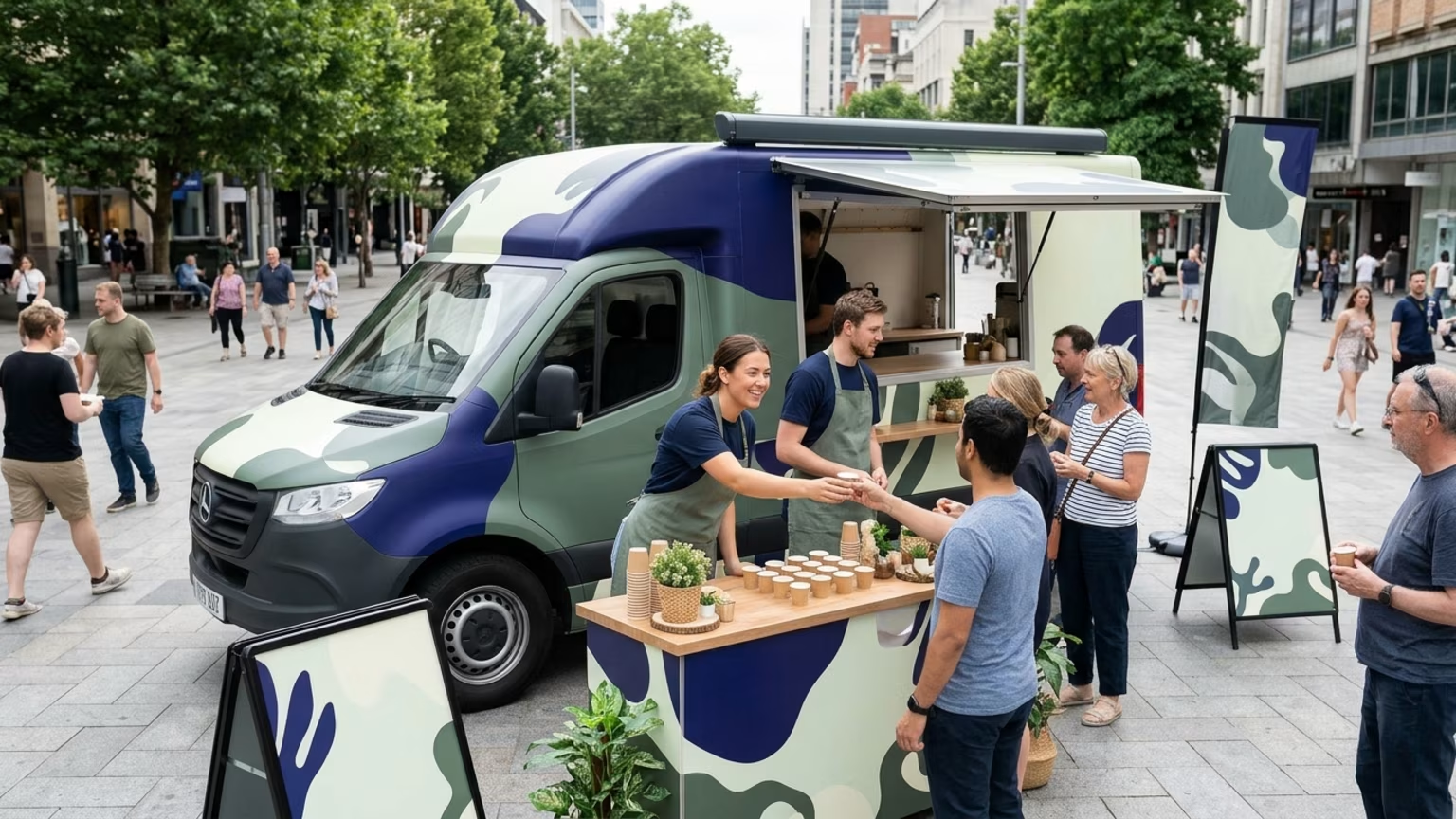
One product sampling program distributed 53,616 cups, according to a Recess case study. That count shows the scale of the handout. It leaves the launch team with a more useful question: What did people do after they got the product?
Start with the job the tour needs to do. If the goal is to introduce a product to people who have never tried it, choose stops that put the crew in front of that audience and make it easy to taste or use the product. If the goal is to support a retail launch, prioritize stops near stores that have the product on the shelf. If the goal is to assess interest across markets, use a consistent sampling format and record results by stop so you know what you’re comparing.
Build each stop around a simple sequence: meet the right people, give them a chance to try the product and offer a next step that fits the launch. That might be a coupon for the nearby store or a voluntary sign-up for a follow-up offer. Decide before the tour how the crew will record the handout, the trial and the response. If the team plans to assess purchase consideration or sales, decide what comparison it will use before the route goes live.
Confirm permitting, setup and product handling requirements for each proposed stop before locking the route. FTP’s food sampling guide discusses local permits and temperature control. A route that crosses markets needs a stop-by-stop review rather than a single checklist carried from city to city. Work through route and permit planning alongside the venue decision, not after it.
Use the launch objective to choose the venue. A retailer-adjacent stop makes sense when the job is to give shoppers a chance to buy right after trying the product. FTP’s guide describes a format that pairs sampling with a coupon redeemable in the nearby store. For a stop designed to introduce a product to new consumers, give more weight to audience fit and whether the space supports an actual demo than to foot traffic alone.
Plan for two kinds of product availability: enough stock to serve at the stop and enough retail stock to support the next step. The tour lead needs to know what product is allocated to each stop and how replenishment will work. If the offer sends shoppers to a specific store, confirm that it carries the launch item. A well-run tasting and an empty shelf are two different operational outcomes, and the stop report should show both.
Mobile tour planning guidance recommends a consistent crew across locations, with roles that can include a tour lead, a sampler or demo specialist and someone responsible for data capture. The useful decision is who owns each job when the stop gets busy. The person explaining how to use the product should know who is counting trials and who can resolve an inventory or setup issue.
At Makai, our aloha approach starts with the person in front of us. We see the ambassador’s job as making the invitation easy to accept or decline, then giving the shopper room to react. Train the crew to explain what is new in plain language and demonstrate the product as intended. The offer or sign-up should feel like a useful next step, not a condition of getting the sample.
We managed a four-week, multi-market Costco sampling program for Pulmuone that delivered more than 65,000 samples. A count like that describes the volume the operation handled. For a launch brief, the staffing question is what the crew needs to do beyond the handoff. If the product needs a demonstration to make sense, staff for that conversation and agree on what counts as a completed demo.
Give each stop a next step the team can trace back to the encounter. We Are Sweeter describes a two-month Jovē Water branded-truck tour that distributed 27,000 one-liter bottles across 11 cities and used a QR-code sweepstakes to collect participant information. That is an example of capturing a response after a handout. For a retail launch, a store-specific offer may fit the objective better than a sweepstakes.
For a sign-up, use a QR code tied to the stop and carry that stop identifier into the customer relationship management (CRM) record when the participant opts in. Keep the action with the record so the follow-up owner knows whether the person requested an offer or entered a sweepstakes. If the QR code is scanned but no form is submitted, count the scan as a response rather than a lead. If the intended next step is a retail purchase, check what the retailer can report before choosing how to connect sampling to checkout.
NVS Visuals recommends recording samples, demos and sign-ups by stop. That approach fits the distinction Evolve draws between sampling activity and downstream purchase measurement. Give the crew definitions it can use during a shift:
Recess reports that its sampling program for Goodles Single Serve Cups covered 20 cities and compared recipients with an unexposed control group. In its survey, 64% of sampled consumers said they were likely to buy in the next 90 days, compared with 60% of the control group. Among past Goodles buyers, Recess reported 31% for sampled consumers and 6% for unexposed consumers. Those provider-reported figures measure stated intent, not verified purchases.
For your own launch, ask comparable exposed and unexposed groups the same purchase-likelihood question over the same time window. For sales, use observed purchases where available and compare them with a suitable comparison group or an adjusted baseline. Check whether product availability differed across the markets being compared. A simple before-and-after increase does not isolate the effect of the tour.
Give the tour lead a decision to make for each failure: which part of the experience can continue, and which part needs to pause? If sampling stock runs out, confirm whether replenishment is available before resetting expectations at the stop. If the crew cannot meet the applicable product handling requirements, pause service and record when it stopped. Build that decision into the inventory plan for live sampling.
If a QR code fails but the crew can still serve the product, keep counting distribution and observed trials. Use a planned retailer coupon if one is available and log that offer separately from the digital response. If there is no working fallback, mark the capture interruption in the stop report rather than recording the gap as zero interest. That gives the team something concrete to check before the next stop.
Before committing to the full route, write a brief for an initial stop that names the audience, the venue’s role and the intended next action. Confirm that the crew can record trial separately from distribution and that the retailer or survey partner can provide the comparison you plan to use. Review what the first stop produced before repeating the format across markets.
The stop schedule dictates where sampling stock and gear need to be, and Makai takes on the delivery coordination. For food and beverage teams managing permits and staffing, Makai stores event gear and sampling product, then handles shipping and tracking nationwide to support the tour schedule.

30 Years Experiential & Retail Activation Partner for CPG & Beverage Brands | Multi-Market Demos, Roadshows & Costco/Club Programs That Actually Sell