Robbie Thain
Founder, CEO

Build a CPG sampling brief that connects audience, staffing and offers to qualified trials, retail sell-through and repeat purchase.
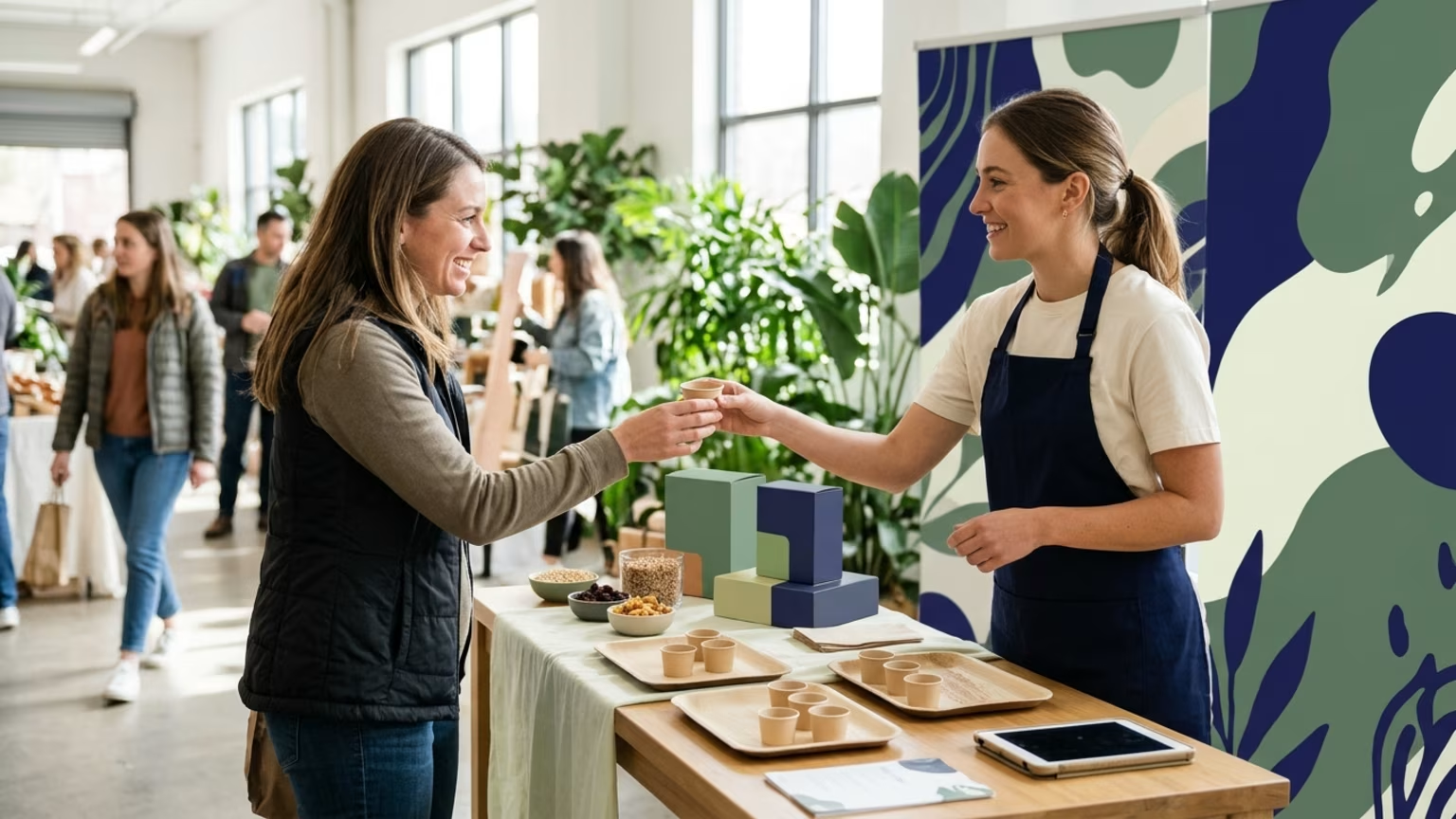
Myth: If the sampling table stays busy, the product will sell.
Truth: A busy table tells you people stopped for a taste. Whether the right shoppers bought the product and came back for it takes different evidence.
Field marketing leaders have good reasons to care about volume. A tight budget and a short setup window make a clear delivery target useful. If an agency proposal spells out how many samples the team can hand out, that gives everyone something concrete to plan around. It also gives the field lead an immediate way to see whether the program ran at the intended scale.
The trouble starts when that delivery target becomes the sales target by default. In our retail demos, sampling programs and roadshows, the face-to-face interaction is designed to get the product into a shopper’s hands and start a conversation. Whether the shopper wants to pay for it is a separate question. Our reporting covers reach, trials, leads and sales because each measure answers a different question about the experience.
On the floor, a line tells the crew where to direct its attention. It doesn’t tell the brand whether the people in it already buy the category or have tried the brand before. If the team is judged only on how fast it moves the line, it can meet its target without learning what would make a shopper choose the product over their usual buy.
The handoff to retail is another place the sale can stall. A shopper may like the sample but not know which pack to look for. The display can be well staffed while the product is hard to find or out of stock. Those are different problems from a product that shoppers taste and decide not to buy. A sample count gives all of them the same result: one more serving handed out.
A recap from activation agency Evolve shows how far attention and purchase evidence can diverge. Evolve reported 43 million social views for a Los Angeles activation for Kopiko Focus Coffee. Its recap also says there was no post-event system connecting participation to later retail sales or repeat purchase. The views describe the attention the agency reported, not what participants bought afterward.
In FoodNavigator’s coverage of a StartupCPG webinar, speakers treated getting a shopper to try a product and getting that shopper to buy again as distinct growth challenges. That distinction belongs in the brief before anyone picks a venue or builds an offer. A first-purchase program needs to show whether it brought in new buyers. A repeat-purchase program needs to show whether buyers returned for another transaction.
Fractional CMO Janice Greenwald advised emerging brands to look at existing category shoppers rather than assume they need to create a new shopping habit. The webinar report describes category and competitor purchases, shopping patterns and geography as useful targeting inputs. Those inputs help a team choose whom it wants to reach before it commits to a location.
A qualified trial is a taste by someone who fits the audience defined in the brief. That might mean a shopper who already buys the category but has never tried the brand. Define the rule before launch and give staff a simple way to identify those tasters. Keep that count separate from total samples and from first-time buyers. A qualified taster is still a taster until there’s evidence of a purchase.
Greenwald recommended spending close to the point of purchase. In practice, the choice between an in-store demo and broader sampling comes down in part to what a shopper can do next. Near the shelf, the handoff might be as simple as pointing out the right pack and where it’s stocked. Away from the store, the brief can name the retailer and give the shopper a trackable next action.
Availability belongs in that same brief. Record whether the product was in stock and easy to find during the activation so the sales review has the right context. A weak sales result is harder to diagnose if no one knows what shoppers found when they went looking for the product.
The FoodNavigator report describes knowledgeable brand ambassadors as useful for explaining the product and gathering shopper feedback. For a retail demo staffing brief, that means defining what staff should explain and what they should listen for. The ambassador needs to know which product is being sampled, how to describe it and where the shopper can find it. Questions about price or trouble finding the pack are useful feedback to bring back from the floor.
Inmar Intelligence sales manager Joe Broderick suggested matching the offer to the behavior the program is meant to support. An incentive that lowers the barrier to buying one pack may suit a first purchase. A multi-unit offer may fit a loyalty goal, but buying two packs in one transaction is not the same as coming back to buy again.
Plan the follow-up while there’s still time to build it into the experience. Evolve’s recap suggests unique offer codes, retailer-specific calls to action, QR journeys and follow-up surveys as options. Pick the method that matches the question. A code can connect a redemption to the activation. A survey can capture what a participant says they remember or did next. Neither substitutes for a purchase record when the objective is to measure repeat buying.
Set the reporting windows and sales comparison before launch. A useful sampling brief tied to retail sell-through spells out the stores covered and the baseline the team will use. It also distinguishes sales during the activation from sales after the offer ends. Give each measure its own line:
Greenwald also recommended comparing programs by cost per unit moved. State which units go into that calculation. If the denominator is all units sold during the activation, the result describes cost against observed sales, not the cost of generating additional sales.
The gaps between measures help narrow down what to check. Plenty of samples but few qualified trials points back to who was reached. Qualified trials without much movement at retail call for a look at price, messaging or shelf placement. Greenwald also recommended checking product quality, packaging, merchandising and availability before putting more money behind an underperforming program.
A crowd shows that people stopped, but the sales case rests on who tried, who bought and who bought again.
A sample handed out in a rush tells a team little about why someone might buy. When heavy trade show traffic yields few qualified leads, Makai helps CPG teams put trial in a purchase setting through retail demonstrations staffed by trained brand ambassadors. Shoppers get to taste the product and ask questions before deciding whether to buy.

30 Years Experiential & Retail Activation Partner for CPG & Beverage Brands | Multi-Market Demos, Roadshows & Costco/Club Programs That Actually Sell