Robbie Thain
Founder, CEO

Choose roadshow markets and stops by audience fit, retail availability, commercial opportunity and execution feasibility, not crowd size alone.
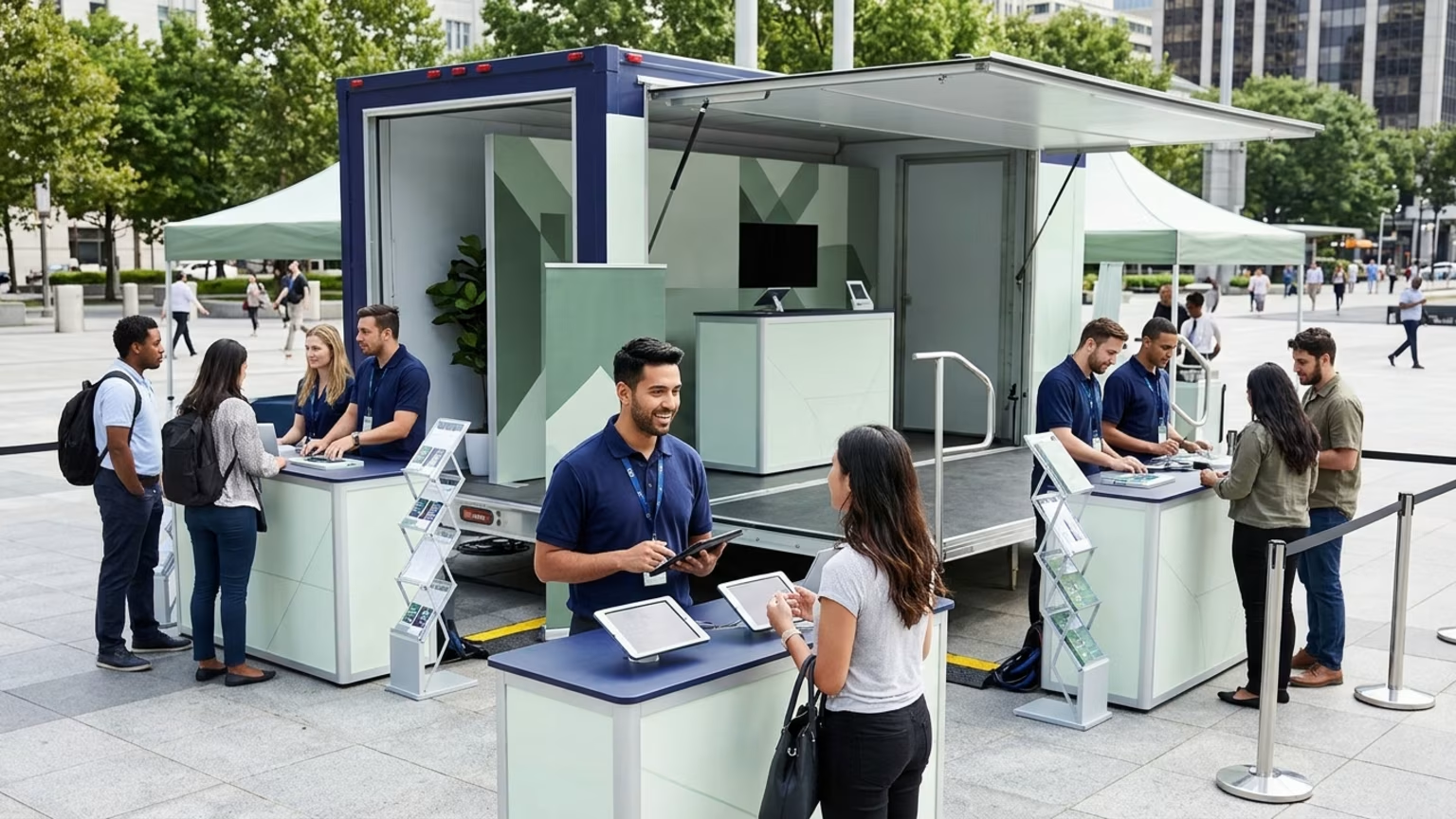
The biggest crowd on your roadshow shortlist may be the worst stop on your route. A packed event is not a distribution strategy. An impressive truck wrap is not a reason to enter a market.
That sounds obvious until expected attendance becomes the argument that wins the budget meeting. Suddenly the route follows the biggest gathering rather than the clearest opportunity to reach likely buyers.
Our take: choose the market where trial has somewhere useful to go. Then choose a stop where the right people can actually participate. Creative ambition belongs in the plan, but it should not overrule the commercial path.
For a CMO defending a major activation budget, the nightmare is not an empty event. It is a packed event followed by an empty pipeline report.
The failure starts when one attractive number does several different jobs. Expected attendance becomes a substitute for audience fit. Audience fit gets treated as purchase opportunity. A polished activation then becomes supposed proof that the investment worked.
Those are separate questions, and route selection should keep them separate.
The AIM Agency’s practitioner planning article recommends evaluating customer fit and commercial readiness alongside venue suitability and operating costs. Its useful distinction is between choosing a market and approving a venue within that market.
That distinction changes the conversation. A promising city still needs a workable stop. A popular venue still needs a credible reason for the brand to be there. Without both, the team risks paying to execute the wrong opportunity beautifully.
At Makai, we believe the alternative is not colder marketing. It is warmer human interaction backed by less forgiving operational thinking.
Aloha-style hospitality means the welcome matters. A person should have a reason to stop and a real conversation worth having. But friendliness is not a substitute for product availability or a feasible delivery plan.
We specialize in retail demonstrations, product sampling programs and roadshows that bring brands face to face with their audiences. Our trained brand ambassadors support in-store sales through conversations and product trials. The intended connection is between the interaction and a useful commercial next step.
Our capabilities also extend from permitting to CRM reporting. Makai stores sampling product and event gear, then ships and tracks delivery nationwide. That operational work belongs in the market decision, not behind the curtain after the route has already been sold internally.
We also design mobile activations around 90-day product launch windows. For us, that makes the relationship between trial and retail performance central to the brief.
The principle is straightforward: human authenticity gives the encounter its value. Operational discipline gives that encounter a workable setting. Planning should connect route ambition with site readiness before visual design becomes the main event.
The following framework translates the planning article’s recommendations into distinct decision areas. It is practitioner guidance, not a validated scoring formula. Keep the criteria separate rather than allowing a strong crowd forecast to cancel out an unresolved commercial or execution problem.
At market level, the question is whether the area offers a plausible concentration of intended buyers. At stop level, the question is whether those people are likely to encounter this activation under workable conditions.
The U.S. Census Bureau provides demographic and economic data alongside population information. Its resources include Census Business Builder and geographic tools. These can inform an initial market shortlist alongside the brand’s own sales and distribution information.
Area-level data do not establish who will attend a particular venue. The planning article therefore recommends checking venue-specific audience evidence separately.
The practical distinction is between a market that fits the audience and a stop that provides access to that audience. Both need a case.
The planning article recommends starting with markets where demand can be served. That might mean stocked retailers or delivery coverage. It might mean sales support or a local distribution partner.
The next question is not simply whether the product exists somewhere in the region. It is where an interested participant can take the next step after this encounter.
For consumer sampling, that gives retail availability a separate place in the decision. For a buyer-focused activation, a defined follow-up opportunity may be more relevant. The objective should determine what counts as a useful commercial path.
This keeps awareness from becoming an automatic excuse for selecting a market where the intended response has nowhere clear to go.
A lower stop fee does not automatically make a better stop. The planning article recommends comparing equivalent costs across locations.
Its categories include crew and venue expenses. Travel and logistics also belong in the comparison, along with an agreed allocation of reusable build costs.
The article illustrates the distinction with a hypothetical example, not an observed result or industry benchmark:
The cheaper stop has the higher cost per qualified demonstration in that example. Yet interaction cost is not the entire decision. The article also recommends considering audience value and follow-up requests alongside product availability and conversation quality.
Our view: commercial opportunity deserves its own judgment. A route should not win merely because its stops are cheap or because it produces the largest interaction count.
The shortest driving route is only one part of a workable schedule. The planning article recommends considering load-in and activation hours together with travel. Replenishment and maintenance also need room, as does recovery time.
That means public-facing hours are not a complete picture of operating capacity.
For each candidate stop, the source-supported review includes:
For outdoor stops, the article treats climate normals as historical context rather than an event-day forecast. It recommends pairing that context with current forecasts and a relocation, postponement or cancellation plan.
A high-potential market still has to support a deliverable stop. Otherwise the route carries an opportunity on paper that the field team may struggle to realize.
The planning article recommends a small pilot built around a specific learning question. It advises keeping the core offer and counting rules consistent, together with training.
Local differences should still be recorded. These include trading hours and stock availability, plus weather and nearby promotions. Visitor mix also matters to the comparison.
A few non-random locations cannot establish national performance. The useful decision is narrower: whether the evidence supports repeating the approach, revising it or stopping before expansion.
This balances ambition with learning. The pilot has a purpose beyond generating activity, and expansion becomes a decision rather than an automatic reward for finishing the first route.
Impressions can describe exposure. Sample counts can describe distribution. Neither should be asked to stand in for every business outcome.
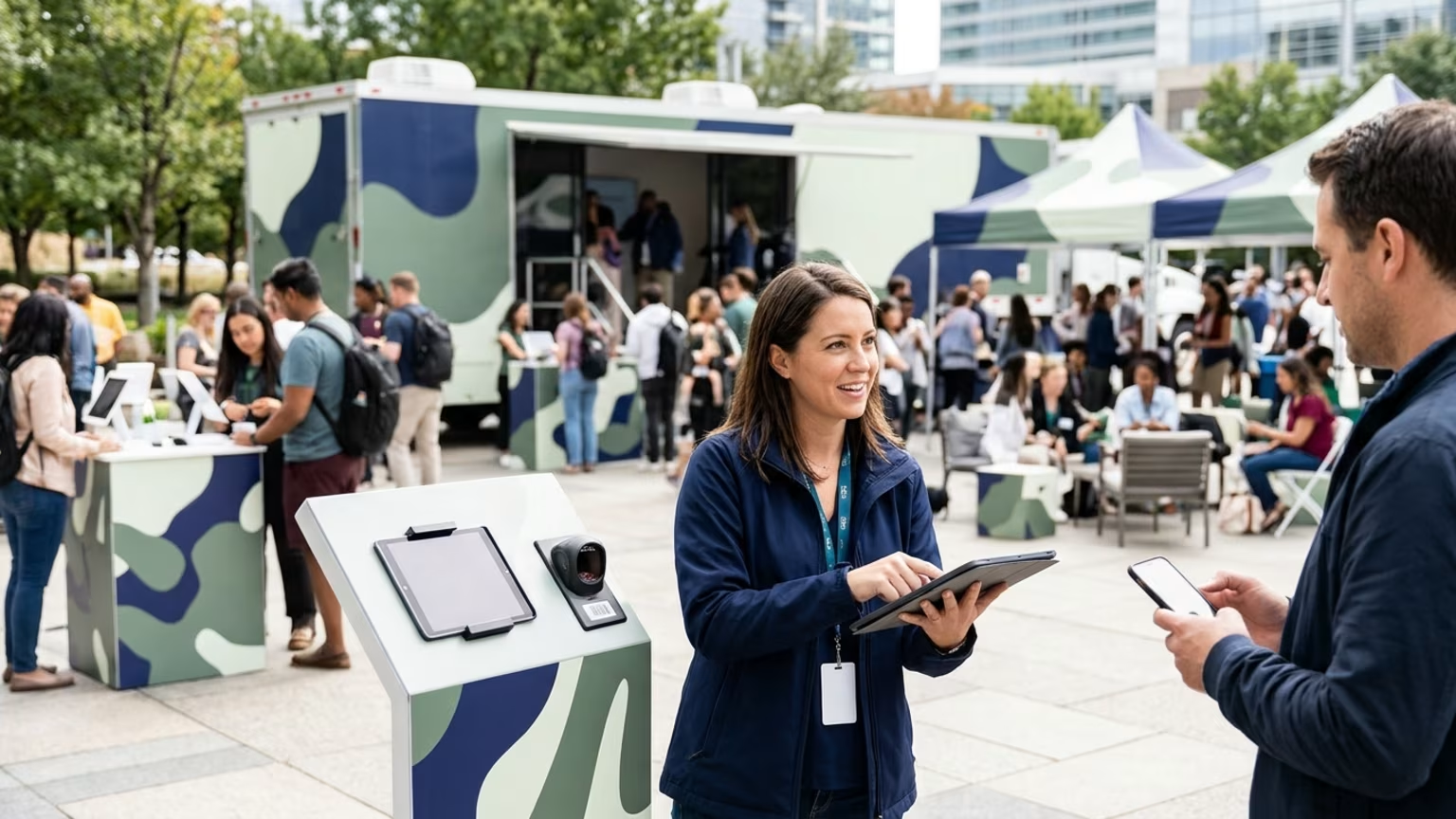
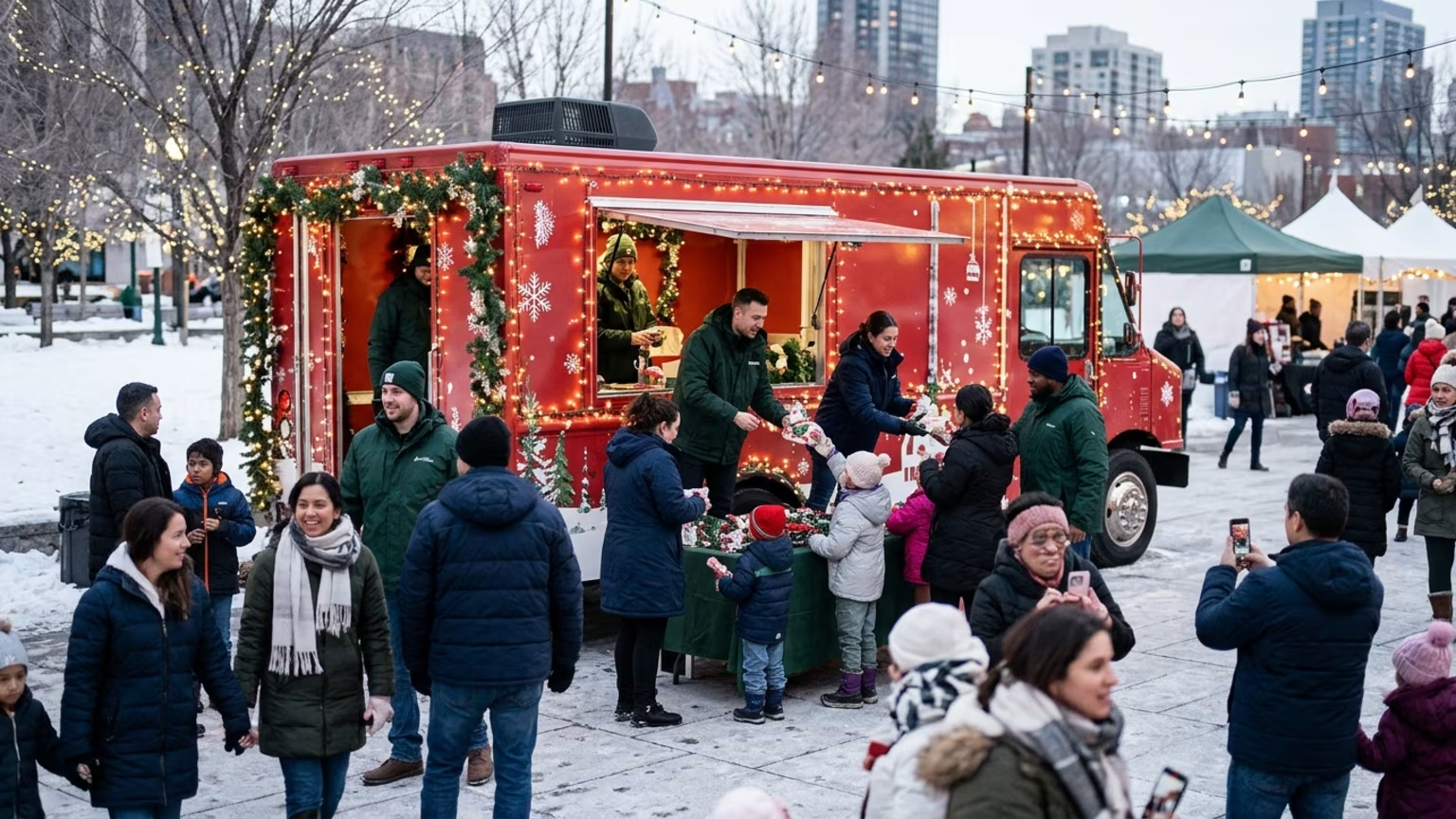
Our own experience makes that distinction concrete. We ran a mobile activation across 21 markets using a branded truck and trailer. Across the tour, we distributed 224,534 cupcakes and generated more than 2.4 million brand impressions.
Those figures describe delivery and exposure. They do not by themselves establish purchases or incremental sales. The planning article makes the same broader distinction between activity metrics and demonstrated business outcomes.
A more useful route review separates:
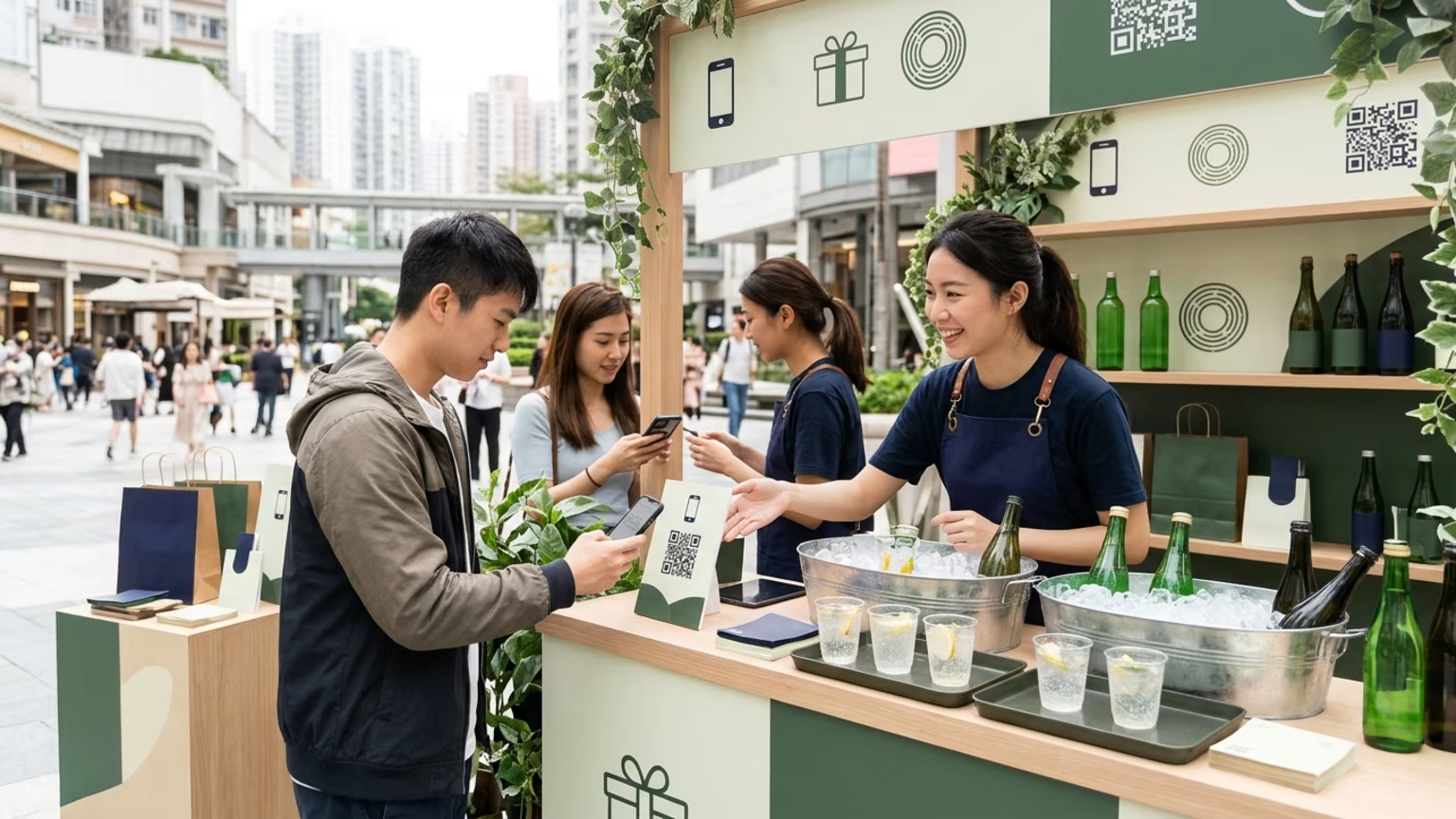
We also integrate QR codes and mobile technology across retail experiences, events and tours. Our position is that these tools should connect participation with a useful next step, not decorate a report with another engagement count.
The goal is a measurement plan that connects field activity with pipeline evidence. Return on Investment needs business evidence beyond a busy activation photograph.
The core takeaway is that a roadshow route should earn approval through audience fit and commercial opportunity, then survive an honest execution review. Aesthetics can make the experience inviting. They cannot answer where interested buyers will go next or whether the team can deliver consistently. Demand a route that supports meaningful trial and observable next steps. Let the creative work serve that route rather than distract from its weaknesses.
Roadshow polish can distract from the buyer conversation; Makai uses trained brand ambassadors in retail demonstrations focused on product trials and in-store sales. Makai also addresses low-quality trade show leads with activations designed to help food and beverage brand managers turn brief consumer interactions into qualified opportunities.

30 Years Experiential & Retail Activation Partner for CPG & Beverage Brands | Multi-Market Demos, Roadshows & Costco/Club Programs That Actually Sell