Robbie Thain
Founder, CEO

Storefront data reveals the median pop-up now lasts four days. See how CPG brands leverage September activations to drive trial, conversion, and retail sales.
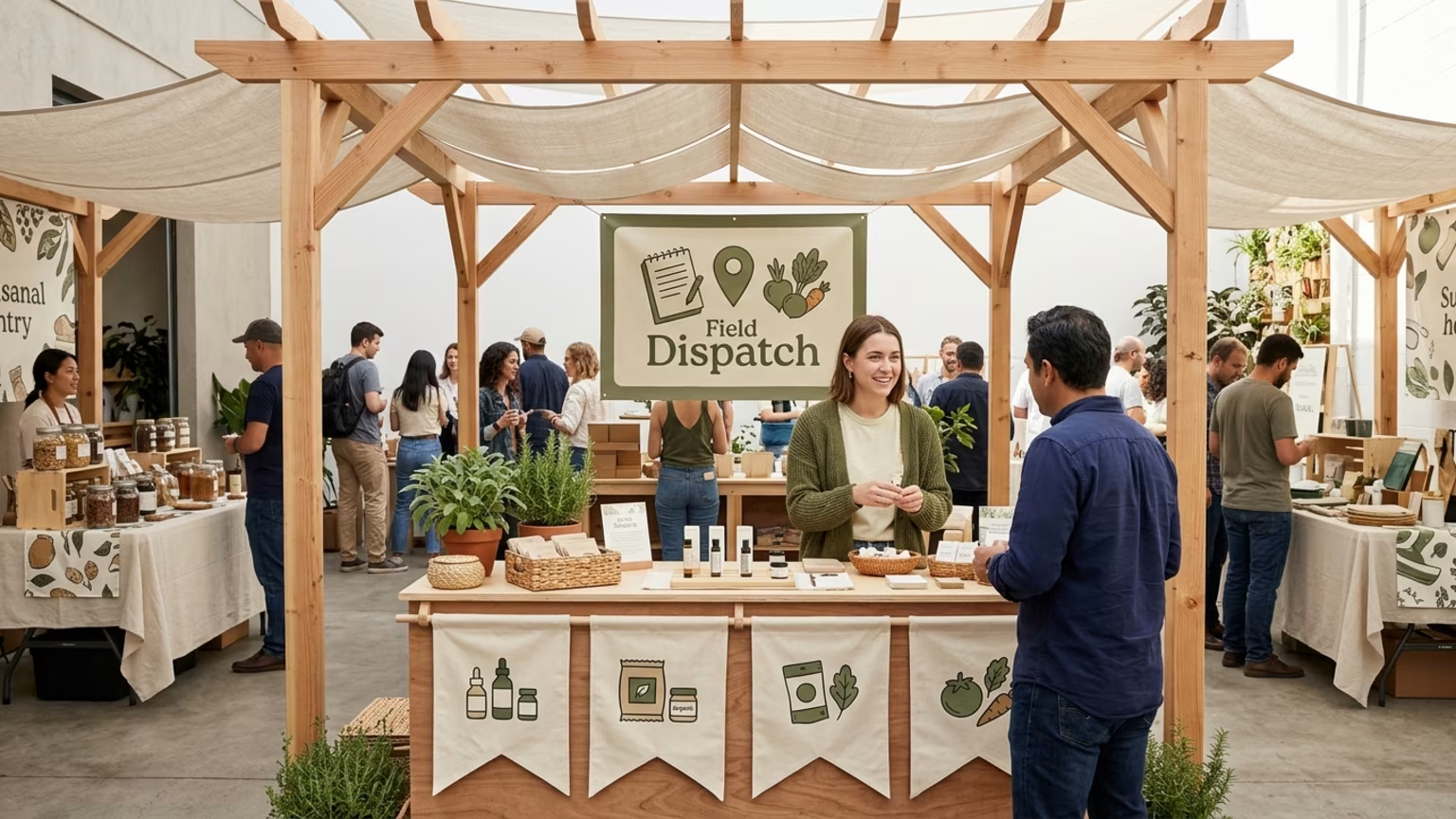
On September 4, 2026, Chief Marketer published an analysis of Storefront data detailing a major shift in physical retail strategies. The dataset examined approximately 20,000 pop-up inquiries from more than 7,000 brands across 21 countries. This global demand signal was measured over a 12-month period from June 2025 through June 2026. The findings show that brands are overwhelmingly rejecting long-term temporary leases in favor of micro-duration activations.
The most striking data point is the sheer speed of these planned activations. The median requested pop-up duration was just four days. According to the data, 80% of brands requested a space for two weeks or less. Roughly 70% requested one week or less. Nearly 50% requested three days or less, and approximately 20% wanted a single-day activation.
The calendar timing also shows intense concentration. September was the most sought-after month for planned pop-up openings. October and June followed closely behind. In fact, September was twice as busy as August in the reported Storefront data. This early fall surge acts as a critical bridge between summer lulls and Q4 commercial intensity.
Brand operators are also working with severely compressed planning cycles. Forty-two percent of brands made their first inquiry one to three months before opening. Twenty-four percent inquired one to four weeks before opening. A small six percent inquired less than a week before launch. Only 9% started more than six months in advance.
The financial realities of these short leases require careful budget management. Typical pop-up rent was reported at approximately $2,000 to $3,000 per week. Entry-level spaces averaged about $600 per week globally. Prime locations such as Beverly Hills could cost $10,000 or more per week. Crucially, these rental figures completely exclude staffing, utilities, insurance, and marketing costs.
The category mix highlights a strong push from physical goods. Fashion brands accounted for 57% of inquiries. Art and galleries followed at 15%. Food and drink brands represented 10% of the demand. Design and homeware accounted for 8%, while beauty represented 7% of inquiries.
It is important to understand the methodology behind these numbers. The Storefront dataset measures brand inquiries rather than completed bookings. A single brand might inquire with several operators before selecting one. The figures should be treated as a strong demand signal rather than a complete census of the pop-up market.
A four-day window forces field marketing teams to adopt ruthless operational discipline. We have executed over 1000 campaigns across all 50 states, bringing brands to life in every major U.S. market. From retail demos in Seattle to roadshows in Miami and events in Honolulu, our teams activate brands wherever our clients' audiences are located. In our experience, physical footprints allow consumers to sample, touch, compare, or use a product before purchase.
The Storefront data validates our approach to compact retail events. Nicholas Roberts-Moore, chief marketing officer at Storefront, characterized the format as a marketing campaign that happens to have a register in it. That framing perfectly aligns with the needs of food, beverage, snack, and wellness brands. A temporary store must serve broader purposes like trial, awareness, earned media, and customer acquisition.
When marketers upgrade their field operations, they stop treating short leases as miniature permanent stores. A four-day pop-up is an aggressive test and learn vehicle. Operators can use the first day for staff and flow adjustments. By day two, teams can compare performance by daypart, test product messages, and observe which demonstrations drive action.
Measurement specialists caution that experiential outcomes occur long before the actual transaction. When planning high-conversion activations, leaders must build their measurement architecture before fabrication begins. The measurement plan should track qualified interactions, samples distributed, and sample-to-purchase conversion. Teams can also monitor coupon redemption, retailer-locator visits, and new CRM opt-ins.
Experiential tracking must evolve to capture these diverse outcomes. Event Marketer guidance recommends that teams measure Return on Investment alongside return on experience and return on emotion. Leaders should define their KPIs before the event and conduct short exit surveys. Teams can then compare exposed attendees with a control group to identify changes in message recall.
Choosing the right success story for leadership is critical. A CFO may evaluate the activation based on incremental revenue or contribution margin. A brand team might prioritize message recall, content yield, or cultural relevance. A sales team typically needs retailer leads or distribution conversations to justify the spend.
Running a sophisticated brand moment for 96 hours creates massive logistical pressure. Short duration does not mean low complexity. A four-day activation requires extensive pre-production, permitting, and inventory management. Teams must also manage fabrication, training, and teardown under tight deadlines.
The shift in seasonal consumer behavior accelerates these operational timelines. The National Retail Federation reported that 49% of consumers began Halloween shopping before October. This behavior is up significantly from 34% a decade earlier. The same report noted that one-quarter of consumers had already purchased Halloween-related items by early August.
Because shopping begins earlier, brands use September to establish seasonal relevance. They introduce fall merchandise and collect market learning before October promotional periods hit. However, launching a fast campaign without adequate inventory or trained staff generates attention that brands cannot convert. Marketers must connect the physical experience directly to their retail distribution channels.
This means integrating local sales pathways into the physical floor plan. Teams might implement a retailer locator, a limited-time nearby offer, or retailer-specific QR codes. When planning mobile pop-up tours for retail expansion, the physical experience should not end when temporary doors close. Post-event CRM journeys must be built before the fabrication phase even begins.
The pressure extends to physical staffing models. Securing brand ambassadors for a short activation requires rigorous vetting. You cannot compromise on product education or customer service simply because the lease is short. Brand representatives must be fully briefed on the specific conversion goals before they ever step onto the floor.
The base rent is only a fraction of the total required budget. Storefront’s reported ranges explicitly exclude the costs of marketing, utilities, and insurance. Teams must also account for point-of-sale systems, agency support, cleaning, and photography. Failure to budget for these operational realities can derail an otherwise brilliant physical campaign.
Operating in major hubs adds strict regulatory and geographical hurdles. The leading cities by number of brand inquiries were Paris, New York, London, Los Angeles, and Milan. U.S.-based brands were the most likely to test a pop-up store. You must execute your teardown with the same rigorous coordination as your opening.
The Chief Marketer coverage provided concrete examples of brands executing short-term strategies. Pandora operated a month-long Los Angeles pop-up in October. The brand established new-customer acquisition as its primary objective. Colby Jarvis, Pandora’s marketing director, said the core KPI was introducing the brand to people who had not previously considered buying it.
The jewelry brand achieved significant results by targeting acquisition. According to the article, 80% of sales came from new customers. The pop-up’s traffic and sales ranked in the top percentile compared with Pandora’s 12 other Los Angeles-area stores. Units per transaction reached 2.86, which was higher than the Los Angeles fleet during that period.
A short activation can also function as a controlled product test. Furniture brand Povison operated a four-day Los Angeles pop-up in November 2025. They wanted to test how consumers would respond to products in person. Povison reported that power recliners represented 39% of sales during the activation.
The temporary showroom allowed the furniture maker to measure direct physical engagement. Those specific power recliners had a 30% higher average order value than the rest of the assortment. Shirley Han, Povison’s general director, said the store connected the company directly with consumers. This physical interaction data helps brands determine whether permanent retail spaces should form part of their long-term commercial strategy.
Finally, compact spaces can drive cultural relevance and mental availability. Cheez-It operated a three-night nightclub in New York City. The brand designed this as a marketing-focused activation rather than a conventional retail store. More than 2,000 consumers attended the event, which also included an invite-only influencer night.
The snack brand prioritized consumer conversation over direct floor sales. Cara Tragseiler, the brand’s senior brand director, stated a clear strategic goal for the space. She wanted to make Cheez-It the first snack consumers thought of when choosing a salty snack. Brands succeeding at owning specific occasions understand that awareness and acquisition require entirely different execution scorecards.
Is your field team prepared to convert a four-day activation into measurable retail sales before your rental window expires?
Rushing a short-term pop-up to market often leaves teams dealing with inefficient post event follow up and CRM routing. Makai resolves this breakdown by deploying our Storage & Logistics capability to store your sampling product and event gear, then ship, track, and coordinate delivery nationwide so every activation stays on schedule. Request a proposal

30 Years Experiential & Retail Activation Partner for CPG & Beverage Brands | Multi-Market Demos, Roadshows & Costco/Club Programs That Actually Sell


