Robbie Thain
Founder, CEO

Shoppers in diverse aisles often encounter disconnected demo tables, making localized language profiling, bilingual merchandising.
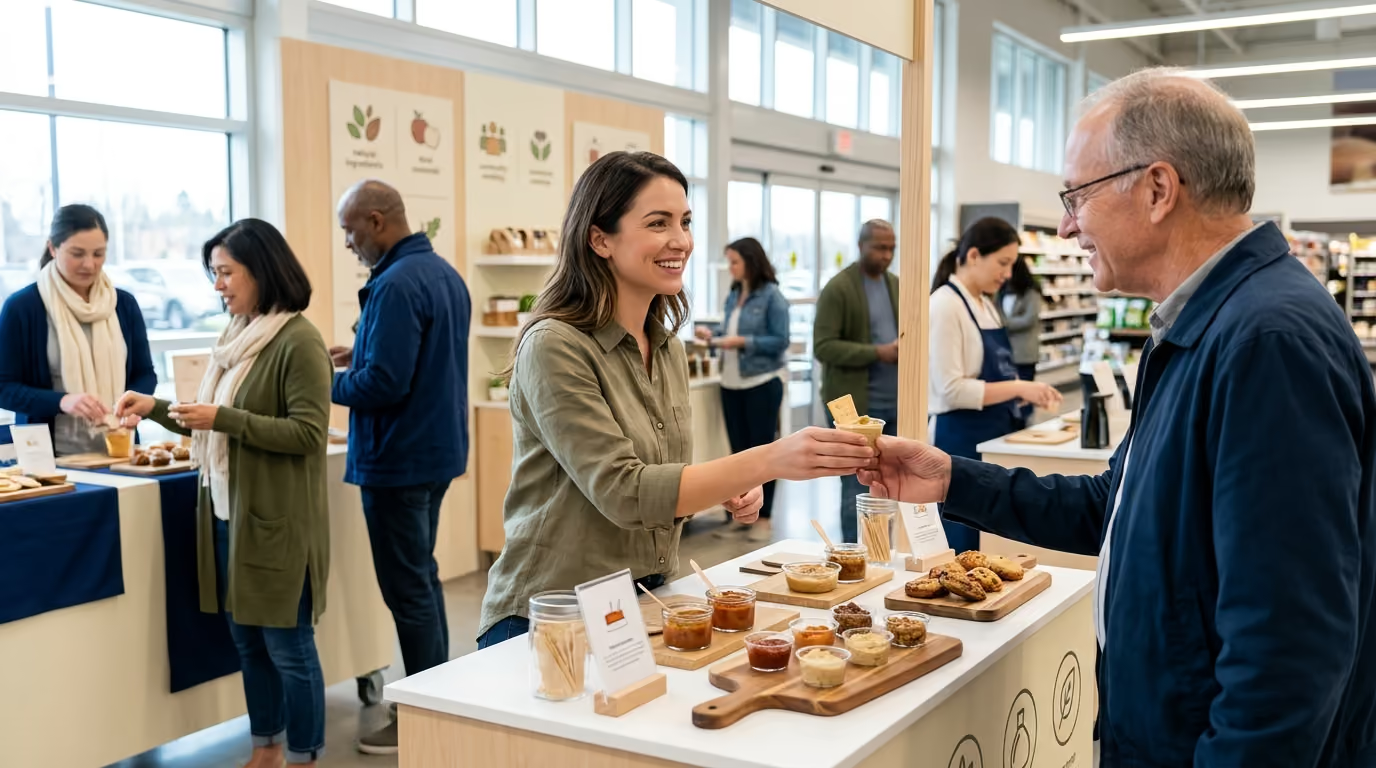
A Saturday afternoon shopper stops in front of a retail demo table in a high-density suburban grocery store. The product is an authentic cooking paste, but the brand ambassador reads from a rigid national script written in standard English. When the shopper asks a question in Spanish about recipe pairings and heat levels, the worker hesitates and points silently at the packaging. The shopper smiles politely, leaves the sample cup on the tray, and walks away without putting the product in their cart.
This breakdown happens across hundreds of retail stores every weekend. This playbook delivers a comprehensive framework for planning and executing high-converting retail sampling programs across multilingual and multicultural consumer markets. Marketing leaders will learn how to align store-level language profiles, deploy bilingual signage, train field teams, and track rigorous sales lift.
Consumer demographics across the United States have shifted faster than conventional retail marketing playbooks. Walking through a regional supermarket, mass merchant, or club store reveals an audience with diverse cultural backgrounds and distinct culinary habits. National brand programs often treat these varied store locations as identical environments. They send standardized promotional kits, monolingual marketing assets, and scripted brand ambassadors into markets where those tools fail to connect.
The operational friction on the retail floor is immediate and costly. When a brand fails to reflect the community it serves, shoppers perceive the activation as distant or confusing. Brand ambassadors struggle to explain unfamiliar ingredients, cooking methods, or flavor profiles to curious consumers. At the same time, English-dominant shoppers in the same aisles can feel alienated if an activation appears completely inaccessible to them.
Retailers notice this lack of alignment immediately. Store managers track shelf velocity, foot traffic friction, and cart abandonment in their aisles. When an outside field team creates confusion or fails to move inventory, retail buyers hesitate to grant prime demo space for future product launches. Brand leaders are left looking at flat scanner data, wondering why an expensive weekend campaign generated negligible sales lift.
Solving this challenge requires moving away from generic national templates. Brand teams must treat multicultural retail execution as an operational discipline grounded in local data, cultural context, and structured communication. When executed with precision, in-store product trials transform hesitant shoppers into long-term brand advocates.
A successful field program begins with market intelligence rather than creative assumptions. Consumer preferences, native languages, and shopping missions differ significantly across regions, cities, and individual zip codes. Designing an effective program requires a strategic framework built on store-level profiling, inclusive communication, culinary assortment, and category expansion.
Language strategy cannot rely on a single national demographic template. A report from the National Grocers Association revealed that Hispanic language preferences vary directly with the ethnic density of the local neighborhood. In high-density Hispanic areas, an estimated 75 percent of Hispanic shoppers prefer communicating mostly in Spanish or using more Spanish than English. In those same high-density areas, 45 percent prefer English only.
In lower-density Hispanic neighborhoods, the National Grocers Association found that 38 percent of Hispanic shoppers preferred English only. These data points prove that broad demographic categories are not uniform language segments. A national Hispanic marketing plan cannot dictate the operational language mix for an individual retail location. Brands must use store-level and neighborhood demographic data to decide whether an activation should be English-led, bilingual, or Spanish-led.
The National Grocers Association framework categorizes shoppers across five distinct language profiles: English-dominant, English-preference, bilingual, Spanish-preference, and Spanish-dominant. High-density retail corridors demand flexible field teams capable of shifting across these linguistic profiles instantly. Relying on English-only staffing in a Spanish-preference corridor caps potential conversion rates before the first sample cup is poured.
Signage design requires balancing cultural relevance with broad shopper accessibility. A published academic study using a national consumer panel examined how shoppers respond to English, bilingual, and Spanish retail signage. The researchers found that the language displayed on in-store signage directly influenced shopper intentions to browse and purchase. Bilingual signs generated significantly higher ratings for authenticity, inclusiveness, and general interest compared to monolingual signs.
The same research found that signs presented exclusively in a non-English language lowered general shopper expectations regarding service quality, communication ease, and inclusiveness. When an activation uses untranslated foreign-language signage, shoppers outside that specific language group often assume the product or service is not intended for them. This creates unintended friction in broad-traffic grocery environments.
The strategic imperative for high-traffic retail stores is clear. Brands should deploy bilingual signage that maintains clean, readable English messaging while incorporating the prominent secondary language of the neighborhood. This approach signals cultural welcome to the heritage audience without creating barriers for the broader customer base. Bilingual clarity expands the total addressable foot traffic passing the demo station.
Broad demographic classifications obscure deep regional and culinary differences. As noted in research by the National Grocers Association, Hispanic consumer markets feature distinct country-of-origin concentrations across major metropolitan areas. Mexican-origin consumers represent the majority in cities such as Dallas and Los Angeles, while Puerto Rican and Dominican communities have strong representation in New York. Cuban-American households represent a significant share of the market in South Florida.
These regional differences directly dictate product relevance, taste preferences, and usage occasions. A seasoning blend, cooking sauce, or specialty beverage tailored for Mexican culinary traditions may not resonate in a market dominated by Caribbean or South American culinary habits. Planning an activation requires analyzing regional dietary patterns, staple ingredients, and traditional preparation techniques before finalizing the featured stock-keeping units.
Successful brand managers align their sampling activations with local retail assortments and verified category sales. Hyper-local marketing requires coordinating with store managers to confirm that the specific regional products featured at the sampling station are fully stocked on primary shelves and endcap displays. Selecting the right product for the right neighborhood prevents wasted labor and maximizes immediate purchase conversion.
In-store product sampling functions as an educational engine that drives measurable retail growth. A study published in the Journal of Retailing analyzed store scanner data across multiple product categories and retail locations. The researchers discovered that in-store sampling generates both immediate sales spikes and sustained long-term sales increases. Repeated sampling events for the same product created a multiplicative positive impact on extended sales performance.
The Journal of Retailing study uncovered a critical commercial dynamic: product sampling creates a category-expansion effect. Rather than merely cannibalizing existing sales or prompting brand switching, sampling brings entirely new shoppers into the category. Consumers who had no prior intention of purchasing within that product classification decided to buy after experiencing a guided live demonstration.
This finding carries vital significance for multicultural activations introducing specialty or culturally specific products. When shoppers encounter unfamiliar ingredients, formats, or flavors, perceived risk prevents them from buying. A structured trial removes sensory hesitation and demystifies the product. Field staff who explain where a product fits into daily meal preparation help shoppers cross the threshold from curiosity to regular category consumption.
The human interaction at the sampling station is the primary engine of consumer conversion. Research on in-store product promotions demonstrates that personal engagement with the product demonstrator significantly increases post-sample purchase rates. Field personnel are not passive sample dispensers. They serve as educators, cultural bridges, and sales closers.
In our experience executing high-volume retail demos, product sampling programs, and roadshows, staffing alignment determines whether an activation accelerates retail velocity or stalls out. We specialize in bringing brands face to face with their target audiences to build authentic consumer relationships across diverse retail footprints. Matching the linguistic capabilities and cultural literacy of the field team to the local store profile ensures that every conversation drives measurable trial.
Brand managers must evaluate field staffing partners against specific operational criteria rather than generic staffing rosters. Field personnel assigned to multicultural retail corridors must possess concrete operational capabilities:
Selecting staff with these core competencies prevents communication breakdowns on the sales floor. When a shopper asks about spice intensity, cooking times, or pairing options, the brand ambassador can respond with immediate authority. This operational competence builds instant trust with the consumer and reflects positively on the sponsoring brand.
Field training programs must prepare brand ambassadors to read shopper cues and adapt their spoken language naturally. Brand ambassadors should never assume a shopper's preferred language based solely on visual appearance. Training modules must teach staff to open interactions with an inviting, bilingual greeting that allows the shopper to choose their preferred language.
Once the consumer responds, the brand ambassador must maintain that chosen language effortlessly throughout the product demonstration. If a shopper switches languages mid-conversation, the worker must follow their lead without hesitation. This linguistic agility makes the interaction feel natural, respectful, and frictionless for every visitor who approaches the demo table.
Brand teams should supply bilingual reference guides, pronunciation glossaries, and key selling points to field staff prior to every campaign. These materials must cover technical product attributes, including non-GMO status, gluten-free certification, organic sourcing, and specific country-of-origin details. Equipping field teams with accurate vocabulary in both languages ensures consistent, compliant messaging across every store location.
Visual merchandising at the sampling station establishes the initial impression for passing foot traffic. Within the fast-moving environment of a retail grocery store, shoppers make subconscious judgments about an activation within seconds. Every graphic element, translated word, and merchandising fixture must communicate quality, safety, and cultural relevance.
Signage layout must maintain visual balance between languages to maximize readability and shopper engagement. Primary headlines should feature clean typography with English and the secondary language presented in clear, harmonious proportions. Placing one language in a prominent position while shrinking the secondary translation into illegible fine print diminishes the welcoming impact of the visual asset.
Graphic elements must avoid exaggerated cultural cliches or cartoonish motifs. Visual design should emphasize appetite appeal, high-resolution ingredient photography, clear packaging images, and certified quality seals. Clean, modern aesthetics paired with precise bilingual typography communicate premium brand positioning to all demographic groups.
Directional callouts on promotional signage should clearly point to product locations within the store. Callouts such as "Find Us in Aisle 4" or "Available in the Fresh Dairy Case" should appear in both languages. Clear directional guidance eliminates shelf-search friction, ensuring that shoppers who enjoy the sample can locate inventory and complete their purchase immediately.
Perimeter departments represent prime retail territory for multicultural sampling activations. Consumer research from Nielsen reveals that multicultural households spend approximately $40 billion annually on fresh products, dedicating 21 percent of their total food spending to fresh grocery categories. Furthermore, African American, Asian American, and Hispanic consumers significantly over-index in meat and seafood spending.
Nielsen data shows that African American households allocate 44 percent of their perishables budget to meat and seafood categories. Asian American shoppers spend more than double the amount on fresh seafood compared to non-Hispanic White households. Additionally, 99 percent of multicultural consumers shop traditional grocery stores for fresh items, with 81 percent shopping mass supercenters and 57 percent shopping warehouse clubs.
These spending patterns highlight the commercial opportunity of placing sampling activations in perimeter grocery zones. Demonstrating specialty sauces, marinades, produce, seasonings, and bakery items adjacent to fresh meat, seafood, and produce departments creates powerful cross-merchandising connections. Brands that activate in these high-traffic perimeter corridors tap directly into proven multicultural purchasing habits.
Maximizing the financial return of a retail sampling program requires looking beyond the single promoted stock-keeping unit. Field activations should deliberately encourage basket building by pairing the featured product with complementary items found in nearby aisles. When sampling a specialty curry paste, cooking simmer sauce, or hot sauce, the brand ambassador should display the complete dish alongside the primary ingredients required to make it.
Field teams should coordinate with store department managers to co-locate necessary companion items near the sampling table. Displaying fresh proteins, specialty produce, rice varieties, or tortillas directly adjacent to the demo station simplifies the shopper's path to purchase. The consumer leaves the sampling encounter with a complete meal solution in hand, generating incremental sales across multiple store departments.
To reinforce basket building, brands can distribute concise, bilingual recipe cards that outline simple four-step preparation instructions. These physical cards provide shoppers with an exact ingredient checklist to complete their meal during that shopping trip. Clear culinary guidance bridges the gap between tasting a sample in the aisle and successfully preparing the dish at home.
Field interactions on a busy retail floor require a disciplined operational structure. Research into in-store sampling indicates that structured personal communication between the demonstrator and the consumer significantly improves sample trial rates and immediate product purchase. Brand ambassadors need a reliable conversational framework that educates consumers efficiently while keeping foot traffic moving.
A systematic seven-step conversational protocol ensures that field teams deliver consistent brand education and drive commercial conversion across diverse retail environments:
During peak weekend shopping windows, demo stations often encounter dense clusters of consumers. Brand ambassadors must manage these crowds with poise, ensuring safe food handling while delivering personalized attention. Table setups should separate the food staging area from the active sampling tray to maintain strict hygiene standards.
When multiple shoppers approach the station at once, the brand ambassador should address the group collectively using clear, engaging language. Group interactions can create social proof, encouraging hesitant passersby to step forward and accept a sample. Research shows that observing other shoppers enjoy a sample increases a consumer's willingness to try the product and make an immediate purchase.
If a shopper rejects a sample or expresses hesitation due to dietary restrictions, staff must respond with professional courtesy. Field personnel should be trained to highlight alternative product varieties within the brand's portfolio, such as mild versions, low-sodium options, or dairy-free alternatives. A gracious, accommodating response maintains brand goodwill regardless of whether an immediate trial occurs.
Moving from high-level strategy to flawless store-level execution requires strict operational discipline. Brand managers, agency partners, and retail field personnel must follow a standardized sequence of checkpoints before, during, and after every retail activation. Systematic execution prevents supply chain gaps, staffing shortages, and compliance failures on event day.
Successful store activations require thorough advance preparation across marketing, operations, and store management teams:
On the day of the activation, field teams must maintain operational excellence from initial setup through final breakdown:
Field teams require clear, concise operational guidance for every store location on their schedule. A store-specific activation brief eliminates guesswork by consolidating critical local data onto a single planning document. Brand managers should provide these briefs to field supervisors prior to campaign launch.
Supplying field personnel with structured store briefs ensures brand consistency while respecting local market differences. Field teams arrive on the retail floor fully informed about customer demographics, inventory locations, and operational expectations.
For marketing teams seeking deeper operational guidance on structuring field campaigns across varied retail footprints, our breakdown on choosing the right physical retail environment provides valuable comparative frameworks.
Measuring the commercial impact of multicultural retail sampling requires moving beyond vanity metrics. Simply counting the total number of paper cups distributed across a weekend does not prove commercial viability. Marketing leaders must implement a balanced measurement framework that tracks real-time execution quality, immediate sales conversion, and sustained long-term revenue growth.
Demonstrating marketing accountability requires tracking specific financial metrics before, during, and after the sampling activation:
Tracking these commercial indicators allows marketing directors to calculate precise Return on Investment (ROI) across individual retail accounts. Comparing sales lift across stores with varying language strategies helps refine future budget allocations.
Execution metrics capture the quality of the on-floor consumer interaction and identify operational bottlenecks in real time:
Collecting systematic field feedback provides actionable retail intelligence to brand marketing and sales teams. If consumers repeatedly ask about a specific ingredient or preparation step, marketing leads can update packaging copy, digital assets, or future point-of-sale displays accordingly.
To learn more about tracking retail performance data and building defensible attribution models, read our analysis on metrics to evaluate retail sampling performance and our guide on proving retail demo Return on Investment.
To understand how these strategic principles function in practice, consider a commercial case study involving a premium shelf-stable cooking sauce brand entering major retail distribution across the Southwest.
A food brand producing authentic Latin American simmer sauces and marinades secured new retail placement across one hundred grocery locations in Southern California, Arizona, and Texas. The brand featured heritage culinary flavors, including authentic mole, adobo, and sofrito bases. Early retail scanner data indicated sluggish sales velocity in suburban mass retail accounts and regional supermarket chains.
The brand's initial sampling effort relied on a standardized national staffing agency that deployed monolingual English speakers with standard promotional kits. Brand ambassadors handed out plain tortilla chips dipped in cold sauce without explaining how to cook with the product. Shoppers tasted the cold samples, found the flavor intense, and walked away without purchasing. The brand faced impending delisting if retail sales velocity did not improve within sixty days.
The brand reorganized its retail activation strategy using the localized principles outlined in this playbook:
The restructured sampling campaign reversed the brand's sales trajectory across the retail territory:
This real-world turnaround demonstrates that aligning language capabilities, culinary context, and professional field execution produces substantial commercial returns. When brands treat multicultural shoppers with operational respect and cultural authenticity, consumers respond with long-term brand loyalty.
For additional perspectives on connecting on-the-ground activations with broader retail marketing channels, review our guide on linking in-store sampling to retail media and our analysis of high-converting retail demos.
Even experienced marketing teams can encounter pitfalls when launching field activations in diverse consumer markets. Identifying and avoiding these common operational mistakes protects marketing budgets and preserves retail partner relationships.
The most common strategic failure is treating broad ethnic demographic classifications as uniform consumer groups. Assuming that all Hispanic, Asian American, or African American shoppers share identical taste preferences, dietary habits, and language profiles leads to misaligned messaging and wasted labor. A campaign designed around Mexican culinary traditions will struggle in a predominantly Cuban-American neighborhood in Miami.
Brand managers must insist on store-level demographic profiling and local assortment analysis before approving field campaign plans. Marketing programs must reflect the specific cultural, culinary, and linguistic realities of the target retail trading area. Tailoring products and messaging to the local community builds credibility and drives higher conversion rates.
Translating English marketing scripts word-for-word into a secondary language often produces awkward, unnatural phrasing that alienates native speakers. Culinary terminology, colloquial cooking expressions, and regional flavor descriptors do not translate directly through automated translation tools. Literal translations can sound stiff, robotic, or culturally disconnected to shoppers on the retail floor.
Brands should collaborate with native-speaking culinary copywriters and experienced field managers to develop localized messaging. Brand messaging should focus on communicating core product benefits, sensory characteristics, and usage bridges in natural, conversational phrasing. Providing field staff with flexible talking points rather than rigid scripts empowers them to connect authentically with consumers.
A well-executed sampling demonstration creates immediate consumer demand. If the retail shelf runs out of inventory during the first two hours of a six-hour shift, the remaining labor budget is largely wasted. Field teams standing in front of empty retail shelves cannot convert interested shoppers into paying customers.
Brand teams must establish strict inventory verification protocols with retail category managers and store-level department heads. Promotional stock orders must be tracked from distribution centers to store backrooms well ahead of event day. Field ambassadors should inspect shelf inventory upon arrival and restock displays continuously throughout their shift to maintain full product availability.
Evaluating a sampling campaign solely on same-day unit sales provides an incomplete picture of marketing performance. While immediate sales lift is important, sampling also drives long-term brand awareness, category entry, and sustained repeat purchases over time. Focusing exclusively on immediate shift sales can lead brand teams to undervalue activations that build substantial long-term customer equity.
Marketing leaders must analyze retail scanner data over extended four-week, eight-week, and twelve-week post-event windows. Measuring sustained velocity lift, household penetration gains, and repeat purchase rates reveals the true financial impact of the field marketing investment. Comprehensive measurement provides the data needed to justify ongoing retail marketing budgets.
Review this playbook whenever your brand prepares for regional retail expansion, introduces new culinary products, activates retail media partnerships, or audits underperforming store-level sampling programs.
Field marketing excellence across multilingual and multicultural retail environments requires continuous operational discipline, rigorous localized planning, and genuine cultural literacy.

30 Years Experiential & Retail Activation Partner for CPG & Beverage Brands | Multi-Market Demos, Roadshows & Costco/Club Programs That Actually Sell