Robbie Thain
Founder, CEO

While guerilla campaigns appear completely spontaneous to consumers, successful brand activations require rigorous property permissions, municipal permits.

Marketing leaders often search for whether guerilla marketing is legal without permits, hoping to balance high-impact street visibility with risk management. This guide provides the definitive operational blueprint for executing temporary, high-impact activations that captivate audiences while remaining compliant with municipal codes and property laws.
Guerilla marketing generates outsized consumer engagement by using creative surprise rather than unauthorized public actions. Enterprise brands execute temporary activations that protect brand equity, adhere to municipal codes, and deliver measurable Return on Investment (ROI).
The trade show floor and the surrounding metropolitan streets present an unpredictable operational environment. Inside the convention hall, brands battle wall-to-wall booth fatigue, where standard pipe-and-drape displays blend into an endless sea of identical corporate signage. Outside the venue, eager field teams attempt rogue street activations, only to face immediate shutdowns from private security guards or local police officers.
A brand ambassador team without proper site permits might attempt to hand out cold beverage samples near an exit plaza. Within twenty minutes, transit police confiscate the sampling trays for blocking pedestrian flow. Meanwhile, an unpermitted projection display on an adjacent hotel wall triggers a municipal code citation and immediate cease-and-desist orders.
These chaotic scenarios do not create edgy brand prestige. They waste marketing budgets, expose executives to liability, and alienate the exact retail partners attending the convention. True operational mastery lies in orchestrating street-level activations that look spontaneous to the consumer while operating with total administrative clearance behind the scenes.
Guerilla marketing is a creative strategy, not an exemption from municipal law. The term describes unconventional, highly visible, temporary interactions that generate attention disproportionate to media spend. Surprise is a creative device, not a legal defense.
An activation can appear completely spontaneous, theatrical, or discovered by chance while remaining fully authorized by local authorities. The central strategic principle is simple: preserve the appearance of surprise while eliminating unauthorized conduct. When teams fail to understand this balance, activations collapse under regulatory scrutiny.
To build an activation that survives legal and field realities, marketing teams should review our guerilla marketing tactics field guide. Creative surprise should stem from unusual timing, clever staging, and unexpected placement within an approved site. It should never stem from trespassing, deceptive safety risks, or the evasion of local officials.
The safest campaigns separate creative drama from legal concealment. When an activation is designed correctly, passersby experience a memorable brand moment. Simultaneously, the field director holds signed permits, insurance certificates, and property agreements ready in a field binder.
Every temporary brand activation, pop-up, or street deployment must pass through five distinct operational permission layers. Bypassing any single layer exposes the brand to fines, site shutdowns, or public relations crises.
The brand must identify the exact legal controller of every surface and footprint used by the campaign. Sidewalks, shopping center aprons, transit plazas, sports venue perimeters, and university grounds often look public but are privately held or managed by public-private entities.
A comprehensive written site agreement must detail specific operational rights:
Private property permission does not override city regulations. A shopping center manager may approve your sampling booth, but the municipal health department still controls food safety standards. Both permissions must exist concurrently before staff step onto the property.
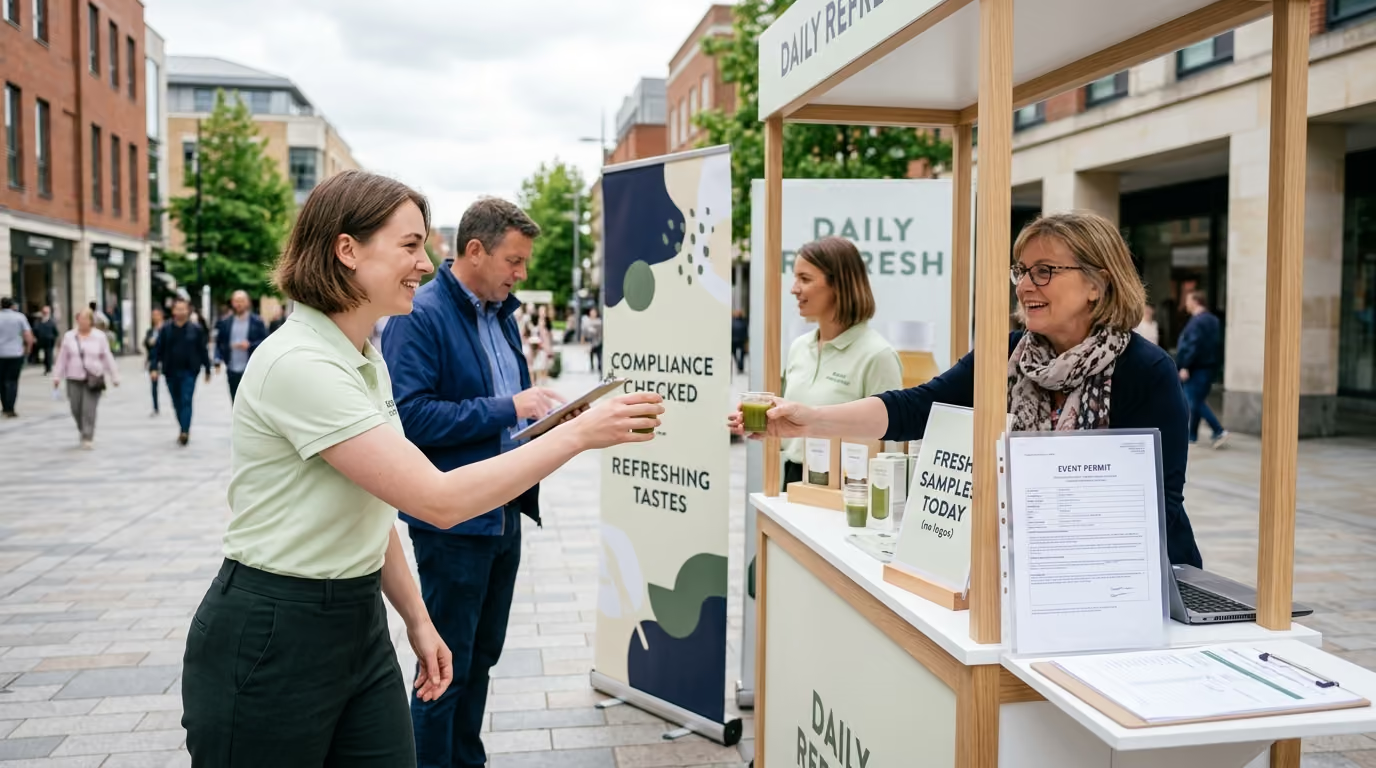
Government agencies govern the public right-of-way to protect citizen safety, traffic movement, and commercial fairness. Operating on public property requires securing specific permits well ahead of the activation date.
Key municipal permits include:
A common industry misconception is that free giveaways do not require municipal oversight. Salt Lake County requires a health department permit for any temporary food service offered to the public, regardless of whether it is sold or free. Santa Clara County similarly enforces environmental health permits for all sampled, sold, or distributed food and beverage items.
The specific physical product distributed during an activation triggers distinct regulatory frameworks. Food, beverage, and nutritional supplements demand strict sanitary controls.
Local health jurisdictions enforce strict operational standards on sampling:
Field marketing teams cannot treat food distribution like handing out flyers. Shelf-stable, prepackaged goods require basic hygiene protocols, while exposed, perishable, or temperature-sensitive foods require active temperature logs and hand-washing stations.
Guerilla marketing often utilizes actors, theatrical reveals, and unannounced pop-up experiences. The Federal Trade Commission (FTC) regulates these interactions to protect consumers from deceptive advertising.
The FTC requires advertisers to substantiate all express and implied objective claims before disseminating them to the public. Health, safety, nutritional, or performance claims require competent and reliable scientific evidence. A brand ambassador delivering a scripted claim on a street corner is held to the same legal standard as a national television commercial.
Creative teams must maintain clear internal divisions among marketing statements:
A clever or unexpected activation format does not lower the substantiation standard. Staged interactions must never deceive consumers about the commercial nature of the encounter.
Modern activations rely on lead generation, QR code scans, SMS opt-ins, and digital sweepstakes. Capturing consumer data in the field triggers state and federal consumer privacy statutes.
The FTC enforces strict compliance with the CAN-SPAM Act for commercial email collection. Marketing emails must include accurate header information, clear identification of the message as an advertisement, a valid physical postal address, and a functioning opt-out mechanism. Opt-out requests must be processed within 10 business days.
Brands running field campaigns must establish compliant digital intake workflows:
When consumers provide contact details in exchange for a sample or branded utility, the interaction must be transparent. For innovative ideas on delivering value during interactions, review how branded utility in guerilla marketing builds immediate consumer trust.
Deploying physical assets into metropolitan spaces requires careful logistical planning. Guerilla tactics that alter physical environments without authorization create severe liabilities.
Affixing stickers, posters, or branded hardware to public infrastructure violates local vandalism and sign codes. Unauthorized street postings create immediate risks for the brand:
Visibility does not require vandalism. Securing temporary rights to private building walls, construction barricades, or designated promotional kiosks achieves the exact same visual grit. It delivers urban authenticity while providing legal protection and clean teardown protocols.
Projection campaigns allow brands to display dynamic video across massive architectural surfaces without physical installation. However, light does not bypass property law. Unpermitted projections on private or public structures can trigger trespass, nuisance, and sign-code violations.
Every projection activation must satisfy key operational checkpoints:
A projection review ensures that high-powered visual displays capture attention without triggering emergency calls or city citations. Brands can explore our dedicated street-level guerilla marketing services to execute secure visual campaigns nationwide.
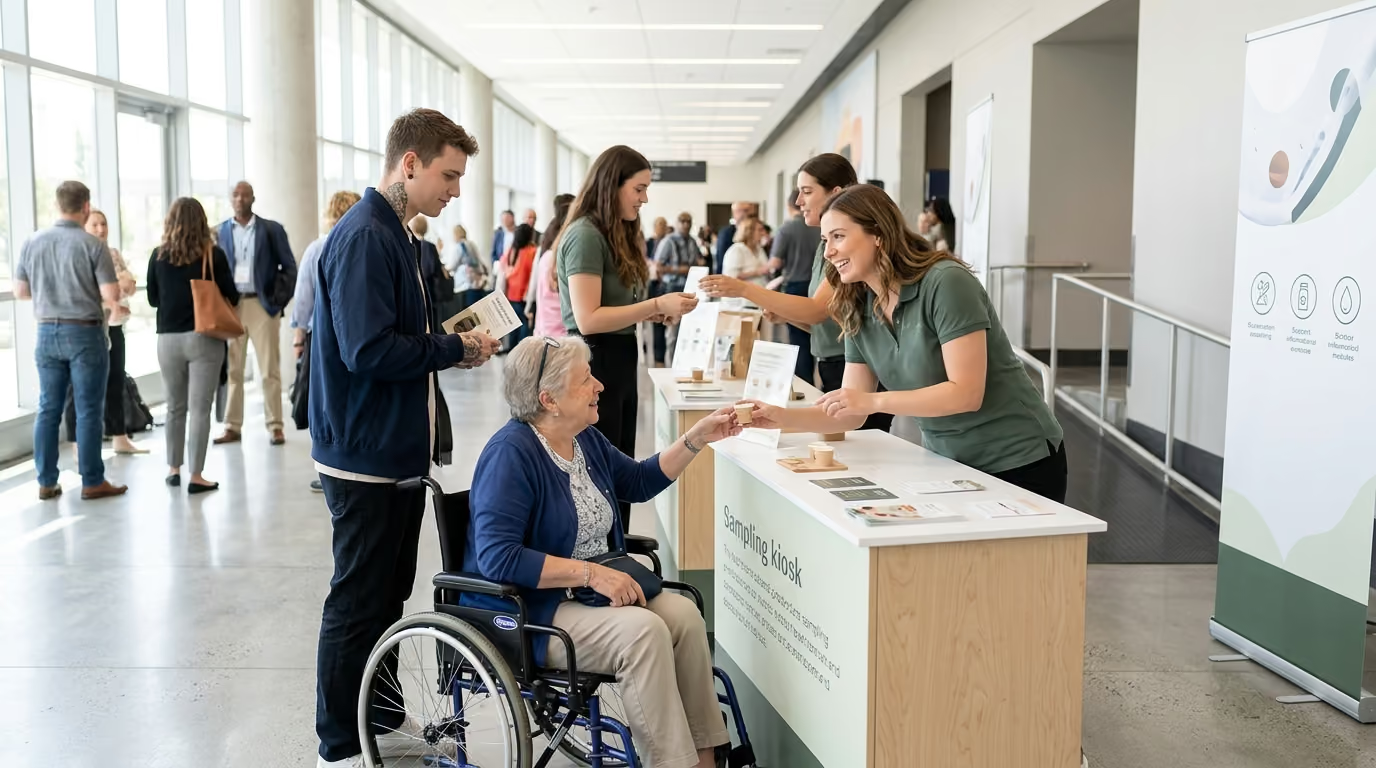
Field installations such as modular shipping containers, sampling kiosks, and staging platforms must comply with federal accessibility mandates. The Americans with Disabilities Act (ADA) explicitly covers temporary buildings, exhibits, and pedestrian passageways.
Short campaign duration does not exempt an activation from federal accessibility standards:
Excluding individuals with disabilities through poor physical design creates severe legal liability. It damages brand perception and ruins consumer goodwill within minutes of opening.
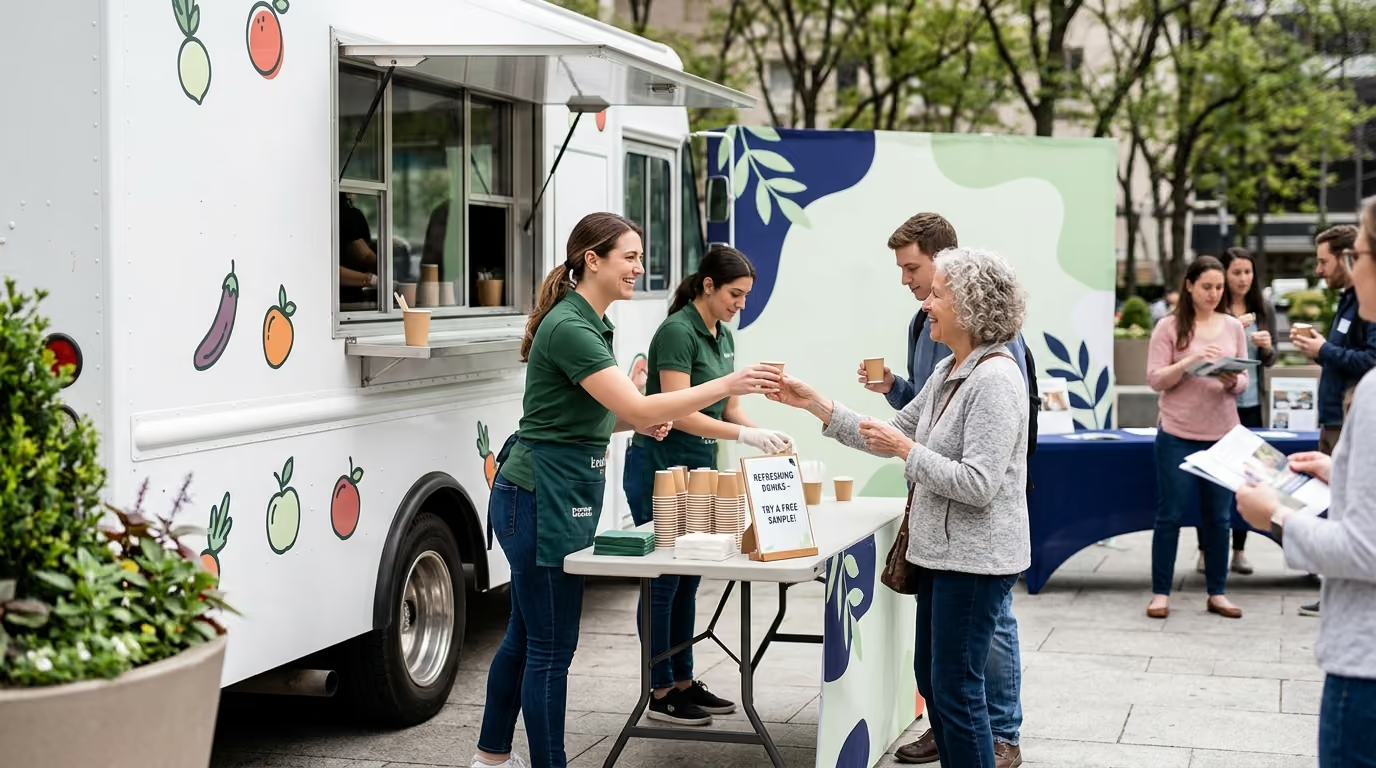
Mobile sampling tours transform marketing campaigns into mobile hospitality and food distribution operations. Managing these tours requires enterprise-level logistics and food safety discipline.
Before designing sampling hardware, operations teams must classify the product category:
Utah mandates that any vendor sampling exposed ready-to-eat foods at temporary events must obtain an official food-sampling permit. Sonoma County requires sample handling that prevents consumers from touching or coughing on food intended for others, alongside designated hand-washing sinks with running water, soap, and paper towels.
Maintaining product safety in high-volume field operations requires rigid physical procedures. Operating a mobile sampling vehicle in high heat demands operational redundancy.
Field crews must execute mandatory food safety controls:
Field managers must maintain organized records across multi-city tours. To structure your long-term tour operations, read our guide on building an annual mobile sampling program.
When guerilla activations use street performers, seeded social interactions, or hidden cameras, commercial ambiguity can escalate quickly into legal noncompliance. The FTC Endorsement Guides hold brands accountable for transparent consumer interactions.
Passersby must clearly understand when an individual is acting as a compensated brand representative. Material connections between a brand and an endorser must be disclosed clearly and conspicuously.
Compensated relationships require immediate disclosure:
Disclosures must be unavoidable, simple, and presented in close proximity to the commercial claim. A creative reveal at the end of a video does not cure deceptive statements made during the live interaction.
Field campaigns capturing consumer phone numbers and email addresses must comply with regulatory frameworks established by the Federal Communications Commission (FCC) and the FTC.
Field operations must implement rigid digital consent boundaries:
Failing to separate general sweepstakes participation from marketing consent exposes enterprise organizations to severe class-action exposure under telemarketing sales rules.
Unconventional marketing campaigns frequently fail because creative teams evaluate concepts only from their own perspective. Without cross-functional operational reviews, creative executions can be misread by the public and law enforcement.
In 2007, an Adult Swim campaign for Aqua Teen Hunger Force placed battery-powered LED signs depicting cartoon characters on bridges, subway stations, and public infrastructure across Boston. Authorities mistook the unannounced electronic devices for improvised explosive devices.
The fallout was catastrophic for the network and its agency:
The lesson is permanent: lack of harmful intent does not protect a brand from the operational costs of a foreseeable security misunderstanding. Any physical asset left unattended in public space will be evaluated through a security lens.
Every field campaign must undergo a formal misinterpretation drill prior to public launch. This operational review identifies worst-case public reactions before physical assets hit the street.
The misinterpretation drill follows a strict seven-step sequence:
When our teams design high-energy live experiences, we apply rigorous pre-event vetting to guarantee public safety. A VP of Marketing reflected on our partnership: "Robbie, it was a pleasure working with you and your team. You turned our launch into an experience that connected with shoppers and built lasting excitement for our brand. We're already looking forward to the next project together." Our team created a launch experience that resonated with retail shoppers and generated momentum for future collaborations.
Executing high-impact, compliant activations requires translating legal frameworks into daily field procedures. This step-by-step playbook guides operations teams from pre-planning through post-event site restoration.
Enterprise brands demand clear financial validation for live activations. Measuring the business impact of guerilla marketing requires tracking both operational lead indicators and pipeline lag metrics.
For an advanced analysis of experiential data modeling, see our strategic guide on measuring the business impact of mobile sampling.
Lead metrics measure execution quality, consumer engagement, and real-time audience participation:
Lag metrics prove whether field marketing expenditures generated sustainable revenue, retail lift, and customer acquisition:
Tracking these metrics provides marketing leadership with clear data showing that compliant field activations generate superior financial returns compared to unmeasured digital advertising.
A leading plant-based snack brand preparing for a major nationwide launch faced significant retail distribution challenges. While the brand secured distribution across 1,200 supermarket locations, consumer trial remained low due to taste misconceptions. Competing brands relied on static digital advertisements, which failed to drive shoppers down grocery aisles.
The marketing leadership designed a high-intensity, five-city guerilla sampling initiative. The operational challenge required deploying unexpected pop-up sampling stations on metropolitan sidewalks directly outside key retail partners, without violating local commercial vending codes.
The execution team secured private sidewalk use agreements with building owners located fifty feet from major supermarket entrances. This private property placement eliminated the need for complex municipal street closure permits while keeping the brand in direct proximity to grocery shoppers. Each sampling station was equipped with health-department-approved food handling stations, temperature-monitored display bins, and ADA-compliant tasting counters.
Over a three-week campaign, the brand achieved measurable operational and sales success:
By combining the visual excitement of a street-level pop-up with rigorous administrative compliance, the brand achieved massive market share gains while keeping brand equity completely secure.
Marketing leaders planning street-level or field activations can apply this compliance checklist to prepare their upcoming campaigns:
To partner with an experienced team that executes nationwide field campaigns with operator-grade discipline, request a proposal from Makai to bring your next activation to life.

30 Years Experiential & Retail Activation Partner for CPG & Beverage Brands | Multi-Market Demos, Roadshows & Costco/Club Programs That Actually Sell