Robbie Thain
Founder, CEO

Crowded event floors cause consumers to ignore brand pitches, making functional service and friction-free trials essential for real commercial lift.
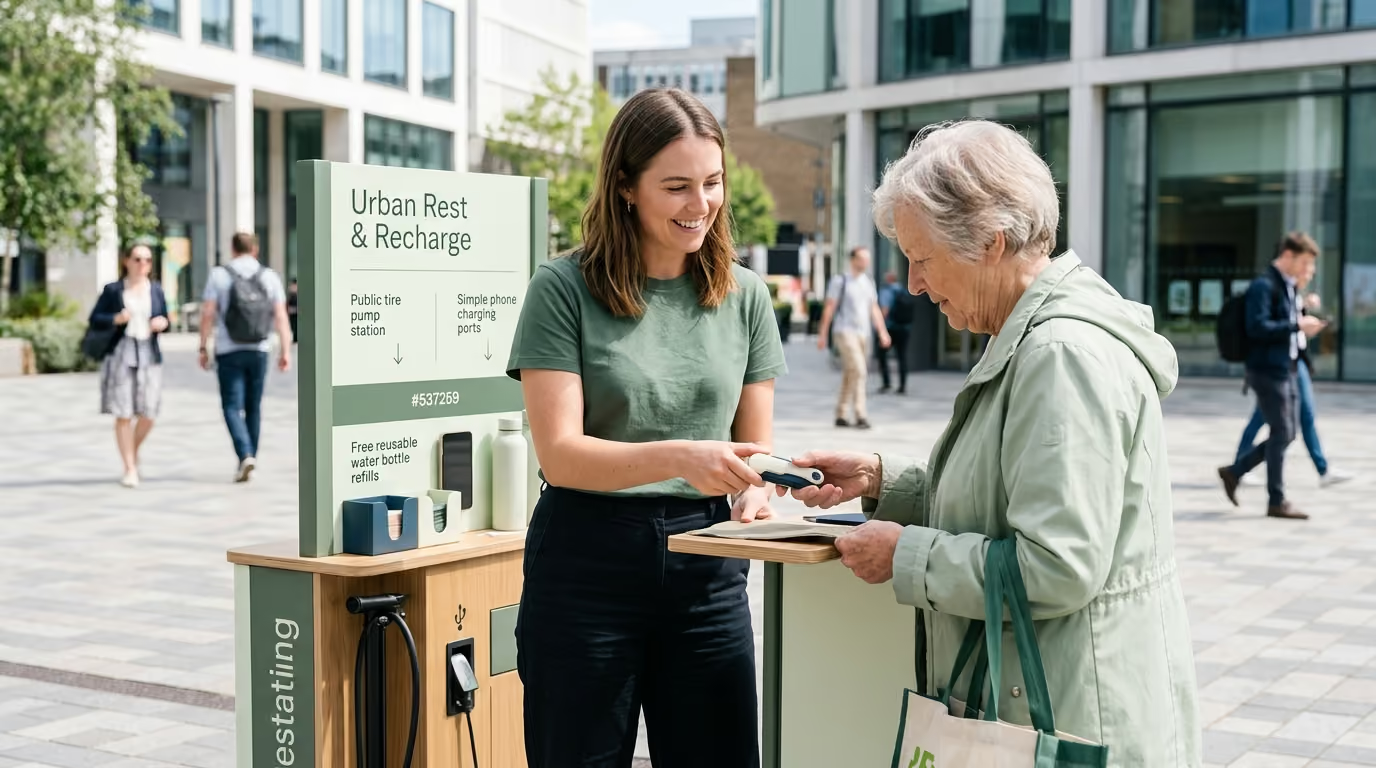
Every field marketer has typed some version of the same question into a search engine: how do you stop event attendees from ignoring your street activation and actually get them to try your product? The definitive solution is branded utility, a deliberate operational framework that solves an immediate physical problem for consumers to create a friction-free bridge to high-converting product trial.
Trade show floors and festival perimeters are loud, congested, and exhausting. Consumers walk past rows of identical pop-up tents, dodge aggressive flyers, and ignore brand ambassadors shouting rehearsed taglines. Most street activations fail because they treat human attention as something that can be seized through sheer volume or visual clutter. When field teams rely on interruption, attendees put their guards up, walk faster, and view every interaction as an unwelcome sales pitch.
This dynamic creates massive operational waste for consumer brands. Field marketing budgets are spent on expensive fabrication, high-footprint vehicle rentals, and generic promotional giveaways that end up in municipal trash cans two blocks away. The brand generates foot traffic numbers on a spreadsheet, but post-event sales lift remains invisible. Marketing directors are left trying to justify field spend without verifiable evidence of retail conversion or customer acquisition.
The breakdown occurs at the initial point of contact. When an activation offers no situational value, consumer engagement is defensive and shallow. People take a giveaway because it is free, not because they care about the product. To build genuine pipeline in physical spaces, field teams must replace intrusive marketing with practical service.
Branded utility is the practice of delivering a functional, real-time service that relieves a specific friction point for consumers in a live environment. Instead of demanding attention, the brand earns engagement by being legitimately helpful. This service is not a passive corporate sponsorship or a philanthropic gesture. It is a calculated commercial gateway designed to position a product trial as the natural next step of receiving help.
Academic research in experiential marketing supports this strategic shift. A Delphi study involving experiential marketing experts published in the Journal of Brand Management defined experiential marketing as the deliberate planning and use of personal, subjective experience to create marketing influence. The researchers established that effective activations immerse participants through sensory, emotional, behavioral, and intellectual interactions. Branded utility operationalizes this principle by anchoring the brand experience in functional relief.
To distinguish a genuine utility from a gimmick, field programs must satisfy four specific criteria:
The service must address an undeniable physical or logistical pain point occurring in that exact location. Providing cold hydration along a marathon route solves a real problem. Handing out branded sunglasses inside a dimly lit convention center does not.
The utility must align logically with the core benefit of the product being promoted. A functional energy beverage brand providing a secure charging lounge with seating understands its audience. A financial services company handing out bottled water creates confusion because there is no link between the service and the product category.
The transition from receiving the service to sampling the product must feel obvious and unforced. If someone steps into a shaded misting station during an outdoor expo, sampling a hydrating beverage or sun care lotion is a welcome relief, not an interruption.
The consumer must be able to use the service without feeling trapped. Forced capture mechanics, such as requiring a five-minute survey before unlocking a charging cable, destroy brand equity. When utility is delivered freely, consumers drop their defense mechanisms and willingly engage with field staff.
Providing a useful service creates physical dwell time and emotional goodwill. However, helpfulness alone does not justify a commercial marketing budget. The utility must systematically convert physical presence into qualified product trial.
Data from the EventTrack 2026 study by Event Marketer, which surveyed 517 brand marketers and 811 event attendees, confirms the primacy of product trial over passive brand exposure. Free samples were cited by consumers as the top motivator for engaging with a brand at a live event. Furthermore, 61% of attendees reported they were more inclined to purchase after interacting with a brand, product, or service at an event.
When researchers examined why attendees became more inclined to buy, 64% cited the ability to try the product or service. Product understanding followed at 55%, while 49% pointed to an experience that made them feel positive about the brand.
These findings demonstrate that while brand sentiment matters, physical trial and functional understanding drive buying decisions. Branded utility sets the stage, but the trial closes the gap.
A 2011 empirical field study published in the British Food Journal analyzed grocery chain sampling promotions across six product categories over multiple weekends. The researchers found that physical sampling was highly effective at inducing immediate trial. For shoppers who already intended to buy within the product category, the sample shifted their purchase directly to the featured brand. For shoppers with no initial category purchase plan, sampling pulled them into the category entirely.
The same study noted that interpersonal interaction with brand staff during the sampling moment significantly increased post-sample purchase rates. When applied to mobile guerilla activations, this proves that human service delivery is a critical commercial asset. A self-service dispensing machine does not build the same purchase momentum as a well-trained brand ambassador who provides immediate relief, explains the product benefit, and directs the consumer to retail shelves. For teams looking to refine these operational techniques, best practices for grocery store sampling provide an exceptional blueprint for scaling trial into sustained retail volume.
Executing a utility-led guerilla activation requires operational discipline. Street-level campaigns operate in unpredictable public environments where permits, weather, foot-traffic flow, and equipment reliability can change hourly.
Our team structures field execution around a five-phase operational framework designed to turn street encounters into measurable retail sales:
In our experience, activations that separate operational logistics from engagement staffing consistently achieve higher trial rates. When brand ambassadors are forced to troubleshoot generator connections or restock ice bins, engagement quality collapses. In our work managing national roadshows and high-volume street activations, establishing rigid operational workflows behind the scenes allows front-line staff to operate with warmth, precision, and complete focus on the consumer.
Field staff must also be trained to capture customer data without creating friction. Understanding how to turn brand reps into data reps ensures your team captures high-intent consumer records while maintaining natural, comfortable conversations on the ground.
To prove business impact to executive stakeholders, field marketing leads must move beyond vanity metrics. Counting the number of charging minutes provided or cups of water poured demonstrates operational activity, not marketing efficiency. Return on Investment (ROI) must be evaluated through incremental sales lift and long-term buyer acquisition.
Research published in Marketing Science provides the mathematical foundation for evaluating sampling economics. The researchers established that product sampling creates three distinct commercial effects:
The Marketing Science study tracked promotions across two field experiments and discovered that free product trials generated sustained sales effects lasting up to 12 months post-activation. Furthermore, the volume of incremental sales varied dramatically based on category dynamics and execution quality.
Evaluating the performance of a branded utility campaign requires measuring the entire conversion funnel across four structured tiers:
Track operational capacity and service usage. Useful metrics include total devices charged, gallons of cold filtered water dispensed, misting station dwell time, and total transit rides assisted.
Track active engagement rather than passive walk-bys. Key indicators include total complete product samples distributed, average dwell time within the branded footprint, two-way staff conversations, and consented digital interactions.
Measure short-term conversion triggers. EventTrack reported that among consumers who purchased a product after an event, 38% purchased within 24 hours and 34% purchased within one week. Track geo-targeted digital coupon redemptions, localized instacart additions, retailer-specific barcode scans, and verified on-site digital orders.
Measure sustained retail impact against a matched control group. Connect field activations to local store scanner data within a five-mile radius over 30, 60, and 90-day windows. Track new-to-brand household penetration, repeat purchase frequency, and baseline volume lift compared to unexposed control markets.
By comparing exposed retail territories against holdout zones, brands can isolate true commercial lift from underlying seasonal trends. For teams managing multi-channel campaigns, closing the physical trial attribution gap is the key to proving that street-level marketing drives measurable digital and in-store velocity.
Branded utility is not a one-size-fits-all execution. The physical service must match the exact functional category of the product to maximize trial conversion.
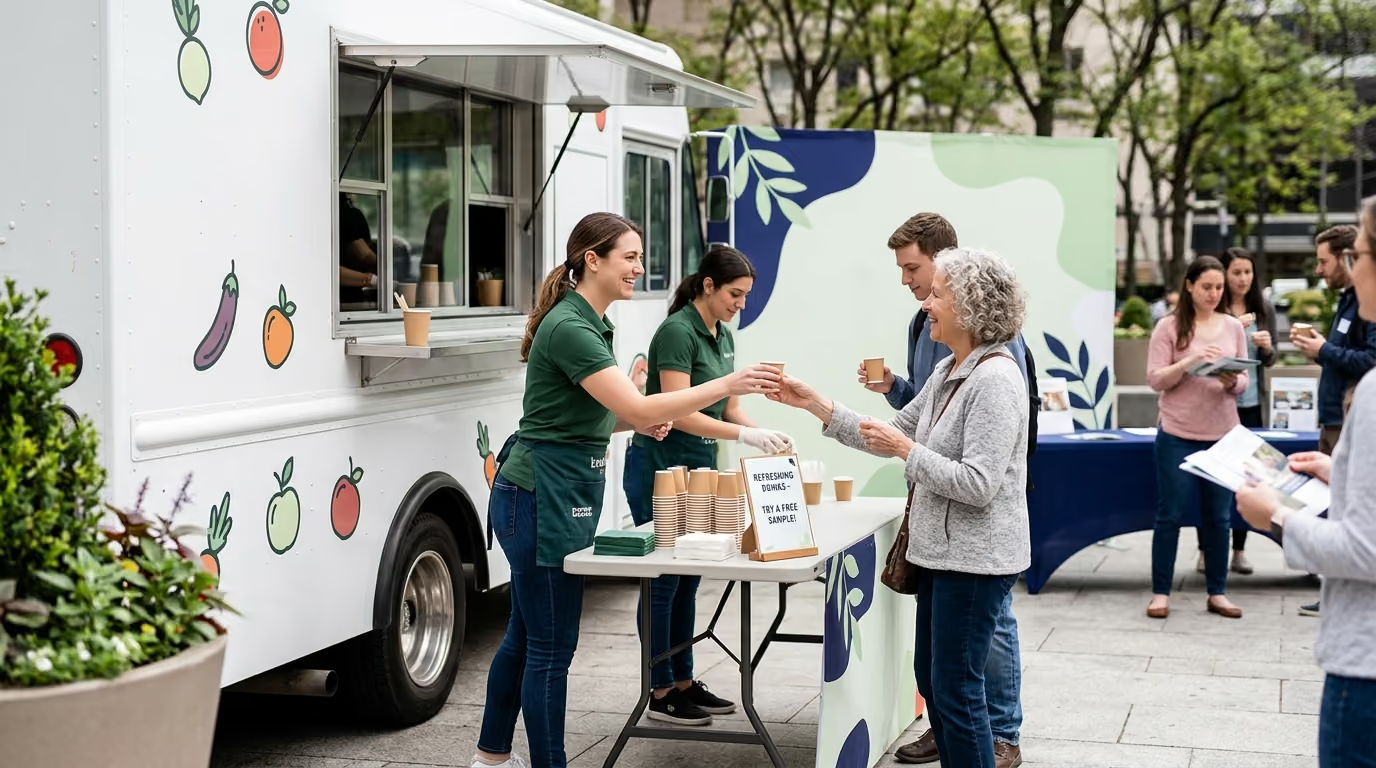
At crowded outdoor endurance races, music festivals, and sports tournaments, attendees struggle with heat and dehydration. A beverage brand can deploy a mobile hydration rig that provides ice-cold electrolyte water refills alongside chilled samples of its ready-to-drink product line.
While consumers wait for their personal bottles to fill, brand ambassadors initiate a quick taste comparison between standard water and the functional beverage. The utility fulfills an urgent biological need, while the product sample offers an immediate sensory solution. Brands executing around high-density convention centers can explore how trade show street activations capture attendees outside venue walls.
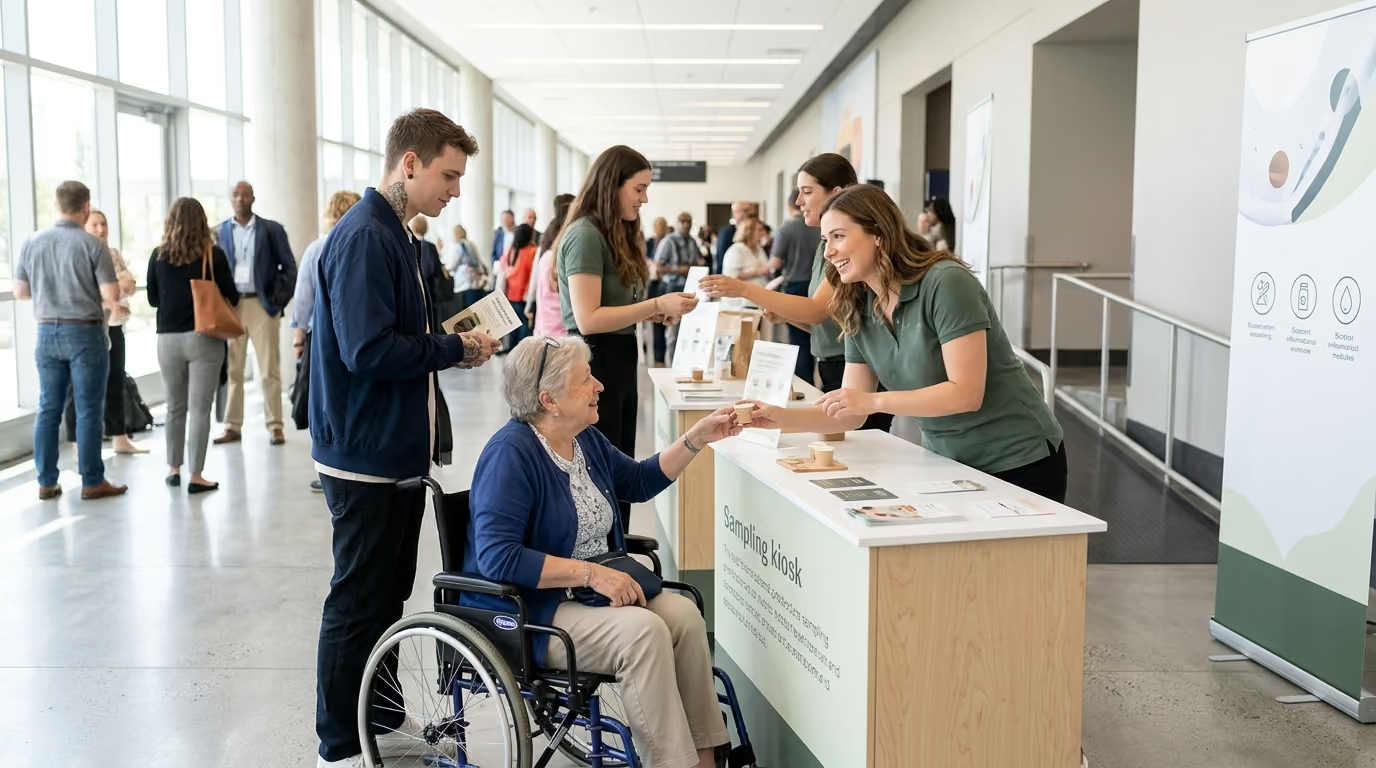
During multi-day consumer conventions or city-wide street fairs, attendees walk miles with limited clean seating or accessible dining options. A premium snack brand can construct an open-air rest lounge featuring comfortable seating, clean preparation surfaces, and hand-sanitizing amenities.
As visitors sit down to recover, staff present curated tasting flights that showcase product flavors, nutritional value, and sourcing transparency. The resting period gives consumers time to read packaging, ask dietary questions, and register for digital grocery coupons. Connecting this field data directly to retail accounts demonstrates how sampling data fuels retail distribution during buyer reviews.
Outdoor summer events expose attendees to intense heat, humidity, and direct sunlight. A personal care brand can deploy mobile shade canopies equipped with high-pressure misting systems, clean vanity mirrors, and touchless mineral sunscreen application bars.
Consumers step into the shaded footprint to cool down and protect their skin. While utilizing the misting amenities, brand ambassadors guide them through an interactive application trial highlighting non-greasy finishes and clean ingredients. The physical service validates the brand's functional claims on the spot.
Large-scale metropolitan events drain smartphone batteries rapidly, leaving attendees stranded without communication or transit navigation. A mobile hardware or accessory brand can deploy rapid-charging lockers and battery loan stations across key pedestrian corridors.
While devices charge, consumers explore interactive product demo stations featuring the brand's latest devices and audio equipment. The utility eliminates acute consumer stress, creating positive brand sentiment that makes the technical demonstration far more engaging.
Guerilla marketing without rigorous operational planning leads to impounded vehicles, municipal fines, and public relations failures. Delivering a physical utility requires a higher standard of logistical compliance than standard flyer distribution.
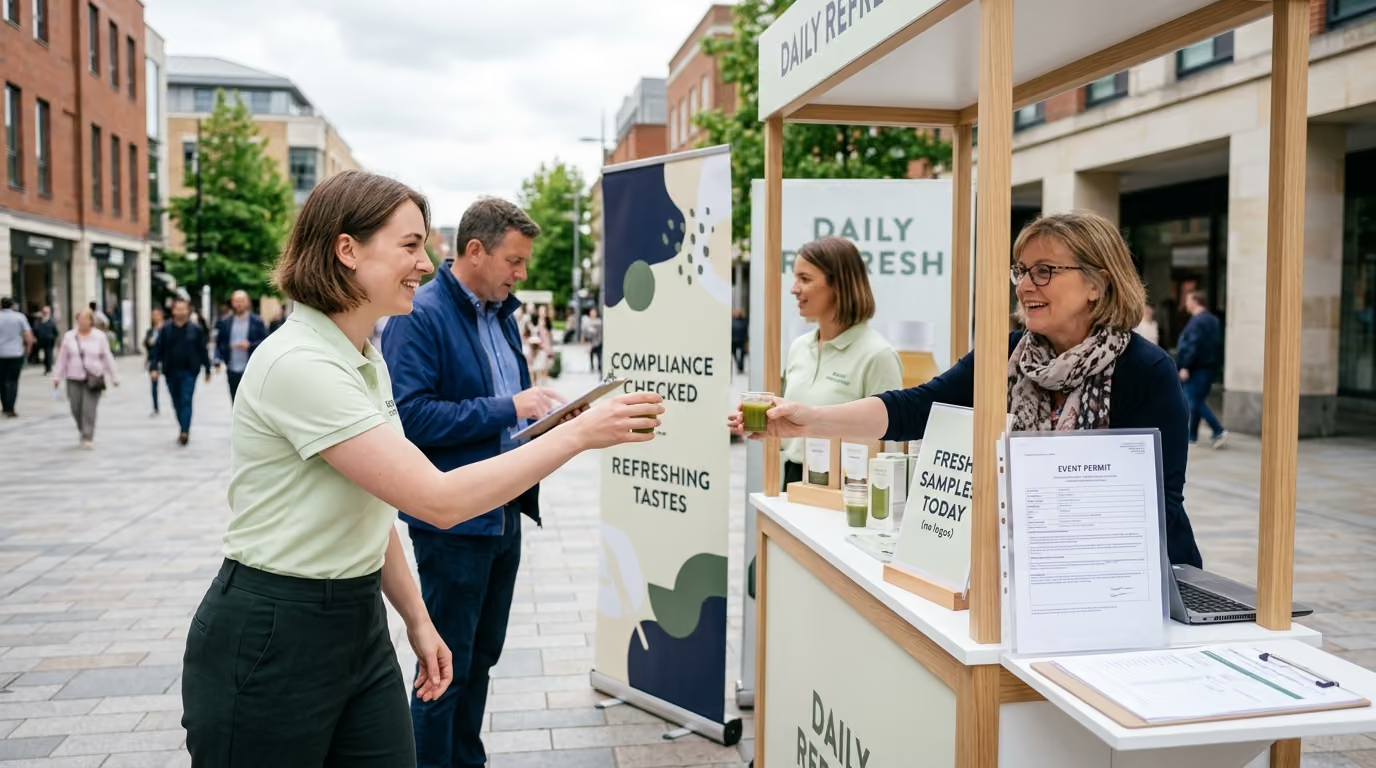
Every municipality maintains distinct regulations governing sidewalk clearances, street parking, and public gathering zones. Mobile utility rigs must maintain ADA-compliant pedestrian pathways at all times. When operating on public sidewalks, teams must secure appropriate street-use permits or identify privately owned public spaces where property agreements can be negotiated directly.
Distributing edible products, ice, or open beverages on public property requires strict adherence to local Department of Health regulations. Field teams must maintain certified cold-chain monitoring logs, potable water handling certifications, sanitary wash stations, and food handler credentials. A single health code violation can shut down a multi-city mobile tour instantly.
Providing mobile power, misting pumps, or high-output refrigeration requires careful electrical management. Gas generators are prohibited in many dense urban centers due to noise and emission standards. Field teams must utilize silent, commercial-grade lithium power stations and ensure all wiring is weather-rated and covered with heavy-duty cable ramps to prevent tripping hazards.
Live consumer activations carry inherent physical risks, from spilled liquids creating slip hazards to overheated electrical equipment. Field marketing programs must maintain robust Commercial General Liability insurance policies that name venue operators, private property owners, and municipal entities as additional insureds. Clear operational safety protocols protect the brand while keeping the activation running smoothly.
A natural electrolyte beverage brand faced intense competition in major metropolitan retail markets. Traditional in-store sampling was generating modest trial, but brand awareness in local grocery channels remained flat. The brand needed an aggressive field marketing strategy to drive trial and prove retail sell-through across regional supermarket partners.
Our team designed and executed a multi-city mobile utility tour centered on heat relief. The activation deployed customized, self-contained mobile vans to high-density running paths, outdoor fitness hubs, and open-air summer events during peak temperature hours.
The vehicles served as mobile oasis stations, offering runners and festival attendees free high-pressure misting, ice-cold water bottle refills, and shaded seating. As visitors utilized the cooling amenities, brand ambassadors introduced a chilled comparative tasting flight of the electrolyte beverage line.
Brand ambassadors highlighted the product's clean ingredient profile, lower sugar content, and superior electrolyte density compared to legacy sports drinks. At the conclusion of the trial, consumers received a digital coupon redeemable at regional grocery locations within a two-mile radius.
The operational results demonstrated the power of branded utility:
By solving an immediate physical challenge, the brand transformed a simple product sample into a memorable, high-converting customer acquisition channel.
Field marketing leaders looking to launch a branded utility program can begin execution this week using this operational checklist:

30 Years Experiential & Retail Activation Partner for CPG & Beverage Brands | Multi-Market Demos, Roadshows & Costco/Club Programs That Actually Sell