Robbie Thain
Founder, CEO

Measurable pipeline growth stems from unbundling sponsorship rights, auditing event audiences, and deploying structured multi-layered activation.
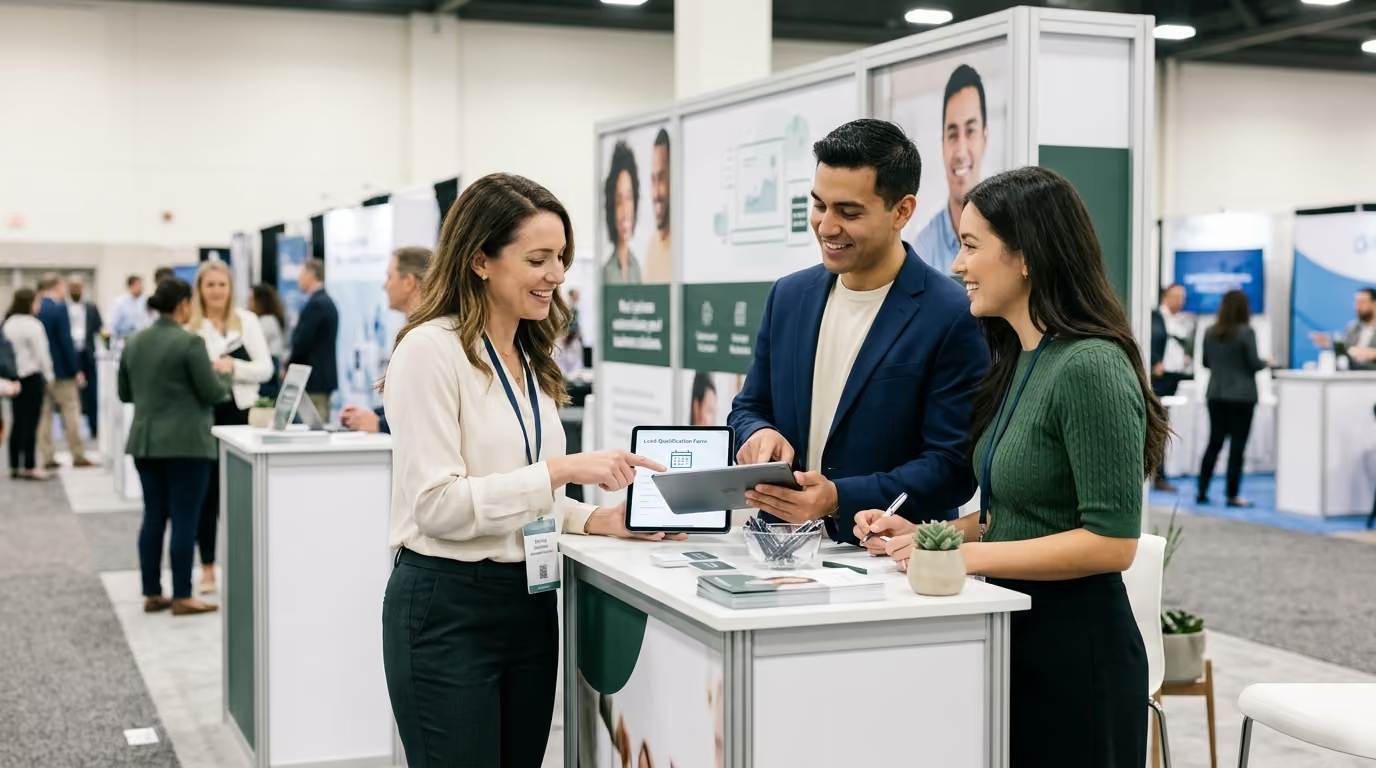
Most marketing teams treat event sponsorship as an expensive media buy, purchasing logo placement across lanyards, tote bags, and signage while expecting brand equity to convert into pipeline on its own. True trade show sponsorship activation is an operational discipline that turns passive contractual rights into physical engagement, verified attendee data, qualified sales conversations, and measurable business growth.
Buying visibility on the show floor is an exceptionally reliable way to burn capital without creating pipeline. Organizers sell multi-tiered packages that promise millions of brand impressions across show guides, floor clings, and digital banners. Yet marketing leaders repeatedly leave convention centers with badge scans of unqualified attendees, empty hospitality suites, and no clear line of sight to revenue. The exhibition hall is a chaotic environment filled with sensory overload, competing noise, and exhausted buyers walking miles of aisles. When a brand treats a sponsorship as passive media exposure, it fades into the background noise of the convention center.
Sponsorship rights are simply raw materials. They represent the inventory a brand purchases from an organizer, including booth footprints, speaking slots, lounge naming rights, digital banner placements, or category exclusivity. Activation is the operational system your team deploys to make those contractual rights useful.
A logo printed on a lanyard provides passive visibility. An interactive product demonstration station, a sponsored research panel, or an executive roundtable creates active engagement. The first generates fleeting brand impressions. The second generates verified buyer intent.
According to research from Freeman, 87% of event attendees state that discovering new products, solutions, and commercial partners is the primary driver influencing their attendance. Freeman also found that 80% of respondents consider in-person events the most trusted marketing channel available. Buyers do not walk into exhibition halls to view passive corporate advertisements. They attend to evaluate physical products, assess technical capabilities, and meet operators who can solve their immediate business problems.
Research from the Center for Exhibition Industry Research (CEIR) indicates that generating qualified leads remains the top objective for 68% of exhibitors. An asset that only delivers visual impressions ignores the fundamental commercial purpose of exhibiting. When evaluating your event portfolio, refer to the complete guide to planning a high-performance trade show activation to establish rigorous operational standards across every market appearance.
A premium sponsorship package at the wrong exhibition is an expensive operational failure. Marketing leaders must evaluate the specific audience composition of an event before analyzing package line items.
Evaluate every potential exhibition across structured operational benchmarks:
The American Marketing Association provides a structured framework for evaluating event portfolios through weighted scoring matrices. You can build a reliable scoring model by assigning percentage weights to core strategic criteria:
Score each prospective exhibition from 1 to 5 across these categories. Multiply each score by its assigned weight to produce a composite rating. This structured approach prevents an organizer from using inflated overall attendance figures to mask low audience relevance.
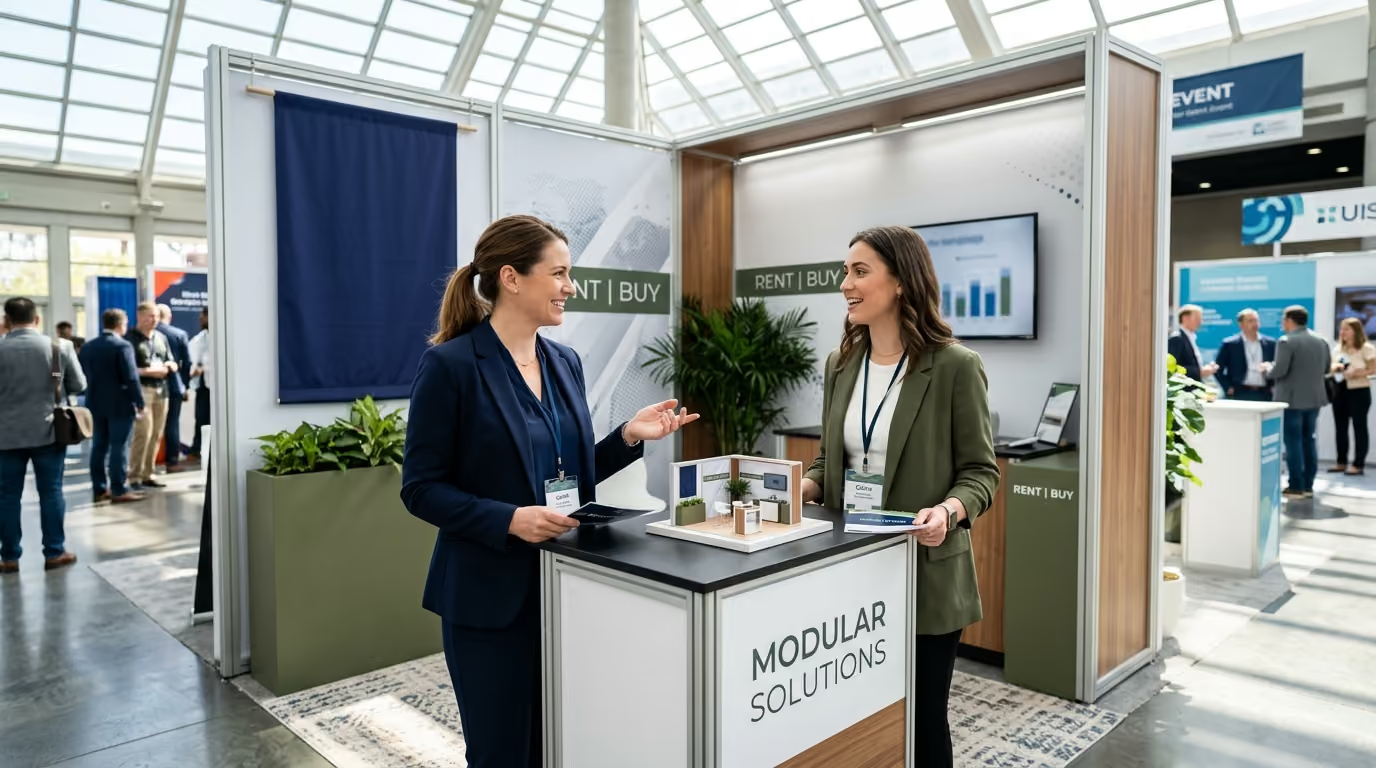
Organizers present sponsorship opportunities in rigid packages labeled Gold, Platinum, or Diamond. Sophisticated marketing teams refuse standard bundles and negotiate custom asset agreements aligned with specific conversion goals.
Visibility inventory includes entrance archways, aisle banners, digital registration screens, badge lanyards, and directional floor clings. These rights establish market legitimacy and category presence. However, visibility assets carry minimal conversion value on their own. They must direct attendee traffic toward a physical activation point or digital conversion gateway.
Direct access rights offer substantially higher commercial value than passive signage. These rights include access to opt-in attendee lists, dedicated email deployments, hosted buyer introductions, VIP breakfast invites, and integrated meeting matchmaking platforms. Review every access right for strict privacy compliance, deliverability dates, and data validation standards before executing an agreement.
Content rights include keynote addresses, technical breakout panels, product theater presentations, and sponsored research papers. Content activations fail when brands deliver thinly veiled sales pitches. Modern business audiences reject corporate infomercials. Deliver proprietary operational frameworks, benchmark data, or practical case studies that solve complex industry problems.
Environmental rights grant physical footprints beyond standard trade show booths. These assets include branded networking lounges, charging zones, outdoor terrace spaces, private meeting suites, and VIP check-in areas. Physical spaces succeed when they solve attendee friction points by offering quiet seating, secure power, strong Wi-Fi, or high-grade refreshments.
Hospitality rights encompass private dinners, cocktail receptions, off-site networking events, and breakfast roundtables. Treat hospitality as relationship infrastructure rather than an entertainment expense. High-performing hospitality activations bring senior executives together around structured discussions rather than unstructured social drinking.
Sampling and demonstration rights permit live product interactions across high-traffic zones. In physical consumer goods, food, and beverage categories, trial is the fastest path to purchase intent. Product trial rights should always be linked to immediate digital data capture or verified retail store locators.
Data rights define how your team captures and exports attendee engagement information. Ensure your contract specifies badge scanner hardware compatibility, raw data export formats, real-time API integrations, and direct consent capture fields. Negotiating lead retrieval without API integration introduces manual processing delays that destroy post-show sales velocity.
A complete sponsorship activation requires an integrated operational system. Build your on-site plan around five sequential execution layers.
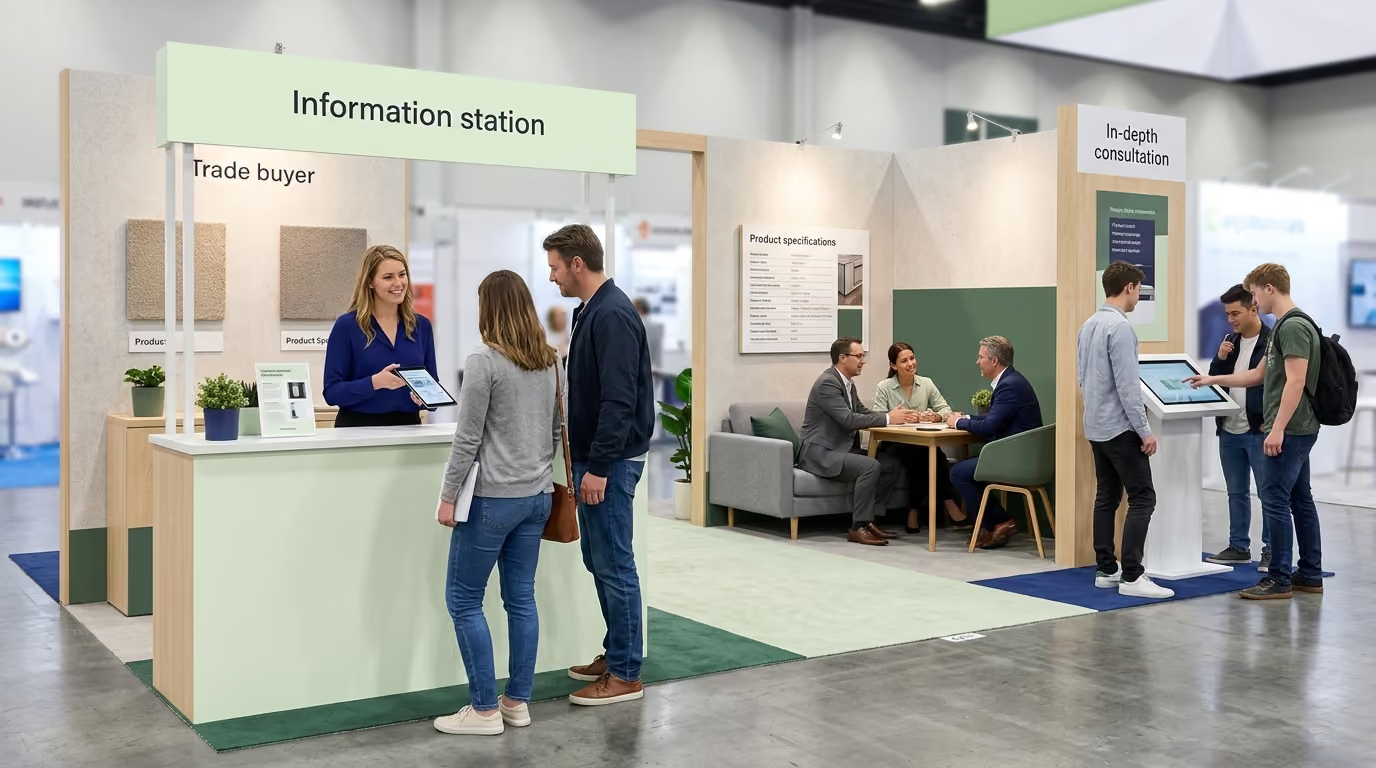
You must give qualified attendees a compelling reason to interrupt their walk across the show floor. Generic booth structures with oversized logos no longer capture attention. Deploy focused attraction triggers:
Once an attendee stops, your physical environment must guide them into a structured interaction. Create low-friction engagement mechanisms:
Engagement must deliver rapid, practical learning. Research from Freeman indicates that learning and solution discovery are the primary reasons business professionals attend live events. Equip your technical specialists to share proprietary data, showcase customer workflows, or diagnose real-world operational bottlenecks. When entering new territories or launching products, consult our guide on trade show sponsorship activation for market entry to build authority quickly.
Every interaction must conclude with a clear, low-friction next step. Match your call to action to attendee readiness:
The commercial value of an event activation is realized after the show floor closes. Connect your on-site data capture directly to your marketing automation platform and customer relationship management system. Deliver promised follow-up assets within 24 to 48 hours of initial engagement while the conversation is still top of mind.
High-performing branded spaces solve physical problems for attendees while creating natural conversion pathways for your field team.
Trade show attendees deal with physical fatigue, loud environments, and limited workspaces. A branded lounge that provides ergonomic seating, private phone booths, high-speed charging ports, and premium coffee creates deep dwell time. Place roaming product specialists within the space to initiate low-pressure conversations with visitors while they recharge.
A dedicated demonstration stage allows your technical specialists to present structured product walkthroughs every thirty minutes. Display a countdown timer showing the next session start time. Use directional audio to contain sound within your footprint while preventing acoustic spillover into adjacent aisles.
High-value enterprise negotiations and retail buyer discussions require total privacy away from the noisy exhibition hall. Build fully enclosed, sound-dampened meeting rooms within your footprint. Furnish these spaces with executive seating, dedicated presentation displays, and high-end beverage service to host scheduled commercial meetings.
Construct a sound-treated glass podcast and video studio directly inside your space. Interview customer executives, industry analysts, and keynote speakers throughout the show. This produces high-impact social video during the event while generating a deep library of post-show sales enablement content.
Content and executive hospitality are two of the most scalable activation assets when executed with operational precision.
Do not purchase speaking slots to read corporate pitch decks. High-performing content sessions follow rigorous structural formats:
Negotiate full content redistribution rights with event organizers prior to signing. Secure raw 4K video files, isolated audio tracks, slide deck distribution permissions, and complete attendee registration lists for your session.
Executive dinners fail when hosts treat them as unfocused social gatherings. Structure your executive engagements to drive account progression:
In our experience, we design mobile activations and roadshows that accelerate consumer trial, build trust, and boost retail velocity during 90-day product launch windows. Our structured approach transforms initial product trial into sustained consumer confidence and retail performance.
For consumable goods and physical hardware brands, direct product trial shortens the sales cycle more effectively than any slide deck. However, unorganized sampling creates operational chaos and wasted inventory.
Implement strict operational protocols across every demonstration station:
For packaged goods brands seeking to expand store footprints, read our playbook on winning retail distribution through trade show activations to turn live sample volume into retail buyer commitments.
An event activation that captures thousands of badge scans without business context creates administrative noise for sales teams. Data capture must separate active buyers from passive passersby.
Establish clear data classifications across all field staff:
Configure your lead retrieval hardware to require essential qualification qualifiers:
For a detailed review of field scanning workflows, explore the complete guide to trade show lead capture and data quality to eliminate post-event data cleanup.
Data from CEIR shows that 86% of exhibitors deploy intermediate performance metrics to evaluate event success, with lead quality tracking ranking as the most critical indicator. Connecting on-site qualification directly to your CRM prevents post-event sales friction.
Evaluating an activation solely on immediate revenue generated during the show undercounts long-term commercial impact. Deploy a balanced measurement framework that tracks delivery, engagement, pipeline progression, and total return.
Verify that the organizer executed every contractual sponsorship asset:
Measure the volume and depth of physical interactions:
Quantify pipeline creation and deal velocity:
Calculate financial Return on Investment (ROI) using total program costs:
Your total investment calculation must include sponsorship rights fees, space rentals, structural fabrication, travel and lodging, drayage, union labor, booth staff compensation, agency retainers, freight, and post-event nurture campaigns. Review the complete trade show activation budgeting guide to forecast every operational cost accurately.
For complex B2B solutions with extended sales cycles, report Return on Opportunity (ROO) alongside direct financial return:
Freeman explicitly recommends utilizing Return on Opportunity frameworks to capture the full strategic value of live marketing investments that financial calculations miss.
Marketing teams regularly fall into execution traps that drain event budgets and dilute commercial return.
Photo booths, money drop machines, and spinning prize wheels generate foot traffic while degrading lead quality. These tactics attract unqualified attendees looking for free items while pushing away senior decision-makers. Every attraction mechanism must relate directly to your core business solution.
Organizers regularly urge sponsors to upgrade to higher tiers for incremental digital impressions. Most package upgrades simply bundle low-value visibility assets like extra program ads or peripheral signage. Negotiate a lower package tier and reallocate your budget toward custom space fabrication, high-grade staffing, or private executive dinners.
Hiring temporary promotional staff to manage technical conversations destroys brand credibility. Use professional field marketing operators for attendee intake, queue management, and data scanning. Keep your internal product engineers, solution architects, and account executives focused on deep technical discovery and commercial negotiations.
According to analytical data from Swapcard, approximately 40% of event lead generation activity occurs before the exhibition floor opens. Much of this pre-event momentum builds during the seven days leading up to the show. Launch targeted LinkedIn outreach, deploy personalized email sequences to registered attendees, and book your executive meeting schedule two weeks prior to arrival.
Never sign an organizer agreement without legal remedies for operational delivery failures. Include contract clauses covering minimum attendance thresholds, floor plan adjustments, session rescheduling, competitive separation guarantees, and financial make-goods if key assets are omitted.
Select an activation model that matches your strategic commercial objective:
Publish an authoritative industry benchmark study with the event organizer. Host an exclusive executive breakfast previewing key findings for senior leaders, followed by a public keynote session. Deliver physical executive summaries on-site while gating full digital downloads behind contact capture.
Transform your footprint into a diagnostic clinic. Attendees bring complex architectural schematics, operational data, or workflow challenges to your technical specialists. Your team runs real-time assessments, identifies core bottlenecks, and provides customized solution blueprints.
Construct a tiered-seating demonstration theater. Run scheduled, 15-minute product showcases every half hour led by senior solution engineers. Equip staff with mobile scanners to capture badge credentials as attendees take their seats.
Secure private dining space at an off-site restaurant near the convention center. Curate a targeted guest list of twenty senior leaders from named enterprise accounts. Assign internal hosts to specific accounts with clear relationship expansion objectives.
Build a broadcast-ready audio and video recording studio. Partner with industry media outlets to record live interviews with keynote speakers, customer executives, and market innovators. Distribute co-branded video clips across digital channels during the event.
Sponsor the official networking and charging lounge. Upgrade the space with enterprise Wi-Fi, comfortable ergonomic seating, private workspace desks, and artisan coffee stations. Place roaming product specialists within the lounge to engage visitors in informal conversations.
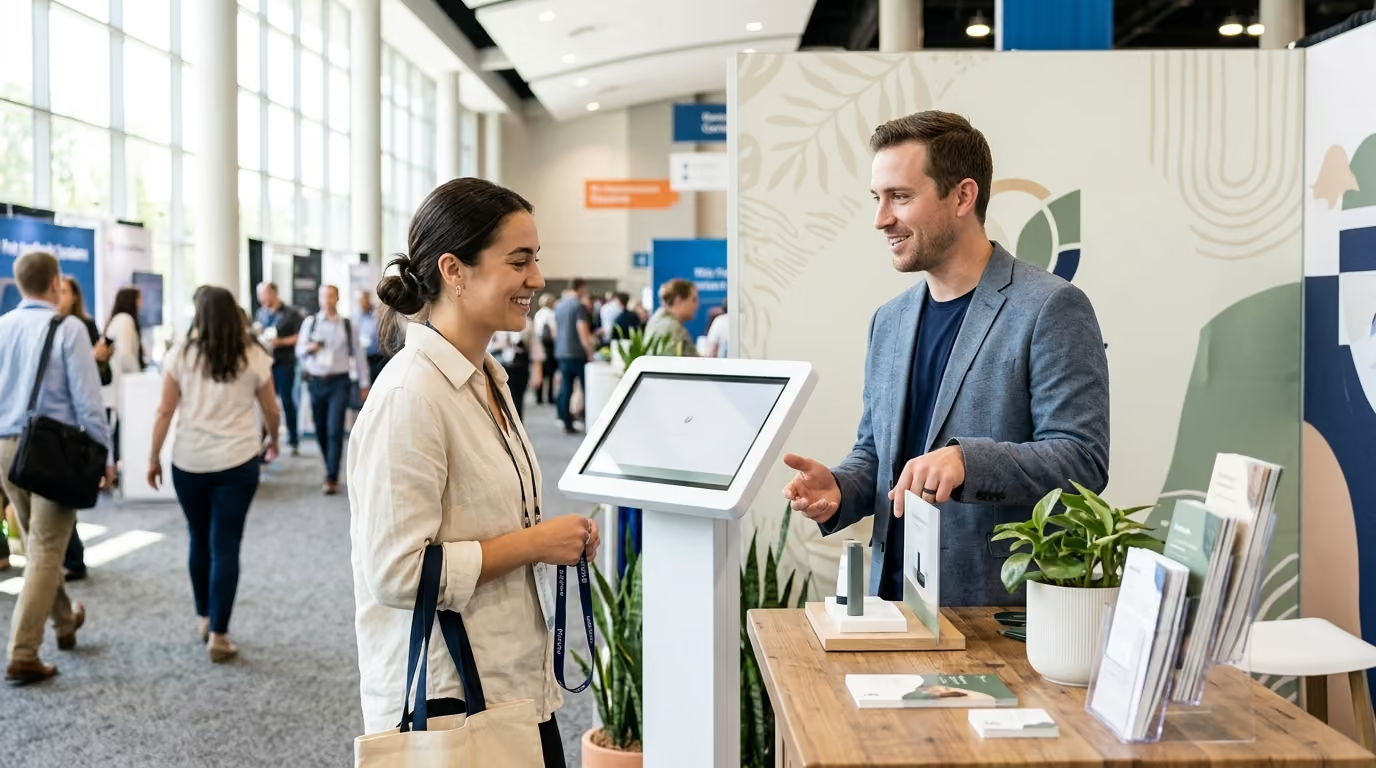
Install interactive touchscreen kiosks that calculate operational savings or efficiency gains based on attendee inputs. The software delivers a personalized benchmark report to the attendee's email address while routing qualified opportunity profiles to your sales team.
Execute your activation with military precision across every phase of the event timeline.
A premium functional beverage brand secured an exclusive regional sponsorship at a premier North American food innovation expo. Rather than relying on standard logo placement and passive booth sampling, the team executed an integrated sensory testing and retail distribution activation.
The brand faced intense category competition from established legacy beverage players with significantly larger booth footprints. The primary objective was securing distribution agreements with regional supermarket buyers while generating verified consumer demand proof points.
The brand transformed its contracted space into a multi-sensory evaluation laboratory. The activation incorporated:
Over three exhibition days, the activation delivered decisive commercial results:
Treat every trade show sponsorship as an operational pipeline driver rather than a passive corporate branding exercise to secure measurable, repeatable commercial growth.

30 Years Experiential & Retail Activation Partner for CPG & Beverage Brands | Multi-Market Demos, Roadshows & Costco/Club Programs That Actually Sell