Robbie Thain
Founder, CEO

Qualified meeting calendars and predictable event pipeline result from deploying a five-layer marketing framework across a structured twelve-week.
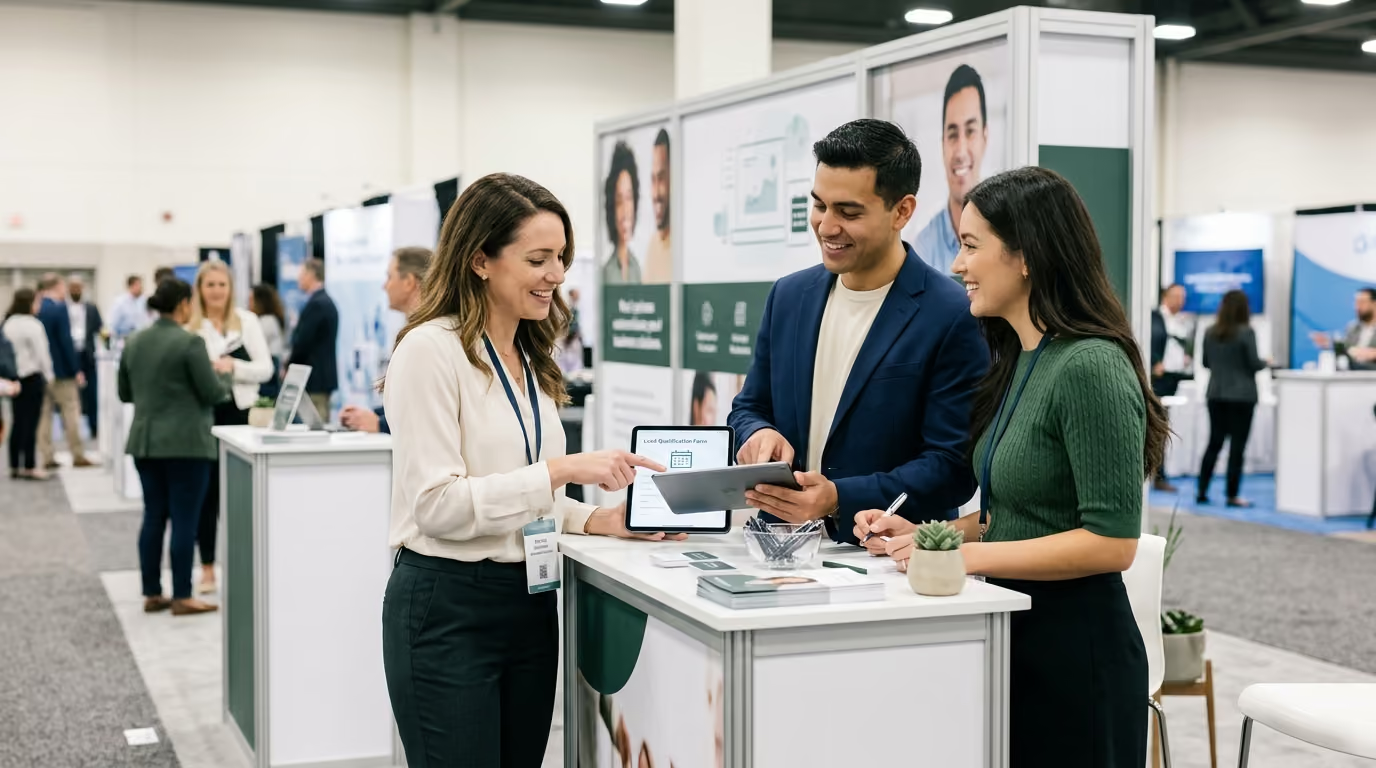
Trade show pre-event marketing is the structured process of identifying, engaging, and scheduling target buyers before an exhibition floor opens. Executing this systematic advance campaign ensures your booth staff spends floor hours conducting qualified business conversations rather than waiting for spontaneous walk-up traffic.
Trade show pre-event marketing is not a simple announcement blast stating your booth number. It is a precise, time-bound account development campaign engineered to build pipeline, protect capital investments, and secure commercial commitments in advance.
Exhibiting without a pre-show campaign leaves your Return on Investment (ROI) to random chance. When you market the outcomes of visiting your activation weeks before the doors open, you transform an unpredictable event into a controlled sales channel.
The main exhibit hall opens at nine in the morning. Thousands of registered attendees flood the aisles under harsh fluorescent lighting. Within minutes, your booth space fills with badge scanners, swag collectors, and curious students who have zero purchasing authority.
Your highest-paid technical experts and sales leaders stand behind counters answering basic questions for passersby. Meanwhile, the category directors and enterprise buyers you spent months trying to reach are walking briskly past your perimeter. Their daily calendars are already fully booked with private briefings, scheduled demonstrations, and executive dinners hosted by your direct competitors.
Industry research shows that up to 70% of trade show attendees construct their schedules using the official event app or website before arriving onsite. Exhibitors who wait for foot traffic enter the buyer consideration cycle far too late. By midday on day two, your team has scanned hundreds of badges, yet your qualified pipeline remains completely flat.
According to research from the Center for Exhibition Industry Research (CEIR), face-to-face exhibitions account for roughly 41% of B2B marketing budgets. Spending six figures on floor space, custom fabrication, and travel logistics without securing advance meetings creates operational waste. When foot traffic dips or bad weather delays flights, an unbooked booth turns into an expensive waiting room.
To eliminate reliance on random aisle traffic, high-performing field teams use a five-layer strategic framework. This model aligns executive goals with field execution across every stage of the planning timeline.
Your strategy defines the specific commercial purpose of your presence. Trade show goals typically fall into three buckets: accelerating active pipeline, acquiring net-new target accounts, or expanding existing customer contracts.
Aligning your resources early prevents team confusion onsite. For example, a new product launch requires dedicated demonstration stations and technical staff. A customer expansion focus requires private meeting rooms and executive representation. Clarifying these priorities dictates how you allocate booth square footage and outreach budgets.
Audience planning focuses on commercial relevance rather than broad registration lists. Industry compilations indicate that 60% to 67% of event attendees represent net-new prospects for the average exhibitor.
Divide your target audience into distinct tiers based on strategic value:
Segmenting your lists ensures your sales representatives spend their time pursuing accounts that move the revenue needle.
A winning pre-show message focuses on what the attendee gains from the interaction. A message that says "Visit Booth 402 to see our new catalog" fails because it offers no clear business value.
Shift your messaging toward tangible problem-solving. Use hooks like "Review our live shelf-life demonstration" or "Get a personalized supply chain audit in 15 minutes." Frame the booth experience as an efficient working session that solves an immediate operational headache.
Orchestration connects your marketing channels into a synchronized outreach engine. Direct sales outreach, targeted email cadences, paid social advertising, and executive communications must reinforce the same core message.
When a target buyer sees an account-based advertisement on LinkedIn, receives a personalized note from an account executive, and hears about your session from a distribution partner, your presence gains credibility. Multi-channel repetition builds familiarity and drives calendar bookings.
Pre-event measurement tracks pipeline progression rather than vanity impressions. Track leading indicators such as advance meeting bookings, target account confirmation rates, and landing page conversion efficiency.
Connecting pre-show touchpoints directly to post-show pipeline ensures full transparency. When your executive team reviews marketing performance, they can evaluate cost per qualified meeting and pipeline velocity rather than simple badge scan counts.
Executing a high-yield pre-show campaign requires disciplined timing. Major business events require attendees to book flights, hotels, and meeting schedules months in advance. Starting your promotional campaign too late guarantees you will fight for scraps on already crowded executive calendars.
In our experience across more than 1,000 campaigns in all 50 states, field teams achieve the highest meeting completion rates when they establish their foundational outreach at least twelve weeks prior to show opening.
The opening phase builds the technical and operational infrastructure required for multi-channel outreach. Sales and marketing leadership must agree on target account lists and meeting qualification rules before launching external communications.
The goal during this window is warming up target accounts so subsequent direct outreach lands effectively. Start broad industry awareness while establishing your company as a thought leader at the upcoming show.
This window represents the most critical period for filling executive calendars. Transition your messaging from broad educational themes to specific calls to action for scheduled meetings.
As the event approaches, open calendar slots become scarce across the industry. Use customer case studies, product demonstration previews, and limited capacity messaging to prompt action from undecided prospects.
Shift your focus toward operational readiness, friction reduction, and calendar protection. Minimize no-show risks by confirming logistical details with registered participants.
The final days before the show require personal, high-touch communication rather than automated marketing blasts.
Email remains the workhorse of B2B event marketing. Data compiled by Trade Show Executive shows that 100% of event organizers and exhibitors rely on email communications as a core marketing pillar. However, generic batch-and-blast emails announcing booth numbers yield dismal click-through rates.
High-converting pre-show email marketing relies on segmented, value-first messaging that treats the attendee's time as a scarce commodity.
Structure your email campaign across six distinct touchpoints, each serving a clear functional purpose:
Send this email eight weeks out. Provide genuine educational value by summarizing key industry trends or highlighting top sessions at the upcoming conference. Mention your booth space briefly at the bottom as an educational resource center.
Send this email six weeks out. Address a pressing operational challenge shared across your target market. Detail how your organization approaches this problem, and invite the reader to review real-world benchmark data in person at your booth.
Send this email four weeks out. This email serves as your direct commercial ask. Offer a focused 15-minute consultation or live solution preview, providing a friction-free booking link with pre-set calendar slots.
Send this email two weeks out. Share a concise customer success story illustrating how a peer organization achieved measurable revenue lift or operational efficiency. Invite the prospect to meet the engineering or product leads behind that success.
Send this email five days out to all confirmed meeting bookings. Provide practical navigation details, including hall maps, booth landmarks, meeting room numbers, and direct phone contacts for their meeting host.
Send this email 48 hours before floor opening to unbooked prospects who engaged with previous emails. Highlight two remaining open time slots for on-site consultations, creating honest urgency around expert availability.
Never send an identical email sequence to your entire database. Segment your sends according to commercial relationship and attendee persona:
Marketing campaigns build awareness and generate inbound interest, but dedicated sales development converts target accounts into secured meetings. Successful exhibitors coordinate marketing and sales development teams under an integrated Account-Based Marketing (ABM) model.
According to research from Freeman, 84% of event attendees consider conversations with subject-matter experts crucial to their commercial evaluations. Furthermore, 74% identify in-person exhibitions as the absolute best environment to discover new solutions.
When your sales development representatives (SDRs) reach out to target accounts, they must sell access to specialized expertise rather than pitching a standard product demo.
Organize your target account list into three operational tiers to focus outbound energy where it produces the greatest return:
These represent your highest-value target logos. Assign dedicated account executives to conduct multi-threaded outreach across the buying committee.
Pair account executives with senior company leadership to issue peer-to-peer executive invitations. Offer customized agendas, private dining experiences, or bespoke market briefings tailored specifically to that company's public strategic initiatives.
These accounts represent strong ideal customer profile fits that lack active enterprise opportunities. Deploy SDR cadences focused on specific use cases and industry challenges.
Use customized video walk-throughs, personalized landing pages, and invitations to small-group workshops conducted at your booth.
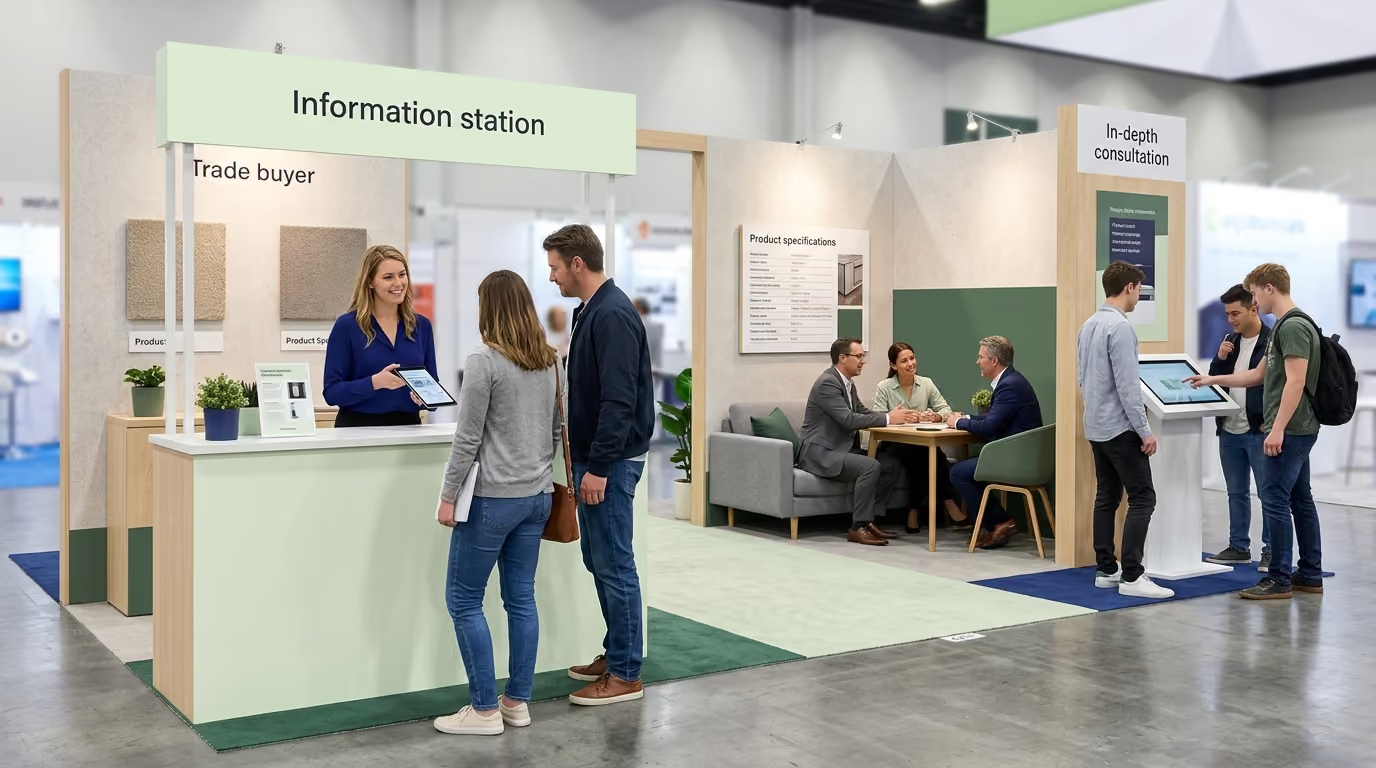
These accounts encompass general industry registrants. Engage them using automated email workflows, paid account-based advertising, and self-service calendar booking links. Direct these visitors to open product demonstrations and public booth presentations.
A high-performing outbound cadence for event meeting recruitment spans ten business days across multiple communication channels:
Expanding your campaign reach beyond your owned contact list requires activating ecosystem partners, executive social channels, and precision paid media.
Ecosystem partners, raw ingredient suppliers, technology integrators, and retail distributors share an interest in attracting qualified buyers to the event floor. Co-marketing with non-competing partners expands your target account reach while splitting promotional overhead.
Paid media ensures your brand remains top of mind as target buyers research their travel schedules. LinkedIn's event marketing guidance emphasizes deploying account-based advertising campaigns at least three months out to warm buying committees before field teams make direct contact.
Target paid ads using precise criteria:
Creative assets should feature concrete visuals of your physical booth space, names of featured executive speakers, and clear value statements regarding the live experience.
A successful pre-show marketing campaign creates substantial demand that your field team must fulfill without operational friction. If an attendee arrives for a confirmed meeting only to find an unprepared sales representative or an overcrowded space, your brand equity suffers immediately.
Follow this execution playbook to bridge the gap between pre-event promises and live booth delivery:
Measuring trade show performance requires tracking both operational leading indicators and commercial lagging results. Focusing strictly on scanned badge totals obscures whether an activation produced meaningful enterprise value.
Leading metrics evaluate how efficiently your pre-event campaign generated qualified demand and calendar density:
Lagging metrics evaluate commercial return and post-show sales velocity over full business cycles:
Adopting this attribution discipline transforms your event marketing from an unverified cost center into a predictable, revenue-generating engine. For teams looking to scale overall field performance, mastering high conversion trade show marketing strategies ensures continuous improvement across every scheduled appearance.
A premium functional snack brand prepared to exhibit at a major natural products expo. In previous years, the brand relied entirely on open sampling and aisle foot traffic. While their booth handed out thousands of samples, post-show sales follow-up yielded few retail distribution agreements.
For their upcoming trade show cycle, the brand implemented a structured eight-week pre-event campaign targeting regional grocery buyers, category managers, and retail brokers.
The marketing team executed a disciplined four-stage account acquisition plan:
By shifting from passive foot traffic to active pre-show recruitment, the brand achieved remarkable commercial outcomes:
Executing a structured pre-event campaign transformed an unpredictable trade show appearance into a major retail expansion milestone.
When official attendee lists are unavailable, leverage secondary intent signals. Run LinkedIn account-based ads targeting employees at priority companies located within the event geography or following the official event page.
Monitor official conference hashtags, review speaker lists, and have your sales team reach out directly to open opportunities to ask if their leadership team plans to attend.
Industry no-show rates for trade show meetings typically range between 15% and 25% due to flight delays, competing sessions, and floor fatigue.
Reduce no-shows by sending calendar invites with clear venue directions, sending SMS reminders 15 minutes before the meeting, and having account executives establish personal contact via text earlier that morning.
For major product unveilings, begin broad awareness and teaser messaging twelve to sixteen weeks prior to the event.
Transition to direct, confidential meeting recruitment six to eight weeks out, offering exclusive advance briefings or under-embargo demonstrations to high-value buyers and select industry media.
If a target buyer declines a formal 30-minute meeting, lower the barrier to entry. Offer a low-friction alternative, such as a five-minute curated sample pickup, a reserved seat at your educational panel, or an invitation to an informal evening reception.
Providing flexible engagement formats allows you to initiate valuable commercial relationships without demanding large calendar commitments during a busy event week.

30 Years Experiential & Retail Activation Partner for CPG & Beverage Brands | Multi-Market Demos, Roadshows & Costco/Club Programs That Actually Sell